Getting hit with $1 million in EPA fines because you didn’t file the right stormwater paperwork? That’s what happens when construction companies skip the basics. Here’s the deal: if you’re disturbing soil in Georgia, you need to know exactly what permits and plans are required. No guesswork. No “I’ll figure it out later.” Just cold, hard facts about Georgia SWPPP requirements.
The Clean Water Act doesn’t care if you’re confused about the rules. Neither does the Georgia Environmental Protection Division. They want compliance, and they want it before your first shovel hits the dirt.
When You Need a SWPPP in Georgia
Simple rule: disturbing one acre or more? You need a Stormwater Pollution Prevention Plan (SWPPP). Period. Even if your project is smaller but part of a bigger development plan, you still need one. This isn’t optional paperwork – it’s federal law under the National Pollutant Discharge Elimination System (NPDES) permit requirements.
Here’s what triggers the requirement:
- Construction sites disturbing 1+ acres
- Smaller sites that are part of larger common plans
- Any project that could discharge pollutants into Georgia waters
- Solar farms (special rules apply)
- Industrial facilities with stormwater discharge
The current Georgia NPDES General Permits (GAR100001, GAR100002, and GAR100003) run through July 31, 2028. These permits got reissued in 2023 after some legal drama, but they’re solid now.
Big Projects Get Extra Attention
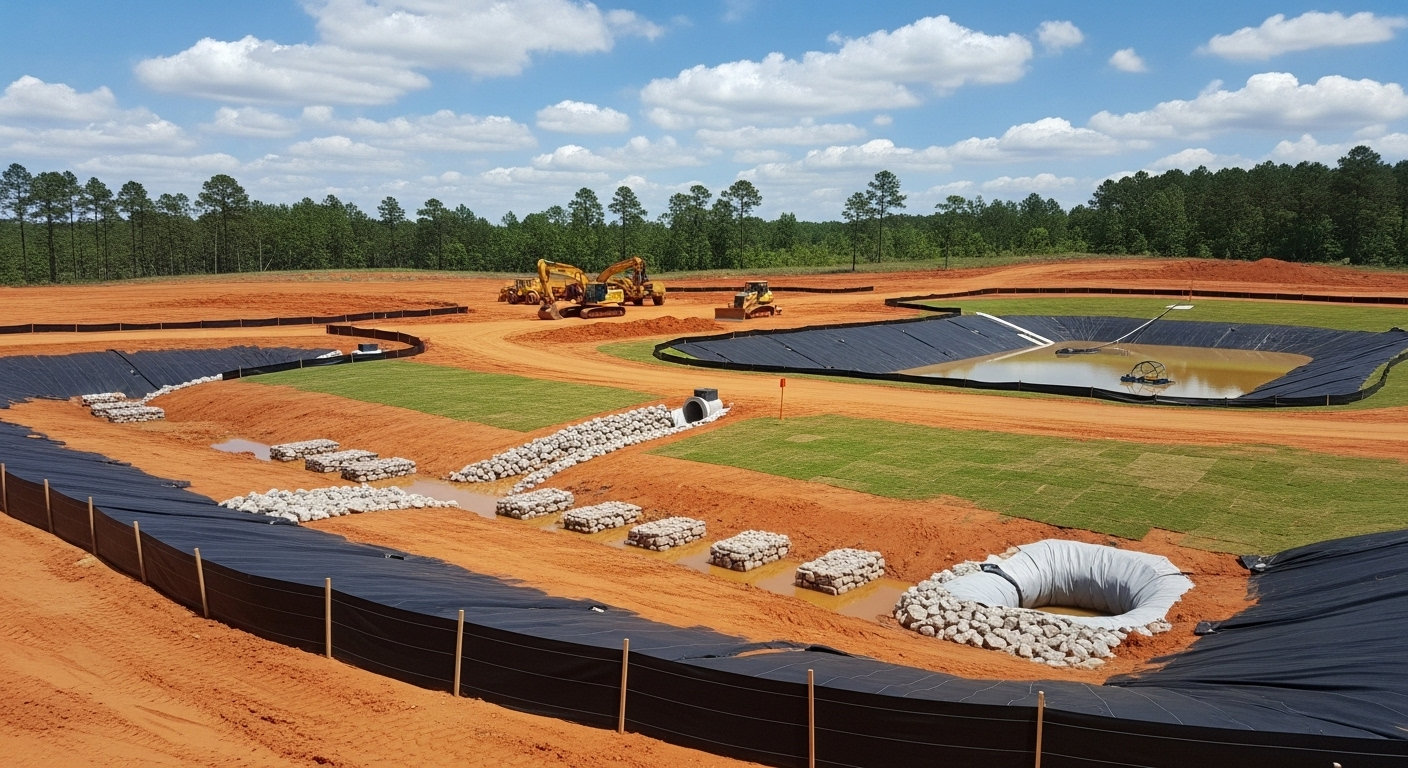
Think bigger is easier? Think again. Sites disturbing more than 50 acres need a variance from Georgia EPD. They strongly encourage phasing your work to keep disturbed areas smaller. Go over 400 acres at once? You’re in special variance territory with extra hoops to jump through.
Sites over 150 acres face even tougher rules:
- Larger sediment basins
- More frequent inspections by design professionals
- Post-construction BMPs that remove 80% of Total Suspended Solids
- Enhanced Best Management Practices across the board
Don’t want to mess with all the paperwork and requirements? Order your SWPPP now with Pro SWPPP Professional CPESC Certified SWPPP Services.
Solar Projects Have Special Rules
Building a solar farm in Georgia? The rules just got stricter. You must temporarily stabilize all disturbed areas before installing panels. Plus, EPD calculates your post-construction impervious area at 70%, which means permanent sediment basins and other Best Management Practices are required.
Solar developers often get surprised by these requirements. One 200-acre solar project near Atlanta had to redesign their entire stormwater system mid-construction because they missed these specifics. Cost them six months and $300,000 in delays.
Inspection Requirements That Actually Matter
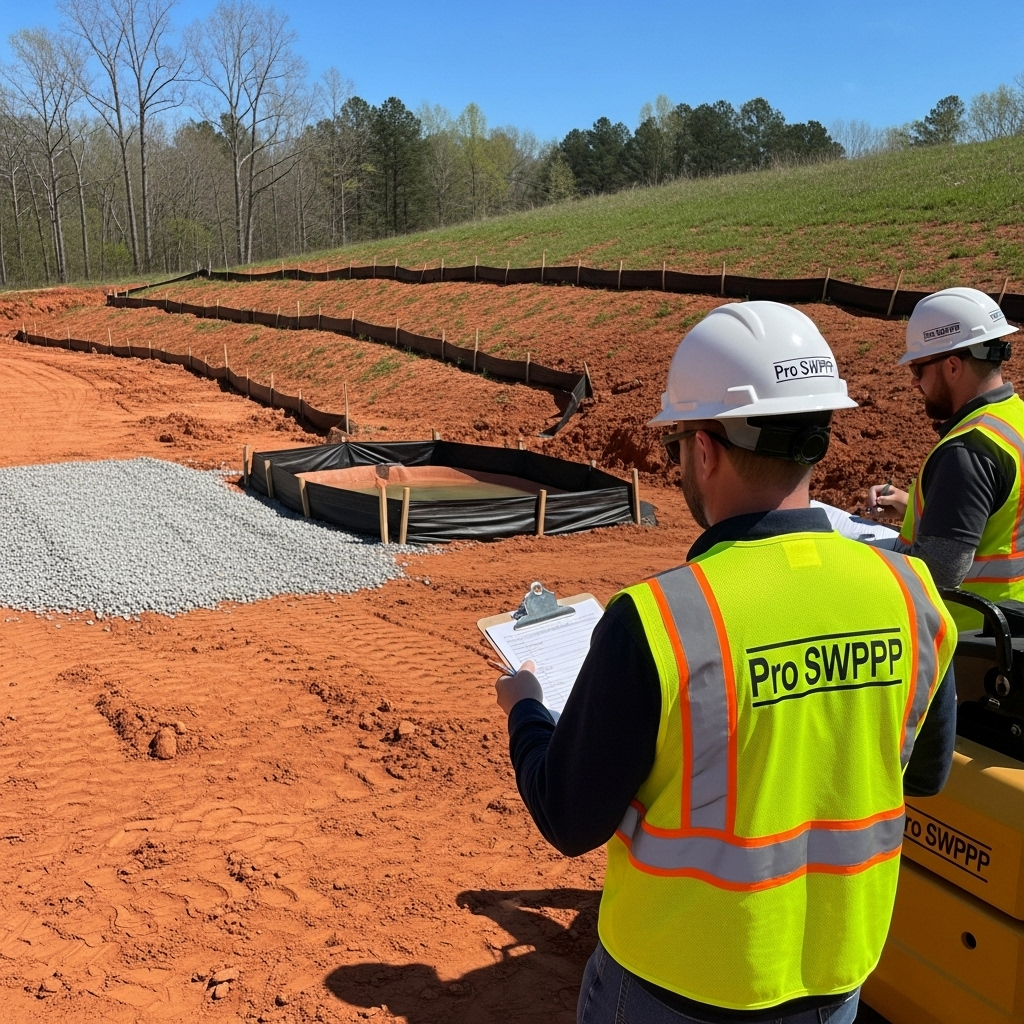
Your SWPPP isn’t a file-and-forget document. Georgia requires quarterly visual inspections of all discharge points. You also need annual lab analysis of your stormwater discharges, with results reported directly to EPD.
Sites discharging to impaired water bodies face even tougher standards – lab analysis twice per quarter under the previous permit guidelines. Miss these inspections? You’re looking at Notice of Violation letters and potential fines.
Local Rules Stack On Top
State requirements are just the starting point. Cities like Atlanta add their own layers. Atlanta requires new developments to manage the first inch of rainwater using green infrastructure. They provide design resources and plan review checklists, but compliance is mandatory.
Other Georgia municipalities are following Atlanta’s lead. Expect more local green infrastructure mandates in coming years, especially in metro areas.
When You Need a Notice of Intent
Before you can implement your SWPPP, you need to file a Notice of Intent (NOI) with Georgia EPD. This tells them you’re starting a project that requires stormwater permits. The NOI must be filed before any ground disturbance begins.
Your Notice of Intent filing triggers permit coverage, but it’s not automatic. EPD reviews each submission and can request changes or additional information.
Common Mistakes That Cost Money
Biggest mistake contractors make? Thinking permits are one-and-done. Your SWPPP must be updated as site conditions change. New EPD guidance, weather events, or project modifications all trigger updates.
Another expensive mistake: assuming smaller projects are exempt. If your half-acre site is part of a larger development plan, you still need full SWPPP compliance. EPA doesn’t care that your piece is small.
Industrial sites often get confused about permit types. Construction general permits are different from industrial stormwater permits. Get the wrong one, and you’re still in violation.
What Happens If You Skip It
EPA enforcement in Georgia is real. Fines start at thousands of dollars per day and can reach millions for major violations. One Atlanta-area developer paid $750,000 in penalties for stormwater violations on a residential project.
Beyond fines, violations can shut down your entire project. Stop-work orders mean your crews sit idle while you scramble to get compliant. That’s money bleeding every single day.
Not sure what your project needs? Take our SWPPP Quiz or Schedule a Free SWPPP Consultation with CPESC Certified SWPPP Expert Derek E. Chinners.
Getting Professional Help
Smart contractors know when to call in experts. Professional SWPPP service providers handle everything from initial planning through final inspection. They know the latest EPD guidance and local requirements.
CPESC-certified professionals understand both federal Clean Water Act requirements and Georgia-specific rules. They catch issues before they become expensive violations.
For companies working across state lines, having experts who understand different state requirements is crucial. Texas stormwater requirements are different from Georgia’s, and mixing them up costs money.
The Bottom Line
Georgia SWPPP requirements aren’t suggestions. They’re legal mandates with real penalties for non-compliance. Whether you need a basic SWPPP for a small site or enhanced Best Management Practices for a large development, getting it right the first time saves money.
The current permits run through 2028, but EPD continues updating guidance based on stakeholder feedback and environmental needs. Staying current with these changes is part of staying compliant.
Georgia SWPPP FAQs
Do I need both a SWPPP and NOI for my Georgia construction project?
Yes, if you’re disturbing one acre or more. The NOI gets filed with EPD to obtain permit coverage, while the SWPPP is your detailed plan for preventing stormwater pollution during construction.
How long does it take to get SWPPP approval in Georgia?
EPD typically processes NOI filings within 30 days, but complex projects or sites near sensitive waters can take longer. Start the process at least 45 days before planned construction.
What’s the penalty for starting construction without a SWPPP?
EPA can fine up to $62,947 per day per violation. Georgia EPD can also issue stop-work orders and require expensive remediation measures.
Are solar projects treated differently under Georgia SWPPP rules?
Yes, solar farms must temporarily stabilize all disturbed areas before panel installation and calculate post-construction impervious area at 70%, requiring permanent stormwater management systems.
Can I use the same SWPPP for multiple construction phases?
Your SWPPP must be updated for each phase as site conditions change. What works for initial clearing won’t work for final stabilization phases.
Get your Georgia SWPPP handled right the first time – contact Pro SWPPP today and avoid costly compliance mistakes that could cost you $1 million or more in fines.