Pro SWPPP – America’s #1 SWPPP Service has helped industrial facilities nationwide stay compliant with federal and state stormwater rules. If you’re running a factory, warehouse, shipping yard, or any industrial site, you’ve probably heard the term SWPPP thrown around. Maybe someone told you that you need one. Maybe you got a letter from the EPA or your state. Either way, you’re probably wondering: “Do I really need this thing? And what even is it?”
Here’s the truth: most industrial facilities that handle materials outdoors or have stormwater runoff touching industrial areas do need a SWPPP. It’s not optional. It’s the law under the Clean Water Act. And if you skip it, you’re looking at big fines, shutdown orders, and a whole lot of headaches.
This guide will walk you through everything you need to know about industrial SWPPPs in 2026. We’ll cover what they are, who needs them, how to get one, and how Pro SWPPP can take the stress out of compliance.
What Is an Industrial SWPPP?
A SWPPP stands for Stormwater Pollution Prevention Plan. It’s a written document that explains how your facility will stop pollutants from getting into stormwater and flowing into rivers, lakes, and oceans.
Think of it like a game plan. Your SWPPP lists all the Best Management Practices (BMPs) you’ll use to control pollution. BMPs are simple things like covering materials, using drip pans, sweeping up spills, and keeping stormwater drains clean.
Your SWPPP also includes site maps, inspection schedules, and monitoring plans. It’s a living document—you update it whenever your facility changes or when inspections show that your controls aren’t working.
Do You Need a SWPPP or Just an NOI?
This is where people get confused. Here’s the quick answer: you need both, but the SWPPP comes first.
An NOI is a Notice of Intent. It’s the form you file with the EPA or your state to say, “Hey, I’m applying for permit coverage.” You can’t file an NOI until you’ve already written your SWPPP. The permit requires that your SWPPP be complete before you submit the NOI.
So the order is: write your SWPPP, then file your NOI, then start operations under the permit. Some states also require you to keep your SWPPP on-site and available for inspectors at any time.
Who Needs an Industrial SWPPP in 2026?
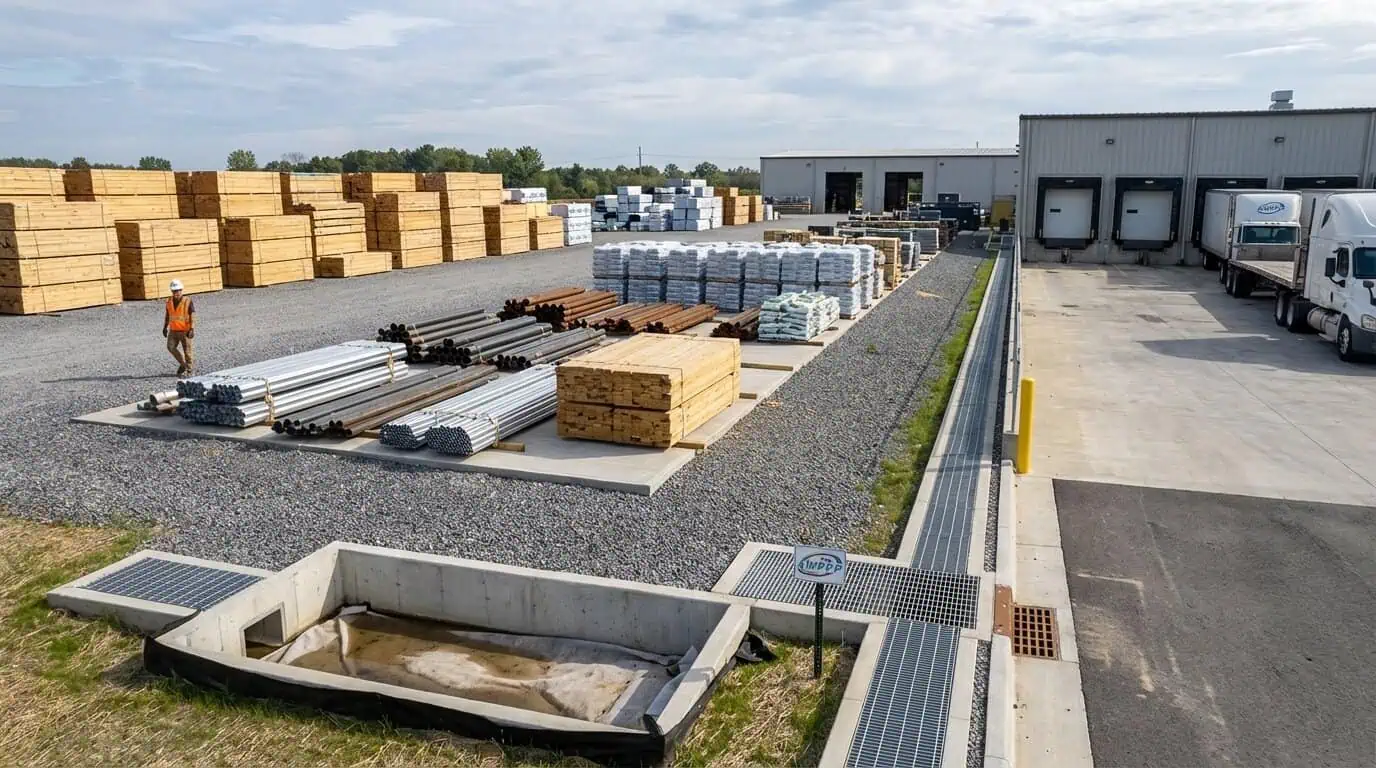
Most facilities that do any of the following need coverage under an NPDES Industrial General Permit and must have a SWPPP:
- Store raw materials, products, or waste outdoors
- Load or unload materials outside
- Have outdoor manufacturing or processing
- Operate equipment or vehicles that drip oil or fluids
- Have stormwater that touches any industrial activity area
Your facility’s SIC code (Standard Industrial Classification) or NAICS code tells you if you’re covered. Common codes include manufacturing, shipping, recycling, scrap yards, chemical plants, and mineral mining. If your SIC code is in Appendix D of the EPA’s Multi-Sector General Permit (MSGP), you need a permit.
There’s one exception: the No Exposure Exclusion (NEE). If all your industrial materials and activities are completely indoors or under cover—so that stormwater never touches them—you might qualify for an NEE instead of a full permit. You still file paperwork, but you don’t need a SWPPP. Most facilities can’t meet this standard, so they end up needing the full permit and SWPPP.
State-Specific Rules: It Gets Complicated
The EPA issues the MSGP for states that don’t run their own stormwater programs. But many states have their own Industrial General Permits (IGPs) with extra rules. Let’s look at a few big ones for 2026.
Connecticut
Connecticut rolled out a new IGP in 2024 after the old one expired. The new permit adds sector-specific Effluent Limitation Guidelines (ELGs), more monitoring, and a new Corrective Actions section that references the 2023 Connecticut Stormwater Quality Manual. Facilities had 120 days to update their SWPPPs. Registration is a two-part process using ezFile and eReporting.
California
California’s 2014 IGP (Order No. 2014-0057-DWQ) is still in effect. It requires detailed SWPPPs with site maps, pollutant assessments, BMPs, and monitoring plans. You file everything electronically through a system called SMARTS. Any time you have a violation or change your operations, you must amend your SWPPP. The Santa Barbara Airport updated its SWPPP in June 2024 to add TMDL requirements and spill prevention plans.
Georgia
Georgia’s 2022 IGP requires an NOI if your facility has an SIC code listed in Appendix D and stormwater contacts industrial activities. If you qualify for No Exposure, you file an NEE instead. Georgia uses an online system called GEOS for all filings. Georgia facilities should check their SIC codes carefully before deciding which path to take.
Texas
Texas is regulated by TCEQ (Texas Commission on Environmental Quality). TCEQ enforces the state’s version of the MSGP, which covers a wide range of industrial facilities. Texas facilities must prepare a SWPPP that meets TCEQ standards and file an NOI before starting operations. TCEQ inspectors can show up anytime to check your SWPPP and BMPs, so it’s smart to keep everything up to date.
Wisconsin
Wisconsin’s program is under NR 216. The state updated its Mineral Mining Permit in 2024 to target industrial sand facilities (SIC 1446) for process wastewater. If you’re a sand mine or similar operation, make sure your SWPPP covers both stormwater and any dewatering activities.
Don’t want to mess with all the paperwork and requirements? Check out Order your SWPPP now with Pro SWPPP Professional CPESC Certified SWPPP Services.
What Goes Into an Industrial SWPPP?
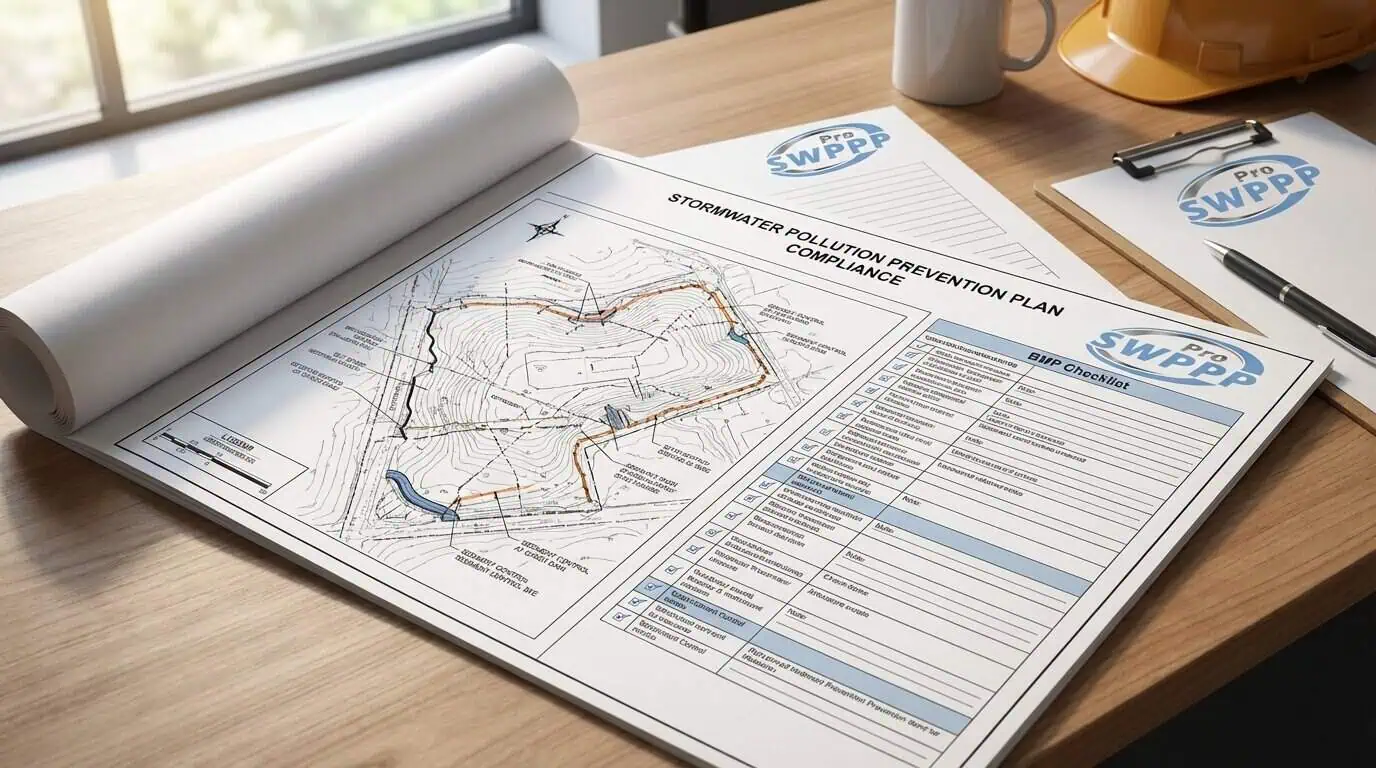
Every SWPPP is different, but they all have the same core pieces:
- Pollution Prevention Team: Names and contact info for the people responsible for stormwater compliance at your facility.
- Site Map: A drawing that shows where stormwater flows, where industrial activities happen, and where your BMPs are located.
- Potential Pollutant Sources: A list of all the materials, chemicals, and activities that could pollute stormwater.
- Best Management Practices (BMPs): The controls you’ll use to stop pollution. Examples include Erosion Control measures, Sediment Control barriers, covers, secondary containment, and spill kits.
- Inspection Schedule: How often you’ll inspect your BMPs and who will do it.
- Monitoring Plan: If your permit requires sampling, your SWPPP explains where, when, and how you’ll collect samples.
- Corrective Actions: What you’ll do if an inspection finds a problem or a BMP fails.
- Record Keeping: How you’ll document inspections, monitoring results, and any changes to the plan.
Your SWPPP must be signed by a Legally Responsible Person (LRP) at your company. Some states also require that the plan be written by a Qualified SWPPP Developer (QSD), which is a person with special training and certification.
Common Mistakes and How to Avoid Them
Even experienced facility managers make mistakes with SWPPPs. Here are the big ones:
- Filing the NOI before the SWPPP is done. This is backwards. Write your SWPPP first, then file your NOI.
- Forgetting to update the SWPPP. If you add a new storage tank, change your materials, or have a spill, you must amend your SWPPP.
- Not training your team. Everyone who works on-site should know what a SWPPP is and how to follow the BMPs.
- Skipping inspections. Most permits require inspections every month or every quarter. Missing them can trigger violations.
- Assuming you don’t need a permit. If stormwater touches any outdoor industrial area, you probably need coverage. Check your SIC code and talk to a pro.
Pro SWPPP has seen every mistake in the book. We help you avoid them from day one.
How to Get Your SWPPP in 2026
You have two options: do it yourself or hire a professional.
If you go the DIY route, you’ll need to learn your state’s permit inside and out, figure out which BMPs to use, draw your own site maps, and write all the procedures. It’s doable, but it takes a lot of time. And if you miss something, you’re still the one who gets fined.
The smarter option is to hire Pro SWPPP. We’re CPESC certified (Certified Professional in Erosion and Sediment Control) and we’ve written SWPPPs for facilities in every state. We know the EPA MSGP, state IGPs, and all the latest updates for 2026. We handle the site maps, the BMP selections, the monitoring plans, and all the paperwork. You get a complete, compliant SWPPP that’s ready to go.
Not sure what your project needs? Take our SWPPP Quiz or Schedule a Free SWPPP Consultation with CPESC Certified SWPPP Expert Derek E. Chinners.
What’s New in 2026?
Stormwater rules keep changing. Here are the big trends for 2026:
- More electronic filing. States like California, Connecticut, and Georgia now require all NOIs, reports, and amendments to be filed online. Paper is dead.
- Stricter monitoring. The EPA’s 2021 MSGP added benchmark monitoring for certain sectors. States are following suit with their own numeric action levels.
- Sector-specific ELGs. Effluent Limitation Guidelines now apply to more industries, especially manufacturing and chemical plants.
- TMDL integration. If your facility is in a watershed with a Total Maximum Daily Load (TMDL) for a pollutant, your SWPPP must address it.
- Better BMP guidance. Groups like CASQA (California Stormwater Quality Association) released major updates to their BMP handbooks in 2023-2025. These are gold mines of practical advice.
Staying current on these changes is tough. That’s why facilities across the country trust Pro SWPPP to keep them compliant year after year.
Why Pro SWPPP Is Your Best Choice
We’ve been doing this longer than anyone. Our team knows the Clean Water Act, the Construction General Permit (CGP), and every state IGP. We’ve worked with factories, warehouses, scrap yards, chemical plants, and more. We know what inspectors look for and how to build a SWPPP that passes every time.
When you work with us, you get:
- A custom SWPPP written by a CPESC certified professional
- Site-specific BMP recommendations
- Help filing your NOI and any amendments
- Training for your team on how to follow the plan
- Ongoing support whenever you have questions
You can learn more about us or contact us anytime. We’re here to make stormwater compliance simple.
FAQ
How long does it take to get a SWPPP?
If you hire a professional, you can have a complete SWPPP in as little as a few days to two weeks, depending on your facility size and complexity. Doing it yourself can take much longer.
How much does a SWPPP cost?
Costs vary by facility size and state. Professional services typically range from a few hundred to a few thousand dollars. DIY is free except for your time, but mistakes can cost you way more in fines.
Do I need a new SWPPP every year?
No. You write one SWPPP and then update it whenever your facility changes or when inspections show that your BMPs need tweaking. Most permits require an annual evaluation, but that’s not the same as writing a whole new plan.
What happens if I don’t have a SWPPP?
Operating without permit coverage is a violation of the Clean Water Act. The EPA or your state can issue fines up to tens of thousands of dollars per day, plus order you to stop operations until you get compliant.
Can I use a template?
Templates are a starting point, but they don’t replace a site-specific plan. Every facility is different, and inspectors want to see that your SWPPP actually matches your operations.
Do I need to sample stormwater?
It depends on your permit and sector. Some facilities must collect samples and test for pollutants like metals, pH, and turbidity. Your SWPPP will spell out your monitoring requirements.
What’s the difference between a construction SWPPP and an industrial SWPPP?
A construction SWPPP is for temporary projects like building a new facility. An industrial SWPPP is for ongoing operations at an existing facility. The rules are different, and you can’t use one in place of the other.
Pro SWPPP is ready to help your facility stay compliant, avoid fines, and protect the environment—get started today at https://proswppp.com.
A Quick Word About the EPA MSGP 🏭
Industrial stormwater is its own animal: most facilities fall under the EPA Multi-Sector General Permit (MSGP) or a state equivalent, with sector-specific benchmarks, quarterly monitoring, and the dreaded NeT portal. Pick the wrong sector or miss a benchmark sample and the violations stack up fast.
That’s the entire point of Pro SWPPP. We handle all of it — your industrial SWPPP, the permit filing, and the CPESC certification it requires — done in 72 hours, with 24-hour expedited turnaround when the clock’s against you. You build; we wrestle the bureaucracy.
Let the MSGP Be Our Problem, Not Yours.
Your industrial SWPPP, permit filing, and CPESC certification — done for you in 72 hours, 24-hour rush available, or it’s FREE.
✅ Order Your industrial SWPPP — The Easy Way →
📞 Talk to THE SWPPP Authority →
Schedule a call with Derek E. Chinners — Founder & Stormwater Consultant, CPESC · 833-GET-SWPPP