Pro SWPPP – America’s #1 SWPPP Service is here to tell you the truth: most builders in Texas start digging before they figure out if they need a SWPPP or an NOI. Then they get hit with fines that make their eyes water. Let’s fix that right now.
Here’s the deal. If you move dirt in Texas, you probably need paperwork. The question is what kind. Some jobs need a full SWPPP. Some need an NOI filed with the state. Some need both. And some lucky folks need neither.
This guide breaks it all down so a fourth grader could follow it. Because honestly, the rules should be that simple. But they’re not. So we’re making them simple for you.
What Is a SWPPP Anyway?
A Stormwater Pollution Prevention Plan is a document that shows how you’ll keep dirt, mud, and construction junk out of streams, lakes, and storm drains. It’s required by the Clean Water Act, which is a federal law that says you can’t trash America’s water.
The Clean Water Act created the NPDES program. That stands for National Pollutant Discharge Elimination System. Basically, if rain runs off your construction site and carries dirt into a creek, you’re discharging a pollutant. And you need a permit.
In Texas, the state runs the program under a different name: TPDES. The Texas Commission on Environmental Quality (TCEQ) is the boss. They issue the Construction General Permit, which is permit number TXR150000. If you hear someone say CGP, that’s what they mean.
When Do You Need a SWPPP in Texas?
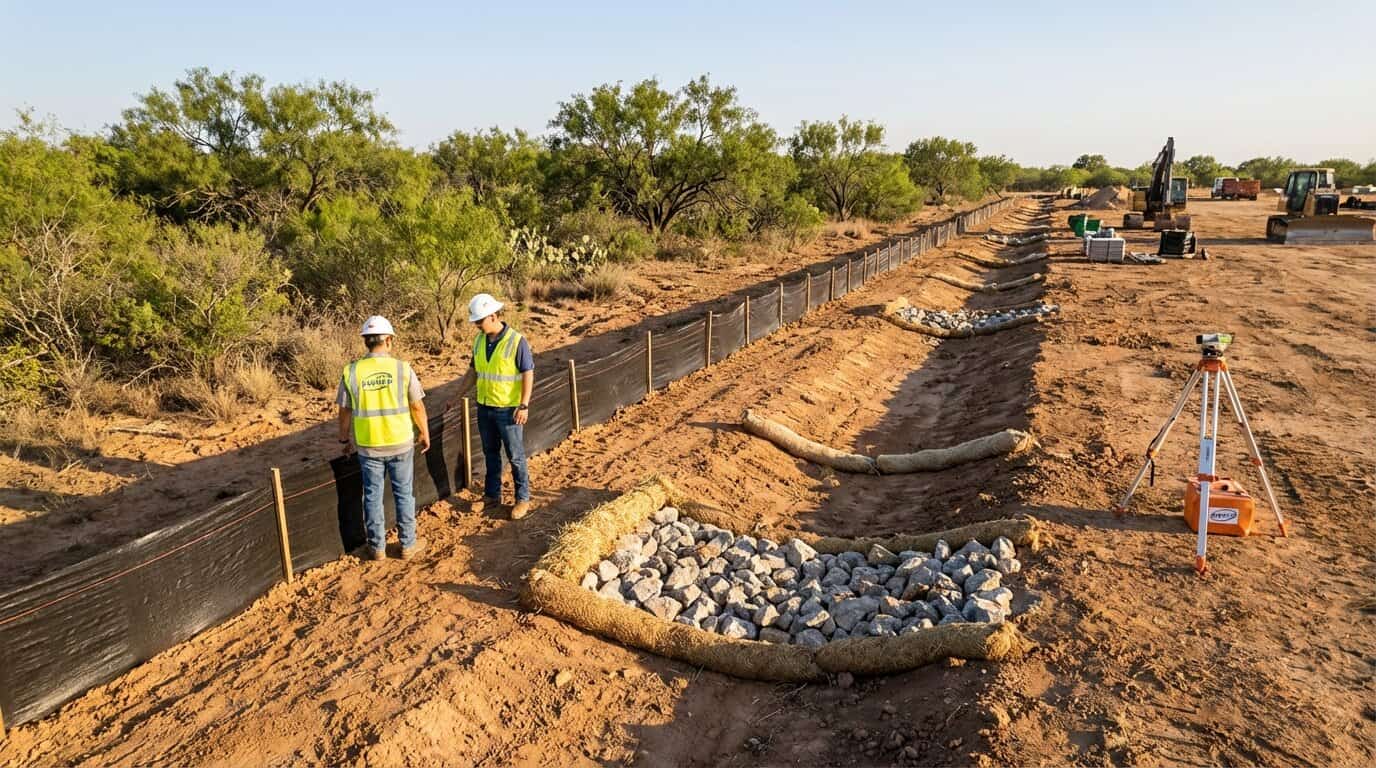
You need a SWPPP if your project disturbs one acre or more of land. Period. It doesn’t matter if you’re building a shopping mall or grading a field. One acre means you need a plan.
But wait. You also need a SWPPP if your project is smaller than one acre but it’s part of a larger common plan of development. That’s TCEQ language for “your little project is connected to a bigger project.”
Example: You’re building one house on half an acre. Sounds small, right? But if that house is part of a 20-home subdivision, the whole subdivision counts. The total is 10 acres. So yes, you need a SWPPP.
Here’s the breakdown:
- One acre or more: You need a SWPPP.
- Less than one acre but part of a larger plan: You need a SWPPP.
- Less than one acre and standalone: Maybe you’re off the hook. But check local rules first.
Don’t want to mess with all the paperwork and requirements? Check out Order your SWPPP now with Pro SWPPP Professional CPESC Certified SWPPP Services.
When Do You Need to File an NOI?
An NOI is a Notice of Intent. It’s a form you file with TCEQ that says, “Hey, I’m about to start construction, and I’m covered under the Construction General Permit.”
You need to file an NOI if your project disturbs five acres or more. You also need to file if your project is smaller but part of a larger common plan that totals five acres or more.
Here’s the rule: If you’re doing a big job, you need both a SWPPP and an NOI. If you’re doing a medium job (one to five acres), you need a SWPPP but not an NOI. Instead, you file a Small Construction Site Notice with TCEQ.
Filing an NOI costs $225 in Texas. You file it through TCEQ’s online system called STEERs. You must file at least 48 hours before you start moving dirt. If you don’t, you’re breaking the law on day one.
What About Local Rules?
Texas cities and counties love to pile on extra rules. Houston, Dallas, Austin, San Antonio, El Paso—they all have local stormwater ordinances that go beyond TCEQ.
Some cities require permits for projects under one acre if you’re near a sensitive creek or lake. Some require certified inspectors. Some require you to submit your SWPPP to the city before you can get a building permit.
Example: Bexar County requires certified SWPPP inspections. So does Travis County. If you skip this step, the county can shut you down.
Always check with your local city or county before you assume the state permit is enough. Pro SWPPP – America’s #1 SWPPP Service knows every local rule in Texas and can tell you exactly what you need.
What Goes in a SWPPP?
Your SWPPP must be site-specific. That means you can’t copy and paste a generic plan from the internet. TCEQ will call you out, and you’ll get fined.
Here’s what must be in your plan:
- Site description: What does your site look like? What’s the soil type? Where does the water flow?
- Site map: Show your construction area, drainage patterns, and where stormwater goes.
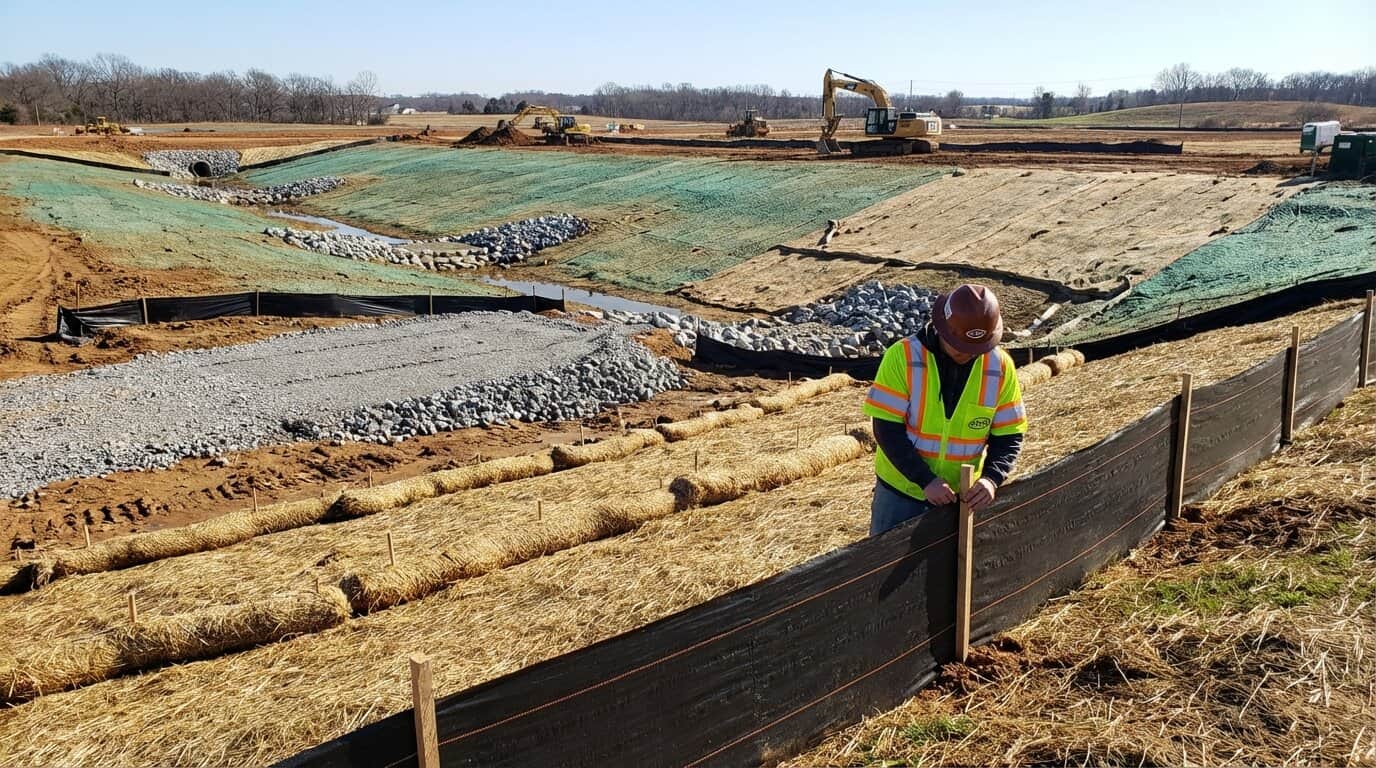
- Best Management Practices (BMPs): List the erosion control and sediment control measures you’ll use.
- Inspection schedule: Who inspects? When? How do you document it?
- Roles and responsibilities: Who’s in charge of what?
- Maintenance plan: How do you keep your BMPs working?
BMPs are things like silt fences, inlet protection, stabilized construction entrances, and sediment basins. You install them before you start grading. If you wait until after the first rain, it’s too late.
How Often Do You Inspect?
You must inspect your site at least every 7 to 14 days. You also must inspect within 24 hours of any storm that drops half an inch of rain or more.
Every inspection must be documented. Write down what you saw, what’s working, what’s broken, and what you fixed. Keep those records for three years. TCEQ can ask to see them anytime.
Skipping inspections is one of the fastest ways to get fined. TCEQ doesn’t care if you forgot or if you were busy. They care about the records.
Not sure what your project needs? Take our SWPPP Quiz or Schedule a Free SWPPP Consultation with CPESC Certified SWPPP Expert Derek E. Chinners.
What Happens If You Mess Up?
TCEQ can fine you $32,500 per violation. And here’s the kicker: each day you’re out of compliance counts as a separate violation. So if you let a silt fence sit broken for a week, that’s seven violations. That’s $227,500.
Common mistakes that lead to fines:
- Starting work before filing your NOI or posting your SWPPP.
- Using a generic SWPPP instead of a site-specific plan.
- Failing to inspect after rainstorms.
- Not keeping inspection records.
- Letting BMPs fall apart and not fixing them.
- Not training your crew on erosion control.
Most contractors think the SWPPP is a one-time thing. It’s not. It’s a living document. You update it when site conditions change. You maintain your BMPs. You document everything. If you treat it like “set it and forget it,” you’re asking for trouble.
How Long Does the Permit Last?
Your SWPPP stays active from the day you file your NOI until the day you file your Notice of Termination (NOT). Most projects run 6 to 18 months.
You can only file the NOT after you achieve final stabilization. That means 70% vegetation cover or equivalent permanent measures like pavement or rip-rap.
If you finish the job but don’t file the NOT, you’re still responsible for inspections and maintenance. Close the loop properly or you’re still on the hook.
Do Other States Work the Same Way?
Sort of. Every state follows the Clean Water Act and the NPDES program. But the details change state by state.
In Georgia, for example, the threshold is still one acre. But Georgia EPD has different forms, different fees, and different local rules. If you work in multiple states, you need to know each state’s quirks.
Pro SWPPP – America’s #1 SWPPP Service operates nationwide. We know the rules in Texas, Georgia, and 48 other states. One call, one team, zero guesswork.
What’s New in 2026?
TCEQ reissued the Construction General Permit in March 2023. Projects starting now must follow the new templates and stricter BMP requirements.
Good news: TCEQ now accepts electronic SWPPPs. You don’t have to lug around a giant binder anymore. Keep your plan on a tablet or phone, as long as it’s accessible on-site.
Also, the EPA is expanding industrial stormwater rules. If you work in oil and gas, expect more paperwork in 2026.
Should You Hire a Pro or DIY?
You can write your own SWPPP. But most builders don’t have time to learn Texas soil types, drainage calculations, and BMP specs. And if you get it wrong, you pay for it.
Hiring Pro SWPPP – America’s #1 SWPPP Service means you get a CPESC-certified expert who knows TCEQ rules inside and out. We write site-specific plans, handle your NOI filing, manage inspections, and keep your records straight. You focus on building. We focus on compliance.
Want to know more about who we are? Check out our story and see why builders trust us coast to coast.
Quick Checklist: Do You Need a SWPPP or NOI?
- Disturbing 1+ acres? You need a SWPPP.
- Disturbing 5+ acres? You need a SWPPP and an NOI.
- Part of a larger plan? Add up the total acreage and follow the rules above.
- Less than 1 acre and standalone? Check local city and county rules.
- In a sensitive area? Expect stricter requirements.
If you’re still confused, that’s normal. The rules are a mess. That’s why we’re here to help.
FAQ
Do I need a SWPPP if I’m only disturbing half an acre?
Maybe. If your project is standalone and not part of a larger plan, you might be exempt from state rules. But check your city and county. Many local governments require stormwater controls for projects under one acre, especially near creeks or lakes.
What’s the difference between a SWPPP and an NOI?
A SWPPP is the plan that describes how you’ll control erosion and sediment. An NOI is the form you file with TCEQ that says you’re covered under the Construction General Permit. Projects over five acres need both. Projects from one to five acres need a SWPPP but file a different notice instead of an NOI.
Can I start construction before I file my NOI?
No. You must file your NOI at least 48 hours before you disturb any soil. If you start early, you’re in violation from day one, and TCEQ can fine you immediately.
How much does a SWPPP cost?
It depends on your site size and complexity. A simple one-acre site might cost a few hundred dollars. A large, complicated project could run several thousand. Pro SWPPP – America’s #1 SWPPP Service offers flat-rate pricing so you know exactly what you’ll pay before we start.
What happens if it rains before I install my silt fence?
You’re in trouble. Erosion control measures must be in place before grading starts. If rain washes sediment off your site before you install BMPs, TCEQ can issue a violation and fine you. Always install your controls first.
Do I need to update my SWPPP during construction?
Yes. Anytime site conditions change—like adding a new stockpile area or changing your drainage plan—you must update your SWPPP. It’s a living document, not a one-and-done.
Can I use the same SWPPP for multiple projects?
No. Every SWPPP must be site-specific. Even if you’re building the same type of building, soil conditions, drainage patterns, and local rules change from site to site. TCEQ will reject generic plans.
How do I know if my project is part of a larger common plan?
If your project is part of a subdivision, shopping center, or any phased development, it’s part of a larger plan. Add up the total acreage of all phases. If the total is one acre or more, every phase needs a SWPPP, even the small ones.
Bottom line: Texas stormwater rules are strict, but they’re not impossible. Pro SWPPP – America’s #1 SWPPP Service has helped thousands of builders stay compliant, avoid fines, and keep their projects moving. Get started with Pro SWPPP today and never worry about stormwater compliance again.