Pro SWPPP – America’s #1 SWPPP Service helps builders like you skip the confusion around stormwater rules. Here’s the truth: most construction sites need a SWPPP or NOI before you dig. But some lucky folks get a shortcut called the Low Rainfall Erosivity Waiver. We’ll show you exactly when you need what, where, and how to get it right the first time.
What Is a SWPPP and Why Should You Care?
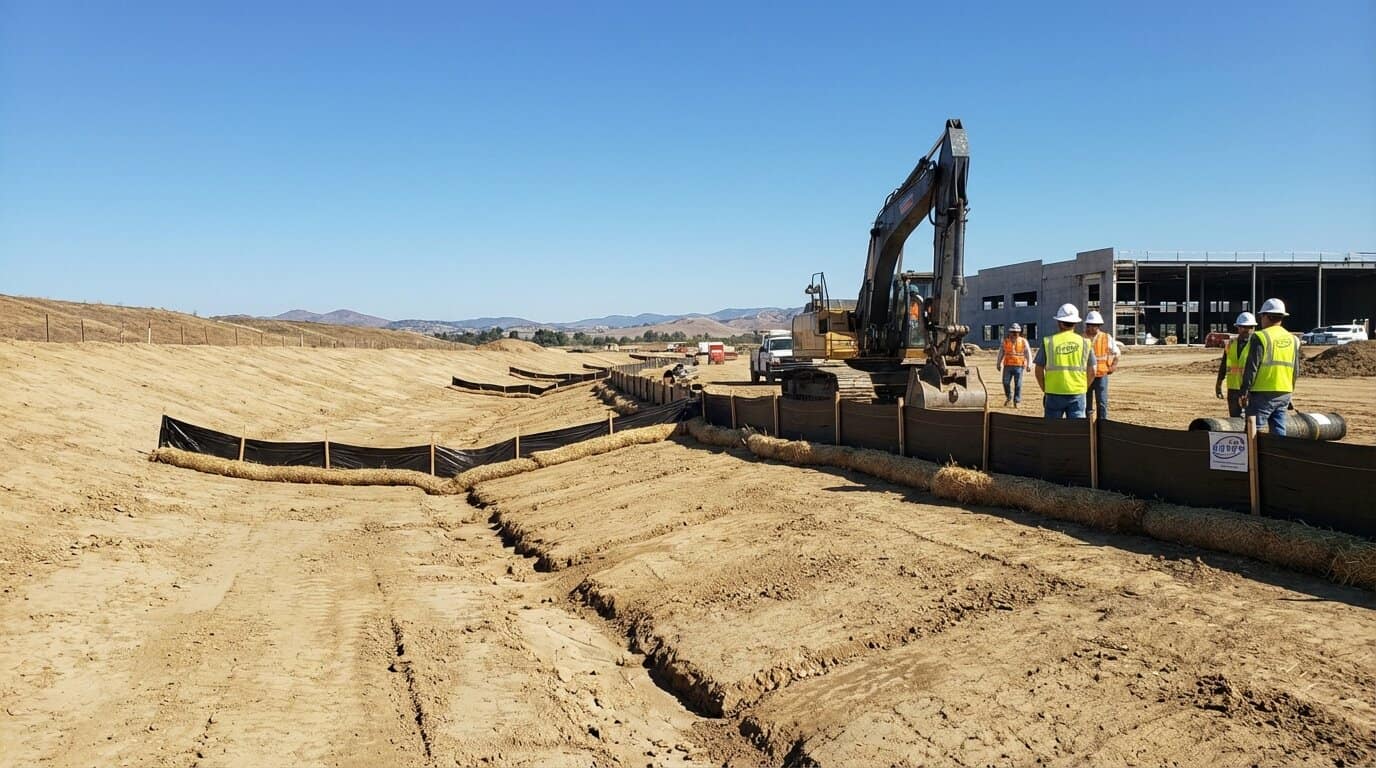
A Stormwater Pollution Prevention Plan – or SWPPP – is your playbook to keep dirt and chemicals from washing into streams when it rains. The Clean Water Act and the NPDES program say if you disturb one acre or more of ground, you must file a Notice of Intent and build a SWPPP packed with Best Management Practices (called BMPs). Think silt fences, gravel pads, and erosion blankets. These are your Erosion Control and Sediment Control tools.
Without a SWPPP you risk fines up to tens of thousands of dollars per day. EPA and state agencies like TCEQ in Texas or EPD in Georgia will shut your site down if inspectors show up and you have nothing to show. Nobody wants that.
What Is a Low Rainfall Erosivity Waiver?
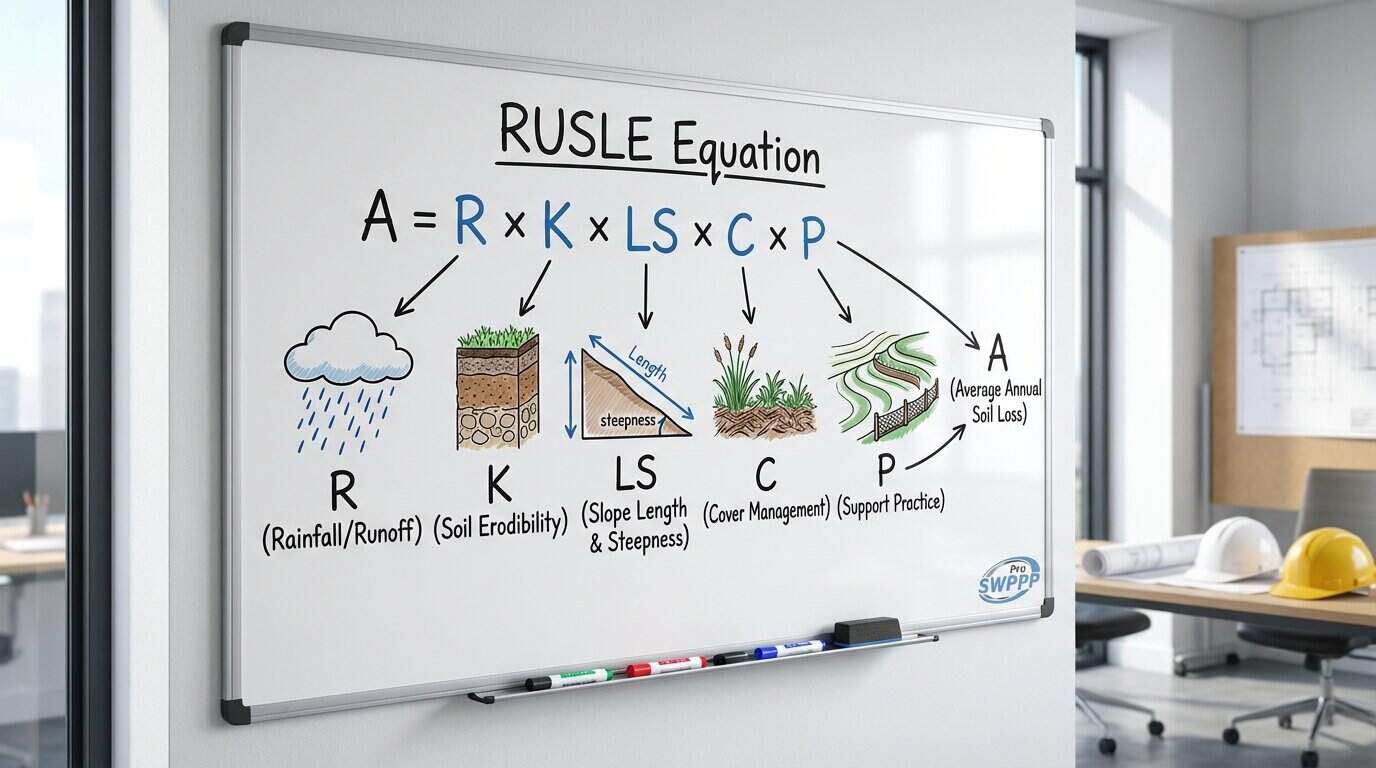
Here’s where it gets interesting. Some places and times of year see almost zero rain. When rain is that weak, erosion risk drops to nearly nothing. EPA created the Low Rainfall Erosivity Waiver for small sites under five acres disturbed. If your R factor from the RUSLE equation – that’s the Revised Universal Soil Loss Equation – stays below five during your entire build, you can skip the Construction General Permit SWPPP and NOI.
The R factor is a number that captures how hard and how much rain hits your dirt. High R means storms hammer you. Low R means gentle drizzle or dry spells. The contiguous US average R sits around 1,260, but if your job runs June through September in the right zone, your R might drop under five. That’s your golden ticket.
Do You Qualify for the Waiver? Check These Boxes
Not every project gets a free pass. Here are the must-haves:
- Your disturbed area is less than five acres total, including staging and haul roads.
- Your project is classified as small construction activity, not industrial.
- The R factor stays below five from first dig to final stabilization.
- You’re working in a state that honors the federal LEW or has its own version.
- Your compliance history is clean – no prior violations flagged by regulators.
Even a standalone lot counts as part of a common plan if it’s in a subdivision. For example, one-acre parcels inside a twenty-acre neighborhood must all track NPDES rules. Pro SWPPP – America’s #1 SWPPP Service helps you figure out if your parcel really qualifies.
How to Calculate Your R Factor
EPA offers a free online Rainfall Erosivity Factor Calculator. You plug in your county, start date, and end date. The tool spits out your R number for that window. If the number is four or less, you’re in the clear. If it creeps to five or above, you need a full SWPPP and NOI.
Here’s a trap: if your schedule slips and pushes work into wetter months, your R climbs. You must recalculate. If the new R hits five or higher, you have to file a fresh LEW application or submit a full NOI before your old waiver expires. Miss that deadline and you’re operating illegally.
States like Alaska, Texas, Minnesota, and Washington all accept some form of low erosivity waiver. Each has its own portal and deadlines. In Texas the current Construction General Permit TXR150000 runs through March 2028. You file your LREW through the STEERS system or on paper at least ten days before you start dirt work. If multiple operators share the site – say a developer and a grading contractor – each one must file separately.
State-by-State Filing Quick Guide
Alaska requires you to use USDA RUSLE Chapter Two formulas and submit everything through their EDMS portal. You enter operator info, SIC codes, disturbance dates, and your calculated R value. No expiration date on the waiver; it lasts as long as your project stays under the threshold.
Texas demands proof of satisfactory compliance history. If TCEQ flags you as high-risk, no waiver for you. Once approved your LREW stays valid unless you extend the schedule. If you do, recalculate R immediately. If the new R is still under five, file a new waiver at least two days before the old one runs out. If R jumps above five, switch to a full permit NOI.
Washington ties the waiver to dry-season work. Their calculator confirms R below five, and you submit through the state CSGP process. Georgia and California have stricter rules. California’s 2023 CGP update skipped any broad erosivity waiver and instead requires a qualified SWPPP developer and practitioner for almost every job over one acre. If you’re building in the Bay Area or LA, count on needing a full SWPPP no matter the season.
Pro SWPPP – America’s #1 SWPPP Service tracks every state’s quirks so you don’t have to read hundreds of pages of permit language. We know TCEQ inside and out, and we’ve filed waivers from Anchorage to Austin.
Common Mistakes That Cost You Time and Money
Mistake one: assuming any site under one acre is automatically exempt. Wrong. If your lot is part of a larger plan – like a five-lot subdivision – the whole plan counts. That triggers the one-acre threshold and you need coverage.
Mistake two: forgetting to recalculate R when weather delays push your timeline. Rain patterns shift month to month. A job that started dry in July might hit monsoons in September. Always rerun the calculator if your end date moves.
Mistake three: filing one waiver for a team of operators. Each party who controls construction decisions must submit their own LEW or NOI. The general contractor, the site-work sub, and the developer might all need separate filings.
Mistake four: skipping interim stabilization. Even with low erosivity you still need basic BMPs like mulch or erosion blankets on slopes. Inspectors will ding you if bare dirt sits exposed for weeks. Define a realistic end date using interim measures, then document final stabilization when grass or pavement is in.
What If You Don’t Qualify for the Waiver?
No waiver? No problem. You file a Notice of Intent, write a SWPPP, and install your Best Management Practices before dirt flies. Your SWPPP lists every BMP – from inlet protection to construction entrances – and assigns someone to inspect them weekly and after every half-inch rain.
NPDES coverage under the Construction General Permit protects you legally and keeps sediment out of creeks. Most states require a certified SWPPP inspector or practitioner to sign off. Pro SWPPP – America’s #1 SWPPP Service employs CPESC-certified pros who write compliant plans fast and train your crew on what to look for.
Don’t want to mess with all the paperwork and requirements? Check out Order your SWPPP now with Pro SWPPP Professional CPESC Certified SWPPP Services.
How the RUSLE Equation Actually Works
RUSLE stands for Revised Universal Soil Loss Equation. It multiplies five factors to predict tons of soil washed off per acre per year:
- R: rainfall erosivity – how hard storms hit
- K: soil erodibility – clay vs sand vs silt
- LS: slope length and steepness – longer, steeper = worse
- C: cover factor – bare dirt = 1.0, thick grass = 0.01
- P: practice factor – contour plowing, terraces, silt fence
For the waiver you only care about R. But understanding the full equation helps you see why Erosion Control and Sediment Control matter. Lower any one factor and you slash soil loss. That’s why seeding slopes fast and wrapping them in blankets works so well.
High-resolution satellite data from tools like CMORPH now feeds into R maps, giving you block-by-block precision. Some states update their calculators yearly. Always use the latest version so your numbers match what regulators see. EPA’s NPDES construction page links to the official calculator.
Real-World Example: Timing Your Job Right
Imagine you’re grading a four-acre retail pad in central Texas. Your schedule says May through August. You run the EPA calculator for those four months. May shows R of 6, June 4, July 3, August 4. If you push start to June first and finish by August thirty-first, your cumulative R stays under five. Waiver approved.
But a supply delay pushes you into September. September R jumps to 7 because fall storms roll in. Your new total R is above five. You must file a full NOI and SWPPP two days before your old waiver expires. If you miss that window, every day without coverage is a violation. TCEQ fines start at several thousand dollars per day.
Pro SWPPP – America’s #1 SWPPP Service monitors your timeline and sends reminders when recalculation is due. We file the paperwork so you stay legal no matter what the weather does.
Emerging Tools and Trends
New satellite precipitation data gives you fifteen-minute rainfall resolution. That means sharper R estimates and fewer surprises. Some builders pair low-erosivity windows with low-impact development – permeable pavers, rain gardens, bioswales – to cut runoff even when storms do hit. Studies show retrofitting a site with these BMPs can capture thirty-three percent of small storms with zero discharge.
EPA’s 2026 Multi-Sector General Permit proposal tightens industrial stormwater rules but leaves small construction LEWs unchanged. That’s good news: the waiver option isn’t going away. States are adopting stricter sampling and trash-control language, but the core R-below-five rule holds steady.
Not sure what your project needs? Take our SWPPP Quiz (link) or Schedule a Free SWPPP Consultation with CPESC Certified SWPPP Expert Derek E. Chinners.
When You Need Expert Help
Calculating R, filing waivers, and knowing state deadlines takes time you don’t have. One missed checkbox or late filing can halt your entire crew. Pro SWPPP – America’s #1 SWPPP Service has written thousands of plans and filed hundreds of LEWs across the country. We know the TCEQ STEERS system, Alaska’s EDMS portal, and every regional water board quirk in California.
Our CPESC-certified team reviews your site, runs the numbers, and tells you within hours whether a waiver fits or you need a full SWPPP. If you need a plan, we deliver it in days with all required BMPs, inspection schedules, and training sheets. If a waiver works, we file it and track your end date so you never miss a recalculation.
Want to learn more about our process and team? Visit our About page to see who’s behind every plan. Have questions right now? Head to our Contact Us page and we’ll reply same-day.
FAQ
Do I need a SWPPP if my site is only half an acre?
Maybe. If your half-acre lot is part of a common plan of development – like a subdivision or shopping center – that totals one acre or more, you need NPDES coverage. Check the master plan and ask your developer.
Can I apply for a waiver after I already started grading?
No. You must submit the LEW or NOI before you disturb any ground. Starting without coverage is an automatic violation. Stop work, file immediately, and expect a warning or fine.
What happens if it rains more than forecast during my waiver period?
Actual rainfall doesn’t change your approved R calculation. The waiver is based on historical averages for the months you listed. But if your schedule extends into wetter months, you must recalculate and possibly switch to a full permit.
Does every state offer a low erosivity waiver?
No. Alaska, Texas, Minnesota, and Washington have clear LEW processes. California and some other states don’t offer a standalone waiver and require full CGP coverage regardless of R factor. Always check your state’s NPDES authority.
How long does LEW approval take?
Most states process waivers within a few business days if your application is complete. Texas asks for ten days notice before start. Plan ahead so you’re not waiting on paperwork while equipment sits idle.
Can I use the same waiver for multiple projects?
No. Each LEW is project-specific and tied to exact disturbance dates and location. If you have three pads in different counties or different timelines, file three separate waivers.
Bottom line: the Low Rainfall Erosivity Waiver can save you thousands in SWPPP costs and speed up small jobs – but only if you time it right, calculate correctly, and file on schedule. Pro SWPPP – America’s #1 SWPPP Service takes the guesswork out so you can focus on building instead of paperwork. Get your plan or waiver handled by pros who know every state’s rules inside out at https://proswppp.com.