Pro SWPPP – America’s #1 SWPPP Service helps thousands of builders stay out of trouble every year. Here’s the deal: if you’re breaking ground on a construction site, you probably need a Notice of Intent. But what is it? And when do you actually need one? Let’s cut through the confusion and get you the straight answer.
What Exactly Is a Notice of Intent?
A Notice of Intent (NOI) is a simple form you send to your state’s environmental agency before you start moving dirt. It tells them “Hey, we’re building something here, and we promise to follow the Clean Water Act rules.” Think of it like checking in before a big event. You’re not asking for permission—you’re just announcing your plans and committing to play by the rules.
The NOI connects your project to the NPDES permit system. NPDES stands for National Pollutant Discharge Elimination System. Sounds fancy, but it just means you can’t let dirty water run off your site into streams, rivers, or storm drains without controlling it first. The EPA created this program under the Clean Water Act to keep our water clean.
When you submit your NOI, you’re saying “We will follow the Construction General Permit (CGP) rules.” The CGP is the nationwide permit that covers most construction stormwater. Each state runs its own version, but the basic idea stays the same: control erosion, trap sediment, and don’t pollute the water.
When Do You Need to File an NOI?
Here’s the magic number: one acre. If your project disturbs one acre or more of land, you need an NOI in almost every state. That includes clearing, grading, digging, or any activity that moves dirt around.
But here’s the catch—even projects under one acre might need coverage if they’re part of a “larger common plan of development.” That means if you’re building one house in a 50-home subdivision, your half-acre lot still counts as part of the bigger plan. The total acreage determines whether you need an NOI.
Some states have stricter rules. Texas, for example, requires you to submit your NOI before you touch the ground. Miss that deadline and you’re already in violation before you start. That’s where Pro SWPPP – America’s #1 SWPPP Service comes in handy—we know every state’s deadlines and make sure you hit them.
NOI vs SWPPP: What’s the Difference?
People get these two mixed up all the time. The NOI is just a form. It’s usually 2-4 pages. You fill in your project details, sign it, and submit it to the state.
The SWPPP is the actual plan. It’s a document that explains exactly how you’ll prevent pollution on your site. It lists your Best Management Practices (BMPs), inspection schedule, and who’s responsible for what. Think of the NOI as your “I’m here” announcement and the SWPPP as your “Here’s how I’ll do it right” playbook.
You can’t submit an NOI without having a SWPPP ready. The two go together. In most states, you submit the NOI to the agency and keep the SWPPP on-site for inspectors to review.
State-by-State Rules That Matter
Every state runs its own program, and the differences matter. Let’s look at a few examples.
Texas (TCEQ TXR150000)
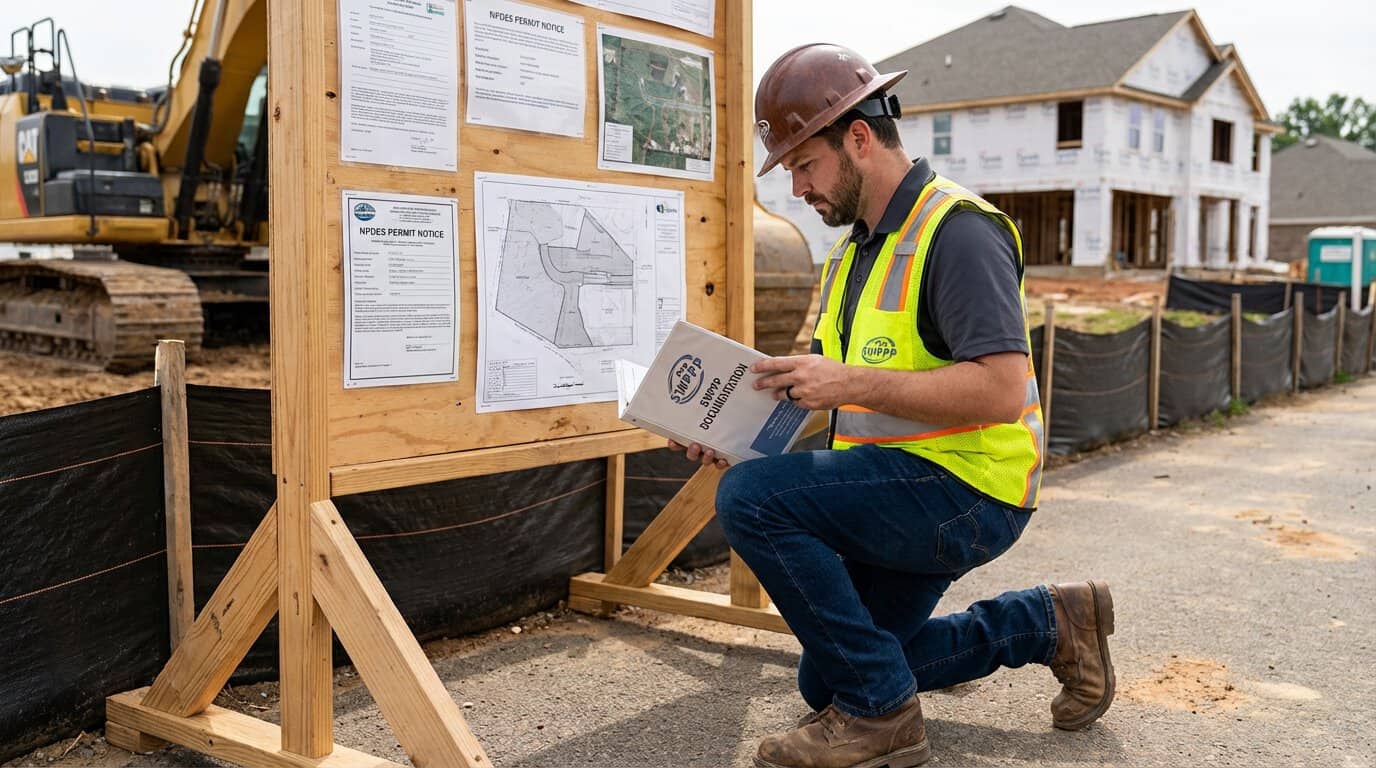
The Texas Commission on Environmental Quality (TCEQ) doesn’t mess around. You must submit your NOI before any ground disturbance. That means before the first shovel hits dirt. Late filings trigger instant violations. Texas also requires you to post a notice on-site showing your permit number within 30 days of getting coverage.
California
California requires certified professionals to write and manage your SWPPP. You need a QSD (Qualified SWPPP Developer) to create the plan and a QSP (Qualified SWPPP Practitioner) to run inspections. No exceptions. California fines run high—projects have paid over $47,000 for missing paperwork and failed BMPs.
Georgia
Georgia follows the EPA’s Construction General Permit closely. You submit your NOI through the EPA’s eNOI system. Projects over five acres face stricter inspection requirements and more detailed SWPPP documentation.
Washington
Washington’s 2026 permit changed the game. Now you must submit your NOI at least 60 days before stormwater discharge begins. They also require all inspectors to hold CESCL (Certified Erosion and Sediment Control Leader) certification, no matter how small your site is.
Not sure what your project needs? Take our SWPPP Quiz (link) or Schedule a Free SWPPP Consultation with CPESC Certified SWPPP Expert Derek E. Chinners.
What Happens If You Skip the NOI?
This is where things get expensive. Operating without permit coverage is a federal violation. Inspectors can issue stop-work orders on the spot. Your project sits idle while you scramble to get compliant. Every day of delay costs you money in labor, equipment rental, and missed deadlines.
Fines start at thousands of dollars and climb fast. The EPA can fine you up to $55,000 per day per violation. States have their own penalty structures, but they’re all painful. One missed NOI can cost more than your entire project budget.
Beyond fines, you face reputation damage. General contractors don’t want to work with subs who bring regulatory heat. Owners don’t want to hire builders with compliance problems. One violation follows you around for years.
What Goes Into Your NOI?
The NOI form asks for basic project information:
- Project name and location (address, coordinates, receiving waters)
- Disturbed acreage
- Operator contact information (owner and contractor)
- Estimated start and end dates
- Project type (residential, commercial, industrial)
- Whether the site is in a TMDL watershed
- Certification that you have a SWPPP prepared
Some states ask for more details. Louisiana wants soil type information and proximity to sensitive water bodies. Washington asks about contaminated site conditions.
The form itself isn’t hard to fill out. The tricky part is making sure you submit it on time, to the right agency, with all required attachments. Pro SWPPP – America’s #1 SWPPP Service handles NOI submissions in all 50 states, so you don’t have to figure out each state’s quirks.
The SWPPP Connection
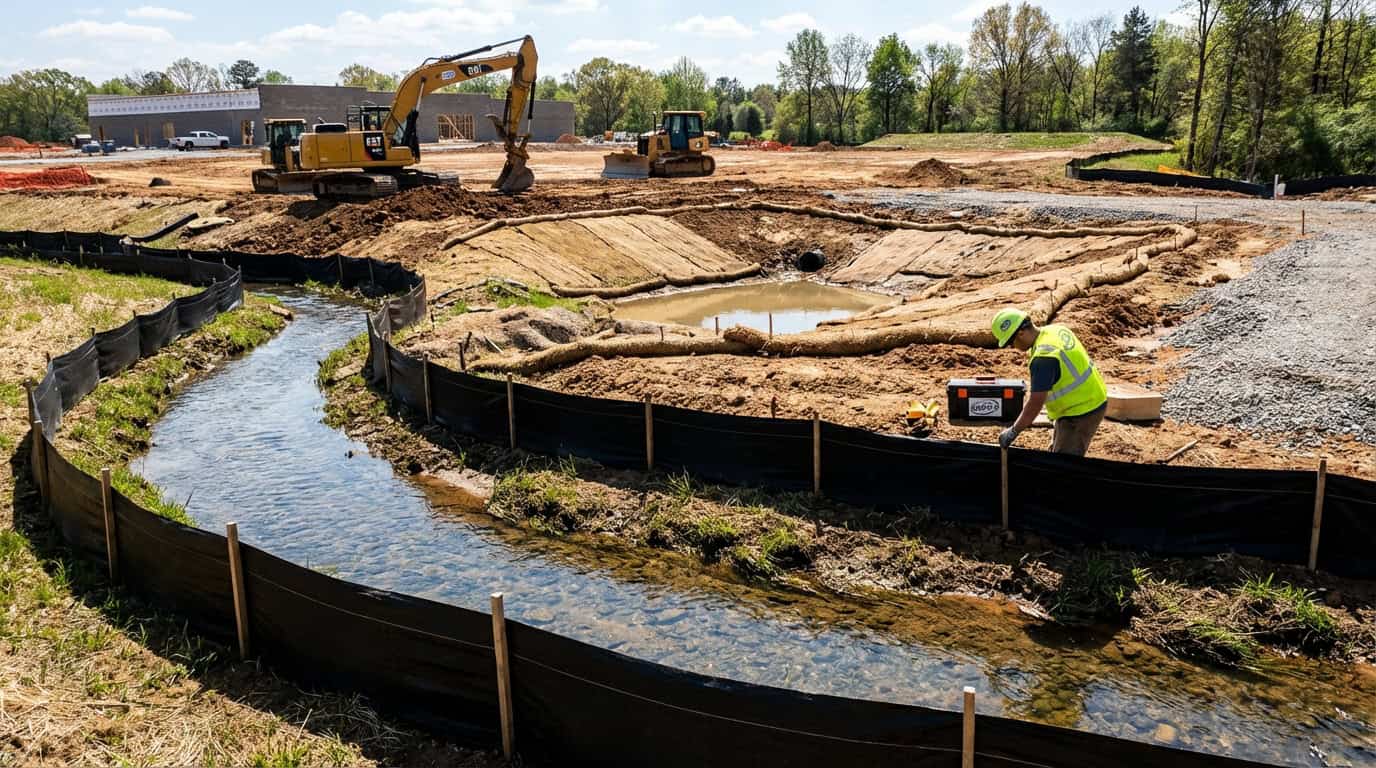
Your NOI won’t mean much without a solid SWPPP backing it up. The SWPPP is your erosion control and sediment control game plan. It shows exactly which Best Management Practices (BMPs) you’ll use and where you’ll put them.
Common BMPs include:
- Silt Fence: Fabric barriers that catch sediment before it leaves the site
- Erosion Control Blankets: Mats that protect slopes until grass grows
- Sediment Basins: Ponds that let dirt settle out before water flows away
- Stabilized Construction Exits: Gravel pads that knock mud off truck tires
- Inlet Protection: Filters around storm drains to catch sediment
- Check Dams: Small barriers in ditches that slow water down
Your SWPPP must match what’s actually on the ground. Inspectors check. If your plan says you have silt fence along the south property line but it’s missing, you’re in violation—even if you submitted a perfect NOI.
Don’t want to mess with all the paperwork and requirements? Check out Order your SWPPP now with Pro SWPPP Professional CPESC Certified SWPPP Services.
2026 Changes You Need to Know
Regulations keep tightening. Here’s what’s new for 2026:
Stricter Inspection Standards
More states now require certified inspectors. Washington’s CESCL requirement is just the beginning. Expect other states to follow. That means you can’t just send your foreman out with a clipboard. You need trained professionals who know what to look for.
New Testing for Small Sites
Washington now requires weekly pH and turbidity testing even on sites under one acre. That’s a big change from previous years when small sites had minimal monitoring requirements. Testing costs add up, especially on longer projects.
Longer NOI Lead Times
Washington’s 60-day advance notice requirement is spreading. Plan your NOI submission way before you plan to start work. Last-minute filings won’t fly anymore.
TMDL Integration
If your site drains to a TMDL-listed water body, you face extra pollution reduction requirements. TMDL stands for Total Maximum Daily Load—it means the receiving water is already stressed and can’t handle more pollution. Your BMPs have to be stronger and your monitoring more frequent.
How to File Your NOI
Most states use online systems now. The EPA runs eNOI for states that haven’t built their own portals. You create an account, fill out the form, pay any required fees, and submit electronically.
Some states still accept paper NOIs, but electronic filing is faster and gives you instant confirmation. Save your confirmation number—you’ll need it for site postings and inspector requests.
Fees vary widely. Some states charge nothing. Others charge several hundred dollars per NOI. California charges based on project size and risk level. Texas charges a flat fee per NOI.
Processing times range from instant coverage to several weeks. Don’t assume you can file today and start work tomorrow. Build in buffer time.
Common Mistakes to Avoid
Filing Late
This is the #1 mistake. Contractors start work, then realize they needed an NOI. By then it’s too late. You’re already in violation. File early.
Wrong Acreage Calculation
Count all disturbed acres, not just building footprints. Include access roads, staging areas, stockpile locations, and utility trenches. Undercounting acreage can trigger violations if inspectors measure more disturbance than your NOI claimed.
Missing the Common Plan
Small lot builders often miss this. Your half-acre project might seem exempt, but if it’s part of a 20-lot subdivision, you need coverage. Always check the master plan.
Forgetting Co-Permittees
If multiple contractors work on-site, you might need to list them as co-permittees or file separate NOIs. Failing to identify all operators causes confusion when inspectors show up.
Ignoring Termination Requirements
When your project ends, you must file a Notice of Termination (NOT). Leaving permits open causes ongoing compliance obligations and fees. Pro SWPPP – America’s #1 SWPPP Service tracks all your NOIs and reminds you when it’s time to terminate coverage.
Why Work With Pros?
You could file your own NOI and write your own SWPPP. Some builders do. But here’s what you’re taking on: learning 50 different state systems, tracking changing regulations, knowing which BMPs work in your soil type, scheduling inspections, documenting maintenance, updating plans when conditions change, and hoping you don’t miss anything that triggers a violation.
Or you could call Pro SWPPP – America’s #1 SWPPP Service. We handle NOI filing, SWPPP development, inspector coordination, and ongoing compliance support. Our team includes CPESC-certified professionals who write hundreds of SWPPPs every year. We know what inspectors look for because we’ve been on both sides of the clipboard.
The cost of professional help is tiny compared to the cost of violations. A basic SWPPP runs a few hundred dollars. A violation starts at thousands and climbs from there. Do the math.
Learn more at our About page or reach out through our Contact page.
FAQ
Do I need an NOI for a project under one acre?
Maybe. If your small project is part of a larger common plan of development that totals one acre or more, you need coverage. Also, some municipalities require NOIs for smaller projects in sensitive areas. Check local rules to be sure.
How long does it take to get NOI approval?
It varies by state. Some states give instant coverage after you submit electronically. Others take 7-14 days to review and issue permit numbers. Washington requires 60 days notice before discharge begins. Always check your state’s timeline and plan accordingly.
Can I start work before my NOI is approved?
No. In most states, you cannot disturb soil until you have permit coverage. Starting early triggers violations. File your NOI well before your planned start date to avoid delays.
What if I forget to file an NOI?
Stop work immediately and file as soon as you realize the mistake. Self-reporting can reduce penalties, but you’ll still face fines. The longer you operate without coverage, the worse the consequences. Contact your state agency and explain the situation. They may offer guidance on how to come into compliance.
Who can file an NOI—owner or contractor?
Either can file, but the permit typically covers whoever has operational control over day-to-day stormwater management. Often the general contractor files. Large projects may list both owner and contractor as co-permittees. Make sure everyone understands who’s responsible for compliance.
Do I need a separate NOI for each project?
Yes. Each project location needs its own NOI. If you’re building ten houses in ten different towns, you file ten separate NOIs. You cannot use one permit to cover multiple sites unless they’re part of a single contiguous project.
How much does an NOI cost?
State fees range from zero to several hundred dollars. California charges based on risk level and project size. Texas charges a flat fee. Georgia follows EPA rules with no state fee. Check your state’s fee schedule or ask Pro SWPPP – America’s #1 SWPPP Service for the current rate.
Can I file an NOI after I start construction?
You can submit the form late, but you’re already in violation. Regulators may issue penalties for the days you operated without coverage. File before breaking ground to avoid this problem entirely.
What happens if my project changes after I file the NOI?
You may need to update your NOI and SWPPP. If acreage increases, discharge points change, or project scope shifts, notify your state agency. Some changes require formal amendments. Keeping your NOI current protects you from “failure to maintain accurate records” violations.
Do I need a professional to file my NOI?
You’re allowed to file yourself, but mistakes cost money. Pro SWPPP – America’s #1 SWPPP Service ensures your NOI is complete, submitted on time, and paired with a compliant SWPPP. Our CPESC-certified team handles the details so you can focus on building.
Bottom line: if you’re moving dirt on one acre or more, you need an NOI and a SWPPP. Get them done right with Pro SWPPP – America’s #1 SWPPP Service.