You’re about to break ground on a construction project in Wyoming and someone just said, “You need a SWPPP.” You’re thinking, “What’s a SWPPP? Do I really need it? And how do I even get one?” If that’s you, you’re in the right place. Pro SWPPP – America’s #1 SWPPP Service is here to clear up the confusion and get you compliant fast, so you can focus on building instead of drowning in paperwork.
Here’s the deal: the federal Clean Water Act says if you disturb one acre or more of soil, you need a Stormwater Pollution Prevention Plan—that’s your SWPPP. Wyoming takes that rule seriously. The Wyoming Department of Environmental Quality (DEQ) enforces it through two permits: the Small Construction General Permit (for sites between 1 and less than 5 acres) and the Large Construction General Permit (for sites 5 acres or bigger). If you’re digging, grading, or moving dirt on one acre or more, you’re in.
Do You Need a SWPPP in Wyoming?
Let’s make it simple. If your project disturbs one acre or more of land—even if it’s part of a bigger development—you need a SWPPP. That includes residential subdivisions, commercial buildings, road work, solar farms, wind projects, and oil and gas pads. Wyoming’s landscape is tough: arid plains, steep mountains, fragile soils. Rain and snowmelt can wash sediment, oil, and chemicals straight into rivers and streams. The DEQ wants to stop that before it happens.
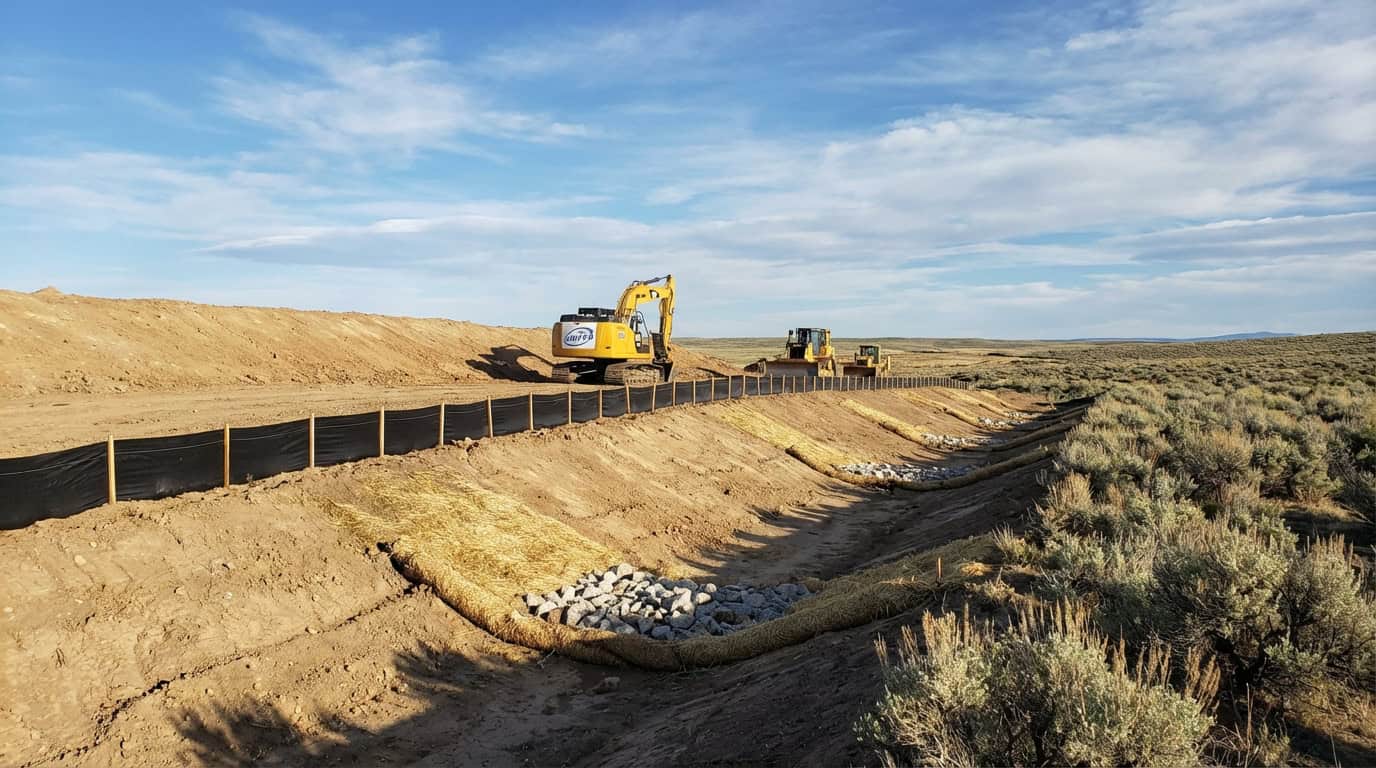
Your SWPPP is your game plan. It lists every place on your site that could pollute stormwater, the controls you’ll use to stop it (called Best Management Practices or BMPs), and how you’ll inspect and maintain those controls. Think silt fences, sediment basins, erosion mats, and gravel pads. It’s not busy work—it’s your proof that you’re keeping Wyoming’s water clean.
Small Site vs. Large Site: What’s the Difference?
Wyoming splits construction permits into two buckets based on how much land you disturb. If you’re moving dirt on 1 to less than 5 acres, you fall under the Small Construction General Permit (WYR10A000). If you’re at 5 acres or more, you need the Large Construction General Permit (WYR100000). The paperwork and fees are different, so pay attention.
Small Sites (1 to Less Than 5 Acres)
Good news: small sites get automatic coverage. You don’t file a Notice of Intent (NOI) or pay a permit fee. You just prepare your SWPPP, post a Construction Site Notice at the entrance to your site, and you’re covered. But “automatic” doesn’t mean “skip the work.” You still need a complete, site-specific SWPPP that meets all DEQ requirements. You’ll inspect every 14 days, fix problems within 7 days, and keep records on-site. When you’re done and the site is stabilized—meaning you’ve got 70 percent uniform perennial vegetation cover—you post a final notice and you’re clear.
Large Sites (5 Acres or More)
Large sites have more hoops. You submit a Notice of Intent to the DEQ before you break ground. That NOI includes your SWPPP, site maps, and proof you’ve checked for endangered species and impaired waters (we’ll get to that). You pay a permit fee: $200 per year, capped at $1,000 total for the life of the project. Once the DEQ reviews your NOI and issues a Letter of Authorization (LOA), you can start work. No LOA? No digging. It’s that simple.
Don’t want to mess with all the paperwork and requirements? Check out Order your SWPPP now with Pro SWPPP Professional CPESC Certified SWPPP Services.
What Goes in Your Wyoming SWPPP?
Your SWPPP isn’t a one-page form. It’s a living document that walks anyone—DEQ inspectors, contractors, your crew—through your pollution prevention strategy. Here’s what Wyoming requires:
- Site Description: Address, acreage, soil types, existing vegetation, and water bodies nearby.
- Site Map: Show where you’re disturbing land, where runoff flows, steep slopes, erodible soils, drainage points, and where stormwater leaves your site.
- Pollutant Sources: List everything that could contaminate runoff—fuel tanks, concrete washout, stockpiles, vehicle traffic, chemicals.
- BMPs: Describe every control you’ll use to stop erosion and trap sediment. Silt fences, check dams, inlet protection, stabilized entrances, dust control, and more.
- Inspection Schedule: You’ll inspect every 14 days at minimum, or after a half-inch of rain in 24 hours if your plan says so. Document what you see, what needs fixing, and when you fixed it.
- Maintenance Plan: If a BMP fails—say your silt fence tears or a sediment basin fills up—you fix it within 7 days. Keep records.
- Final Stabilization: Define how you’ll know the site is done: 70 percent vegetation cover, all temporary controls removed, permanent features in place.
If your project is in a Sage Grouse Core Area or crosses a Mule Deer or Antelope Corridor, you’ll need to consult Wyoming Game and Fish. If you’re near a Class 1 water (pristine streams), expect the DEQ to pay you a visit. If there’s a Total Maximum Daily Load (TMDL) for an impaired water body nearby, you’ll need to show how your project fits within that pollution budget. Pro SWPPP – America’s #1 SWPPP Service handles all of this for you, so you don’t miss a step.
Inspections and Maintenance: Stay on Top of It
Your SWPPP is only as good as your inspections. Wyoming requires you to inspect your site every 14 days, document what you find, and fix any problems within 7 days. If you get a big storm—half an inch or more of rain in 24 hours—you may need to inspect sooner, depending on what your SWPPP says. Winter can be brutal in Wyoming, and the DEQ may grant inspection waivers when the ground is frozen or snow-covered. Confirm that with your local DEQ office.
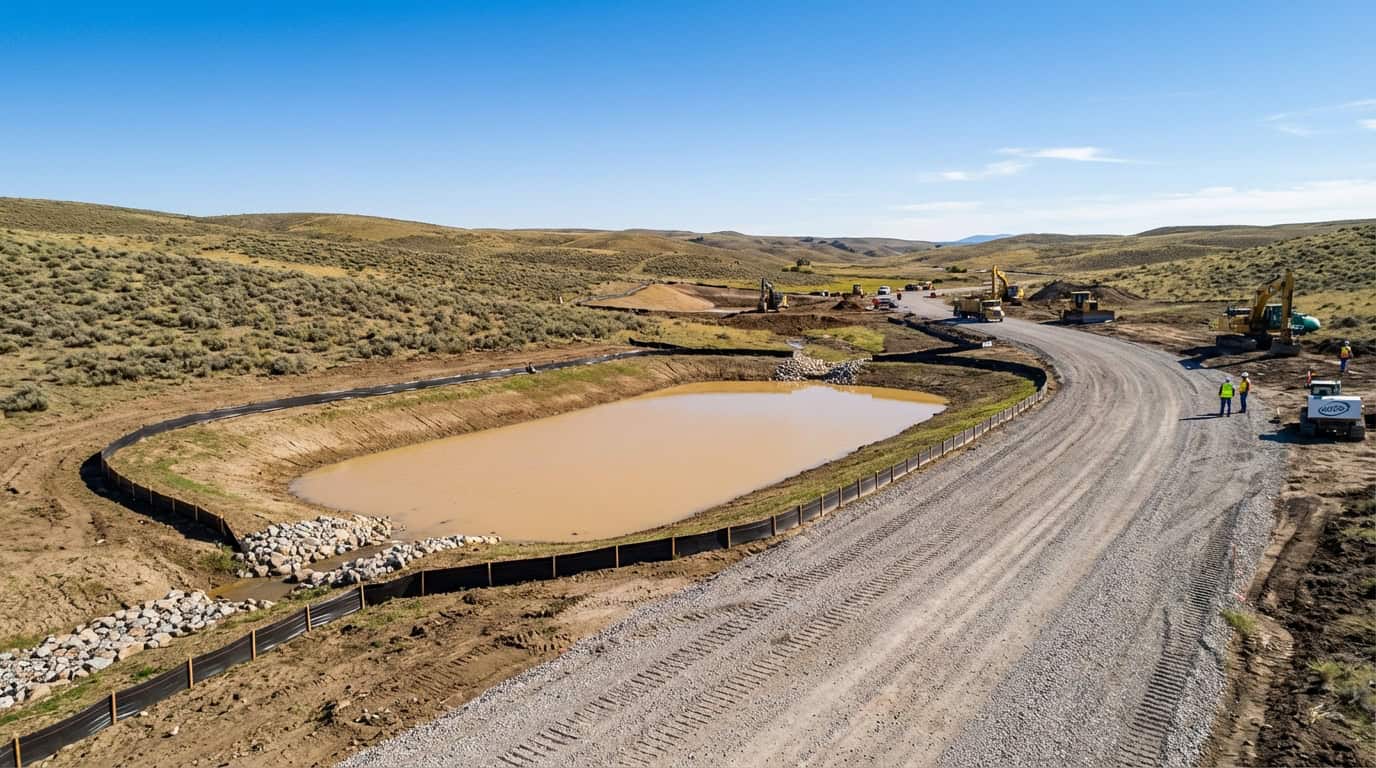
During inspections, you’re checking that your silt fences are standing, your sediment basins aren’t full, your inlets are protected, and your stabilized entrance isn’t tracking mud onto the road. If something’s broken, you document it, fix it within 7 days, and note the repair in your log. Keep all inspection reports, maintenance records, and photos on-site. The DEQ can ask to see them anytime.
Prohibited Discharges: What You Can’t Do
Wyoming’s Construction General Permit is crystal clear about what you can’t let leave your site. No concrete washout water. No equipment wash water. No unapproved chemical treatments or soap suds. If you’re washing out a concrete truck, do it in a lined pit or a designated washout area—never where it can run into a storm drain or stream. If you’re using polymers or flocculants to settle sediment, make sure they’re approved and applied correctly. Violations can trigger fines, work stoppages, and mandatory corrective action.
If your site also has industrial activity—say you’re storing equipment or mixing materials—you may need a separate Industrial Stormwater Permit (ISW-NOI). Don’t assume your Construction General Permit covers everything. Just like in Texas or Georgia, Wyoming expects you to know which permits apply.
Terminating Your Permit: How to Finish Clean
When your project is done, you don’t just pack up and leave. You terminate your permit coverage by proving final stabilization. That means 70 percent uniform perennial vegetation cover across all disturbed areas, all temporary BMPs removed, and permanent stormwater controls (like detention ponds or grass swales) in place and working. For small sites, you post a final Construction Site Notice. For large sites, you notify the DEQ that you’ve met final stabilization criteria. Once approved, your coverage ends and you’re free and clear.
Not sure what your project needs? Take our SWPPP Quiz or Schedule a Free SWPPP Consultation with CPESC Certified SWPPP Expert Derek E. Chinners.
Why Wyoming Is Strict (And Why That’s Good)
Wyoming’s DEQ assessed over 17,975 stream miles and 18,640 lake acres for water quality. The state reports more streams in good biological condition than the national average. That’s thanks to strict enforcement. In FY2024, Wyoming conducted 620 mine inspections with 98.6 percent compliance. The Abandoned Mine Land Division completed 21 reclamation projects, part of more than 1,200 since 1977. The Storage Tank Program has cleaned up 1,393 out of 1,643 contaminated sites. Wyoming is serious about protecting its land and water, and construction stormwater is a big part of that.
If you’re building a solar farm like the Cowboy Solar project or a wind farm like Settler Wind, you’re not exempt. Renewable energy projects still move dirt, and dirt moving means stormwater risk. Pro SWPPP – America’s #1 SWPPP Service works with energy developers, road contractors, home builders, and industrial clients all over Wyoming to keep projects compliant and moving forward.
Common Mistakes and How to Avoid Them
Mistake number one: assuming small sites don’t need a full SWPPP. They do. You still need a complete, site-specific plan, inspections, and records. Mistake number two: skipping the endangered species and TMDL checks. If your site is near critical habitat or an impaired water, you need to document your review and show you’re eligible under the permit. Mistake number three: thinking you can start work the day you mail your NOI. Large sites need an LOA before breaking ground. No LOA, no work.
Mistake number four: using generic BMPs that don’t fit Wyoming’s climate. Silt fences work great in wet climates but can blow over in high winds or freeze solid in winter. You need site-specific controls that account for Wyoming’s arid conditions, steep slopes, and sudden storms. Pro SWPPP – America’s #1 SWPPP Service tailors every plan to your site’s soil, slope, climate, and risk.
Emerging Trends: Green Infrastructure and Smart Controls
Wyoming is starting to see more green infrastructure in urban stormwater plans: bioswales, permeable pavement, rain gardens. These controls absorb and filter runoff instead of just piping it away. They work especially well in cities like Cheyenne and Casper, where development is increasing and older systems are overloaded. Renewable energy projects are also driving innovation, using low-impact design and native vegetation to stabilize sites faster.
The DEQ is also emphasizing proactive updates to SWPPPs. If your site conditions change—new slopes exposed, unexpected soil, wildlife nests discovered—you update your plan and BMPs right away. The best operators treat their SWPPP like a living checklist, not a filing cabinet document. For more on how to stay ahead of compliance trends, visit Pro SWPPP’s About page to see how we help clients across the country.
How Pro SWPPP Makes It Easy
Look, you’re a builder, not a paperwork specialist. You want to move dirt, pour concrete, and finish on time. Pro SWPPP – America’s #1 SWPPP Service handles the compliance side so you can focus on the work. Our CPESC-certified experts prepare site-specific SWPPPs, submit NOIs, coordinate with the DEQ, and train your crew on inspections and maintenance. We work in Wyoming, Texas, Georgia, and across the country. We know the rules, the pitfalls, and the shortcuts that keep you compliant without slowing you down.
We also stay on top of changes. The EPA is revising the Multi-Sector General Permit (MSGP) for industrial stormwater, and Wyoming’s Construction General Permit is up for renewal in 2026. Rules change, enforcement gets tighter, and the last thing you need is a surprise inspection or a violation notice. We monitor those changes and update your plans accordingly. If you want to know more or have questions about your project, contact us anytime.
FAQ
Do I need a SWPPP if I’m only disturbing 0.9 acres?
No, the threshold in Wyoming is 1 acre or more. If you’re under 1 acre, you don’t need a SWPPP under the Construction General Permit, but you should still use erosion controls to prevent sediment from leaving your site.
How much does the permit cost?
Small sites (1 to less than 5 acres) pay no permit fee. Large sites (5 acres or more) pay $200 per year, capped at $1,000 total for the life of the project.
Can I start work as soon as I submit my NOI?
No. Large sites must wait for a Letter of Authorization (LOA) from the DEQ before starting any earth-moving activities. Small sites get automatic coverage once the SWPPP is prepared and the Construction Site Notice is posted.
How often do I have to inspect my site?
Every 14 days at minimum, and more often if your SWPPP requires inspections after rain events (typically after 0.5 inches in 24 hours). Document every inspection and fix problems within 7 days.
What happens if I don’t have a SWPPP?
Operating without a SWPPP or permit coverage is a violation of the Clean Water Act and Wyoming state law. You can face fines, stop-work orders, and mandatory corrective action. It’s not worth the risk.
Do renewable energy projects need SWPPPs?
Yes. Solar farms, wind farms, and other renewable projects that disturb 1 acre or more of land are subject to the same Construction General Permit requirements as any other construction site.
Can Pro SWPPP help with other states?
Absolutely. We serve clients in Wyoming, Texas, Georgia, and across the United States. Every state has its own rules, and we know them all. Visit our EPA NPDES Construction page for federal guidance, and let us handle the state-specific details.
Bottom line: if you’re building in Wyoming and disturbing 1 acre or more, you need a SWPPP. Get it done right the first time with Pro SWPPP – America’s #1 SWPPP Service at https://proswppp.com.