Pro SWPPP – America’s #1 SWPPP Service knows that solar farm builders face a big problem. You want to break ground fast, but stormwater rules can stop you cold. Miss one filing and you risk fines, delays, or worse.
Solar farms are booming across the country. That’s great news for clean energy. But every site that disturbs one acre or more needs a plan to keep dirt and sediment out of streams and wetlands. That plan is called a Stormwater Pollution Prevention Plan, or SWPPP.
This guide cuts through the jargon. You’ll learn when you need a SWPPP, when you need a Notice of Intent (NOI), and how state rules differ. We’ll also cover best practices so your project stays on track and stays legal.
Do You Need a SWPPP for Your Solar Farm?
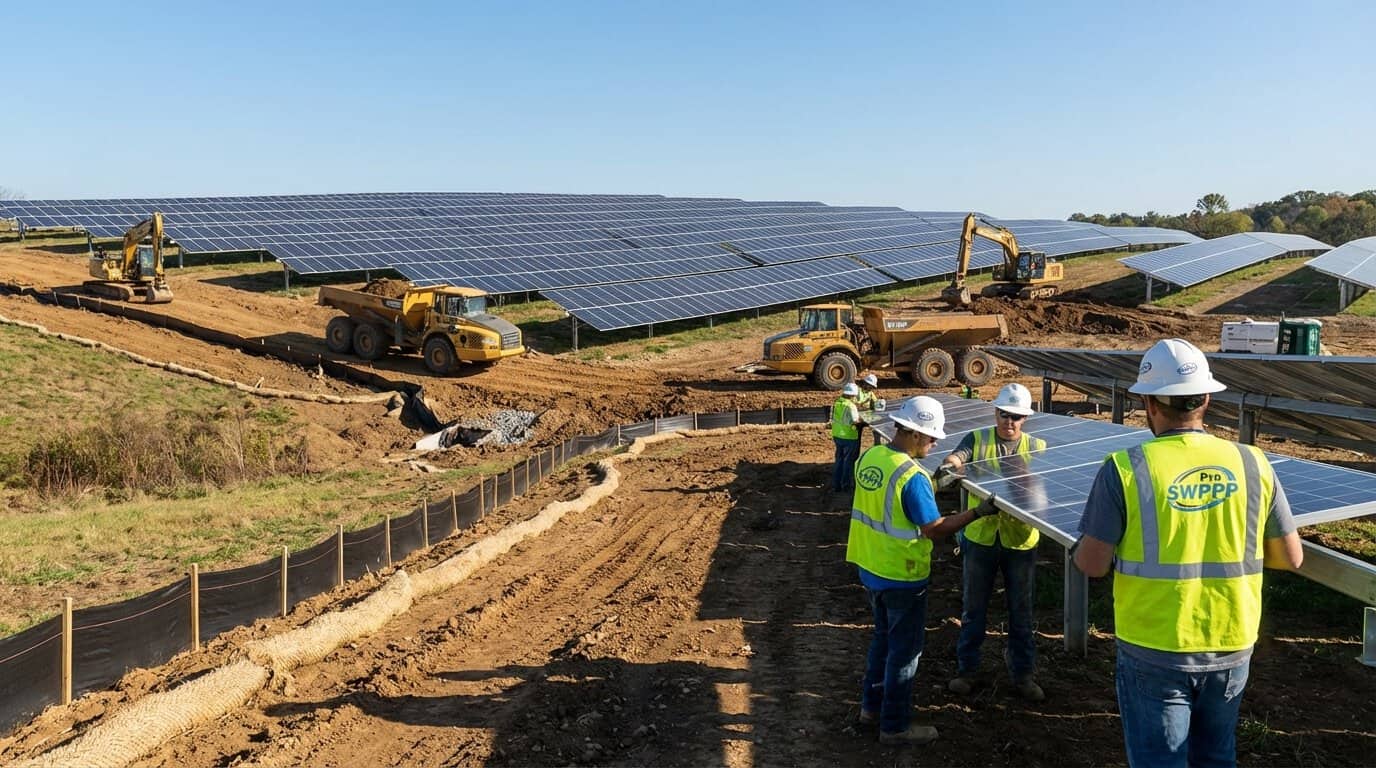
Yes, if you disturb one acre or more. The Clean Water Act Section 402(p) requires a Construction General Permit (CGP) from the EPA or your state. The CGP says you must write a SWPPP before you start work.
Even if your panel footprint is small, you count all the area you clear, grade, or dig. That includes access roads, trenches for cables, and staging areas. One acre adds up fast.
A SWPPP is your roadmap. It tells inspectors which Best Management Practices (BMPs) you’ll use to stop soil from washing away. Common BMPs include silt fences, sediment basins, and temporary seeding.
What Is an NOI?
A Notice of Intent is a short form you file with the EPA or your state before construction starts. It tells regulators you intend to follow the CGP and your SWPPP. Think of it as your project’s official handshake with the government.
You submit the NOI at least seven days before breaking ground. Some states want 30 days. Miss that deadline and you can’t legally start.
When You Need Both
Most solar farm builders file an NOI and write a SWPPP. The NOI is paperwork. The SWPPP is your on-site manual. You keep the SWPPP at the job site and update it when conditions change.
Some states let you use a general permit without an individual NOI if your disturbance is tiny. Always check local rules first.
NPDES vs. State Permits
The National Pollutant Discharge Elimination System (NPDES) is the federal framework. Most states run their own version of the NPDES program. That means you file with your state agency, not the EPA.
For example, Texas calls it the TCEQ Construction General Permit. Georgia has its own forms under the Georgia Environmental Protection Division. New York uses SPDES General Permit GP-0-20-001 for solar projects.
Each state tweaks the rules. Some require extra inspections after rain. Others set strict timelines for stabilizing bare soil. If you build in multiple states, you juggle multiple playbooks.
Don’t want to mess with all the paperwork and requirements? Order your SWPPP now with Pro SWPPP Professional CPESC Certified SWPPP Services.
State-by-State Quick Look
Texas TCEQ Rules
In Texas, any construction site one acre or larger needs a TCEQ permit and SWPPP. You file an NOI with the TCEQ and pay a fee. Inspections are required every seven days and within 24 hours of a half-inch rain event.
TCEQ also wants a site map, a description of potential pollutants, and a maintenance schedule for your BMPs. For a deeper dive, see our complete guide to Texas SWPPP requirements.
Georgia EPD Rules
Georgia mirrors the federal CGP but adds its own inspection windows. You must conduct inspections every seven calendar days. After a storm that dumps half an inch or more, you inspect within 24 hours.
Georgia also emphasizes native vegetation. Stabilize disturbed areas within seven days of final grading. That means seeding or mulching fast.
Pennsylvania, Maryland, and North Carolina
Pennsylvania says you need 90% vegetative cover after construction wraps. Only piles and foundations count as impervious surface if they exceed 5% of the total site. That’s good news for solar farms because panels can be considered pervious if you maintain grass underneath.
Maryland and North Carolina follow similar logic. Panels are pervious when you keep native plants, limit slopes to five or ten degrees, and space rows at least as wide as your panels. That spacing lets rain sheet down naturally instead of concentrating runoff.
Best Practices for Solar Farm Construction
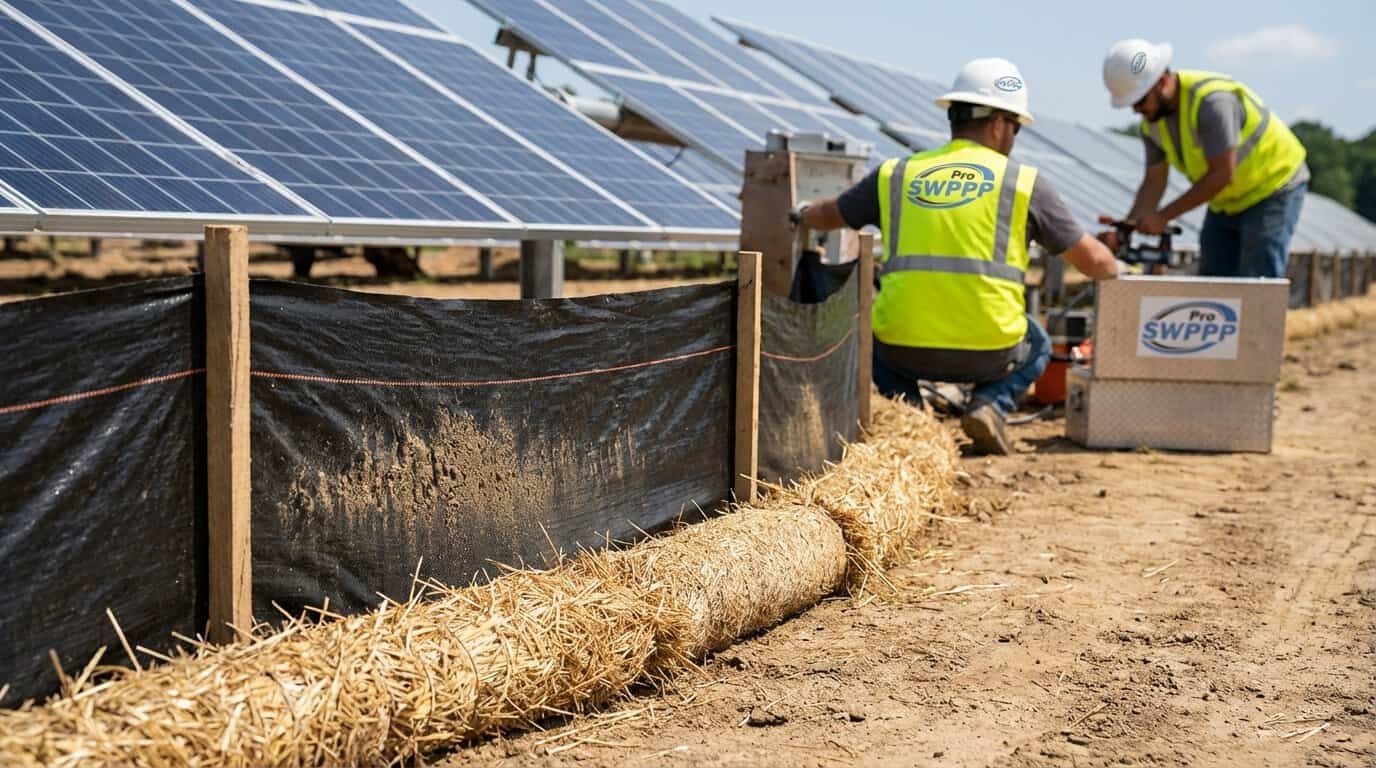
Smart solar builders install perimeter controls before they touch a shovel. Silt fences, straw wattles, and filter socks stop sediment at the property line. Install them first, then clear vegetation and grade.
Minimize Earthwork
Terrain-following trackers are your friend. They let panels ride the natural slope instead of forcing massive cuts and fills. Less grading means less exposed soil and faster stabilization.
Sequence Your Activities
Divert upstream runoff away from your work zone. Then clear only the area you need. Install erosion control barriers. Build your foundations and set panels. Finally, seed and mulch any bare ground within seven days.
Preserve topsoil whenever possible. Stockpile it and spread it back after grading. Topsoil holds moisture and helps grass grow faster.
Stabilize Fast
Most permits give you seven days to stabilize soil after final grade. Use native, low-growing grasses that thrive in your climate. Aim for 70% to 90% vegetative cover across the site.
During construction, temporary seeding or mulch blankets keep soil in place. After the panels go up, permanent seed mixes take over.
Key BMPs at a Glance
- Silt fences and sediment barriers around the perimeter
- Sediment basins or traps in low spots to catch runoff
- Straw wattles or filter socks along slopes and swales
- Temporary seeding or erosion-control blankets on bare soil
- Rock-pad vehicle exits to prevent mud tracking onto public roads
- Regular inspection and maintenance after every rain event
Not sure what your project needs? Take our SWPPP Quiz or Schedule a Free SWPPP Consultation with CPESC Certified SWPPP Expert Derek E. Chinners.
Post-Construction Standards
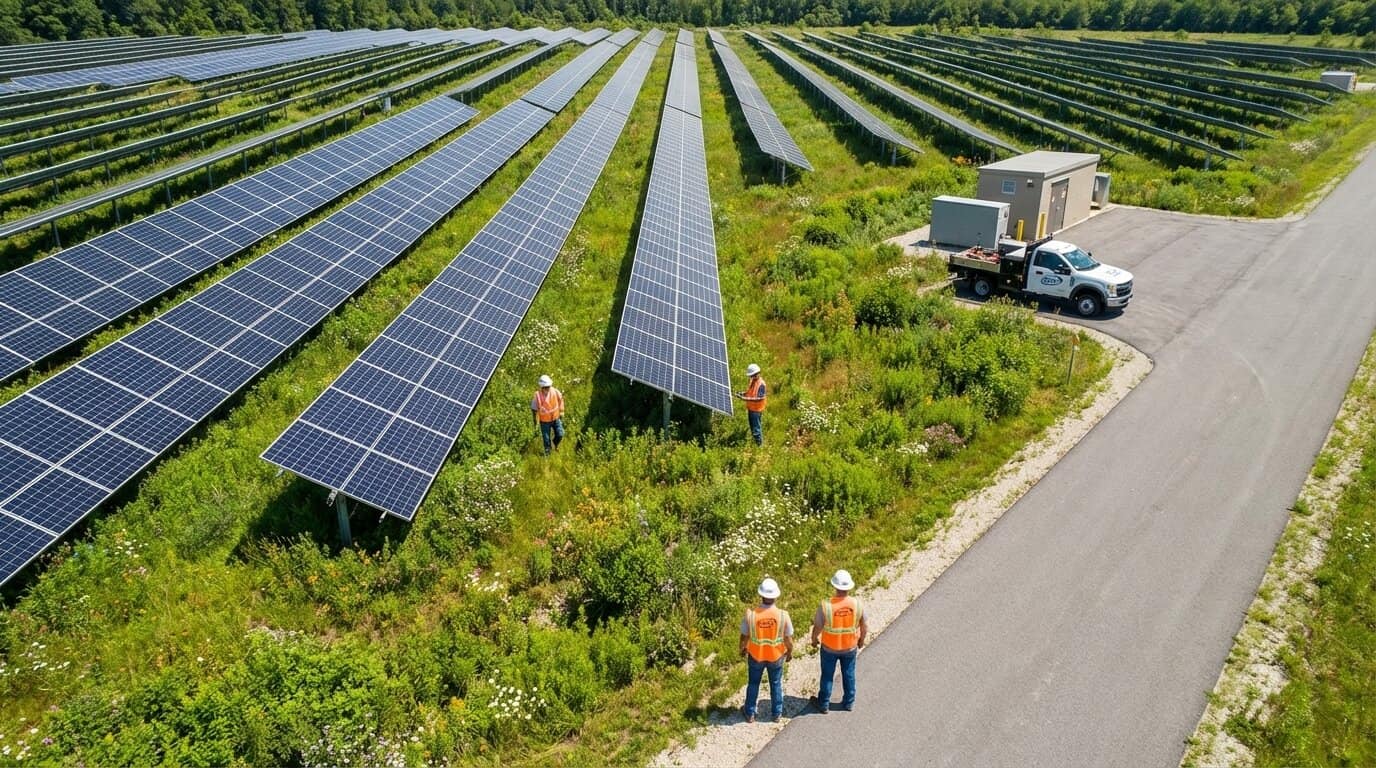
Once your solar farm is built, the SWPPP shifts to long-term care. You want healthy native vegetation under and between panel rows. That grass slows runoff and prevents erosion for decades.
Row Spacing and Ground Clearance
Space your panel rows at least as wide as the table width. Keep panel clearance under ten feet off the ground. This setup lets rain sheet evenly instead of dripping off edges and carving gullies.
Impervious Surface Calculation
Only foundations, piles, and equipment pads count as impervious if they cover more than 5% of the site. Panels themselves are pervious when you maintain vegetation and follow spacing rules.
Model your runoff velocities to confirm you won’t get erosion hotspots. If velocities spike, add more BMPs or adjust row spacing.
Adaptive Management
Check your site every few months. Reseed bare patches. Trim or mow grass so it stays low and healthy. Some farms use sheep grazing under panels to manage vegetation naturally. That’s called agrivoltaics, and it’s gaining traction.
Set aside funds for decommissioning at the end of the project’s life. Some states require bonds to cover removal and site restoration.
Common Challenges and How to Beat Them
Soil Compaction and Runoff Increase
Heavy equipment and panel arrays can compact soil. Compacted soil sheds water faster, increasing runoff. Combat this by limiting equipment travel paths and spacing rows wider to encourage sheet flow.
The Panel Imperviousness Myth
Many people think panels act like rooftops. They can, if you pave everything and let dirt wash away. But with vegetation, gentle slopes, and proper spacing, panels behave more like tree canopy. Rain drips through gaps and soaks into grass.
Wetlands and Floodplains
Avoid building in Special Flood Hazard Areas if you can. If you must work near wetlands, use silt curtains and dewatering BMPs. Check federal and state wetland permits separately from your SWPPP.
The Pro SWPPP Advantage
Pro SWPPP – America’s #1 SWPPP Service has written thousands of plans for solar farms nationwide. Our team includes CPESC-certified professionals who know every state’s quirks. We handle the NOI filing, the SWPPP document, site maps, and BMP schedules so you can focus on building.
Speed and Accuracy
We turn around most SWPPPs in 48 to 72 hours. That means you file your NOI on time and start work on schedule. No waiting weeks for a consultant to get back to you.
State-Specific Expertise
Building in Texas? We know TCEQ forms inside out. Working in Georgia? We’ve filed hundreds of Georgia EPD NOIs. Every plan we write matches local requirements and passes inspection.
Ongoing Support
Regulations change. Weather happens. If you need to update your SWPPP mid-project, we’re here. Our clients get free consultations and amendment support.
Learn more about our team and track record on our About page.
Emerging Trends in Solar Stormwater Management
The industry is moving toward smarter, lighter-touch construction. Single-axis trackers reduce grading. PV-SMaRT research from the Department of Energy shows that best practices can cut runoff by 38% compared to older methods.
Agrivoltaics is growing fast. Sheep graze under panels, keeping grass short without mowers or herbicides. This lowers maintenance costs and improves soil health.
States are writing tailored guidance. Maryland, Pennsylvania, and North Carolina now have solar-specific stormwater rules. Expect more states to follow by 2026.
Multidisciplinary teams are the new standard. Engineers, ecologists, and SWPPP writers work together from day one. That collaboration prevents costly surprises and streamlines permitting.
For federal guidance, check the EPA NPDES Construction page.
Takeaways for Solar Developers
- Any solar farm disturbing one acre or more needs a SWPPP and an NOI.
- Federal rules set the baseline, but state agencies add extra requirements.
- Install perimeter controls first, minimize grading, and stabilize soil within seven days.
- Panels can be pervious if you maintain vegetation, space rows wide, and limit slopes.
- Post-construction care matters. Healthy grass prevents erosion for the life of the project.
- Pro SWPPP – America’s #1 SWPPP Service handles all the paperwork so you stay compliant and on schedule.
Questions or ready to get started? Visit our Contact page or call us today.
FAQ
Do I need a SWPPP in Texas?
Yes, if you disturb one acre or more. Texas requires a TCEQ Construction General Permit, an NOI, and a site-specific SWPPP before you start work.
How soon must I file my NOI?
File at least seven days before construction in most states. Some states require 30 days. Check your state’s CGP for exact deadlines.
Are solar panels considered impervious surface?
Not always. Many states treat panels as pervious if you maintain vegetation, use gentle slopes, and space rows properly. Only foundations and piles over 5% of the site count as impervious.
What happens if I skip the SWPPP?
You risk fines, stop-work orders, and liability for water pollution. Federal penalties start at thousands of dollars per day. State fines add up fast.
Can I write my own SWPPP?
Technically, yes. But mistakes cost more than hiring a pro. Pro SWPPP – America’s #1 SWPPP Service guarantees compliance and fast turnaround so you avoid delays.
How often do I inspect my site?
Most permits require inspections every seven days and within 24 hours of a rain event that drops half an inch or more. Keep logs on site for regulators.
What are the best BMPs for solar farms?
Silt fences, straw wattles, sediment basins, temporary seeding, and erosion-control blankets top the list. Wider row spacing and minimal grading also help.
Do I need separate wetland permits?
Yes, if your site includes wetlands or streams. The SWPPP covers stormwater, but you may need a Section 404 permit from the U.S. Army Corps of Engineers for wetland impacts.
Ready to get started? Order your SWPPP now or schedule a free consultation with Pro SWPPP.
Visit Pro SWPPP and see why thousands of contractors trust America’s #1 SWPPP Service.