When you break ground in Kansas, you need a SWPPP that works. Pro SWPPP – America’s #1 SWPPP Service – has helped contractors across Kansas stay compliant with state stormwater rules. Whether you’re building in Wichita or working on a farm site in Dodge City, we make sure you’re covered. This guide walks you through every part of Kansas stormwater compliance, from the Construction General Permit to industrial facility rules. You’ll learn what forms to file, what inspections to run, and how to avoid costly fines. Let’s get you up to speed.
SWPPP Requirements in Kansas: What You Need to Know
Kansas follows federal Clean Water Act rules but runs its own NPDES program. That means you deal with state forms, state inspectors, and state deadlines. If your project disturbs one acre or more, you need a SWPPP and a permit from the Kansas Department of Health and Environment before you start digging. Smaller sites get a pass unless KDHE flags them as high risk. Industrial facilities that handle exposed materials also need coverage.
Pro SWPPP writes compliant plans for both construction and industrial sites in Kansas. We know the state forms, the KEIMS portal, and the exact BMPs KDHE expects. You don’t have to guess what goes in your plan or worry about missing a deadline. We deliver your SWPPP in 72 hours, and our CPESC-certified team has been doing this for 20+ years nationwide.
Kansas stormwater permits come in two main flavors: the Construction General Permit and the Industrial General Permit. Each has its own Notice of Intent form, annual fee, and inspection schedule. The state stopped accepting paper forms a few years ago, so everything goes through an online system called KEIMS. Once you submit your NOI and your plan is ready, KDHE issues authorization. No authorization means no legal dirt work. The state takes enforcement seriously, and fines can pile up fast if you skip steps.
Kansas Stormwater Regulatory Framework
The Kansas Department of Health and Environment runs the show. Inside KDHE, the Bureau of Water’s Industrial Programs Section handles all stormwater permits. Kansas earned EPA authorization decades ago to manage its own NPDES program under state statute K.S.A. 65-165. That means the state writes the permits, reviews your plans, and sends inspectors. EPA still watches from the sidelines, but day-to-day decisions come from KDHE staff in Topeka.
Kansas rules mirror federal Phase II requirements: one-acre threshold, SWPPP before you start, and BMPs that match 40 CFR 450. The state added its own twists. You pay an annual permit fee invoiced under K.A.R. 28-16-56. You file everything through KEIMS, the state’s online environmental portal. If your site is under one acre but KDHE thinks it could cause pollution, they can require a permit anyway. Municipal separate storm sewer systems, or MS4s, handle local post-construction rules in places like Johnson County.
For questions about your permit, you call Chris Seeds at KDHE: 785-296-5517. The state publishes general guidance, but you won’t find a massive manual like some states offer. Most operators lean on the permit language itself and examples from similar projects. If you want backup, Pro SWPPP can walk you through every requirement and make sure your plan checks every box.
Construction General Permit (CGP) in Kansas
Who Needs Coverage
Any construction site that disturbs one acre or more of land needs a Kansas Construction General Permit. That includes roads, buildings, subdivisions, and utility lines. If your project is part of a larger common plan, you add up all the disturbed acres across the whole plan. A half-acre lot in a ten-acre subdivision still needs a permit. Projects under one acre get a pass unless KDHE sends you a letter saying your site poses pollution risk.
The current CGP took effect August 1, 2022, and runs through July 31, 2027. If you had coverage under the old permit, you had until January 31, 2024, to transition to the new forms. New projects file fresh NOIs using the 2022 permit forms.
What the Permit Covers
Kansas CGP authorization lets you discharge stormwater runoff from your site to waters of the state. It doesn’t cover process water, concrete truck washout, or sewage. You handle those separately. The permit requires you to:
- Write a site-specific SWPPP before submitting your NOI
- Install erosion and sediment controls that meet 40 CFR 450
- Inspect your BMPs every seven days or every 14 days plus after qualifying rain events
- Keep records for at least three years after you file your Notice of Termination
- Update your SWPPP whenever site conditions or operations change
- Pay the annual permit fee when KDHE invoices you
Pro SWPPP writes SWPPPs that meet every line of the Kansas CGP. We include site maps, BMP details, inspection schedules, and maintenance procedures. You get a plan ready to upload to KEIMS and a team that answers your questions through project closeout.
Common Plan of Development Rules
Kansas follows EPA’s common plan rules. If multiple operators work on the same larger project, each one files an NOI. A developer might file for the master grading, while a homebuilder files for individual lots. Everyone shares responsibility for controlling runoff, so your SWPPP needs to show how your work connects to the overall erosion control strategy. Coordination between operators prevents gaps in coverage and keeps inspectors happy.
Industrial Stormwater Permits in Kansas
Which Facilities Need Coverage
Kansas Industrial General Permit S-ISWA-2111-1 covers facilities listed under 40 CFR 122.26(b)(14) or designated by KDHE. That includes manufacturers, quarries, recycling yards, chemical storage sites, and any place that exposes industrial materials to rain or snow. If your facility was operating under an old permit issued before 2006 and never renewed, you must file a new NOI and pay the fee.
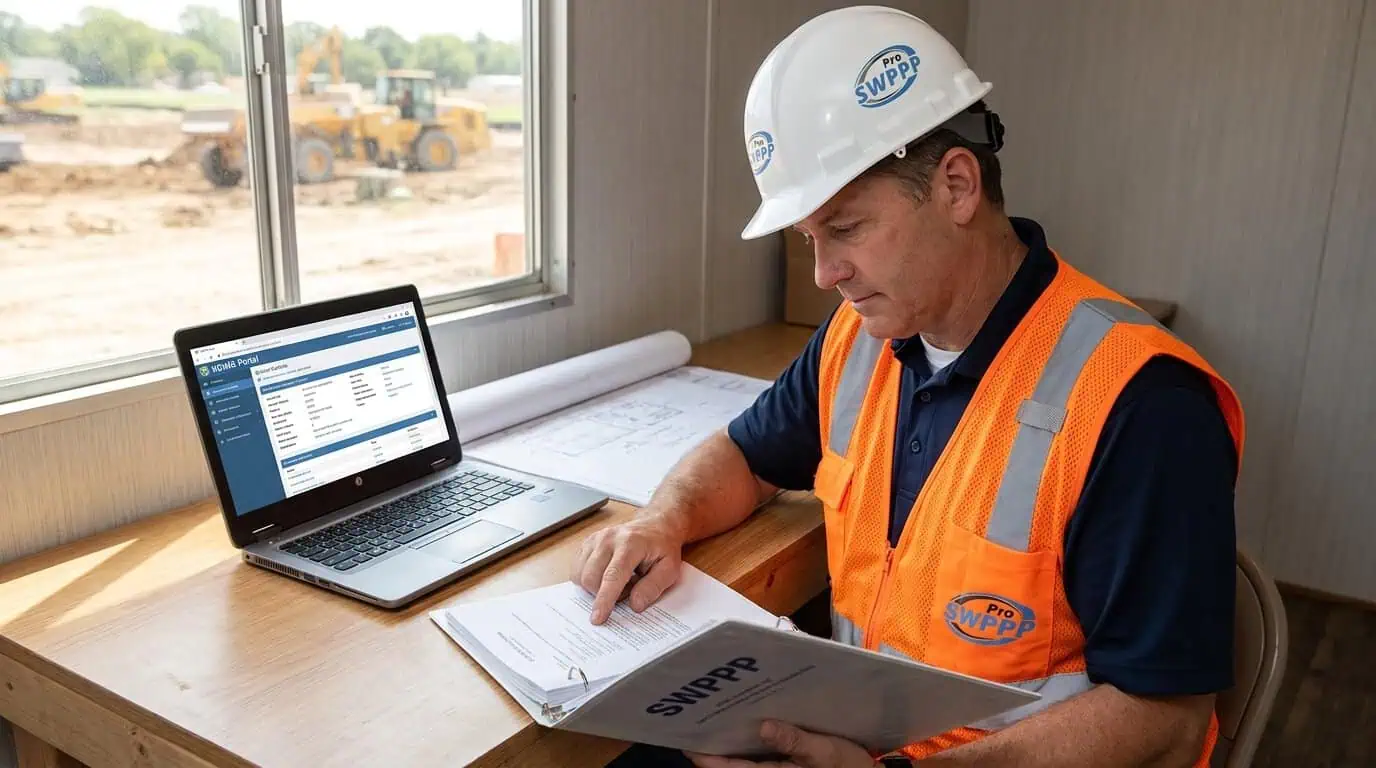
The current IGP runs from November 1, 2021, through October 31, 2026. You develop a facility-specific SWPPP that identifies pollutant sources, outfall locations, and control measures. You don’t need to submit your SWPPP with your NOI, but you keep it on site for inspectors. Visual monitoring, equipment maintenance, and employee training all go in the plan.
Key Differences from Construction Permits
Industrial permits don’t expire when the work is done. Coverage continues as long as the facility operates. You update your SWPPP whenever you add equipment, change materials, or modify drainage. Inspections focus on visual checks of stormwater discharges, not calendar-driven site walks. You still pay annual fees, and you still file through KEIMS.
Pro SWPPP writes industrial plans for quarries, concrete plants, scrap yards, and more. We map your site, identify every potential pollutant, and design controls that fit your operations. Our team includes engineers and certified professionals who understand both Kansas rules and real-world industrial work.
Don’t want to mess with all the paperwork? Order your SWPPP now with Pro SWPPP Professional CPESC Certified SWPPP Services.
Required BMPs for Kansas Construction Sites
Erosion Control Measures
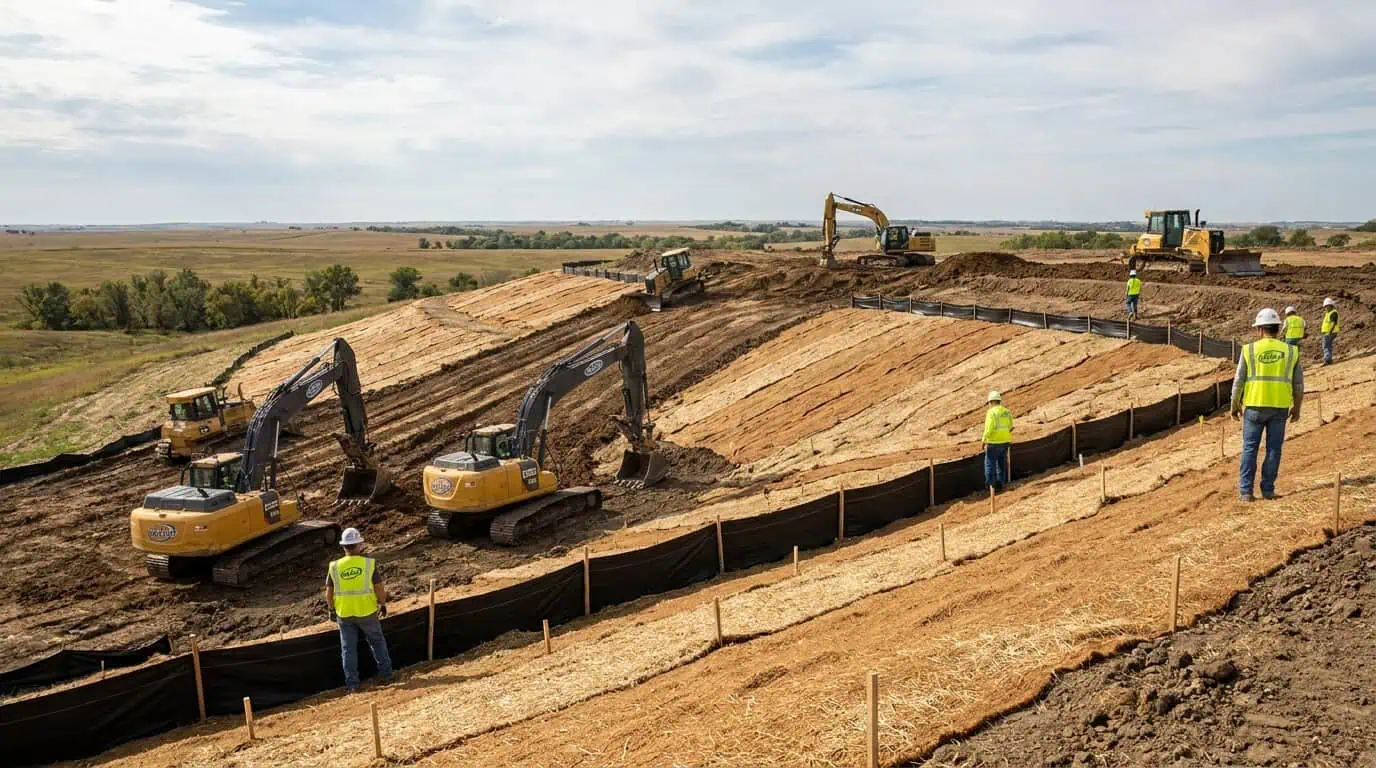
Kansas requires controls that stabilize soil and prevent it from leaving your site. Temporary seeding, erosion control blankets, mulch, and tackifiers all qualify. You phase your grading so you don’t leave acres of bare dirt exposed for months. Steep slopes need extra protection. The goal is to keep soil in place until permanent vegetation or pavement takes over.
You install erosion controls before you start clearing. If rain hits exposed soil before your blankets and seed are down, you’re out of compliance. Inspectors look for bare dirt, rills, and gullies. If they see erosion, they expect you to fix it fast and document the repair in your inspection log.
Sediment Control Measures
Sediment controls catch soil that erodes before it reaches a stream or storm drain. Silt fences, sediment basins, check dams, and inlet protection are standard. Kansas expects these controls at every point where stormwater leaves your site. You size basins to handle runoff from your disturbed area, and you clean them out when sediment fills more than half the volume.
Silt fence installation matters. You trench the fabric into the ground and support it with posts on the downslope side. A fence that falls over or lets water under the fabric doesn’t count. Check dams in ditches need regular maintenance to keep them working. Pro SWPPP details every BMP installation and maintenance step in your plan so your crew knows exactly what to do.
Good Housekeeping and Pollution Prevention
Kansas rules require you to manage waste, control dust, and prevent spills. That means:
- Store chemicals and fuels under cover or in secondary containment
- Clean up spills immediately and document the response
- Wash out concrete trucks in designated areas, never on open ground
- Dispose of construction trash in covered dumpsters
- Train your crew on SWPPP requirements and spill response
These practices prevent pollutants other than sediment from entering stormwater. Oil, paint, concrete wash, and trash all violate your permit if they leave the site. Inspectors check for good housekeeping every time they visit.
State-Specific and Local Requirements
Kansas aligns with federal 40 CFR 450, so you follow EPA’s construction effluent guidelines. Some MS4s add local rules. Johnson County, for example, requires treatment for sites over one acre. Always check city or county stormwater ordinances before you finalize your SWPPP. Pro SWPPP tracks local rules across Kansas and builds them into your plan automatically.
SWPPP Inspection Requirements in Kansas
Inspection Frequency
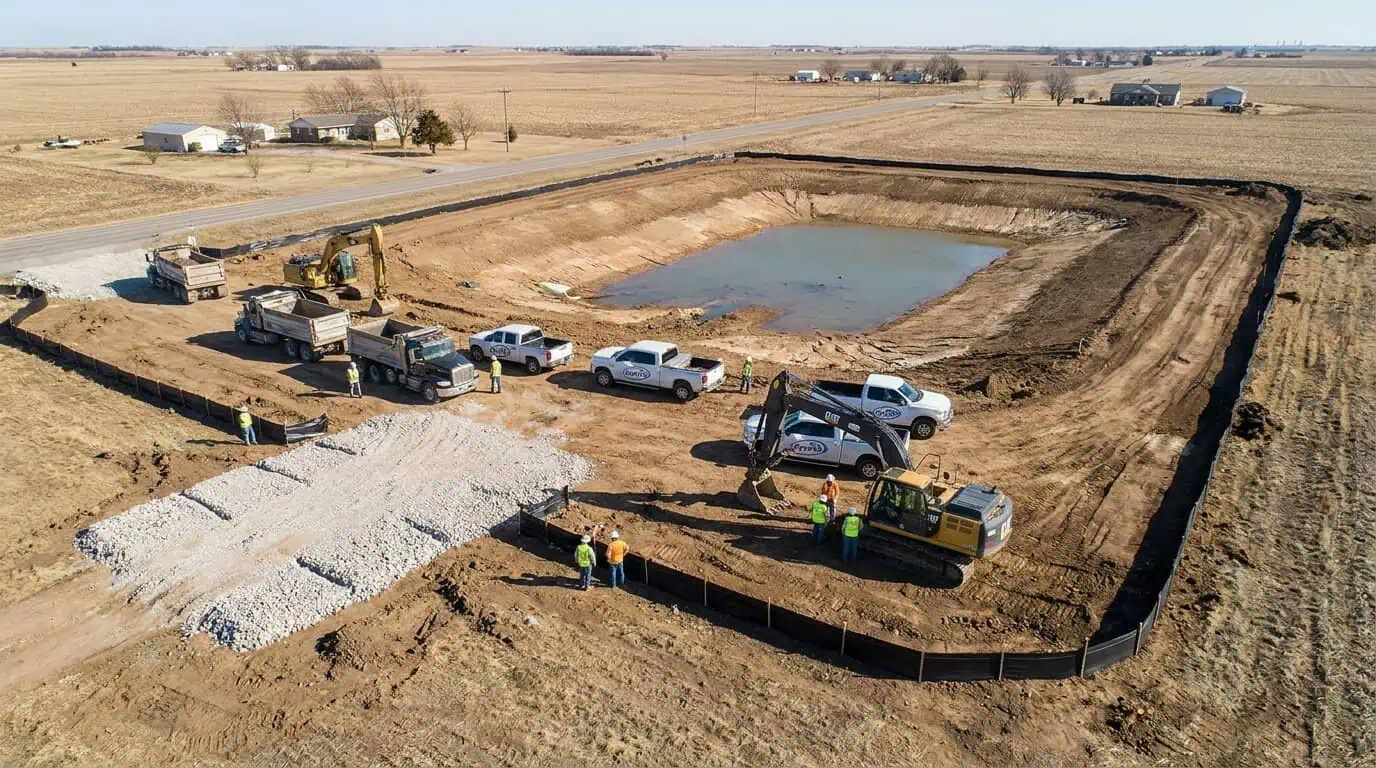
Kansas CGP requires qualified personnel to inspect your site every seven calendar days. You can switch to a 14-day schedule if you also inspect within 24 hours of any storm that drops at least half an inch of rain. Most operators stick with weekly inspections because it’s simpler. You mark the date, walk the site, check every BMP, and write down what you find.
Inspections happen whether it rains or not. If your site is idle for a week, you still inspect. If you’re waiting on materials, you still inspect. The only exception is winter shutdown with full stabilization, and even then KDHE expects documentation.
Who Can Inspect
A qualified person conducts inspections. Kansas defines that as someone trained to assess BMPs and identify erosion or discharge problems. It doesn’t require a professional engineer or CPESC certification, but the inspector must know what good erosion control looks like. Many operators train a site superintendent or foreman. Larger projects hire third-party inspectors. Pro SWPPP offers inspection services if you need help staying compliant.
What to Document
Your inspection report covers:
- Date, time, and inspector name
- Weather conditions and recent rainfall
- Status of all BMPs, including any damage or maintenance needs
- Observations of stormwater discharges
- Any evidence of erosion, sediment leaving the site, or spills
- Corrective actions taken or planned
You keep these reports with your SWPPP on site. Inspectors from KDHE or local authorities will ask to see them. If you miss inspections or fail to document problems, you’re out of compliance even if your BMPs look good.
Corrective Action Deadlines
When you find a problem, you fix it fast. Kansas expects corrective action as soon as possible, usually within seven days. If a silt fence is down, you repair or replace it before the next rain. If a basin is full, you clean it out. Document every repair in your log and note the date you finished the work.
Enforcement and Penalties in Kansas
What Triggers Enforcement
KDHE inspectors visit construction sites and industrial facilities. They check for permit coverage, review your SWPPP, and walk the site. Common violations include:
- Starting work without submitting an NOI or getting authorization
- Missing or inadequate BMPs
- Sediment leaving the site and entering streams or ditches
- Failure to conduct or document inspections
- Spills or improper waste disposal
Local MS4 inspectors also have authority. If they find problems, they report to KDHE. Either way, you get a notice of violation and a deadline to fix the issue.
Fines and Penalties
Kansas can issue fines for permit violations. The state statute allows civil penalties, and repeat offenders face higher amounts. Specific penalty figures vary by case, but enforcement can also include stop-work orders, mandatory compliance audits, and required plan revisions. If sediment reaches a waterway, you may face additional liability under the Clean Water Act.
The simplest way to avoid fines is to file your NOI on time, keep your SWPPP current, run your inspections, and maintain your BMPs. Pro SWPPP helps you stay ahead of enforcement by delivering compliant plans and answering questions fast.
Recent Enforcement Actions
KDHE conducts routine compliance checks but doesn’t publish detailed enforcement statistics. The agency emphasizes corrective action over punishment when operators cooperate. That said, projects that ignore warnings or repeatedly violate their permits face escalating consequences. Keeping good records and fixing problems quickly keeps you out of trouble.
Not sure what your project needs? Schedule a Free SWPPP Consultation with CPESC Certified SWPPP Expert Derek E. Chinners.
How to File Your NOI in Kansas
Step One: Write Your SWPPP
Before you touch the NOI form, you write your SWPPP. Kansas requires a complete, site-specific plan that includes site maps, a list of BMPs, maintenance schedules, inspection procedures, and contact information. You don’t submit the SWPPP with your NOI, but you keep it on site and make it available to inspectors. Without a finished SWPPP, you can’t truthfully certify your NOI.
Pro SWPPP delivers your plan in 72 hours. We include everything KDHE expects: erosion control details, sediment basin sizing, spill response, and more. You get a PDF ready to print and a team standing by if inspectors ask questions.
Step Two: Register in KEIMS
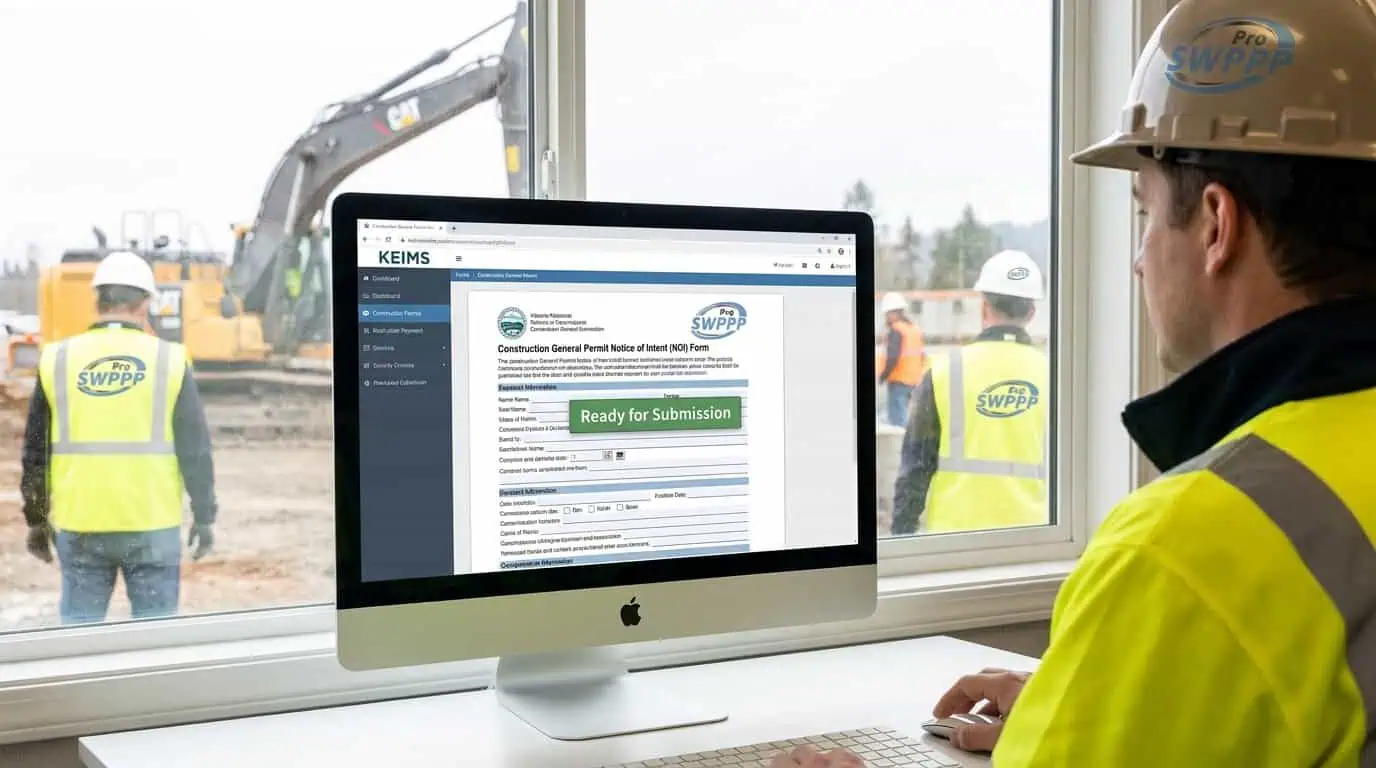
Kansas Environmental Information Management System is the state’s online portal. You create an account, verify your email, and log in. All NOI and NOT forms go through KEIMS. Paper forms are no longer accepted. If you’ve never used KEIMS, the system walks you through setup. You’ll need your company information, site address, and project details ready.
Step Three: Complete the NOI Form
The Construction General Permit NOI asks for:
- Operator name and contact information
- Site location with latitude and longitude
- Total acres to be disturbed
- Estimated project start and end dates
- Receiving waters and impaired water body information
- Certification that your SWPPP is complete
Double-check every field. Errors delay authorization. If your project involves multiple operators, each one files a separate NOI. For industrial facilities, the IGP form asks for facility type, SIC code, and pollutant sources.
Step Four: Submit and Pay the Fee
Once you submit your NOI through KEIMS, KDHE reviews it. If everything looks good, they issue your authorization number. The state invoices your annual permit fee to the contact listed on your NOI. You pay the fee every year until you file a Notice of Termination. Keep a copy of your authorization letter with your SWPPP on site.
Step Five: Begin Work
You can start clearing and grading as soon as you receive authorization. No authorization means no legal dirt work. If you start early, you risk fines and a stop-work order. Keep your SWPPP, authorization letter, and inspection logs on site at all times. KDHE or local inspectors can show up any day.
Filing Your Notice of Termination
When your site is fully stabilized and all temporary BMPs are removed, you file a Notice of Termination through KEIMS. KDHE reviews your NOT and closes your permit. You keep all records for at least three years after termination. If you file early, before true stabilization, KDHE may reject your NOT and require continued coverage.
Why Pro SWPPP is Kansas’s Best SWPPP Service
CPESC Certified Professionals
Pro SWPPP employs CPESC-certified stormwater experts. That means our team passed the toughest exam in erosion and sediment control. We know Kansas rules, federal EPA guidance, and the latest BMP science. When you hire us, you get professionals who write compliant plans every day, not someone guessing from a template.
20+ Years, Nationwide, CPESC-Certified Plans
We’ve been writing SWPPPs since before KEIMS existed. We’ve worked on Kansas highway projects, housing developments, solar farms, and industrial sites. Our team understands local soil types, rainfall patterns, and the inspection priorities of KDHE staff. That experience shows up in every plan we deliver. You get a document built for Kansas, not a generic copy-paste job.
72-Hour Turnaround
Most engineers and consultants take weeks to deliver a SWPPP. Pro SWPPP delivers in 72 hours. You send us your site information, and we turn around a complete, compliant plan in three days. That speed keeps your project on schedule. No waiting, no excuses, no delays. We’ve perfected the process so you get quality fast.
Kansas-Specific Expertise
We know the KEIMS portal, the 2022 CGP forms, and the annual fee schedule. We track local MS4 rules in Johnson County, Sedgwick County, and other jurisdictions. If your site has special conditions, like proximity to an impaired water body or steep slopes, we design BMPs that address them. You don’t have to teach us Kansas rules. We already know them.
Support Through Closeout
When you order a SWPPP from Pro SWPPP, you get more than a PDF. You get a team that answers questions, helps with NOI filing, and supports you through inspections. If KDHE asks for clarification or a plan update, we handle it. We stay with you from NOI to NOT. That’s why contractors across Kansas trust us project after project.
We also offer services beyond SWPPP writing. Need inspection help? We provide that. Need training for your crew? We do that too. Check out our work in Texas and Georgia to see how we help contractors nationwide. Visit our about page to learn more about our team and our mission.
FAQ
Do I need a SWPPP in Kansas if my site is under one acre?
Usually no, but KDHE can require coverage if your site poses significant pollution risk. If you get a letter from the state, you must file an NOI and write a SWPPP. Otherwise, projects under one acre are exempt unless they’re part of a larger common plan that totals one acre or more.
How much does the Kansas Construction General Permit cost?
KDHE invoices an annual permit fee under K.A.R. 28-16-56. The exact amount depends on your project size and type. You pay every year until you file your Notice of Termination. Check the KDHE fee schedule or ask when you submit your NOI. Pro SWPPP can walk you through the fee structure if you’re not sure.
Can I start work before I receive CGP authorization?
No. You must wait for KDHE to issue your authorization number before you clear, grade, or install BMPs. Starting early is a permit violation that can result in fines and a stop-work order. Submit your NOI as early as possible so you don’t delay your project schedule.
What happens if I miss a weekly inspection?
Missing an inspection is a permit violation. KDHE expects documentation for every required inspection. If you miss one, document the gap and explain why. If inspectors find a pattern of missed inspections, you risk enforcement action. Set reminders and assign a qualified person to keep your schedule on track.
How do I know when to file my Notice of Termination?
File your NOT when your site is fully stabilized with permanent vegetation or pavement, all temporary BMPs are removed, and you’re no longer responsible for stormwater control. KDHE reviews your NOT to make sure you meet those criteria. If you file too early, they’ll reject it and require continued coverage.
Does Kansas require post-construction stormwater controls?
The state CGP doesn’t mandate specific post-construction BMPs, but local MS4s may. Johnson County, for example, requires treatment for sites over one acre. Check your city or county stormwater ordinance. Pro SWPPP includes local requirements in your plan so you don’t miss any steps.
Where can I find Kansas stormwater forms?
All forms are accessed through the KEIMS portal at EPA NPDES stormwater resources or the KDHE website. Paper forms are no longer accepted. You must create a KEIMS account and submit your NOI electronically. Pro SWPPP can guide you through the portal if you need help.
Ready to get started? Order your SWPPP now or schedule a free consultation with Pro SWPPP.
Visit Pro SWPPP and see why contractors nationwide rely on America’s #1 SWPPP Service.
A Quick Word About KDHE 🌪️
Kansas runs its construction stormwater program through KDHE (the Department of Health & Environment) under the state Construction General Permit. Tornado alley, big ag, and a permit process that wants your NOI, fees, and inspection logs filed just so — miss a step and your start date blows away.
That’s the entire point of Pro SWPPP. We handle all of it — your Kansas SWPPP, the permit filing, and the CPESC certification it requires — done in 72 hours, with 24-hour expedited turnaround when the clock’s against you. You build; we wrestle the bureaucracy.
Let KDHE Be Our Problem, Not Yours.
Your Kansas SWPPP, permit filing, and CPESC certification — done for you in 72 hours, 24-hour rush available, or it’s FREE.
✅ Order Your Kansas SWPPP — The Easy Way →
📞 Talk to THE SWPPP Authority →
Schedule a call with Derek E. Chinners — Founder & Stormwater Consultant, CPESC · 833-GET-SWPPP