You’re about to break ground on a construction project. You’re excited. Then someone mentions stormwater permits, SWPPPs, and NOIs. Your head spins. You think, “Do I really need all this?” Short answer: probably yes. And Pro SWPPP – America’s #1 SWPPP Service is here to make it simple. Let’s cut through the confusion and figure out exactly what you need based on where you’re building.
What Is a Construction General Permit and Why Should You Care?
The Clean Water Act is federal law. It says you can’t dump polluted water into rivers, lakes, or streams. When you dig dirt, it rains, and mud runs off your site—that’s stormwater discharge. If you disturb one acre or more (or less than one acre if it’s part of a bigger project), you need a Construction General Permit (CGP). This permit lives under the National Pollutant Discharge Elimination System, or NPDES for short.
Think of the CGP as your ticket to legally discharge stormwater. Without it, you’re breaking federal law. The EPA can fine you. Your state can shut you down. Nobody wants that.
Here’s the kicker: most states run their own NPDES programs. That means your state writes the rules, not just the EPA. So what you need in Texas is different from what you need in Georgia. Let’s break it down state by state so you know exactly what to do.
Do You Need a SWPPP or an NOI? (Or Both?)
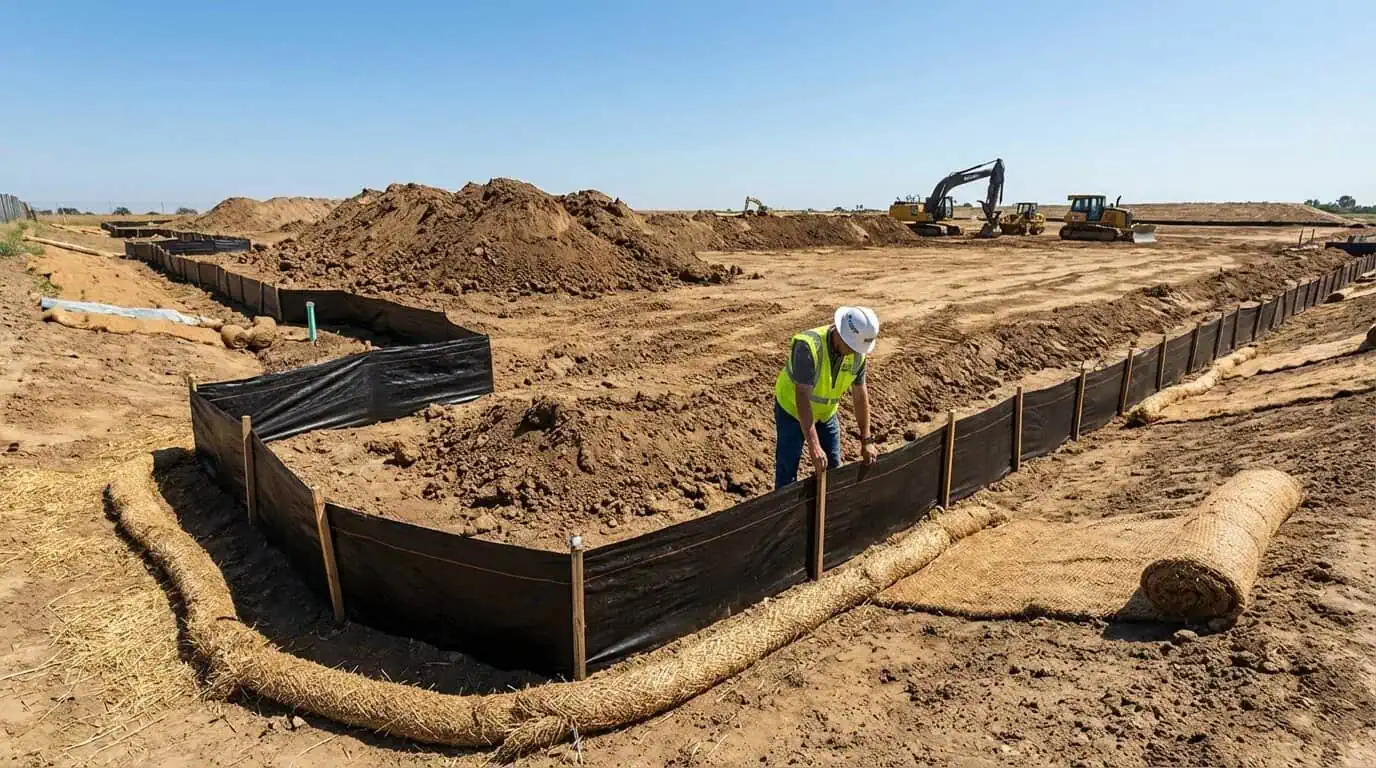
SWPPP stands for Stormwater Pollution Prevention Plan. It’s a written document that explains how you’ll keep dirt and chemicals out of the water. You list your Best Management Practices (BMPs)—things like silt fences, erosion control blankets, and sediment basins. You describe your site, your soil, your slopes, and your plan to stabilize everything when you’re done.
NOI stands for Notice of Intent. It’s a form you file with your state (or the EPA) telling them, “Hey, I’m starting construction, and I’m going to follow my SWPPP.” Think of the NOI as the official handshake. The SWPPP is the blueprint.
In almost every state, if you need a CGP, you need both. You write the SWPPP first, then you submit the NOI. But the exact process and timing change depending on where you are. Let’s look at some key states.
State-by-State Breakdown: What You Actually Need
Texas (TXR150000 Permit)
If you’re building in Texas, you’re under the Texas Commission on Environmental Quality, or TCEQ. The current permit is TXR150000, effective March 5, 2023. You need a SWPPP (called a SWP3 in Texas—same thing, fancier name). You must submit your NOI before you disturb the ground. You also need to post a site notice visible from the road showing your permit number and contact info.
Texas is hot. Dirt dries fast. But when storms hit, they hit hard. Your erosion control better be tight. Inspections are required weekly and within 24 hours after any storm that causes runoff. Miss an inspection? That’s a violation.
Georgia
Georgia runs its own NPDES program through the Georgia Environmental Protection Division. If you disturb one acre or more, you file an NOI and prepare a SWPPP. Georgia requires you to designate a qualified person to oversee erosion and sediment control. That person must be on-site or available to inspect regularly.
Georgia gets a lot of rain, especially in summer. Sediment control is critical. Silt fences, check dams, and stabilized construction exits are standard. You must keep records of inspections and maintenance. If you can’t prove you did the work, you didn’t do the work in the eyes of the regulators.
California
California takes stormwater seriously. Their CGP requires a Qualified SWPPP Developer (QSD) to write your plan and a Qualified SWPPP Practitioner (QSP) to oversee it. You can’t just wing it. You need certified professionals. The NOI goes to the State Water Resources Control Board. You must also submit a Risk Level Assessment and follow specific training requirements.
California’s rules are strict. They’ve fined projects tens of thousands of dollars for missing inspections or failing to update SWPPPs after site changes. One container terminal in California got hit with a $47,100 fine for inadequate BMPs and incomplete documentation. Don’t be that project.
Washington
Washington’s CGP expires December 31, 2025. A new one kicks in January 1, 2026, and runs through 2030. You must apply for coverage at least 60 days before you start discharging stormwater. That means plan ahead. You need a SWPPP on-site at all times. Weekly inspections are required, plus inspections within 24 hours after any storm.
Washington’s wet season runs from October through April. Erosion risk is high. Your SWPPP must address seasonal conditions. Vegetated stabilization and mulch are common BMPs. If you’re in a Total Maximum Daily Load (TMDL) area, you have extra restrictions.
Louisiana (LAR100000)
Louisiana’s permit, LAR100000, covers large construction sites and support activities. You file an NOI with the Louisiana Department of Environmental Quality. Your SWPPP must address site-specific conditions, including soil type and proximity to water bodies. Louisiana also requires you to check if your project is in a TMDL watershed. If it is, you may need extra controls.
Louisiana has flat terrain and heavy rainfall. Sediment basins and diversion ditches are your friends. Keep them clean and functional, or you’ll have muddy water running straight into bayous and wetlands.
Other States
Most other states follow a similar pattern: SWPPP first, NOI second, inspections weekly and after storms. Some states have online portals for NOI submission. Some still use paper forms. Check your state environmental agency website or talk to a certified professional. Pro SWPPP knows the rules nationwide and can tell you exactly what you need.
Don’t want to mess with all the paperwork and requirements? Check out Order your SWPPP now with Pro SWPPP Professional CPESC Certified SWPPP Services.
Key Components Every SWPPP Must Include
No matter what state you’re in, your SWPPP needs these core pieces:
- Site Description: Location, size, soil type, slopes, existing vegetation, nearby water bodies.
- Construction Activities: What you’re building, when you’re building it, phases of work.
- BMPs: Specific controls for erosion (like mulch, mats, seeding) and sediment (like silt fences, sediment traps, inlet protection).
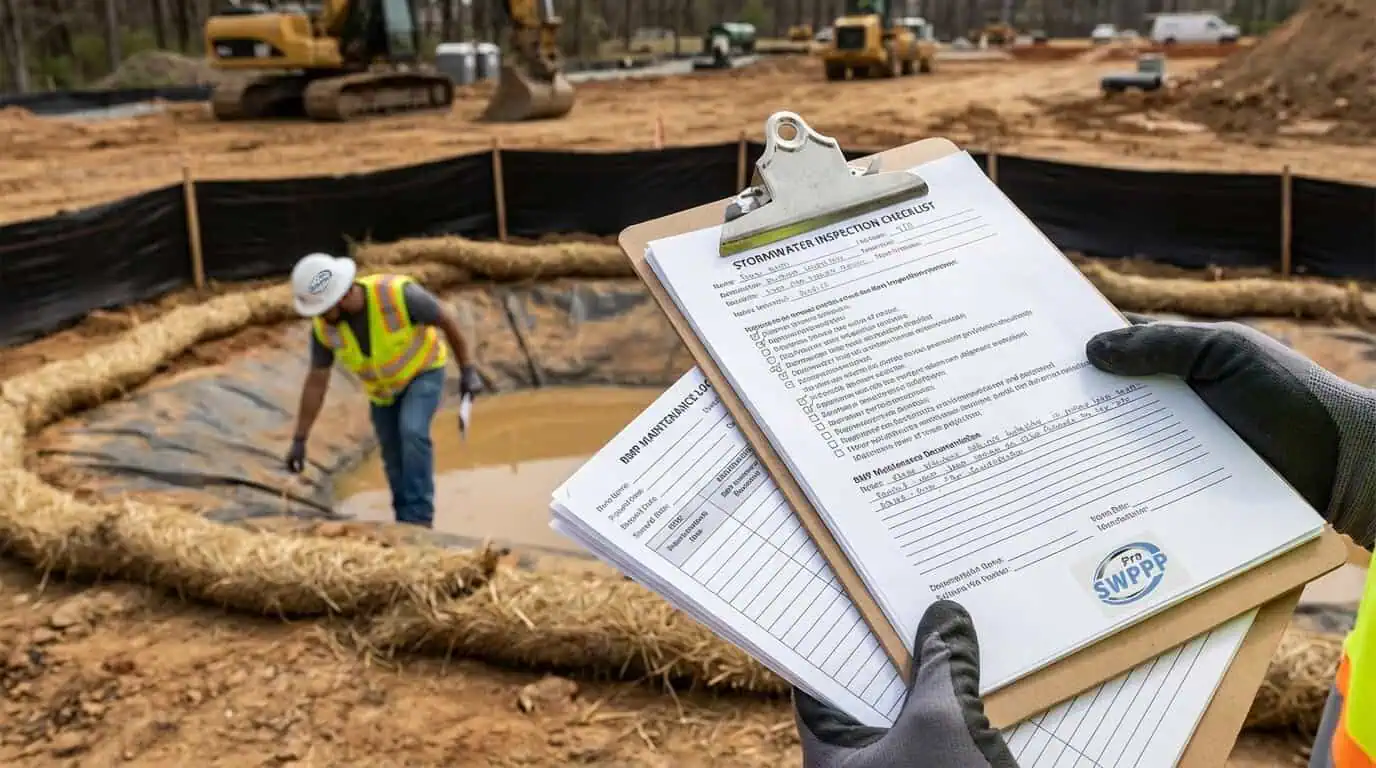
- Inspection Schedule: Who inspects, how often, what they check, how they document it.
- Maintenance Plan: How you’ll repair or replace BMPs when they fail.
- Spill Prevention: Where you store fuel, oil, concrete, and how you prevent spills.
- Final Stabilization: How you’ll stabilize the site when construction is done so vegetation can grow and erosion stops.
Your SWPPP is a living document. If your site changes, update the plan. If a BMP isn’t working, document it and fix it. Regulators want to see proof you’re adapting to real conditions, not just checking boxes.
Best Management Practices: What Actually Works
BMPs are the tools you use to keep dirt on your site and out of the water. Here are the most common and effective ones:
- Silt Fence: Fabric barrier that traps sediment. Install it before you disturb soil. Check it after every rain. Replace torn sections immediately.
- Erosion Control Blankets: Roll them out on slopes to hold soil in place while grass grows.
- Sediment Basins: Ponds that collect runoff and let sediment settle before water leaves the site. Size them for your site’s runoff volume.
- Check Dams: Small barriers in ditches that slow water and trap sediment. Use rock or sandbags.
- Stabilized Construction Exit: Gravel pad where trucks leave the site, shaking off mud before they hit the road.
- Inlet Protection: Filters around storm drains to catch sediment before it enters the drainage system.
- Dust Control: Water trucks or mulch to keep dry dirt from blowing off-site.
Don’t pick BMPs at random. Match them to your site. Sandy soil? You need different controls than clay. Steep slopes? Extra stabilization. Near a creek? Triple-check your sediment barriers. Pro SWPPP – America’s #1 SWPPP Service tailors every plan to the site’s soil, slope, rainfall, and nearby water.
Common Mistakes That Lead to Fines and Shutdowns
Here’s what trips up most projects:
Missing or Late NOI: You start digging before you file. Regulators drive by, see earth moving, check their database, and you’re not in it. Instant violation.
No SWPPP On-Site: Inspectors show up and ask to see your plan. You say it’s at the office or “in progress.” That’s a violation. Your SWPPP must be on-site, accessible, and current.
Skipped Inspections: You’re busy. Rain came, but you didn’t inspect within 24 hours. Documentation is missing. That’s a violation even if your BMPs are working.
Failed BMPs: Your silt fence tears, and you don’t fix it. Mud runs into the street or a storm drain. Someone complains. Regulators investigate. You’re in trouble.
Ignoring Site Changes: You add a new stockpile, change your grading plan, or extend your timeline. Your SWPPP still shows the old plan. That’s out of compliance.
The fix for all of these? Plan ahead. Assign someone to own stormwater compliance. Use digital tools to log inspections and track maintenance. Don’t wait until the inspector shows up to scramble.
Not sure what your project needs? Take our SWPPP Quiz or Schedule a Free SWPPP Consultation with CPESC Certified SWPPP Expert Derek E. Chinners.
How Pro SWPPP Makes Compliance Easy
Pro SWPPP handles everything. We write your SWPPP, prepare your NOI, submit it to the right agency, and coach your crew on inspections and maintenance. We’re CPESC certified (Certified Professional in Erosion and Sediment Control), so we know the rules inside and out. We’ve worked in every state and with every type of project—residential subdivisions, commercial developments, highways, energy facilities.
We don’t give you a generic template. We visit your site (or review plans remotely), assess your soil and slopes, identify nearby water, and design BMPs that match your conditions. We also train your team so they know what to look for and how to document it. If something changes on-site, we update the plan fast.
Our clients avoid fines, pass inspections, and sleep better at night. We’ve helped hundreds of projects stay on schedule and on budget by getting stormwater compliance right from day one. You can learn more about our team and approach here.
What Happens If You Ignore Stormwater Rules?
Fines start at thousands of dollars per day. Serious violations can reach six figures. But money isn’t the only cost. Your project can be stopped. Your general contractor can be barred from future work. Your reputation takes a hit. And if sediment reaches a protected water body, you might face federal charges under the Clean Water Act.
States are cracking down. Enforcement is up. Inspectors use drones and satellite imagery to spot violations. Neighbors and environmental groups report problems online. You can’t fly under the radar anymore.
The good news? Compliance isn’t hard if you do it right. A solid SWPPP, regular inspections, and responsive maintenance keep you legal and protect the environment. It’s a win-win.
Emerging Trends: What’s Changing in Stormwater Compliance
Digital platforms are taking over. Apps let inspectors log findings, snap photos, and generate reports in minutes. Cloud-based systems track action items and send reminders. No more lost notebooks or missed deadlines.
Modular BMPs are gaining traction. Mobile sediment filters, portable dewatering systems, and prefab inlet guards adapt fast to changing sites. They’re especially useful on tight urban projects where space is limited.
Certified professionals are now required in many states. California’s QSD and QSP roles are the model. Expect more states to follow. Hiring a CPESC-certified expert isn’t optional anymore—it’s smart business.
TMDL integration is increasing. If your site is in a watershed with impaired water quality, your permit will have extra limits. You might need to reduce pollutants beyond standard BMPs. Check your state’s TMDL list before you start.
The EPA’s CGP is up for renewal soon. Expect updates to inspection frequencies, documentation requirements, and BMP standards. Stay current or get left behind. You can review the latest federal guidance on the EPA’s website.
Common Questions About SWPPPs
Do I need a SWPPP if I’m disturbing less than one acre?
Maybe. If your project is part of a larger common plan of development that totals one acre or more, you need a SWPPP and an NOI. For example, building one lot in a 10-lot subdivision counts. Check with your state or a certified professional to be sure.
How long does it take to get permit coverage?
It varies. Some states issue coverage immediately after you submit your NOI. Others take 30 to 60 days. Plan ahead. Don’t wait until the day before your first excavation to file.
Who is responsible for inspections?
The permit holder is responsible. That’s usually the owner or general contractor. You can assign inspections to a qualified person on your team or hire a third party. Either way, you must document every inspection and keep records on-site.
What happens if a BMP fails during a storm?
Repair or replace it immediately. Document the failure, the cause, and the fix in your inspection log. If sediment left the site, report it to your state if required. The key is to act fast and show you’re being proactive.
Can I use the same SWPPP for multiple projects?
No. Each project needs its own site-specific SWPPP. Soil, slopes, water bodies, and BMPs are unique to each location. A generic plan won’t pass inspection and puts you at risk.
How much does a SWPPP cost?
It depends on project size and complexity. Small residential sites might cost a few hundred dollars. Large commercial or industrial sites can run several thousand. But the cost of a SWPPP is tiny compared to the fines and delays you’ll face without one. Pro SWPPP offers transparent pricing and fast turnaround.
Do I need to update my SWPPP during construction?
Yes. Anytime your site conditions, activities, or BMPs change, update the plan. If inspections reveal a problem, document it and revise your approach. Your SWPPP should reflect what’s actually happening on the ground, not what you planned six months ago.
What if my state doesn’t have its own NPDES program?
A few states (like Idaho, Massachusetts, and New Hampshire for construction) fall under the EPA’s CGP. You file your NOI with the EPA and follow federal rules. The process is similar, but the agency is different. Check the EPA website or contact us for guidance.
Stormwater compliance doesn’t have to be painful. Know your state’s rules, write a solid SWPPP, file your NOI on time, and inspect regularly. If that sounds like a lot, you’re right—it is. That’s why we exist. We handle the details so you can focus on building. Get started with Pro SWPPP and keep your project moving without the stress.
The CGP Is the Same Idea in 50 Flavors 📜
Every state runs some version of the Construction General Permit — EPA’s where the feds are in charge, a state CGP everywhere else — and each has its own NOI, fees, thresholds, and portal. The concept is identical; the paperwork never is.
That’s the entire point of Pro SWPPP. We handle all of it — your SWPPP, the permit filing, and the CPESC certification it requires — done in 72 hours, with 24-hour expedited turnaround when the clock’s against you. You build; we wrestle the bureaucracy.
Let Us Handle Your CGP.
Your SWPPP, permit filing, and CPESC certification — done for you in 72 hours, 24-hour rush available, or it’s FREE.
✅ Order Your SWPPP — The Easy Way →
📞 Talk to THE SWPPP Authority →
Schedule a call with Derek E. Chinners — Founder & Stormwater Consultant, CPESC · 833-GET-SWPPP