Pro SWPPP – America’s #1 SWPPP Service – helps contractors and facility managers in Connecticut meet every state stormwater rule without the stress. If you’re building, expanding, or operating in the Constitution State, you need to know what Connecticut demands for construction sites and industrial facilities. This guide walks you through permit thresholds, filing steps, inspection schedules, and enforcement. You’ll learn exactly what the Connecticut Department of Energy and Environmental Protection expects and how Pro SWPPP delivers fast, certified plans that keep your project on track.
Connecticut stormwater law is strict. The state requires electronic filing, professional engineer signatures, public posting, and detailed monitoring. Miss a deadline or skip an inspection and you risk steep fines and stop-work orders. Pro SWPPP takes the guesswork out of compliance. Our CPESC-certified team prepares your Stormwater Pollution Control Plan or industrial SWPPP in seventy-two hours or less, so you can focus on the work that makes you money.
SWPPP Requirements in Connecticut: What You Need to Know
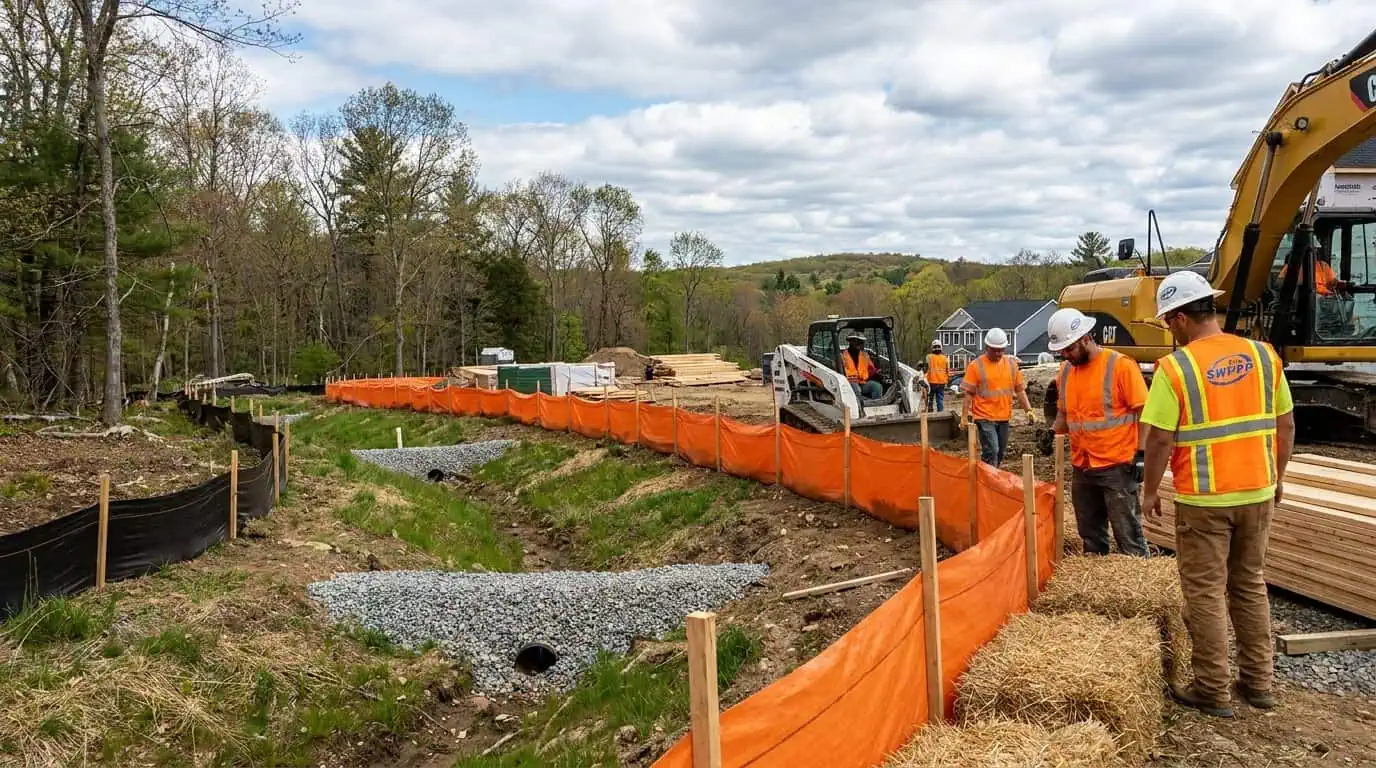
Connecticut ties stormwater permits to two major activities: construction and industrial operations. If you disturb one acre or more of soil, you need a Construction General Permit and a Stormwater Pollution Control Plan. If you run a facility that falls under specific industrial codes, you need an Industrial General Permit and a full SWPPP signed by a licensed professional.
Both permits flow through the Connecticut DEEP ezFile portal. No paper submissions are accepted. You’ll upload your plan, pay fees online, and wait for a Notice of Coverage before you begin regulated discharges. Pro SWPPP has filed hundreds of NOIs nationwide, and we know Connecticut’s system inside out.
Every plan is a living document. You update it when site conditions change, when storms exceed thresholds, or when inspections reveal problems. DEEP can arrive unannounced to review your records. Having a CPESC-certified plan from Pro SWPPP means you’re ready on day one.
Connecticut Stormwater Regulatory Framework
The Connecticut Department of Energy and Environmental Protection administers the state’s National Pollutant Discharge Elimination System program under federal Clean Water Act authority. DEEP issues general permits that mirror EPA’s baseline but add extra layers of certification, inspection, and public transparency.
Connecticut law requires that industrial SWPPPs be certified by a Connecticut-licensed Professional Engineer or a Certified Hazardous Materials Manager. Construction plans must include detailed site maps, receiving-water data, and post-construction stormwater management. These state-specific touches go beyond the federal EPA construction baseline.
DEEP expects electronic submission for every permit action. You register through the ezFile portal, pay fees by credit card, and subscribe to NetDMR for discharge monitoring reports. Pro SWPPP handles every upload, so you never miss a form or payment deadline.
Relationship Between State and Federal Rules
Connecticut’s permits follow 40 CFR 122.26 but layer on tougher standards. The state requires professional certification, public SWPPP posting, and signage within one hundred eighty days of coverage. Federal permits often allow self-certification and do not mandate public access to industrial plans.
DEEP also sets stricter timelines for corrective actions. If you can’t fix a problem within sixty days, you must document the extension in your SWPPP and report progress. Pro SWPPP builds corrective-action frameworks into every plan we write, so you stay ahead of escalation.
Construction General Permit (CGP) in Connecticut
Connecticut’s Construction General Permit covers any project that disturbs one acre or more. Smaller sites that are part of a larger common plan of development also need coverage if the total disturbed area hits the one-acre threshold.
You must develop a Stormwater Pollution Control Plan before filing your Notice of Intent. The plan describes erosion controls, sediment barriers, post-construction best management practices, and receiving waters. DEEP reviews every application, and processing can take ninety to one hundred eighty days. Start early or risk delays.
Pro SWPPP prepares construction SWPCPs that meet every DEEP checklist item. We map outfalls, calculate drainage areas, and specify BMPs for each phase of your project. Our seventy-two-hour turnaround means you file fast and get your Notice of Coverage without waiting months.
Who Needs Construction Permit Coverage
- Residential subdivisions clearing one acre or more
- Commercial developments with grading and paving
- Road construction, utility installation, and pipeline projects
- Any site that is part of a larger common plan exceeding one acre total
If your project falls under these categories, you need an SPCP and an approved NOI before the first piece of equipment moves dirt. Pro SWPPP files NOIs nationwide, including Texas and Georgia.
Threshold and Exemptions
One acre is the magic number. Projects under one acre that are not part of a common plan do not need a permit. Emergency work and certain agricultural activities may also be exempt, but you should confirm eligibility with DEEP or a Pro SWPPP consultant before assuming you’re clear.
Even exempt sites must follow local erosion and sediment control ordinances. Many Connecticut towns have their own rules that mirror or exceed state standards. Pro SWPPP reviews local codes as part of every plan we write.
Industrial Stormwater Permits in Connecticut
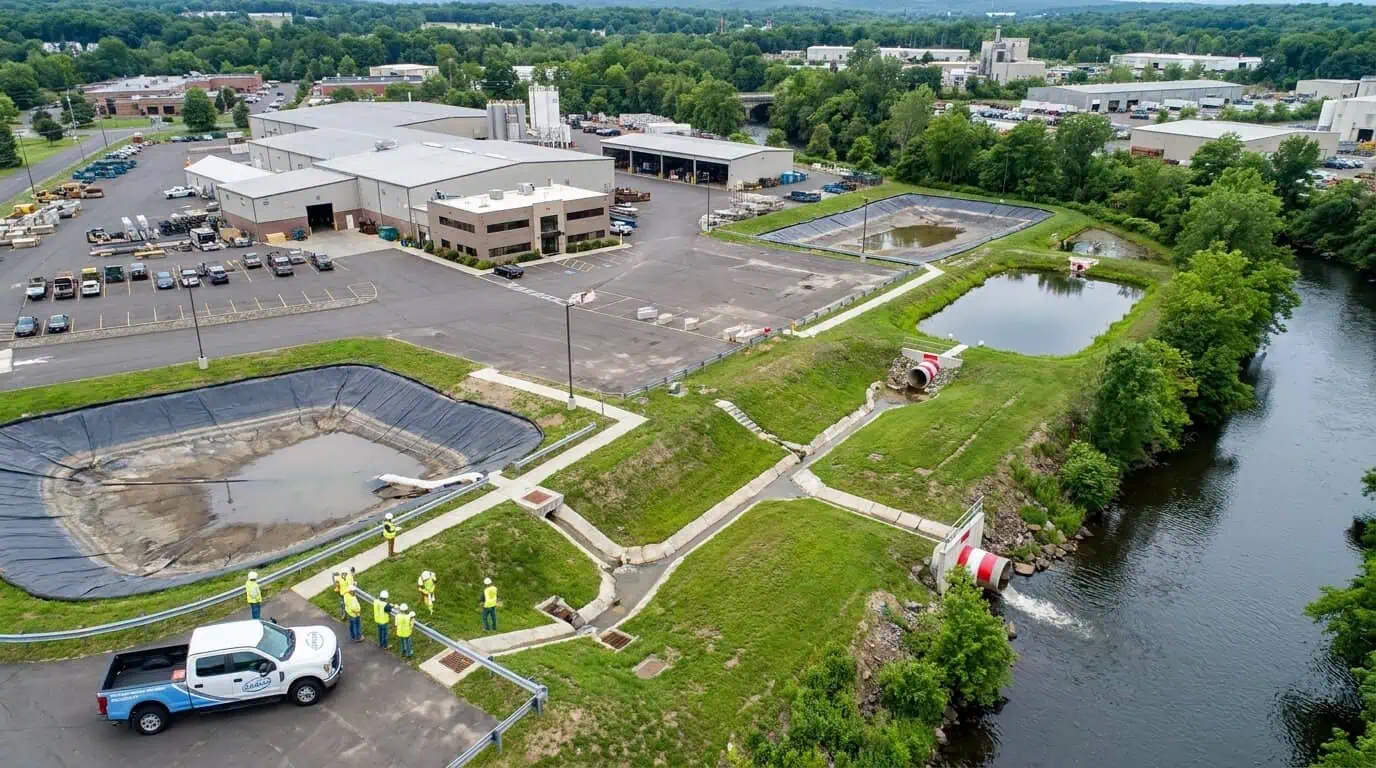
Connecticut’s Industrial General Permit covers facilities in manufacturing, transportation, metal finishing, recycling, and other sectors listed in Appendix A of the permit. If your Standard Industrial Classification code appears on that list and you discharge stormwater to surface waters, you need coverage.
The current permit, CTR050000, took effect November first, two thousand twenty-five. Existing facilities had until April first, two thousand twenty-six, to re-register. New facilities must apply at least ninety days before beginning regulated activities. There is no automatic renewal, so mark your calendar and file on time.
Pro SWPPP writes industrial SWPPPs that include site descriptions, pollutant assessments, control measures, monitoring plans, training schedules, and corrective-action protocols. Every plan is certified by a Connecticut PE or CHMM and delivered in seventy-two hours.
SIC Codes and Facility Types
Appendix A of the Industrial General Permit lists dozens of SIC codes. Common examples include:
- Metal fabrication and finishing
- Auto salvage and recycling
- Chemical manufacturing and storage
- Transportation terminals and freight depots
- Food processing and packaging
If your facility falls into one of these categories, you need a SWPPP and an NOI filed through ezFile. Pro SWPPP reviews your SIC code and tailors your plan to sector-specific requirements in the permit.
No Exposure Certification Option
Some facilities qualify for a No Exposure Certification if all materials and activities are fully enclosed or covered. NECs require detailed documentation and photos proving no stormwater contact. DEEP reviews NEC applications just like full permit NOIs, so the paperwork burden is nearly identical.
Pro SWPPP evaluates whether an NEC is realistic for your site. If exposure is present, we write a full SWPPP. If you qualify for an NEC, we prepare the certification package and supporting evidence.
Fees and Registration Deadlines
Industrial permit fees range from six hundred twenty-five to one thousand two hundred fifty dollars, based on employee count and annual sales. You pay online when you submit your NOI. Late filings can trigger penalties and enforcement action.
Pro SWPPP tracks every deadline and submits NOIs ahead of schedule. We also set up your NetDMR subscriber agreement so monitoring reports flow smoothly from day one.
Required BMPs for Connecticut Construction Sites
Connecticut demands that construction sites prevent sediment from leaving the property and manage stormwater runoff during and after construction. Your SPCP must specify BMPs for erosion control, sediment control, and post-construction stormwater quality.
Pro SWPPP designs BMP sequences that match your site’s soil type, slope, and receiving waters. We specify silt fence, sediment basins, inlet protection, and stabilization schedules. Every BMP is drawn on site maps and referenced in your maintenance plan.
Erosion Control Measures
Erosion controls keep soil in place before it becomes sediment. Common practices include:
- Temporary seeding and mulch on disturbed areas
- Erosion-control blankets on slopes steeper than three-to-one
- Rock check dams in drainage swales
- Preservation of existing vegetation buffers
DEEP expects erosion controls to be installed before grading begins. Pro SWPPP writes sequencing schedules that align BMP installation with site phases, so you never expose more soil than you can stabilize.
Sediment Control Measures
Sediment controls capture soil that does erode. Key BMPs include:
- Perimeter silt fence along down-slope boundaries
- Sediment basins or traps at discharge points
- Inlet protection on storm drains and catch basins
- Construction-entrance stabilization to prevent tracking
Every sediment control must be inspected weekly and after every storm event. Pro SWPPP provides inspection checklists and maintenance triggers so your site crew knows exactly what to check and when to repair.
Post-Construction Stormwater Management
Connecticut requires that new development replicate pre-construction runoff rates and volumes. You achieve this through infiltration basins, bioretention cells, permeable pavement, or detention ponds. Your SPCP must describe post-construction BMPs and provide design calculations.
Pro SWPPP coordinates with your civil engineer to document post-construction controls in the SPCP. We ensure that temporary construction BMPs transition smoothly to permanent stormwater infrastructure.
SWPPP Inspection Requirements in Connecticut
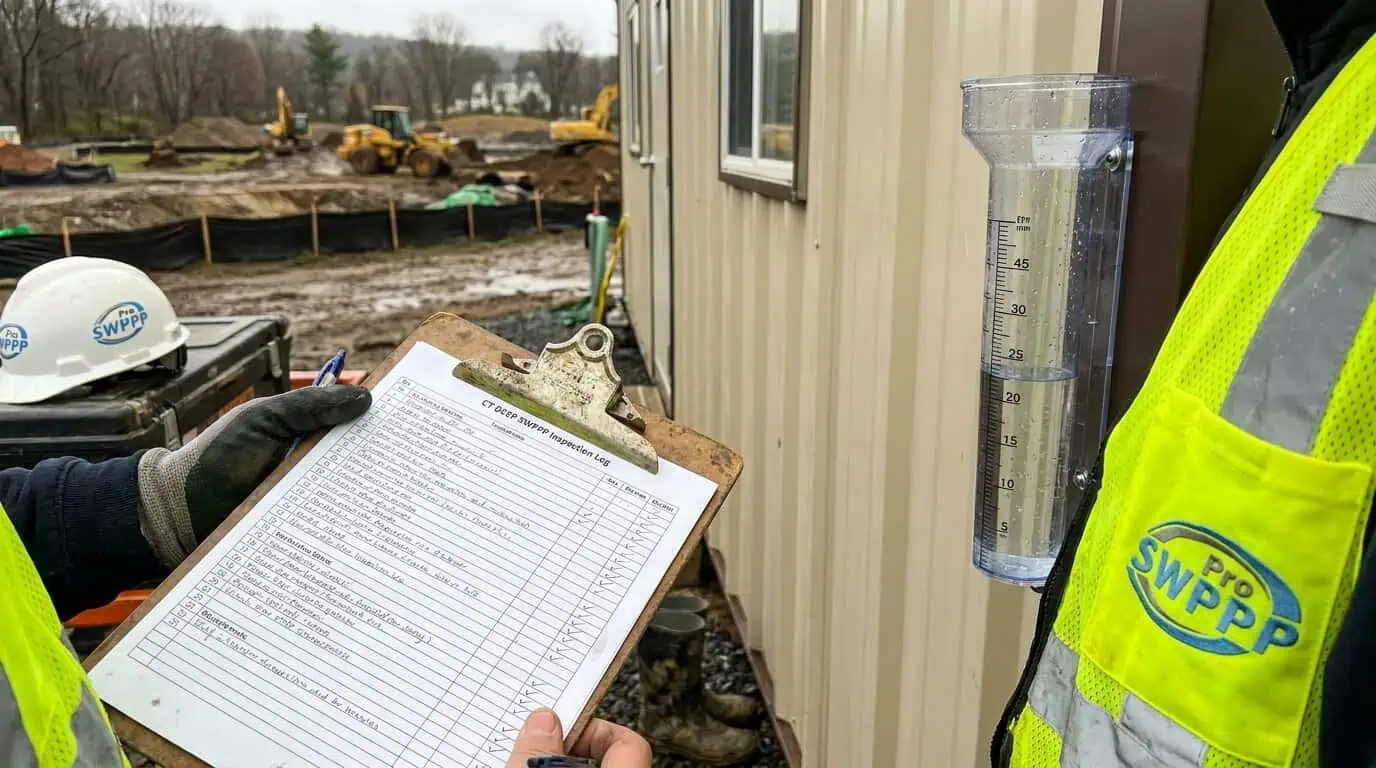
Connecticut construction sites must conduct weekly inspections and post-storm inspections after any event that deposits at least half an inch of rain. Industrial facilities follow a tiered schedule: routine inspections daily to monthly, comprehensive inspections semi-annually, and quarterly visual assessments of stormwater discharges.
Every inspection must be documented in writing and kept with your SWPPP. DEEP reviews inspection logs during site visits. Missing records or late inspections trigger enforcement. Pro SWPPP provides digital inspection templates that sync to your phone, so your crew logs findings in real time.
Construction Site Inspection Frequency
Construction projects need two types of inspections:
- Weekly routine inspections of all BMPs, stabilization, and discharge points
- Storm-event inspections within twenty-four hours of a qualifying rain
Qualifying storms deposit at least half an inch of rain in twenty-four hours. Your inspector checks for sediment releases, damaged silt fence, clogged inlets, and erosion channels. Any deficiency must be repaired within seven days or documented as an extension.
Pro SWPPP trains your site crew to spot common problems and prioritize repairs. Our inspection templates prompt corrective actions and track completion dates, so you stay compliant without drowning in paperwork.
Industrial Site Inspection Frequency
Industrial facilities follow a more complex schedule:
- Routine inspections: Daily, weekly, or monthly depending on pollutant risk
- Comprehensive inspections: Every six months, covering all areas and records
- Visual discharge assessments: Quarterly, during or immediately after rain events
Comprehensive inspections require a site walk with your SWPPP in hand. You verify that every control measure is in place, that training records are current, and that monitoring data is complete. Pro SWPPP provides a comprehensive-inspection checklist that walks you through every permit requirement.
Qualified Inspector Requirements
Connecticut does not mandate third-party inspectors for construction sites, but your inspector must understand erosion control and be able to recognize deficiencies. Many contractors designate a site foreman or erosion-control specialist.
Industrial facilities must have a trained staff member or consultant perform comprehensive inspections. Pro SWPPP offers training sessions and can conduct inspections on your behalf. Our CPESC-certified team has 20+ years of field experience and knows what DEEP looks for during audits.
Record Retention Rules
Connecticut requires that you keep inspection logs, training records, monitoring data, and corrective-action reports for at least five years. Records must be available on-site for DEEP review. Digital storage is acceptable as long as records can be printed or displayed immediately.
Pro SWPPP builds record-keeping systems into every plan. We provide cloud-based folders, pre-formatted logs, and annual reminders so your files stay organized and audit-ready.
Enforcement and Penalties in Connecticut
Connecticut DEEP enforces stormwater permits through inspections, administrative orders, and civil penalties. Violations can trigger fines in the thousands of dollars per day. Repeat offenders face stop-work orders and criminal referrals.
Common violations include failure to file an NOI, missing inspection records, inadequate BMP maintenance, and unpermitted discharges. DEEP expects controls to be in place and functioning. If an inspector finds sediment leaving your site or pollutants in runoff, you will receive a Notice of Violation and a deadline to correct the problem.
Pro SWPPP helps you avoid enforcement by delivering plans that meet every permit requirement and by training your crew to spot issues before DEEP arrives. Our support team answers compliance questions within hours, so you never face an inspection unprepared.
Civil Penalty Ranges
Civil penalties for construction and industrial violations can reach thousands of dollars per day per violation. Penalties are calculated based on the severity of the discharge, harm to waters, and the violator’s history. Settlements often include corrective actions, third-party audits, and supplemental environmental projects.
Pro SWPPP’s CPESC-certified plans reduce your liability by ensuring that every control measure is properly specified and documented. If DEEP does issue a violation, we can prepare corrective-action plans and updated SWPPPs on an expedited schedule.
Stop-Work Orders and Project Delays
DEEP can issue a stop-work order if it determines that stormwater controls are inadequate or that discharges pose a threat to water quality. A stop-work order halts all earth-moving until you install or repair BMPs and demonstrate compliance.
Stop-work orders cost contractors thousands of dollars per day in idle equipment, lost crew time, and missed deadlines. Pro SWPPP’s seventy-two-hour turnaround and same-day site visits help you resolve violations fast and get your project back on track.
Recent Enforcement Actions
Specific enforcement data for Connecticut was not available in the research, but industry sources confirm that DEEP actively inspects construction sites and industrial facilities. Contractors who skip inspections, fail to update plans, or ignore corrective actions face the highest risk of penalties.
Pro SWPPP monitors state enforcement trends and adjusts our templates to address common citation triggers. We also offer annual SWPPP reviews to catch compliance gaps before DEEP does.
How to File Your NOI in Connecticut
Connecticut requires electronic filing through the DEEP ezFile portal for both construction and industrial permits. Paper submissions are not accepted. You create an account, upload your SWPPP or SPCP, enter site details, and pay fees online. DEEP reviews your application and issues a Notice of Coverage if everything is complete.
Pro SWPPP handles the entire NOI process for clients. We prepare your plan, complete the ezFile application, upload supporting documents, and track your approval status. You get a Notice of Coverage without logging into a single portal.
Step-by-Step NOI Filing for Construction
Follow these steps to file a construction NOI in Connecticut:
- Develop a Stormwater Pollution Control Plan that meets DEEP template requirements
- Register for an ezFile account at portal.ct.gov/deep
- Complete the electronic NOI form with project name, location, acreage, and receiving waters
- Upload your SPCP, site maps, and any required certifications
- Submit the application and wait for DEEP review
DEEP processing takes ninety to one hundred eighty days. Incomplete applications delay approval. Pro SWPPP submits NOIs that pass DEEP’s initial review, so you avoid back-and-forth and get coverage faster.
Step-by-Step NOI Filing for Industrial
Industrial NOI filing requires additional steps:
- Prepare a SWPPP certified by a Connecticut-licensed PE or CHMM
- Create site maps showing curbs, drains, material storage, and historical spills
- Register for ezFile and NetDMR accounts
- Complete the electronic NOI form and upload all documents
- Pay the six hundred twenty-five to one thousand two hundred fifty dollar fee
- Wait for Notice of Coverage from DEEP
Industrial NOIs opened November first, two thousand twenty-five. High application volume may cause delays. Pro SWPPP files early and follows up with DEEP to ensure timely approval.
Required Supporting Documents
Both construction and industrial NOIs require supporting documents:
- Complete SWPPP or SPCP with site maps and BMP details
- Receiving-water information and discharge-point locations
- Certification statements signed by a responsible party
- For industrial sites, PE or CHMM certification and NetDMR subscriber agreement
Pro SWPPP assembles every required document and uploads it in the correct format. We also keep copies in your project folder for record retention.
Approval Timelines and Tracking
DEEP aims to review construction NOIs within ninety days but can take up to one hundred eighty days if applications are incomplete. Industrial NOIs processed in late two thousand twenty-five and early two thousand twenty-six faced high volume, so delays were common.
Pro SWPPP tracks your application status and communicates with DEEP on your behalf. We notify you the moment your Notice of Coverage is issued, and we upload the NOC to your project folder.
Don’t want to mess with all the paperwork? Order your SWPPP now with Pro SWPPP Professional CPESC Certified SWPPP Services.
Why Pro SWPPP is Connecticut’s Best SWPPP Service
Pro SWPPP has prepared stormwater plans for contractors and facility managers nationwide for 20+ years. Our CPESC-certified team knows Connecticut’s ezFile system, DEEP permit language, and BMP standards inside out. We deliver certified plans in seventy-two hours, so you file on time and avoid costly delays.
We don’t just write documents. We provide inspection templates, corrective-action protocols, training guides, and ongoing compliance support. When DEEP shows up, you’ll have every record organized and every BMP functioning. That’s the Pro SWPPP difference.
CPESC Certification and Expertise
Every Pro SWPPP plan is prepared or reviewed by a Certified Professional in Erosion and Sediment Control. CPESC certification is the gold standard in stormwater management. Our lead consultant, Derek E. Chinners, holds CPESC credentials and has guided thousands of projects through state and federal permit processes.
CPESC certification means we understand soil science, hydrology, BMP performance, and regulatory nuances. We design control measures that work in the field, not just on paper. Learn more about our team at Pro SWPPP About.
Seventy-Two-Hour Turnaround
Most engineers and consultants need weeks to deliver a SWPPP. Pro SWPPP delivers certified plans in seventy-two hours or less. We achieve this speed through standardized templates, dedicated staff, and cloud-based workflows. You send us your site details, and we return a complete plan ready for ezFile submission.
Fast turnaround doesn’t mean shortcuts. Every Pro SWPPP plan is custom-tailored to your site’s soil, slope, and receiving waters. We review local ordinances, confirm SIC codes, and specify BMPs that match your budget and schedule.
Nationwide Coverage, One Trusted Partner
Pro SWPPP operates nationwide, so we understand regional differences and multi-state projects. If you build in Connecticut today and Texas tomorrow, we handle both permits with the same speed and quality. Our clients include national contractors, regional developers, and industrial operators who need consistency across their portfolio.
We also offer multi-site discounts and annual compliance reviews. Whether you manage one project or one hundred, Pro SWPPP scales with your needs.
Inspection Support and Training
Pro SWPPP doesn’t disappear after your NOI is filed. We provide inspection checklists, corrective-action templates, and training webinars for your site crew. We also offer on-site audits and third-party inspection services if you prefer an independent eye on BMP performance.
When DEEP shows up, you’ll have every log, photo, and repair record organized and ready. That confidence is worth more than any fine you’ll avoid.
Transparent Pricing and No Hidden Fees
Pro SWPPP offers flat-rate pricing for SWPPP preparation. You know the cost before we start. No surprise charges for site maps, NOI filing, or revisions. We also include free minor updates during the life of your permit, so you stay compliant without additional invoices.
Our pricing beats regional consultants and national firms. You get CPESC-certified expertise at a fraction of the cost.
Not sure what your project needs? Schedule a Free SWPPP Consultation with CPESC Certified SWPPP Expert Derek E. Chinners.
FAQ
Do I need a SWPPP for a half-acre construction site in Connecticut?
No. Connecticut’s Construction General Permit applies to projects that disturb one acre or more. If your half-acre site is part of a larger common plan that totals one acre or more, then you do need coverage. Pro SWPPP reviews your project scope and confirms whether you need a permit or an exemption.
How long does it take DEEP to approve my NOI?
DEEP targets ninety days for construction NOI review but can take up to one hundred eighty days if your application is incomplete. Industrial NOIs filed in late two thousand twenty-five faced high volume and similar timelines. Pro SWPPP submits complete applications that pass initial review, reducing your wait time.
Can I file a paper NOI in Connecticut?
No. Connecticut requires electronic submission through the ezFile portal for all construction and industrial stormwater permits. Pro SWPPP handles ezFile registration, document uploads, and fee payment on your behalf.
What happens if I miss a weekly inspection?
Missing inspections is a permit violation. DEEP can issue a Notice of Violation and assess civil penalties. Chronic inspection failures can lead to stop-work orders. Pro SWPPP provides inspection checklists and automated reminders so your crew never misses a required walk-through.
Does my industrial SWPPP need a professional engineer signature?
Yes. Connecticut requires that industrial SWPPPs be certified by a Connecticut-licensed Professional Engineer or a Certified Hazardous Materials Manager. Pro SWPPP coordinates PE review and signature for every industrial plan we prepare.
How much does an industrial stormwater permit cost in Connecticut?
Fees range from six hundred twenty-five to one thousand two hundred fifty dollars, based on employee count and annual sales. You pay online when you submit your NOI through ezFile. Pro SWPPP includes fee calculation and payment coordination in our service package.
Can Pro SWPPP update my existing SWPPP if my site changes?
Yes. Pro SWPPP offers revision services for existing plans. We review your current SWPPP, incorporate site changes, and deliver an updated plan with new maps and BMP specifications. Minor updates are included free for clients who order their original plan from us.
Connecticut stormwater rules are detailed, strict, and enforced. Pro SWPPP removes the complexity and delivers certified plans in seventy-two hours. Our CPESC team knows ezFile, DEEP permit language, and BMP design. We file NOIs, track approvals, and provide inspection support so you stay compliant without stress.
Ready to get started? Order your SWPPP now or schedule a free consultation with Pro SWPPP.
Visit Pro SWPPP and see why contractors nationwide rely on America’s #1 SWPPP Service.
Stop Babysitting Connecticut’s Stormwater Paperwork
Here’s the open secret of construction stormwater compliance: every state and county runs its own version of the same headache — a clunky permit portal, a Notice of Intent that has to be filed just so, fees, inspection logs, and a review team that loves bouncing things back “with revisions.” Connecticut is no exception. You didn’t get into construction to moonlight as a stormwater clerk at 9 PM.
That’s the entire point of Pro SWPPP. We handle all of it — your Connecticut SWPPP, the permit filing, and the CPESC certification it requires — done in 72 hours, with 24-hour expedited turnaround when the clock’s against you. You break ground; we wrestle the bureaucracy.
Skip the Paperwork. Get Back to Your Build.
Your Connecticut SWPPP, permit filing, and CPESC certification — done for you in 72 hours, 24-hour rush available, or it’s FREE.
✅ Order Your Connecticut SWPPP — The Easy Way →
📞 Talk to THE SWPPP Authority →
Schedule a call with Derek E. Chinners — Founder & Stormwater Consultant, CPESC · 833-GET-SWPPP