When you’re building in Delaware, stormwater compliance isn’t optional. Pro SWPPP – America’s #1 SWPPP Service helps contractors nationwide stay compliant, avoid fines, and keep projects moving. Delaware has clear rules for both construction and industrial sites, and we’re going to break them down step by step so you know exactly what to do.
Delaware’s Department of Natural Resources and Environmental Control (DNREC) runs the show. They enforce federal EPA rules but add their own state-specific requirements. If you disturb one acre or more, you need a permit. If you run an industrial facility, you need a stormwater plan. Miss these steps and you risk stop-work orders, fines, and project delays.
This guide covers everything: who needs a permit, how to file, what inspections look like, and how to stay out of trouble. We’ll also show you why Pro SWPPP is the best choice for getting your SWPPP done right, on time, and without the headaches.
SWPPP Requirements in Delaware: What You Need to Know
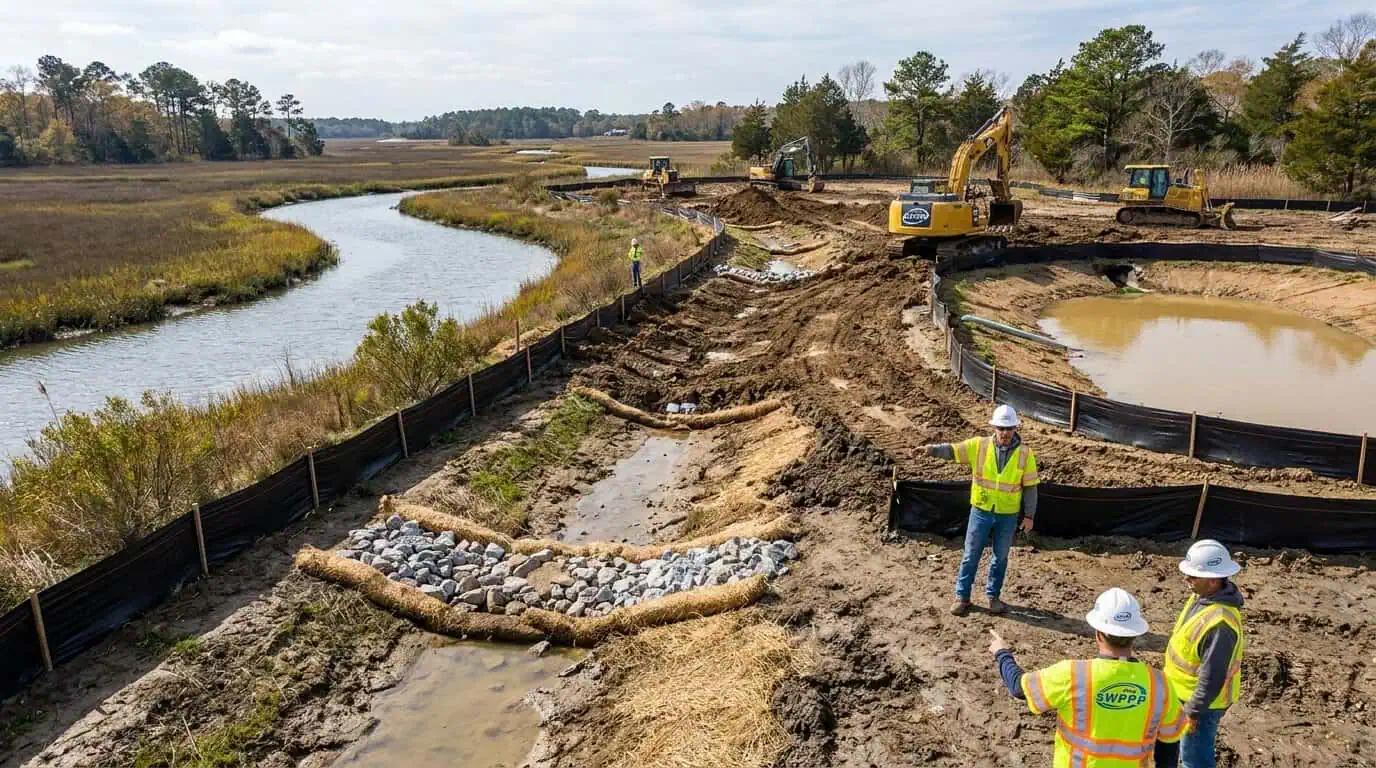
A Stormwater Pollution Prevention Plan (SWPPP) is a written document that explains how you will stop dirt, chemicals, and other pollutants from washing into rivers, streams, and wetlands. If you’re building anything that moves dirt on one acre or more, Delaware law says you need one. If you operate an industrial facility, you need a stormwater plan too.
Delaware has two main permit types: the Construction General Permit (CGP) and the Industrial Stormwater Permit. Both require a SWPPP. Both have inspection rules. Both carry penalties if you mess up.
Pro SWPPP has worked with hundreds of contractors in Delaware. We know the state rules inside and out. We’ll prepare your plan, help you file your Notice of Intent (NOI), and make sure you’re covered before you break ground.
Why Delaware Takes Stormwater Seriously
Delaware sits on the coast. Its waterways feed into the Delaware River, the Chesapeake Bay, and the Atlantic Ocean. When construction sites don’t control runoff, sediment clogs streams, harms wildlife, and pollutes drinking water. Industrial sites can leak oils, chemicals, and heavy metals into stormwater. DNREC enforces strict rules to protect water quality.
These rules come from two places: federal law (the Clean Water Act and EPA’s NPDES program) and state law (Delaware’s Sediment and Stormwater Regulations and Water Pollution Control Regulations). Delaware has full authority to issue permits and conduct inspections. You deal with the state, not the EPA.
Delaware Stormwater Regulatory Framework
DNREC is the agency in charge. Within DNREC, two programs handle stormwater permits: the Sediment and Stormwater Program (for construction) and the Industrial Storm Water Permitting Program (for facilities). Both sit under the Division of Watershed Stewardship. You can reach the Sediment and Stormwater Program at 302-608-5458.
Delaware’s rules are codified in two key regulations:
- 7 DE Admin. Code 5101: Sediment and Stormwater Regulations. This covers erosion control during construction and post-construction stormwater management.
- 7 DE Admin. Code 7201: Regulations Governing the Control of Water Pollution. This includes special conditions for construction stormwater (Part 2) and industrial stormwater discharges (Section 9.0).
Delaware is an authorized NPDES state. That means EPA delegated permit authority to Delaware. You apply to DNREC, not EPA. The state issues permits, reviews plans, conducts inspections, and enforces violations. Federal rules still apply, but Delaware adds its own requirements on top.
How Delaware’s Rules Relate to Federal EPA Standards
The federal Clean Water Act requires all states to regulate stormwater discharges. EPA sets baseline standards under 40 CFR 122. Delaware meets those standards and goes further. For example, EPA requires inspections every seven days, or every 14 days with certain conditions. Delaware requires weekly site reviews for all construction projects. If your site is over 50 acres, Delaware requires a Certified Construction Reviewer (CCR) to conduct those reviews. That’s a state-specific credential.
Delaware also integrates sediment and stormwater management into a single permitting process. Your approved Sediment and Stormwater Management Plan serves as your SWPPP. That’s different from many states, where you prepare a standalone SWPPP document. Pro SWPPP knows these nuances and prepares plans that satisfy both state and federal requirements.
For more on federal stormwater regulations, see the EPA’s construction stormwater page.
Construction General Permit (CGP) in Delaware
If your project disturbs one acre or more, you need coverage under Delaware’s NPDES Construction General Permit (CGP). The current permit is DE 0051268, also known as State Permit WPCC 3082/20. It became effective March 11, 2026, and is valid for five years.
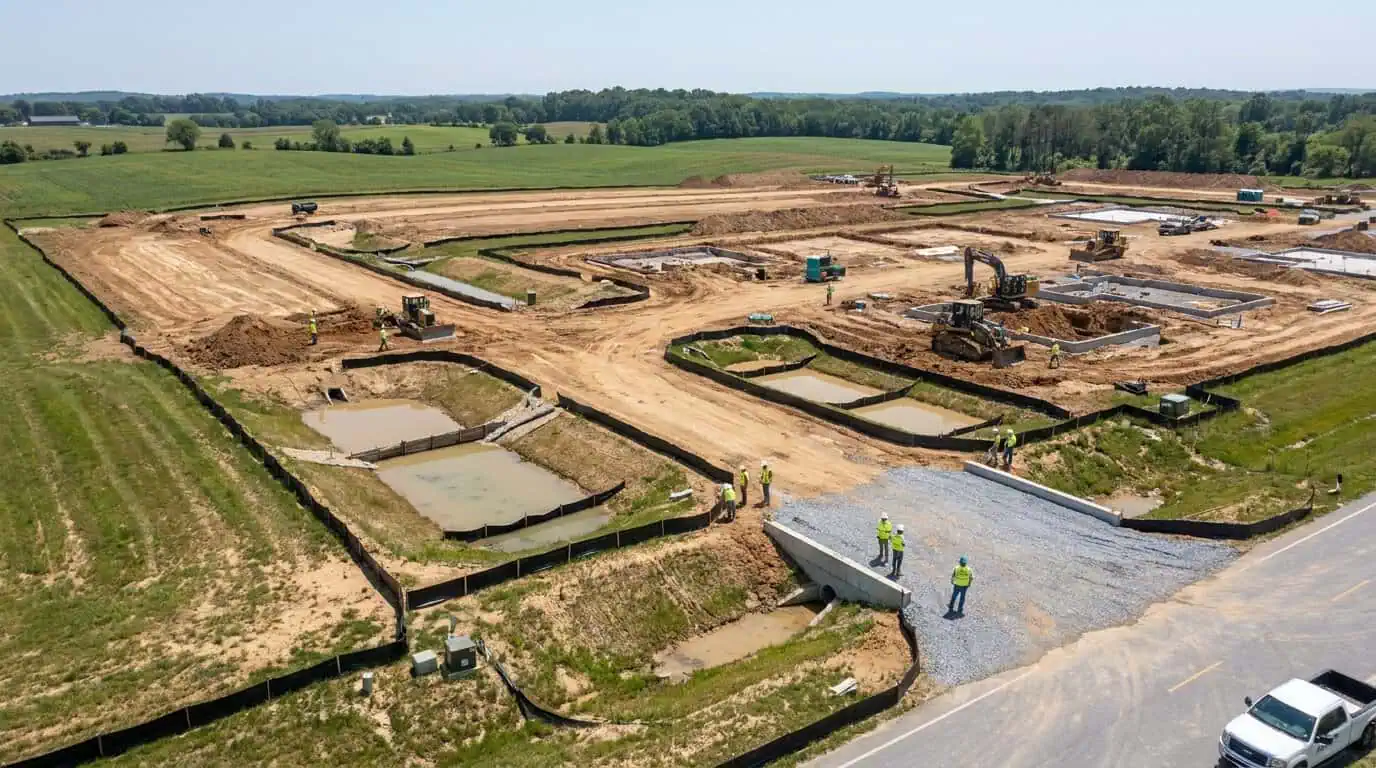
The one-acre threshold includes all phases of your project. If you’re building a housing development in stages, add up the total disturbance. If it’s one acre or more, you need the permit. Even if each phase is smaller, the total counts.
Who Needs the Construction General Permit
You need the CGP if you are:
- A general contractor, developer, or property owner disturbing one acre or more.
- A subcontractor responsible for stormwater controls on a larger site.
- A municipality or government agency doing roadwork, park construction, or utility projects over one acre.
The permit covers stormwater discharges from construction activities. It does not cover wastewater, concrete washout, or other non-stormwater discharges. Those require separate permits or controls.
How to Obtain CGP Coverage
You must submit a Notice of Intent (NOI) before you start construction. The NOI tells DNREC you want coverage under the general permit. You also need an approved Sediment and Stormwater Management Plan. That plan becomes your SWPPP.
Here’s the process:
- Prepare a Sediment and Stormwater Management Plan that meets 7 DE Admin. Code 5101 and 7201.
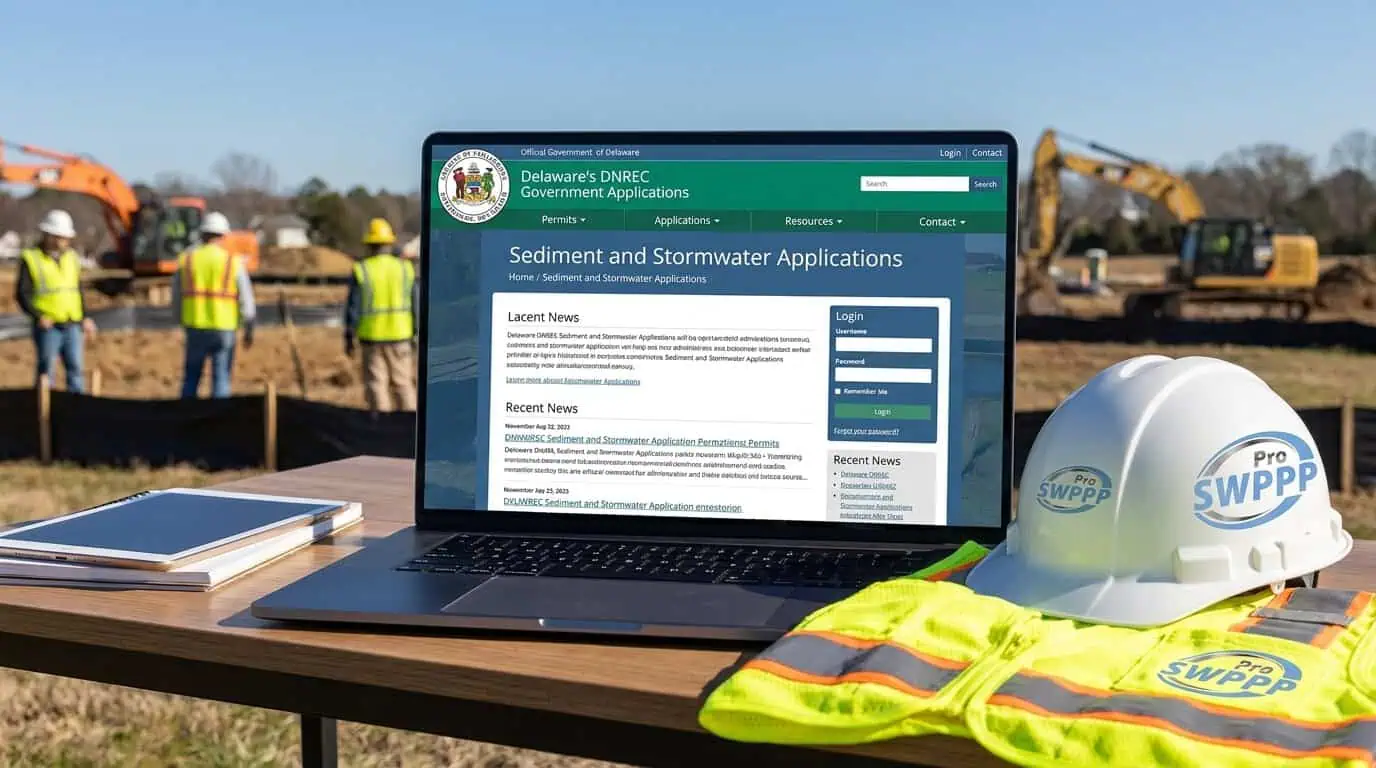
- Submit the plan to DNREC for review. Use the Sediment and Stormwater Applications portal on DNREC’s website.
- Once DNREC approves your plan, submit your NOI. You can do this online or by mail.
- Pay any required fees. DNREC will assign you a permit number.
- Post your permit number on-site and keep a copy of your approved plan available for inspectors.
Do not begin land disturbance until you receive permit coverage. Starting work without a permit is a violation. DNREC can issue a stop-work order and fine you.
Pro SWPPP handles all the paperwork. We prepare your plan, submit your NOI, and make sure you’re covered before your first bulldozer rolls. We’ve done this for projects nationwide. We know what DNREC looks for, and we get plans approved fast.
Permit Duration and Termination
Your CGP coverage lasts five years or until you complete construction and stabilize the site, whichever comes first. To terminate coverage, you must submit a Notice of Termination (NOT). You can terminate when:
- All land disturbance is complete.
- All areas are stabilized with vegetation or permanent cover.
- All temporary controls (silt fences, inlet protection, etc.) are removed.
- Post-construction stormwater BMPs are installed and functional.
Don’t file your NOT too early. If inspectors find unstabilized areas or missing controls after you terminate, you can be cited for violations.
Industrial Stormwater Permits in Delaware
Industrial facilities also need stormwater permits. If you operate a facility in one of EPA’s industrial categories, you must either obtain coverage under Delaware’s Industrial General Permit or apply for an individual permit. Covered categories include manufacturing, mining, transportation, waste handling, and more.
Delaware’s rules are in 7 DE Admin. Code 7201, Regulations Governing Storm Water Discharges Associated with Industrial Activities. Section 9.0 spells out permit requirements.
Who Needs an Industrial Stormwater Permit
You need an industrial permit if your facility:
- Stores, processes, or manufactures materials outdoors.
- Loads or unloads materials in areas exposed to stormwater.
- Has outdoor equipment, storage tanks, or waste piles.
- Falls under one of EPA’s Standard Industrial Classification (SIC) codes for stormwater.
Common examples include metal fabricators, auto salvage yards, chemical plants, warehouses with outdoor loading docks, and aggregate operations.
How to Obtain Industrial Permit Coverage
You have three options:
- General Permit: Submit an NOI Form to DNREC. You’ll receive coverage under the state’s Industrial General Permit. You must prepare a Storm Water Plan (SWP) that covers material handling, good housekeeping, spill prevention, and best management practices.
- No Exposure Certification: If your facility has no materials or activities exposed to stormwater, you can file a “No Exposure” Certification instead of obtaining a permit. DNREC reviews your certification and may inspect your site.
- Individual Permit: If your facility doesn’t fit the general permit, DNREC may require an individual permit. This involves a more detailed application and site-specific conditions.
Pro SWPPP prepares Industrial Storm Water Plans for facilities across Delaware. We assess your site, identify exposure points, design BMPs, and document everything DNREC requires. We also help you stay compliant with quarterly inspections and plan updates.
Don’t want to mess with all the paperwork? Order your SWPPP now with Pro SWPPP Professional CPESC Certified SWPPP Services.
Required BMPs for Delaware Construction Sites
Best Management Practices (BMPs) are the controls you use to stop pollutants from leaving your site. Delaware requires both erosion control BMPs (to keep soil in place) and sediment control BMPs (to trap soil that does move). Your SWPPP must list all BMPs and show where they’ll be installed on your site map.
Delaware’s Sediment and Stormwater Regulations (7 DE Admin. Code 5101) detail the standards for BMPs. Your plan must include controls for during construction and after construction is complete.
Erosion Control BMPs
Erosion control keeps soil from moving in the first place. Common erosion control BMPs in Delaware include:
- Temporary seeding: Planting fast-growing grasses on disturbed areas that will sit idle for more than 14 days.
- Mulching and tackifiers: Applying straw, wood chips, or spray-on tackifiers to hold soil in place.
- Erosion control blankets: Rolling out mats on slopes to stabilize soil until vegetation grows.
- Dust control: Watering or applying suppressants to haul roads and stockpiles to reduce airborne dust.
Delaware requires you to stabilize disturbed areas as soon as possible. If an area will be idle for 14 days or more, you must seed, mulch, or cover it. Don’t leave bare soil exposed.
Sediment Control BMPs
Sediment control captures soil that does erode. These BMPs are your last line of defense before stormwater leaves the site. Delaware requires perimeter controls on all projects. Common sediment control BMPs include:
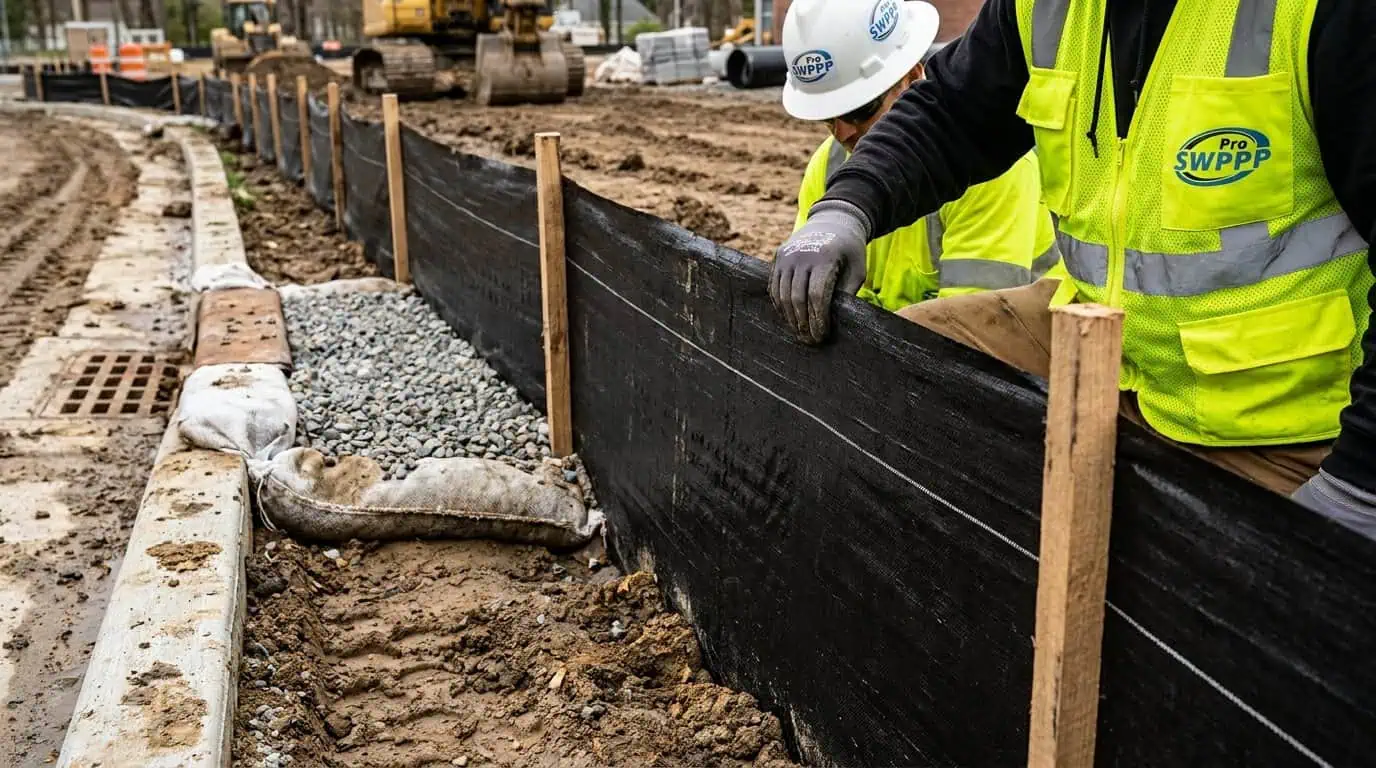
- Silt fences: Fabric barriers installed along the downhill edge of disturbed areas. They filter runoff and trap sediment.
- Inlet protection: Barriers or filters around storm drains to keep sediment out of the drainage system.
- Sediment basins and traps: Excavated ponds that hold runoff and allow sediment to settle before water is released.
- Check dams: Rock or sandbag barriers placed in ditches to slow water flow and trap sediment.
- Construction entrances: Gravel pads at site exits to knock mud off vehicle tires before they hit the road.
Delaware inspectors pay close attention to perimeter controls. If your silt fence is torn, sagging, or improperly installed, you’ll get a violation. Pro SWPPP designs BMP layouts that meet Delaware’s standards and provides clear installation guidance.
Post-Construction Stormwater Management
Your SWPPP must also address stormwater after construction is done. Delaware requires post-construction BMPs that reduce runoff volume and mimic natural hydrology. Common post-construction BMPs include:
- Infiltration basins and rain gardens: Landscaped depressions that soak up runoff and recharge groundwater.
- Permeable pavement: Pavers or porous asphalt that lets water filter through instead of running off.
- Bioretention areas: Planted areas with engineered soil that filters and absorbs stormwater.
- Disconnecting impervious surfaces: Routing roof downspouts and pavement runoff into vegetated areas instead of directly to storm drains.
Delaware’s regulations (Sections 11.0 and 12.0 of 7 DE Admin. Code 5101) spell out the design standards for post-construction BMPs. If your project uses infiltration BMPs, you must conduct a soils investigation to confirm the soil can handle infiltration rates. Pro SWPPP coordinates with engineers and soil scientists to design compliant post-construction systems.
SWPPP Inspection Requirements in Delaware
Delaware requires regular inspections for both construction and industrial sites. Inspections verify that BMPs are installed correctly, functioning properly, and maintained. You must document every inspection and keep records on-site.
Construction Site Inspection Requirements
Construction sites must conduct weekly site reviews. That means at least once every seven days, a qualified person must walk the site and check:
- All erosion and sediment control BMPs.
- Perimeter controls like silt fences and inlet protection.
- Stormwater outfalls and receiving waters.
- Areas of active disturbance.
- Material storage areas, including fueling and concrete washout.
If your site is over 50 acres, Delaware requires a Certified Construction Reviewer (CCR) to conduct the weekly reviews. The CCR is a state-specific credential. You can find CCR training through DNREC or approved training providers.
Weekly reviews must be documented on an inspection form. Record the date, weather conditions, BMPs inspected, any deficiencies found, and corrective actions taken. If you find a problem, you must fix it as soon as possible. Delaware regulations don’t give you a specific deadline, but inspectors expect prompt action.
Pro SWPPP provides inspection templates and checklists that meet Delaware’s requirements. We can also train your site personnel or provide CCR services if needed.
Industrial Site Inspection Requirements
Industrial facilities must conduct two types of inspections:
- Routine inspections: Quarterly inspections of equipment, outfalls, and BMPs. Walk the site, check for leaks or spills, verify controls are working, and document findings.
- Comprehensive site evaluations: More detailed inspections required annually, semi-annually, or quarterly depending on your industrial sector. For example, facilities in sectors A, B, and G inspect annually. Sectors C, D, and E inspect semi-annually. Sectors M and N inspect quarterly.
If you find a deficiency, you must correct it within 14 days and document the corrective action. If you can’t fix it in 14 days, document why and set a schedule for completion.
Industrial inspections must also include secondary containment checks (for tanks, drums, and chemical storage) and spill prevention equipment. Pro SWPPP prepares Industrial Inspection Forms tailored to your facility’s operations and sector.
DNREC Inspections
DNREC staff conduct inspections at construction and industrial sites. They check for permit compliance, BMP effectiveness, and plan implementation. If they find violations, they issue notices of violation (NOVs) or stop-work orders. DNREC also inspects post-construction stormwater facilities to verify they’re built and maintained correctly.
Inspectors can show up unannounced. Always keep your approved SWPPP, inspection logs, and training records on-site and accessible. If you’re not there, your site superintendent or foreman should know where the documents are.
Enforcement and Penalties in Delaware
Delaware takes stormwater violations seriously. DNREC has authority to issue fines, stop-work orders, and even refer cases for criminal prosecution in extreme situations. Most violations result in notices of violation (NOVs) with corrective action requirements. If you don’t fix the problem, fines escalate.
Penalties vary based on the severity and duration of the violation. Delaware’s Water Pollution Control Act authorizes civil penalties up to $10,000 per day per violation. Criminal penalties for knowing violations can include fines up to $25,000 per day and imprisonment.
Common Violations
The most common stormwater violations in Delaware include:
- Starting construction without permit coverage.
- Failure to install or maintain perimeter controls.
- Sediment discharge to state waters.
- Missing or incomplete inspection records.
- Failure to update the SWPPP when site conditions change.
- Lack of secondary containment at industrial facilities.
DNREC issues NOVs for first-time or minor violations. You typically have 30 days to correct the problem and submit proof of corrective action. If you don’t respond, DNREC escalates to fines or legal action.
Stop-Work Orders
If DNREC finds a serious violation (like sediment washing into a waterway or no permit coverage), they can issue a stop-work order. That means all land disturbance stops immediately. You can’t resume until you fix the problem, submit a corrective action plan, and get approval from DNREC. Stop-work orders cost you time, money, and reputation.
Pro SWPPP helps you avoid violations with compliant plans, ongoing support, and fast responses when issues arise. We’ve worked with contractors who faced NOVs and helped them get back on track. Prevention is always cheaper than fines.
Enforcement History in Delaware
DNREC does not publish detailed enforcement statistics for stormwater violations. However, the agency conducts hundreds of inspections each year and issues NOVs regularly. Contractors who ignore permit requirements or fail to maintain controls face penalties. DNREC also coordinates with local governments, who can issue their own citations for sediment escaping sites.
If you’re concerned about compliance, Pro SWPPP can audit your site, review your inspection records, and identify any gaps before DNREC does. We also provide training so your crew knows what inspectors look for.
How to File Your NOI in Delaware
Filing your Notice of Intent (NOI) is the first official step to get permit coverage. For construction projects, you file after your Sediment and Stormwater Management Plan is approved. For industrial facilities, you file the NOI along with your Storm Water Plan.
Here’s the step-by-step process for construction:
- Step 1: Prepare your Sediment and Stormwater Management Plan. This plan must meet 7 DE Admin. Code 5101 and 7201. It includes site maps, BMP details, construction sequencing, and maintenance schedules.
- Step 2: Submit your plan to DNREC for review. Use the Sediment and Stormwater Applications portal on the DNREC website. You can submit electronically or by mail.
- Step 3: DNREC reviews your plan. They may request revisions. Respond promptly to keep the process moving.
- Step 4: Once your plan is approved, submit your NOI. The NOI form is available on DNREC’s website. You can submit it online or by mail.
- Step 5: Pay any required fees. DNREC will assign you a permit number and send you a confirmation.
- Step 6: Post your permit number on-site. Keep a copy of your approved plan and NOI confirmation available for inspectors.
For industrial facilities, the process is similar. Submit your NOI Form along with your Storm Water Plan. If you’re claiming “No Exposure,” submit the No Exposure Certification instead. DNREC reviews your submission and issues permit coverage or requests more information.
Not sure what your project needs? Schedule a Free SWPPP Consultation with CPESC Certified SWPPP Expert Derek E. Chinners.
Timelines and Fees
DNREC aims to review plans within 30 days, but complex projects can take longer. Start the permitting process early. Don’t wait until the week before you want to start grading.
Permit fees vary by project size and type. Check DNREC’s fee schedule on their website or contact the Sediment and Stormwater Program at 302-608-5458 for current rates.
Common NOI Mistakes
Avoid these common mistakes that delay permit coverage:
- Incomplete or incorrect site maps.
- Missing BMP details or specifications.
- Failure to address post-construction stormwater requirements.
- Not signing or certifying the NOI.
- Filing the NOI before the plan is approved.
Pro SWPPP handles all the paperwork so you don’t have to worry about mistakes. We prepare compliant plans, submit your NOI, and track approvals. We’ve filed NOIs nationwide. We know what works.
Why Pro SWPPP is Delaware’s Best SWPPP Service
When you need a SWPPP in Delaware, you need a team that knows the state rules, works fast, and delivers quality. Pro SWPPP checks all those boxes. We’ve been doing this for 20+ years, we’re CPESC certified, and we work nationwide. We know Delaware’s regulations, DNREC’s expectations, and what inspectors look for.
CPESC Certified Experts
Our lead staff, including Derek E. Chinners, hold Certified Professional in Erosion and Sediment Control (CPESC) credentials. That’s the gold standard in stormwater compliance. CPESC certification means we’ve passed rigorous exams, stay current on regulations, and follow industry best practices. When you hire Pro SWPPP, you get certified professionals, not document mills.
Fast Turnaround
We deliver most SWPPPs within 72 hours. Need it faster? We offer rush service. We know contractors work on tight schedules. You can’t wait weeks for paperwork. We get your plan done so you can file your NOI and start work on time.
Nationwide Compliance
We’ve worked in Delaware, Texas, Georgia, and over 30 other states. We understand how state rules vary and how to navigate different agencies. If you have projects in multiple states, we can handle all of them with one point of contact.
Comprehensive Support
Pro SWPPP doesn’t just hand you a plan and disappear. We provide:
- SWPPP preparation and updates.
- NOI filing and permit tracking.
- On-site inspections and training.
- BMP design and installation guidance.
- Compliance audits and corrective action plans.
- Emergency response when DNREC shows up or violations occur.
We’re your stormwater compliance partner from start to finish. You can reach us anytime at our contact page or learn more about our team and services.
Transparent Pricing
We offer flat-rate pricing. No surprises, no hidden fees. You know exactly what you’ll pay before we start. Most contractors appreciate that. We also offer package deals for developers with multiple projects.
Proven Track Record
Contractors nationwide trust Pro SWPPP. We’ve prepared SWPPPs for everything from single-lot home builds to multi-phase commercial developments to highway projects. We’ve helped clients through DNREC inspections, NOV responses, and plan revisions. Our clients stay compliant and avoid fines.
When you work with Pro SWPPP, you work with pros who care about your success. We’re not a faceless online form. We’re real people with real experience, and we’re here to help.
FAQ
Do I need a SWPPP in Delaware if I’m disturbing less than one acre?
If your total disturbance is less than one acre and not part of a larger common plan of development, you do not need a NPDES Construction General Permit or SWPPP. However, you still must comply with local erosion and sediment control ordinances. Some counties and municipalities have their own requirements. Check with your local government before starting work.
How long does it take to get SWPPP approval in Delaware?
DNREC typically reviews Sediment and Stormwater Management Plans within 30 days. Complex projects or plans with deficiencies can take longer. Once your plan is approved, you can submit your NOI immediately. Allow at least six weeks from initial submission to permit coverage to be safe. Pro SWPPP can expedite the process by submitting complete, compliant plans the first time.
What happens if it rains and my BMPs fail?
Inspect your site immediately after any rain event that causes runoff. If BMPs are damaged or sediment escapes the site, document it, make repairs, and note corrective actions in your inspection log. If sediment reaches state waters, contact DNREC right away. Proactive communication and fast response can reduce penalties.
Can I use the same SWPPP for multiple projects in Delaware?
No. Each project needs its own site-specific SWPPP. Your plan must reflect the actual site conditions, BMPs, and construction sequence. You can use similar BMP designs and templates, but the plan itself must be unique to the project location. Pro SWPPP can create templates for repeat clients to speed up the process.
Do I need a Certified Construction Reviewer (CCR) in Delaware?
Yes, if your site disturbs 50 acres or more. Delaware requires a CCR to conduct the weekly site reviews on large projects. The CCR must complete state-approved training and maintain certification. If your site is under 50 acres, any qualified person can conduct the weekly reviews. Pro SWPPP can provide CCR services or help you find trained personnel.
What is the difference between a construction SWPPP and an industrial stormwater plan in Delaware?
A construction SWPPP covers temporary controls during land disturbance and post-construction BMPs. An industrial stormwater plan covers ongoing operations at a facility, including material handling, spill prevention, and routine maintenance. Construction SWPPPs terminate when the site is stabilized. Industrial plans remain in effect as long as the facility operates. Both must be prepared according to Delaware regulations, but the content and focus differ.
How much does a SWPPP cost in Delaware?
Costs vary based on project size, complexity, and whether you need additional services like inspections or training. Pro SWPPP offers competitive flat-rate pricing. Contact us for a free quote. Most small to mid-size projects cost less than you’d expect, especially compared to the cost of fines or delays.
Ready to get started? Order your SWPPP now or schedule a free consultation with Pro SWPPP.
Visit Pro SWPPP and see why contractors nationwide rely on America’s #1 SWPPP Service.
Stop Babysitting Delaware’s Stormwater Paperwork
Here’s the open secret of construction stormwater compliance: every state and county runs its own version of the same headache — a clunky permit portal, a Notice of Intent that has to be filed just so, fees, inspection logs, and a review team that loves bouncing things back “with revisions.” Delaware is no exception. You didn’t get into construction to moonlight as a stormwater clerk at 9 PM.
That’s the entire point of Pro SWPPP. We handle all of it — your Delaware SWPPP, the permit filing, and the CPESC certification it requires — done in 72 hours, with 24-hour expedited turnaround when the clock’s against you. You break ground; we wrestle the bureaucracy.
Skip the Paperwork. Get Back to Your Build.
Your Delaware SWPPP, permit filing, and CPESC certification — done for you in 72 hours, 24-hour rush available, or it’s FREE.
✅ Order Your Delaware SWPPP — The Easy Way →
📞 Talk to THE SWPPP Authority →
Schedule a call with Derek E. Chinners — Founder & Stormwater Consultant, CPESC · 833-GET-SWPPP