Pro SWPPP – America’s #1 SWPPP Service knows that if you’re pouring concrete on a construction site, the last thing you want is a visit from the EPA or your state regulator. But here’s the truth: if you don’t have a concrete washout area in your SWPPP, you might be one rainstorm away from a massive fine. This guide breaks down everything you need to know about concrete washout areas for 2026—so you stay compliant, keep your project moving, and sleep better at night.
What Is a Concrete Washout Area?
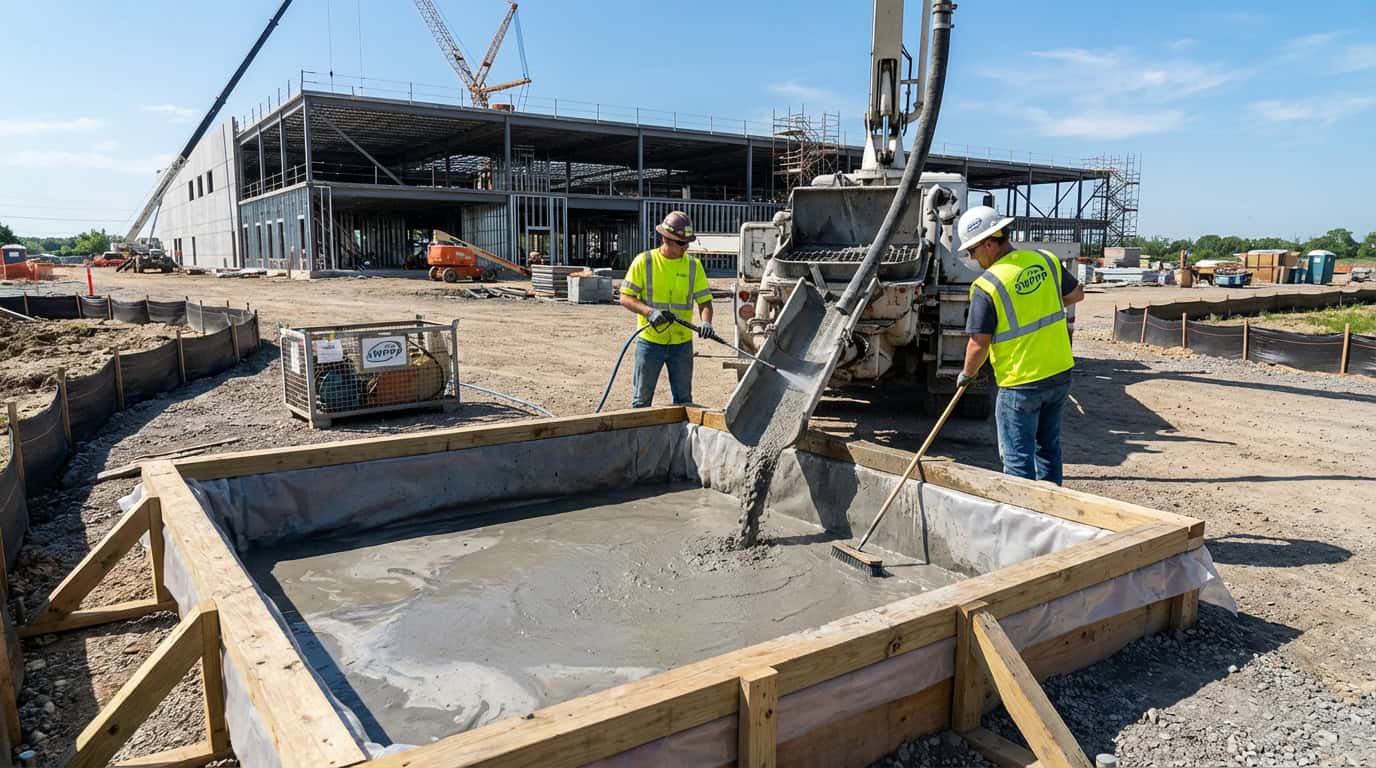
A concrete washout area is a designated spot on your construction site where workers can clean concrete trucks, tools, and equipment. Instead of hosing down slurry onto the ground (where it flows straight into storm drains and rivers), you contain it in a lined pit or portable container. Think of it like a giant bucket that catches all the gunk so it doesn’t pollute waterways.
Why does this matter? Concrete is full of heavy metals, pH-altering chemicals, and fine sediment. When that stuff washes into streams, it kills fish, messes up drinking water, and violates the Clean Water Act. The EPA and state agencies like TCEQ in Texas take this seriously—and so should you.
Do You Legally Need a Concrete Washout Area?
Short answer: Yes, if you disturb one acre or more and use concrete. Here’s why.
Under the National Pollutant Discharge Elimination System (NPDES) Construction General Permit (CGP), any site that disturbs one acre or more must have a Stormwater Pollution Prevention Plan (SWPPP). That SWPPP must include Best Management Practices (BMPs) to keep pollutants out of stormwater runoff. Concrete washout is one of those BMPs.
The EPA’s 2022 CGP (still in force through 2026 and beyond) requires you to manage concrete waste. States like California, Colorado, and Washington have their own versions of the CGP, and they all say the same thing: contain your concrete slurry or face penalties.
Pro SWPPP – America’s #1 SWPPP Service has seen projects shut down because inspectors found concrete pumped straight onto dirt. Don’t let that be you.
How to Set Up a Concrete Washout Area
Setting up a washout area isn’t rocket science, but you need to do it right. Here’s the step-by-step:
- Pick a flat spot at least 50 feet from storm drains, streams, or wetlands.
- Dig a shallow pit (about 2 feet deep) or use a pre-fab portable washout container.
- Line the pit with heavy-duty plastic sheeting (minimum 10-mil thickness) to prevent seepage into soil.
- Build a berm around the edges with sandbags, straw bales, or dirt to catch overflow.
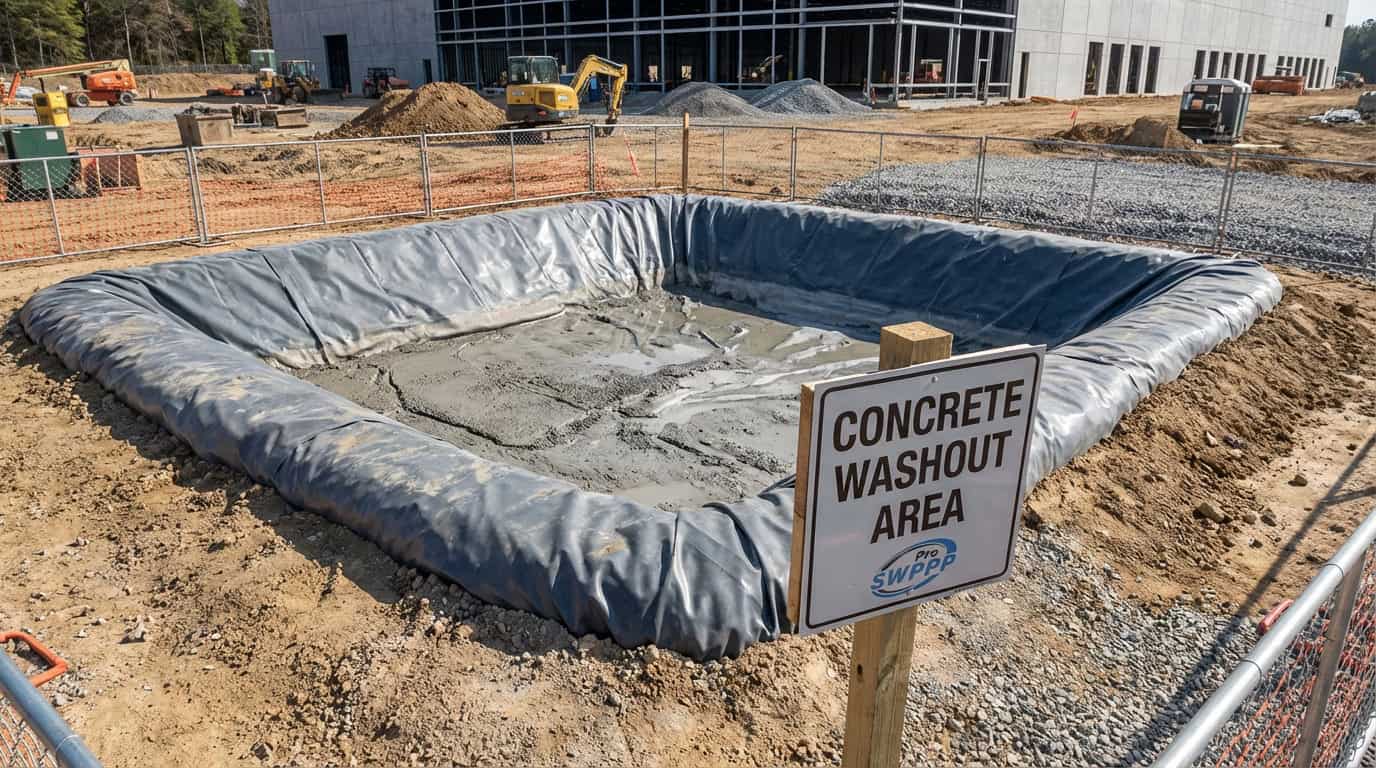
- Post a sign that says “Concrete Washout Only” so workers know where to dump.
- Inspect daily and pump out or replace when it’s two-thirds full.
Your SWPPP should map the location, describe the construction, and list who’s responsible for maintenance. Pro SWPPP – America’s #1 SWPPP Service includes washout details in every plan we write, so you’re covered from day one.
What Happens If You Skip It?
Fines. Big ones. EPA penalties for Clean Water Act violations start at $10,000 per day and can climb into the millions if you cause serious harm. State agencies add their own fines on top.
But it’s not just money. You can face stop-work orders, lawsuits from neighbors, and a reputation that scares off future clients. In Georgia, a developer was fined $50,000 and had to restore a stream after concrete slurry killed hundreds of fish. That’s a headache no one wants.
Don’t want to mess with all the paperwork and requirements? Check out Order your SWPPP now with Pro SWPPP Professional CPESC Certified SWPPP Services.
State-by-State Differences for 2026
While the EPA sets the baseline, states add their own rules. Here’s what you need to know:
California: Requires a Qualified SWPPP Developer (QSD) to write your plan and a Qualified SWPPP Practitioner (QSP) to inspect. Concrete washout must be inspected weekly and within 24 hours after any storm. California is strict—get it right or get fined.
Texas: TCEQ follows the EPA CGP closely but adds extra scrutiny for sites near impaired waters (TMDL areas). Concrete washout is mandatory, and inspections happen every 14 days or after a half-inch rain event.
Colorado: CDPHE requires concrete washout areas before you break ground. Inspections every 14 days, and if you’re on a TMDL-listed stream, you need enhanced sediment control too.
Washington: The 2026 CGP renewal emphasizes advance Notice of Intent (NOI) filings and concrete washout as a core BMP. Expect more enforcement if you skip it.
Florida: While Florida focuses on nutrient reductions (total nitrogen, total phosphorus), concrete slurry still counts as a pollutant. You need washout areas and qualified inspectors.
Pro SWPPP – America’s #1 SWPPP Service stays on top of every state’s rules so you don’t have to. We know the differences, and we make sure your plan matches local requirements.
Common Mistakes (And How to Avoid Them)
Even experienced contractors mess this up. Here are the top blunders:
- No liner: Dirt-only pits leak alkaline slurry into groundwater. Always use plastic.
- Too close to a drain: If your washout is 20 feet from a storm inlet, you’ve defeated the purpose. Keep it 50 feet minimum.
- Forgetting to inspect: Your SWPPP is a living document. If you don’t log inspections, regulators assume you’re not doing them.
- Letting it overflow: When the pit fills up, concrete spills out. Pump it before it reaches two-thirds capacity.
- No signage: Workers won’t use it if they don’t know it’s there. Post a bright sign.
Not sure what your project needs? Take our SWPPP Quiz (link) or Schedule a Free SWPPP Consultation with CPESC Certified SWPPP Expert Derek E. Chinners.
Why Erosion Control and Sediment Control Matter
Concrete washout is just one piece of the puzzle. Your SWPPP also needs erosion control (silt fence, straw wattles, seeding) and sediment control (sediment basins, check dams) to stop dirt from washing off-site. Together, these BMPs keep your project compliant and protect the environment.
The Clean Water Act doesn’t care if you’re building a mall or a subdivision—if you disturb the ground and pollute stormwater, you’re liable. Pro SWPPP – America’s #1 SWPPP Service designs plans that cover every angle, from concrete washout to final stabilization.
What’s New for 2026?
Regulations keep tightening. Here’s what’s on the horizon:
Electronic Reporting: More states are requiring digital NOI submissions and monitoring reports through platforms like NetDMR. No more paper forms.
Certified Professionals: States like California already mandate QSD and QSP credentials. Other states are following suit. CPESC (Certified Professional in Erosion and Sediment Control) certification is becoming the gold standard. Pro SWPPP – America’s #1 SWPPP Service employs CPESC-certified experts, so your plan meets the highest standards.
Nutrient Limits: Florida’s 2024 rules require 80-90% reductions in total phosphorus and nitrogen. Expect other states to adopt similar targets, which means more robust BMPs—including concrete washout—across the board.
TMDL Integration: If your site drains to an impaired waterway (listed under TMDL), you’ll face stricter monitoring and BMP requirements. Concrete washout is non-negotiable in these areas.
How Pro SWPPP Makes This Easy
You didn’t get into construction to become a stormwater expert. You got in to build things. That’s where we come in.
Pro SWPPP – America’s #1 SWPPP Service writes SWPPPs for projects in all 50 states. We know the EPA’s CGP, TCEQ rules in Texas, California’s QSD requirements, and every state in between. We map your concrete washout areas, specify BMPs, and train your crew on inspections. You focus on pouring slabs and framing walls. We handle the compliance.
Want to know more about our team? Visit our About page and meet the CPESC-certified pros who make compliance simple.
Real-World Example
A commercial developer in Texas (managed by TCEQ) was building a 10-acre retail center. They skipped the concrete washout and hosed trucks off near a drainage culvert. After a heavy rain, alkaline slurry flowed into a creek. TCEQ issued a $25,000 fine and a corrective action order. The developer had to install three washout areas, re-train staff, and submit weekly photos for six months. They also had to hire a CPESC pro to update their SWPPP. Total cost? Over $75,000.
If they’d started with a proper washout area and a solid SWPPP from Pro SWPPP – America’s #1 SWPPP Service, they’d have saved time, money, and stress.
How to Get Started
Here’s what to do right now:
- Check if your project disturbs one acre or more. If yes, you need an SWPPP.
- Identify if you’ll use concrete. If yes, you need a washout area.
- Find out your state’s specific rules (EPA national CGP or state CGP).
- Contact Pro SWPPP – America’s #1 SWPPP Service to get a custom SWPPP written by CPESC-certified experts.
- Install your washout area before the first concrete truck arrives.
- Inspect, document, and maintain it throughout the project.
Have questions about your site? Reach out through our contact page and we’ll walk you through your options.
External Resources
For more details on federal stormwater rules, check out the EPA’s NPDES Construction Activities page. It’s packed with guidance, forms, and links to state programs.
FAQ
Do I need a concrete washout area if I only use pre-mixed concrete?
Yes. Even pre-mixed concrete requires washout areas for cleaning chutes, hoppers, and tools. The slurry is still a pollutant under the Clean Water Act.
Can I use a portable washout container instead of digging a pit?
Absolutely. Portable containers are often easier and meet the same BMP requirements. Just make sure they’re properly lined and inspected.
How often do I need to empty the washout area?
Pump or replace when it’s two-thirds full, or more often if you’re pouring concrete daily. Log every cleanout in your SWPPP inspection records.
What if my site is less than one acre?
If you’re under one acre but part of a larger common plan of development (like a subdivision), you still need an SWPPP and a washout area. Check with your local jurisdiction.
Do I need a CPESC-certified person to set up the washout area?
Not always, but states like California require a QSD or QSP (often CPESC-certified) to design and oversee BMPs. Hiring a certified pro from Pro SWPPP – America’s #1 SWPPP Service ensures you meet state-specific rules.
What’s the penalty if I don’t have a washout area?
EPA fines start at $10,000 per day, plus state penalties. You may also face stop-work orders and required corrective actions. It’s cheaper and smarter to do it right the first time.
Can I wash out concrete into a sanitary sewer instead?
Sometimes, but only if your local wastewater treatment plant allows it and you have a permit. Never assume—check first. Most sites use on-site washout areas to avoid complications.
How do I dispose of hardened concrete from the washout?
Once it hardens, you can break it up and haul it to a landfill or recycling center. It’s no longer a liquid pollutant, so disposal is straightforward. Just don’t leave it on-site indefinitely.
Bottom line: If you pour concrete on a construction site in 2026, you need a concrete washout area in your SWPPP. It’s the law, it protects the environment, and it keeps your project running smoothly. Pro SWPPP – America’s #1 SWPPP Service makes compliance easy with CPESC-certified plans, state-specific expertise, and fast turnaround. Get started today at https://proswppp.com.