Pro SWPPP – America’s #1 SWPPP Service knows that starting a construction project in Illinois without the right permits is like driving without a license – you might get away with it for a while, but when you get caught, it’s going to cost you big time. If you’re planning to break ground in 2026, you need to know whether your project needs a SWPPP (Stormwater Pollution Prevention Plan) and how to get it done right.
Here’s the deal: Illinois doesn’t mess around when it comes to stormwater. The state runs one of the tightest construction site programs in the country under the Clean Water Act. If you disturb one acre or more of dirt, you’re going to need a SWPPP before you can even think about starting work. And if you don’t get it right? Expect fines, stop-work orders, and serious headaches that could sink your whole project.
What Exactly Is a SWPPP and Why Illinois Cares So Much
A SWPPP is your game plan for keeping dirt, chemicals, and other nasty stuff from washing off your construction site into nearby streams, rivers, and lakes. Think of it like this: when it rains on bare dirt, that water picks up sediment and pollutants and carries them straight into the water system. The EPA and Illinois EPA don’t want that happening, so they created the NPDES permit program to control it.
Under the Construction General Permit system, Illinois uses what’s called the ILR10 permit. This permit runs from September 2023 through August 2028, and it has some pretty specific rules you need to follow. The ILR10 permit requires you to create a detailed plan showing exactly how you’ll stop pollution from leaving your site, then actually do what you said you’d do.
We’ve helped hundreds of Illinois contractors get their permits approved fast, and we’ve seen every mistake in the book. The biggest one? Thinking you can skip the SWPPP because your project is “small.” If you’re part of a larger development plan that adds up to one acre or more total, you still need coverage – no exceptions.
When You Actually Need a SWPPP in Illinois
The one-acre rule is the big trigger. Any construction activity that disturbs one acre or more of land requires a SWPPP and an NOI (Notice of Intent). But here’s where people get tripped up: even if your specific lot is only half an acre, if it’s part of a bigger development that totals more than one acre, you’re still on the hook.
Let’s say you’re building a single home on a 0.7-acre lot. Normally, you’d be fine. But if that home is part of a 10-home subdivision, the whole project is way over one acre – which means every builder needs coverage under the ILR10 permit. This catches a lot of small contractors off guard.
Don’t want to mess with all the paperwork and requirements? Check out Order your SWPPP now with Pro SWPPP Professional CPESC Certified SWPPP Services.
The ILR10 Permit: What Changed in 2023 and What You Need to Know for 2026
The current ILR10 permit kicked in during September 2023, and it brought some big changes from the old rules. The most important one: everything is electronic now. You submit your NOI through the EPA’s CDX portal, not by mail or fax. You also need to upload your SWPPP electronically and keep digital records.
Here’s what the permit requires before you can start construction:
- Create a complete SWPPP that shows your site layout, drainage patterns, erosion control measures, and Best Management Practices
- Get clearance from the Illinois Department of Natural Resources EcoCat system proving you won’t harm endangered species
- Get approval from the Illinois State Historic Preservation Office showing you won’t damage historic sites
- Submit your NOI through the CDX portal with a $750 fee
- Wait 7-10 days for your permit coverage to be confirmed
Only after all that can you legally disturb the ground. Start too early, and you’re looking at serious penalties.

What Goes Into a Complete Illinois SWPPP
Your SWPPP isn’t just a box to check – it’s the blueprint for your entire erosion and sediment control program. Pro SWPPP – America’s #1 SWPPP Service creates plans that include everything the permit requires and nothing you don’t need.
A complete SWPPP must have a detailed site map showing topography extending a quarter-mile beyond your property, all outfall locations, drainage patterns, and where you’ll place controls. It also needs a narrative explaining your construction activities, what pollutants might be present, and exactly which Best Management Practices you’ll use to control them.
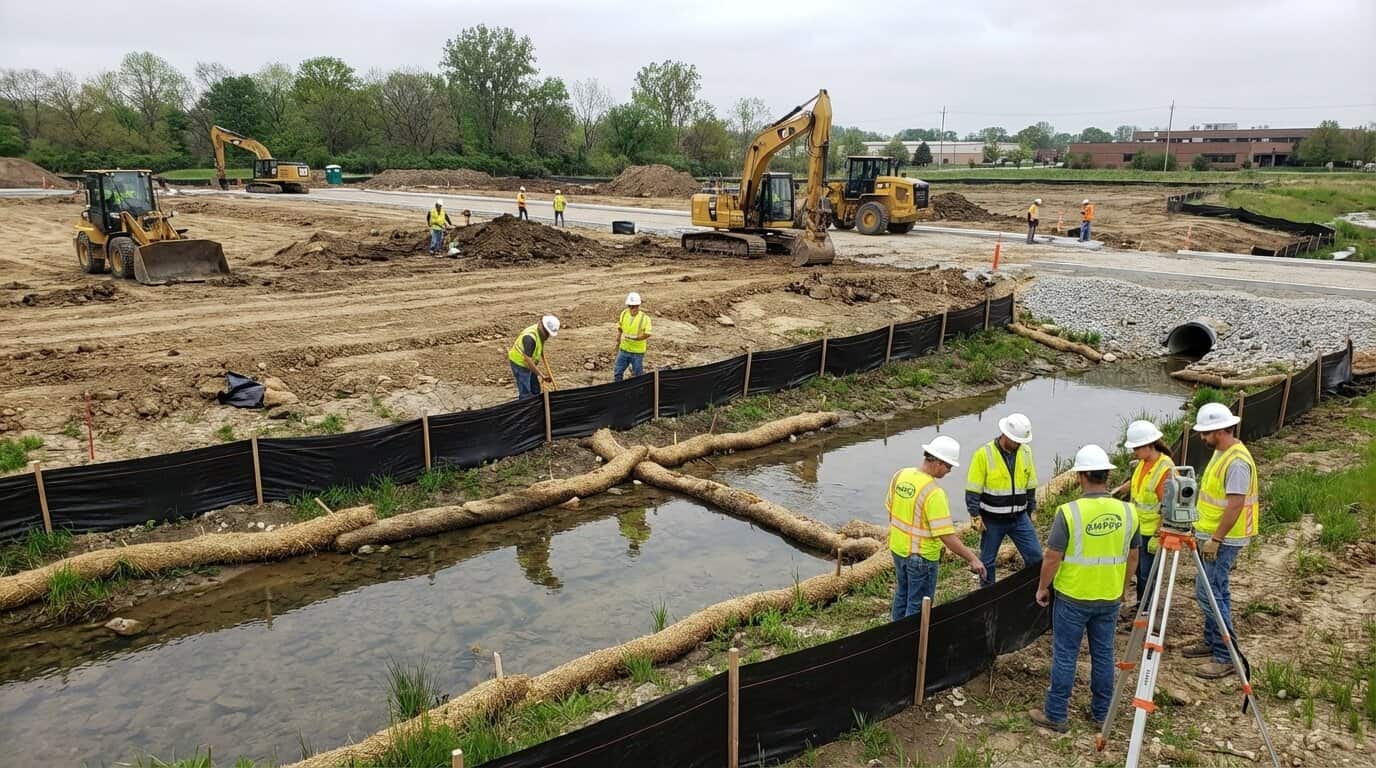
The BMP section is where most of the work happens. You need both structural controls like silt fences, sediment basins, and stabilized construction entrances, plus non-structural practices like good housekeeping, spill prevention, and employee training. Every control has to be shown on your map and explained in detail.
Other states like Texas and Georgia have similar requirements, but Illinois adds some extra teeth with its inspection and maintenance rules.
Inspections and Maintenance: The Part That Never Ends
Getting your SWPPP approved is just the beginning. The ILR10 permit requires regular inspections by a qualified person – someone who has completed EPA Construction General Permit training or has equivalent experience. You must inspect your site after every rain event that drops 0.5 inches or more, or at least once per week if there’s no rain.
Each inspection requires documentation showing what you found, what needed fixing, and when you fixed it. You keep these records for three years after your project wraps up. Miss inspections or fail to maintain your controls, and you’re out of compliance – which can trigger fines or stop-work orders.
Illinois weather makes this challenging. The state gets plenty of rain and snow, which means your controls take a beating. Silt fences get torn, sediment basins fill up, and stabilized entrances turn into mud pits. That’s why your SWPPP needs realistic maintenance schedules and backup plans for when controls fail.
The Electronic Reporting System and CDX Portal
One of the biggest changes in the 2023 ILR10 permit was the switch to electronic submissions. You can’t mail or fax anything anymore – it all goes through the EPA’s CDX (Central Data Exchange) portal. This system handles your NOI, SWPPP uploads, and your NOT (Notice of Termination) when the project is done.
Setting up a CDX account takes time. You need to register, get approved, and learn how to navigate the system. Many contractors find this frustrating, especially if they’re not tech-savvy. That’s where working with Pro SWPPP – America’s #1 SWPPP Service pays off – we handle all the electronic filing for you.
The NOI fee is $750, payable online through the portal. If you had coverage under the old permit, you needed to renew by around March 2024 to keep your coverage active. For new projects in 2026, you’ll submit a fresh NOI and wait up to 10 days for coverage confirmation.
EcoCat and SHPO: The Extra Steps That Slow Everything Down
Before you can submit your NOI, you need two special clearances that most other states don’t require upfront. The EcoCat system is run by the Illinois Department of Natural Resources and checks whether your project might harm endangered or threatened species. You submit your site information online and wait for a determination.
The SHPO (State Historic Preservation Office) clearance makes sure you won’t damage any historic properties or archaeological sites. This process involves reviewing maps, submitting project details, and sometimes waiting for field surveys.
Both clearances can take weeks if there are issues with your site. That’s why smart contractors start these processes early – often before finalizing their SWPPP. Waiting until the last minute can delay your whole project by a month or more.
Not sure what your project needs? Take our SWPPP Quiz (link) or Schedule a Free SWPPP Consultation with CPESC Certified SWPPP Expert Derek E. Chinners.
Common Illinois BMP Requirements You Can’t Skip
The ILR10 permit spells out minimum requirements for certain Best Management Practices. Every site needs perimeter sediment controls – usually silt fence or erosion control blankets along the property line to catch runoff before it leaves your site. You also need stabilized construction entrances to keep mud from tracking onto public roads.
Sediment basins or traps are required for larger sites to settle out dirt particles before water leaves the property. The permit has specific sizing requirements based on your drainage area and flow rates. You can’t just dig a hole and call it a basin – it needs to be engineered properly.
The 2023 permit added stricter rules for dewatering operations. If you’re pumping groundwater out of excavations, you need to filter or treat it before discharge. Chemical storage also got more attention – you need documentation showing how you’re preventing spills and leaks from fuel tanks, paint, concrete washout, and other materials.
Good housekeeping practices tie everything together. This means keeping your site clean, properly storing materials, preventing trash from blowing around, and training your crew on spill response. It sounds basic, but these simple steps prevent most pollution problems.
What Happens If You Don’t Comply
The Illinois EPA doesn’t play around. If they catch you working without a SWPPP or failing to maintain your controls, you’re looking at civil penalties that can reach thousands of dollars per day. They can also issue stop-work orders that shut down your whole project until you fix the problems.
Beyond state enforcement, you might face citizen lawsuits under the Clean Water Act. Environmental groups and downstream property owners can sue for violations, and you’ll be paying their legal fees on top of your own if you lose.
Project delays cost even more than fines. Every day your crew sits idle because you don’t have proper stormwater coverage is money down the drain. That’s why getting your SWPPP right the first time is so critical.
How Pro SWPPP Makes Illinois Compliance Easy
Pro SWPPP – America’s #1 SWPPP Service takes the stress out of Illinois stormwater compliance. We create custom SWPPPs that meet every ILR10 requirement, handle all the CDX portal submissions, coordinate your EcoCat and SHPO clearances, and provide qualified inspectors when you need them.
Our team includes CPESC-certified professionals who know Illinois regulations inside and out. We’ve worked on projects from small residential sites to major commercial developments across the state. When you work with us, you get a complete compliance package – not just a document.
We also provide ongoing support throughout your project. Need help with an inspection? We’re there. Questions about maintaining your controls? We’ve got answers. Worried about an EPA audit? We’ll help you prepare. You can learn more about our approach here.
Looking Ahead to 2026 and Beyond
The current ILR10 permit runs through August 2028, so no major changes are expected for 2026 projects. But that doesn’t mean you can relax. The Illinois EPA continues to update guidance documents and enforcement priorities. Electronic reporting requirements keep expanding, and inspection standards get stricter every year.
Climate change is driving more intense storms across Illinois, which means your erosion and sediment controls face tougher conditions than ever before. A SWPPP that would have worked fine ten years ago might not cut it today. That’s why working with experts who stay current on best practices is so important.
The trend toward sector-specific requirements continues too. Different types of construction face different pollution risks, and permits are starting to reflect that with customized monitoring and control requirements. Staying ahead of these changes protects your business from costly surprises.
Quick Steps to Get Your Illinois SWPPP Done Right
Here’s the simple process for 2026 projects. First, determine if you need coverage by calculating your total disturbed area including any common plan of development. If you’re over one acre, you need a SWPPP and NOI.
Next, develop your SWPPP with detailed site maps, BMP selections, and maintenance schedules. Start your EcoCat and SHPO clearances early – don’t wait for the SWPPP to be perfect. Once you have those clearances, register for the CDX portal if you haven’t already.
Submit your NOI with the $750 fee and wait for coverage confirmation. Only after you receive confirmation can you begin disturbing soil. Keep your SWPPP on site at all times, conduct required inspections, and maintain detailed records. When the project is finished and the site is stabilized, submit your NOT to close out the permit.
If this sounds like a lot, that’s because it is. But Pro SWPPP – America’s #1 SWPPP Service handles every step for you. We’ve streamlined the process so you can focus on building while we handle compliance. Questions about getting started? Just give us a shout and we’ll help!
Commonly Asked Questions About SWPPPs
Do I need a SWPPP for a small residential project in Illinois?
If your project disturbs less than one acre and isn’t part of a larger common plan of development, you don’t need ILR10 permit coverage. But if your lot is part of a subdivision or phased development that totals one acre or more, you need a SWPPP and NOI even if your individual lot is small.
How long does it take to get ILR10 permit coverage?
Once you submit a complete NOI with your EcoCat and SHPO clearances, the Illinois EPA typically confirms coverage within 7-10 business days. But getting those clearances can take several weeks, so start the process at least a month before you need to break ground.
What’s the difference between an NOI and a SWPPP?
The NOI (Notice of Intent) is the application form you submit to get permit coverage. The SWPPP is the actual pollution prevention plan that shows what controls you’ll use and how you’ll maintain them. You need both – the NOI gets you coverage, and the SWPPP guides your daily operations.
Can I use the same SWPPP for multiple projects?
No. Each construction site needs its own site-specific SWPPP showing the unique conditions, drainage patterns, and controls for that location. You can use similar templates and approaches, but the details must match the actual site.
What happens if I start work before getting my permit?
Starting construction without approved permit coverage is a violation that can result in fines, stop-work orders, and legal liability. The Illinois EPA takes unauthorized discharges seriously, and the penalties can be severe enough to make your project unprofitable.
How often do I need to inspect my erosion controls?
You must inspect after every rainfall of 0.5 inches or more, or at least once per week if there’s no significant rain. Inspections must be done by a qualified person and documented in writing. These records stay with your SWPPP for three years after project completion.
Do industrial sites need a SWPPP too?
Yes, but they use a different permit called the ILR00 for industrial stormwater. That permit has its own requirements separate from construction site rules. If you have both construction and industrial activities, you might need coverage under both permits.
What’s a qualified inspector under the ILR10 permit?
A qualified inspector is someone who has completed EPA Construction General Permit training or has equivalent experience in erosion and sediment control. The 2023 permit expanded who qualifies by recognizing EPA CGP training completers.
Getting your Illinois construction project permitted doesn’t have to be complicated – Pro SWPPP – America’s #1 SWPPP Service makes stormwater compliance fast, affordable, and stress-free so you can focus on building instead of paperwork.