Pro SWPPP – America’s #1 SWPPP Service here to help you understand something important: if you’re breaking ground on a construction site in Indiana that disturbs one acre or more, you need to follow special rules. These rules keep dirt, mud, and chemicals from washing into streams, rivers, and lakes. Miss them and you could face fines averaging $28,000. So let’s talk about what you actually need to do.
What Is the Construction General Permit?
The Clean Water Act is a big federal law that protects America’s water. Part of it created the NPDES program. NPDES stands for National Pollutant Discharge Elimination System. Basically, if your construction project could send dirty water into a storm drain or stream, you need a permit.
In Indiana, that permit is called the Construction Stormwater General Permit, or CSGP for short. The current version became active on December 18, 2021. If your project moves one acre of dirt or more, you must get covered under this permit before you touch the land.
Think of the CSGP as your license to build without poisoning the water supply. Without it, you’re breaking the law.
Do You Need a SWPPP or an NOI?
Short answer: you need both.
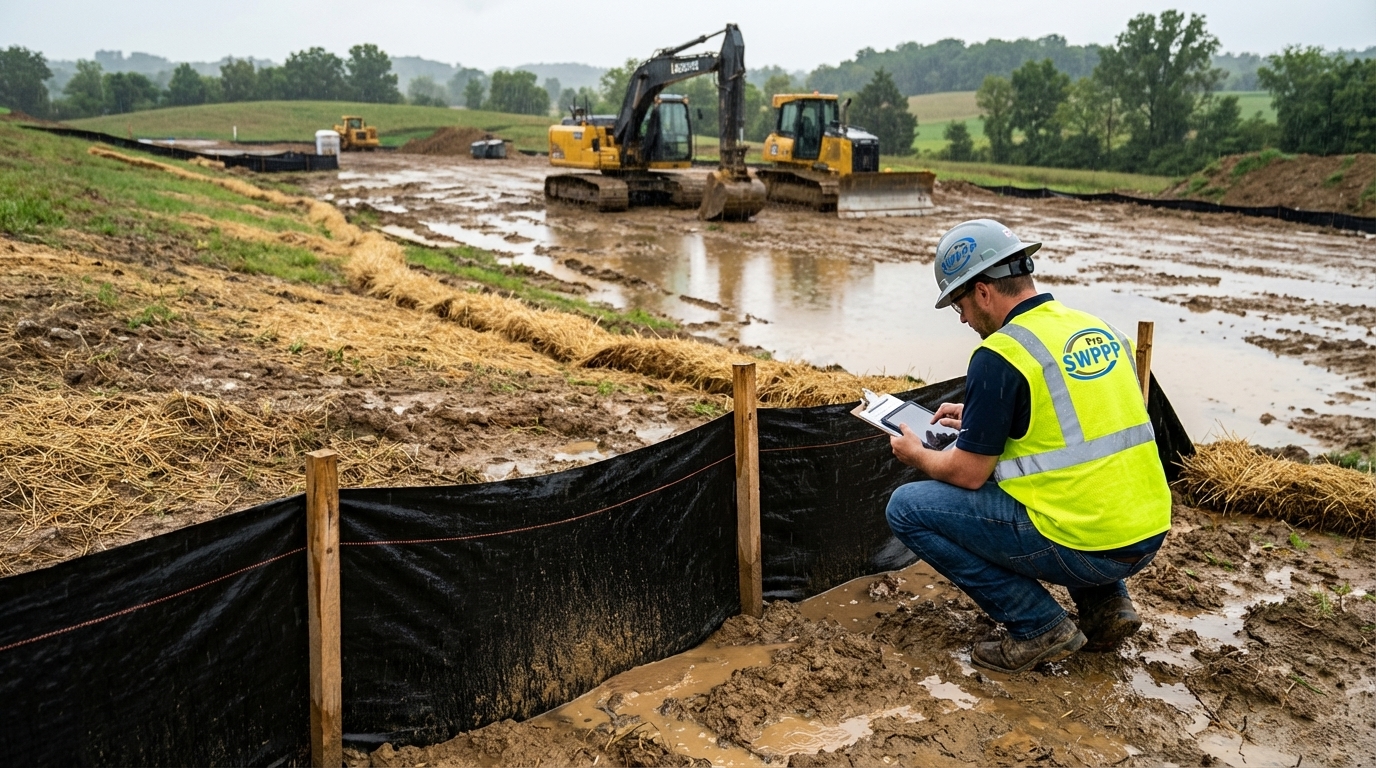
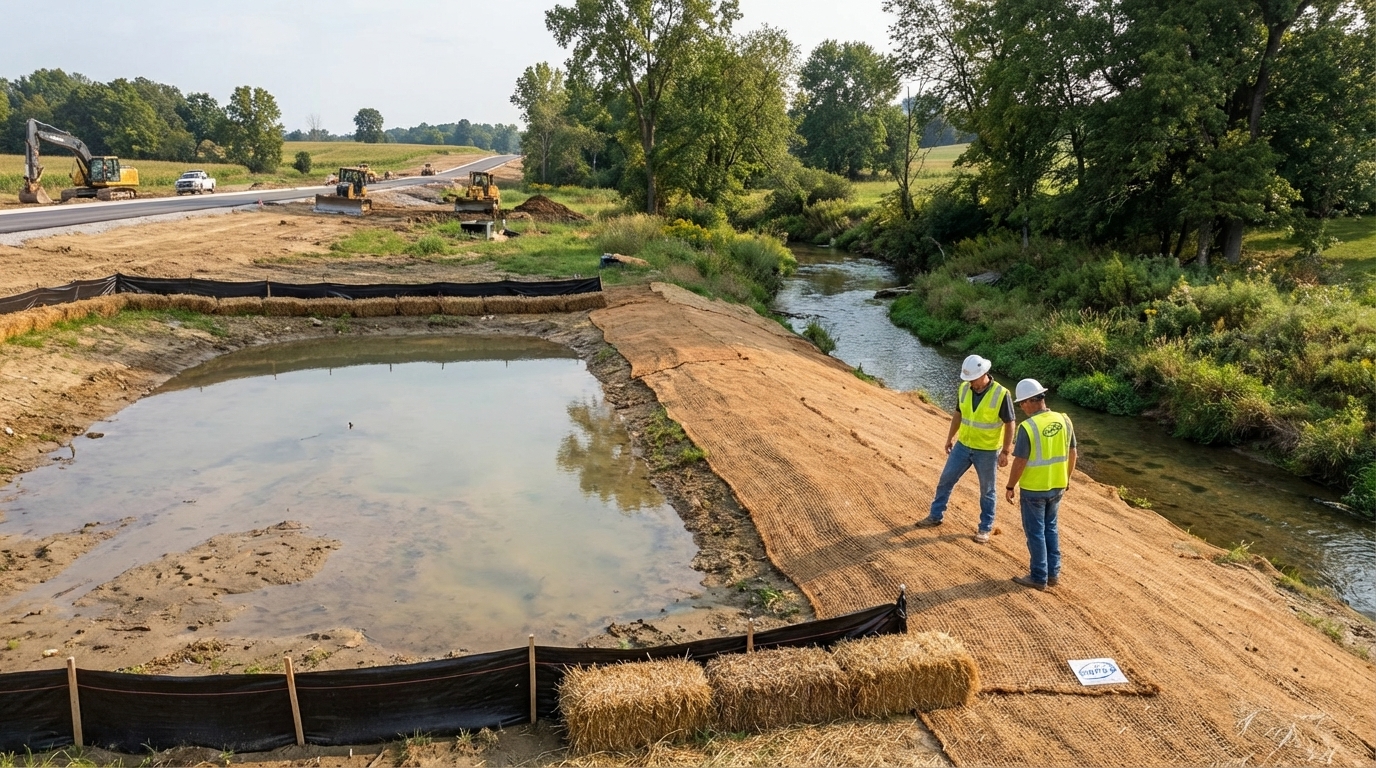
A SWPPP is a Stormwater Pollution Prevention Plan. It’s a detailed document that shows how you’ll stop mud, sediment, fuel, paint, concrete washout, and other pollutants from leaving your site. It lists your Best Management Practices, or BMPs. These are things like silt fences, sediment basins, erosion control blankets, and construction entrance pads. Your SWPPP also names who’s in charge, how often you’ll inspect, and what you’ll do after construction to manage stormwater long-term.
An NOI is a Notice of Intent. It’s the form you file with the Indiana Department of Environmental Management, or IDEM, to get your permit coverage. You submit your NOI through IDEM’s ePortal system. You pay a $100 fee and attach proof that you published a newspaper notice. Once IDEM approves your NOI, you’re officially covered under the CSGP.
Here’s the catch: you must write your SWPPP first. Then you submit it for review to your local Municipal Separate Storm Sewer System (MS4), Soil and Water Conservation District (SWCD), or IDEM. Only after your plan is approved can you file your NOI and start digging.
Pro SWPPP – America’s #1 SWPPP Service writes SWPPPs every day for builders, developers, and contractors all over the country. We know the rules inside and out, so you don’t have to guess.
What Goes Into a SWPPP in Indiana?
Your SWPPP must include several key pieces:
- Site maps: Show property lines, drainage patterns, slopes, and nearby streams.
- Grading and drainage plans: Explain where water flows and how you’ll control it.
- Erosion and sediment controls: List your silt fences, sediment traps, inlet protection, check dams, and stabilization methods.
- Other pollutant controls: Cover fueling areas, material storage, concrete washout, and trash management.
- Post-construction BMPs: Describe permanent stormwater features like bio-swales, detention ponds, or infiltration systems.
- Personnel and responsibilities: Name the trained person who manages stormwater on site.
- Inspection and maintenance schedules: Commit to checking your BMPs at least every seven days and after every half-inch rain.
- Record-keeping: Keep all inspection logs, maintenance records, and plan updates for three years.
Your SWPPP isn’t just paperwork. It’s a living performance standard. If a silt fence falls over or a sediment basin fills up, you must fix it and document the repair. Inspectors from IDEM, your SWCD, or your MS4 can show up anytime to check your work.
Don’t want to mess with all the paperwork and requirements? Check out Order your SWPPP now with Pro SWPPP Professional CPESC Certified SWPPP Services.
The Step-by-Step Permit Process
Here’s how it works in Indiana:
Step 1: Write your SWPPP. Use the Indiana Stormwater Quality Manual as your guide. Size your post-construction BMPs using the Water Quality Volume, or WQv, method. Match your plan to the review forms used by your local SWCD or MS4.
Step 2: Submit your plan for review. If you’re in an MS4 area, send it to the city or county stormwater office. If not, send it to your SWCD or IDEM. Digital submissions are becoming the norm.
Step 3: Wait for approval. Review times vary. Some SWCDs turn plans around in a week. Others take a month. Plan early to avoid delays.
Step 4: File your NOI. Log into IDEM’s ePortal. Submit your NOI form, pay the $100 fee, and upload proof of your newspaper notice. IDEM will issue your permit authorization letter.
Step 5: Start construction. Keep your SWPPP on site at all times. Train your crew. Inspect weekly and after rain. Fix problems fast.
Step 6: Terminate your permit. When the site is stable and your post-construction BMPs are in place, file a Notice of Termination, or NOT. Your SWCD will inspect first. Remove all temporary BMPs like silt fences. Once IDEM approves your NOT, you’re done.
What Changed in the 2021 CSGP?
The current CSGP replaced the old Rule 5 permit. Key updates include:
- Stricter erosion control standards on steep slopes over 10 percent.
- More detailed post-construction BMP requirements.
- Digital submission through the ePortal system.
- Mandatory training for the person overseeing stormwater compliance.
- Tougher enforcement. IDEM issued over 120 Notices of Violation in 2024, with average settlements around $28,000.
More changes are coming. Experts expect updates in 2025 or 2026 that will require digital submittals through a system called nSITE Explorer, stricter BMP specifications, and as-built drawings that match your approved plans within 10 percent. The feds are also updating the nationwide Multi-Sector General Permit, or MSGP, which could add requirements for public access to your SWPPP and endangered species documentation.
Common Mistakes and How to Avoid Them
Here are the biggest traps builders fall into:
Waiting too long to start the SWPPP. Some contractors think they can slap together a plan the week before breaking ground. Wrong. Plan reviews can take weeks. Start early.
Skipping training. Your site superintendent needs to know what a silt fence is, how to inspect it, and when to call for help. Undertrained staff miss problems until it’s too late.
Ignoring local rules. MS4 ordinances often add requirements beyond the CSGP. For example, some cities in Indiana require extra buffer zones or specific BMP types. Check with your local stormwater office.
Treating the SWPPP like a one-time task. Your plan must adapt as the site changes. New phases, new drainage patterns, or unexpected erosion all require plan updates.
Forgetting post-construction BMPs. Your site isn’t done until permanent stormwater features are built and working. Bio-swales, detention ponds, and infiltration systems must be sized correctly and constructed to match your approved plans.
Not sure what your project needs? Take our SWPPP Quiz or Schedule a Free SWPPP Consultation with CPESC Certified SWPPP Expert Derek E. Chinners.
Why Indiana Takes This So Seriously
Sediment is the number-one pollutant in American waterways. One rainstorm on an unprotected construction site can dump tons of mud into a stream, smothering fish eggs, clogging storm drains, and making drinking water treatment more expensive. Fuel, paint, concrete, and trash make the problem worse.
Indiana has thousands of miles of rivers and streams. Many feed into Lake Michigan, the Ohio River, and the Wabash River. Protecting these waters isn’t optional. It’s the law.
IDEM enforces the CSGP hard. In 2024 alone, inspectors issued over 120 Notices of Violation. Common violations include missing silt fences, unmaintained sediment basins, no weekly inspections, and failure to stabilize soil within seven days. Fines average $28,000 per case. Some repeat offenders face individual NPDES permits, which are more expensive and time-consuming than the general permit.
How Pro SWPPP Can Help
Pro SWPPP takes the stress out of stormwater compliance. We write SWPPPs that pass inspection the first time. Our team includes CPESC-certified professionals who know Indiana’s rules, IDEM’s forms, and local MS4 requirements. We work with builders in every state, including Texas and Georgia.
We handle the site maps, BMP selection, post-construction sizing, inspection schedules, and record-keeping templates. You get a complete, professional plan ready to submit. We’ll even answer questions during construction if something comes up.
Want to learn more about what we do? Visit our About page or contact us anytime.
Best Practices for Indiana Construction Sites
Follow these tips to stay compliant:
- Use the Indiana Stormwater Quality Manual for BMP design.
- Size your post-construction features using the WQv method.
- Train your site crew using the definitions in Appendix B of the CSGP.
- Inspect every seven days and within 24 hours after a half-inch rain.
- Document everything. Keep inspection logs, repair records, and photos.
- Stabilize disturbed soil within seven days if possible, 14 days maximum.
- Use green infrastructure like bio-swales and infiltration systems when you can. They’re better for water quality and often preferred by reviewers.
- Install perimeter controls before clearing trees or moving dirt.
- Protect storm drain inlets with filter fabric or gravel bags.
- Designate concrete washout areas away from drainage paths.
For more guidance, check the EPA’s stormwater construction page.
Common Questions We Get Asked
Do I need a SWPPP if my project is less than one acre?
Not under the CSGP. But if your project is part of a larger common plan of development that totals one acre or more, you still need coverage. Also, some MS4 areas have local rules that require plans for smaller sites. Check with your city or county.
How long does SWPPP approval take in Indiana?
It depends on who reviews your plan. SWCDs and MS4 offices vary. Some approve in one week, others take a month. Start your SWPPP early to avoid construction delays.
Can I start construction before my NOI is approved?
No. You must have your permit authorization letter from IDEM before you disturb the land. Emergency projects can get a 24-hour notification waiver, but you still must file your full NOI within 30 days.
What happens if I get a Notice of Violation?
Fix the problem immediately. Document your repairs. Work with IDEM to settle the violation. Fines average $28,000, but repeated or serious violations can cost more. Ignoring a violation can lead to criminal charges.
Do I need an individual NPDES permit?
Probably not. The CSGP covers most construction sites. IDEM will notify you in writing if your project requires an individual permit. This usually happens for sites near impaired waters or environmentally sensitive areas.
How do I terminate my permit?
Stabilize your entire site. Install all post-construction BMPs. Remove temporary controls like silt fences. Schedule a final inspection with your SWCD. Then file your Notice of Termination through the ePortal. Keep your SWPPP and inspection records for three years after termination.
What’s the difference between erosion control and sediment control?
Erosion control stops soil from moving in the first place. Examples include seeding, mulch, erosion control blankets, and construction phasing. Sediment control catches soil that’s already moving. Examples include silt fences, sediment basins, and inlet protection. You need both.
Can I write my own SWPPP?
Yes, if you have the training and time. But most builders find it easier and safer to hire a certified professional. A mistake in your plan can lead to rejected submittals, construction delays, and fines. We writes plans fast and right the first time.
Bottom line: Indiana’s Construction Stormwater General Permit is serious business. You need a SWPPP and an NOI for any project disturbing one acre or more. The rules are strict, the inspections are real, and the fines hurt. Don’t risk it. Let Pro SWPPP – America’s #1 SWPPP Service handle your stormwater compliance so you can focus on building. Get started on your SWPPP today!