Construction that disturbs one acre or more in Miami-Dade or Broward County requires coverage under the Florida DEP Generic Permit for Stormwater Discharge from Large and Small Construction Activities. Coverage means a written SWPPP completed first, then a Notice of Intent filed with Florida DEP before any soil is disturbed.
The one-acre trigger is identical statewide, but South Florida stacks additional layers on top of it: Miami-Dade County DERM review, Broward County environmental permitting, and a South Florida Water Management District Environmental Resource Permit for most projects that touch a canal, wetland, or drainage system.
What is a SWPPP, and what has to be inside one?
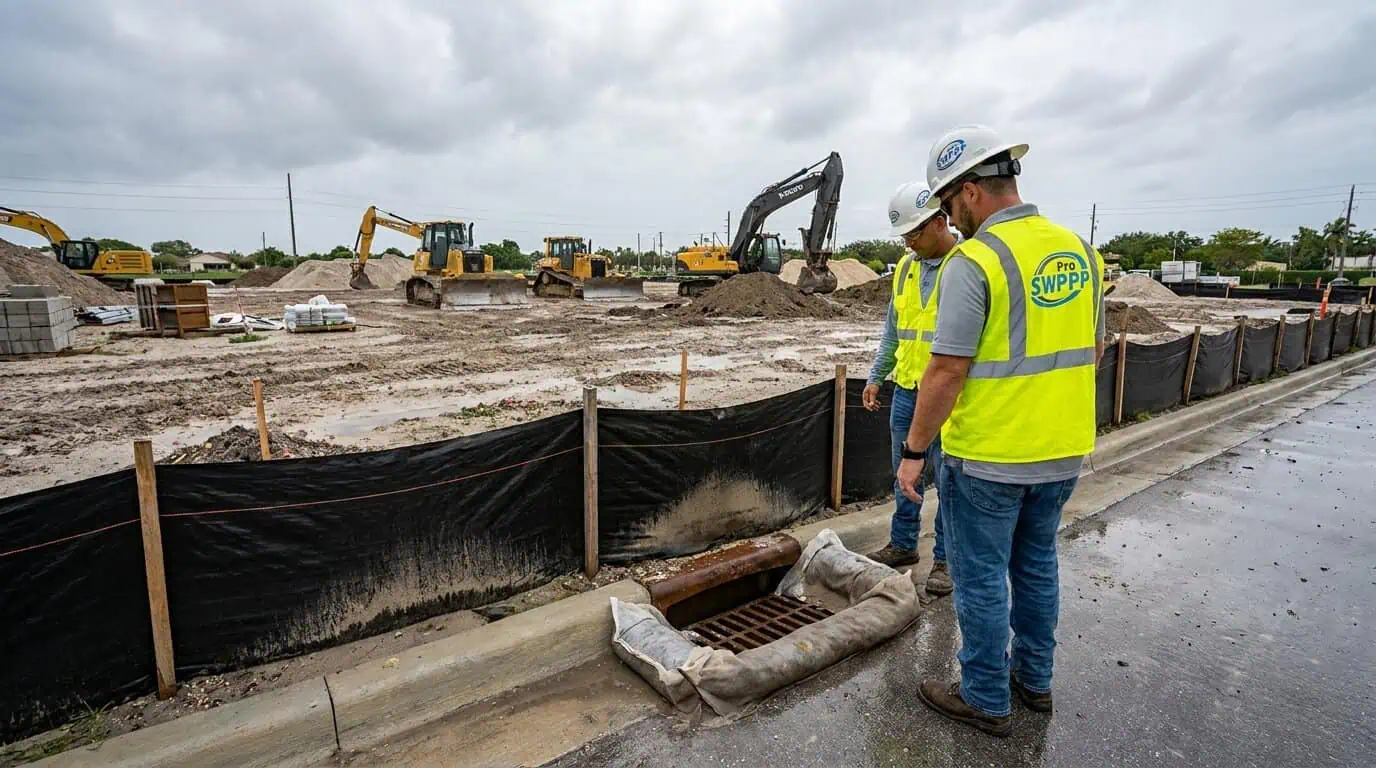
A Stormwater Pollution Prevention Plan is the site-specific document that inventories every pollutant source on a construction site, identifies the Best Management Practices that control those pollutants, and sets the inspection, maintenance, and recordkeeping schedule that proves the controls stayed functional. It is a living document, amended whenever the site layout or phasing changes.
The federal floor comes from the Clean Water Act and the NPDES program, with the construction-specific effluent limits codified at 40 CFR Part 450. Those EPA Construction and Development Effluent Limitations Guidelines set the performance standard every Florida SWPPP has to meet.
EPA states the first requirement plainly in 40 CFR 450.21(a)(1): “Control stormwater volume and velocity within the site to minimize soil erosion.” Every other control on the plan exists to serve that sentence.
Pro SWPPP prepares the documentation: the plan narrative, the site maps, the BMP details, the inspection forms, and the NOI paperwork. Physical installation of BMPs is handled by your site contractor.
Not sure if you even need one?
Answer a few questions about your site and find out in under two minutes.
Who needs a Florida DEP construction stormwater permit in Miami-Dade and Broward?
Coverage is required for any construction activity that disturbs 1 acre or more, and for any smaller parcel that is part of a larger common plan of development or sale totaling 1 acre or more. The generic permit is adopted by reference in Rule 62-621.300(4)(a), Florida Administrative Code, and administered by the Florida Department of Environmental Protection.
The common-plan rule is where most South Florida contractors get caught. A 0.5-acre pad inside a 5-acre retail center is covered, because the regulator measures the whole plan of development, not the shovel you are holding this month.
Neither Miami-Dade nor Broward lowers the 1-acre state threshold. Both counties, however, require local erosion and sediment control on smaller sites through their own ordinances, so a sub-acre project is rarely control-free.
How do you file the NOI with Florida DEP?
The Notice of Intent is the short certification form submitted to Florida DEP identifying the project name, location, operator, acreage disturbed, and receiving water. The full SWPPP is not attached to the NOI. The operator certifies that a complete, signed SWPPP already exists and meets the generic permit conditions.
Sequence is the compliance point. The SWPPP must be finished and signed before the NOI is submitted, and the NOI must be submitted before land disturbance begins. Filing the NOI first and writing the plan afterward is a violation even if both documents eventually exist.
Permit fees are set in the DEP fee schedule at Rule 62-4.050, F.A.C. Confirm the current amount with DEP before you budget, because the schedule is periodically amended. When the site reaches final stabilization, a Notice of Termination ends coverage and stops the compliance clock.
What do Miami-Dade DERM and Broward County require on top of the state permit?
Miami-Dade County reviews construction through its Division of Environmental Resources Management, part of the Miami-Dade Department of Regulatory and Economic Resources. DERM authorization is typically needed for dewatering discharge, work adjacent to canals and wetlands, and connections to the county drainage system.
Broward County runs a parallel structure through Broward County Environmental Protection and Growth Management, with its own licensing for dewatering and surface water discharge, layered under each city building department.
Above both counties sits the South Florida Water Management District. Under Chapter 62-330, F.A.C., smaller projects, generally those under 10 acres total with less than 2 acres of impervious surface, may qualify for a general Environmental Resource Permit; larger projects need an individual ERP.
| Layer | Agency | Trigger | Core document |
|---|---|---|---|
| Federal / state construction permit | Florida DEP | 1 acre or more disturbed, or part of a 1-acre common plan | SWPPP + NOI |
| Post-construction stormwater | SFWMD or DEP | Wetland, canal, or surface water impact; general ERP thresholds near 10 acres and 2 acres impervious | Environmental Resource Permit |
| County environmental review | Miami-Dade DERM | Dewatering, canal or wetland proximity, drainage connection | DERM environmental permit |
| County environmental review | Broward County | Dewatering and surface water discharge | County license plus city building approval |
For state-level Florida detail beyond the two-county area, our Orange County Florida FDEP SWPPP Guide walks through the DEP process in full.
How often must a South Florida construction site be inspected?
The Florida generic permit follows the standard NPDES construction schedule: inspections at least once every 7 calendar days, or as an alternative, at least once every 14 calendar days plus within 24 hours of the end of a storm event of 0.50 inch or greater. Read your permit language and pick one schedule, then keep it.
Every inspection has to be written down: date, inspector, weather, condition of each control, deficiencies found, and the corrective action taken. Records are retained for at least 3 years after permit coverage ends.
Most enforcement in Miami-Dade and Broward does not come from missing controls. It comes from missing paperwork: a log with a three-week gap, a noted deficiency with no documented repair, or a plan that no longer matches the site. Documentation is the deliverable Pro SWPPP produces; the repairs themselves are your contractor’s work.
Just want a number first?
Tell us about your project and we will send a written estimate, no obligation.
How does the high water table change dewatering in Miami-Dade and Broward?
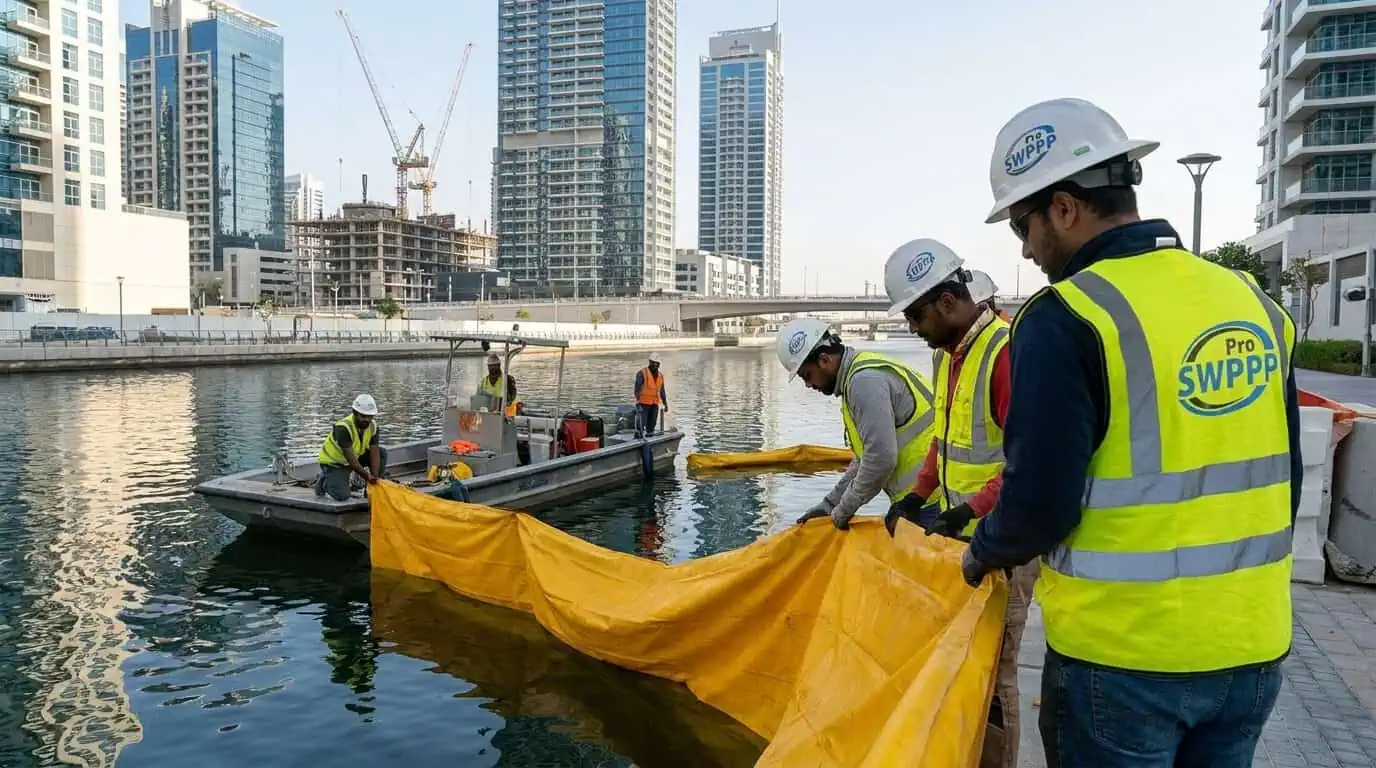
Both counties sit on porous limestone with a wet-season water table that can be within 12 inches of the surface. Any excavation below that line produces pumped water carrying fine suspended solids, and discharging it untreated to a storm drain or canal is a permit violation.
The SWPPP has to describe the treatment train: settling tanks, dewatering bags, weir tanks, or turbidity curtains at the receiving water, plus the turbidity monitoring point. Florida surface water standards limit turbidity increases above background, so the plan should name the monitoring location and the response if readings climb.
DERM or Broward County authorization for the discharge is a separate approval from the DEP construction permit. Both have to be in hand before the pump starts.
Which BMPs hold up on flat, wet, tight South Florida sites?
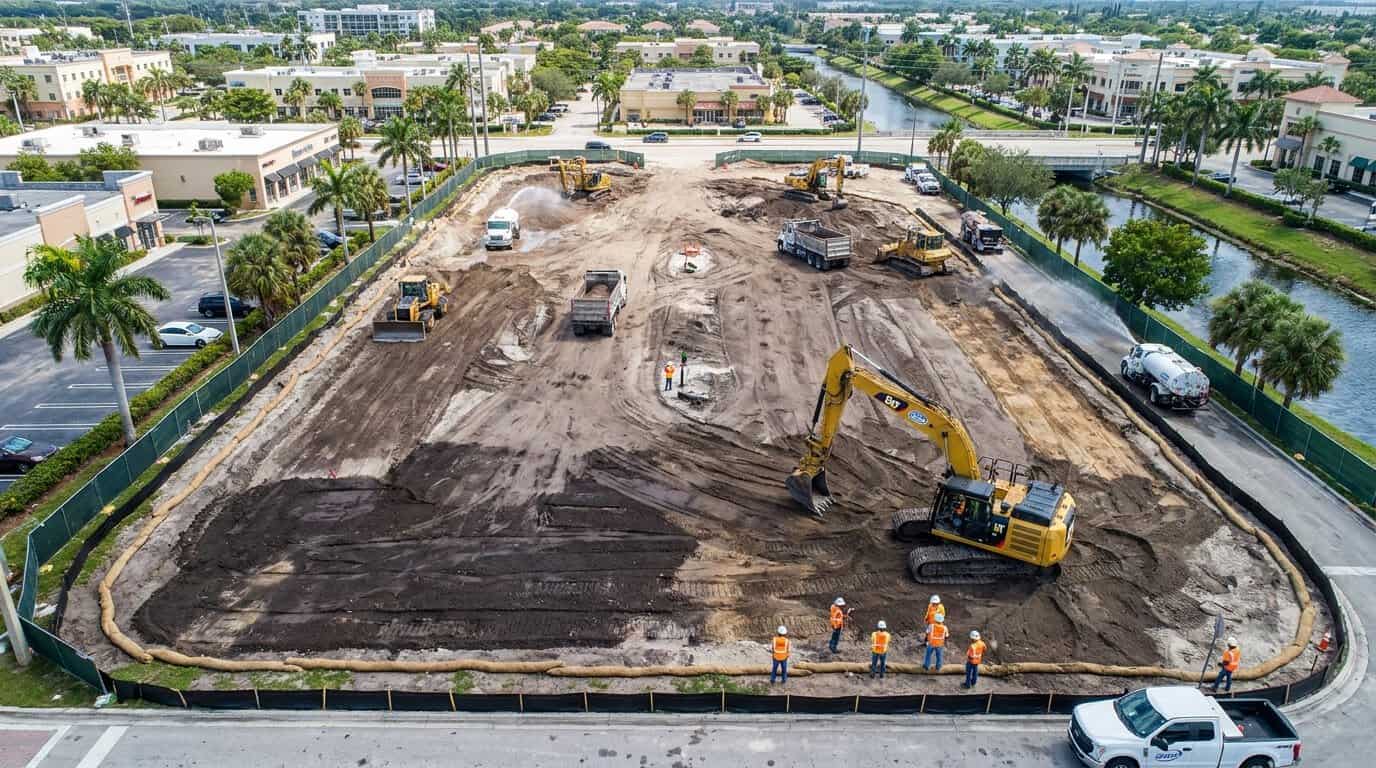
Flat coastal ground moves runoff slowly, so water ponds instead of channelizing, and perimeter controls have to hold sediment for longer periods between storms. These are the specifications a South Florida SWPPP should call out for the contractor to build.
- Phased clearing. Expose only the area that can be stabilized or built within 14 days. Less bare soil at one time means less sediment generated.
- Perimeter controls first. Silt fence, fiber rolls, or sediment barriers go in before clearing begins, as the last line of defense.
- Inlet protection at every structure. In urban redevelopment blocks, inlets are dense and every one of them discharges to a canal or to the bay.
- Stockpile stabilization. Cover or seed soil and aggregate piles that will sit more than 14 days; wind moves loose material even on flat ground.
- Clean-water separation. Route run-on from undisturbed areas around the work zone. Every gallon kept clean is a gallon you do not have to treat.
- Contained materials. Concrete washout, fuel, paint, and waste in designated areas with secondary containment.
Physical installation of BMPs is handled by your site contractor. The SWPPP specifies what goes where, to what standard, and how often it gets checked.
What did Florida’s stormwater rule overhaul change for 2026 projects?
Senate Bill 7040 directed a rewrite of Florida’s stormwater design standards, with changes beginning in mid-2024 and phasing in afterward. Every project designed for the 2026 construction season is subject to the updated framework.
The shift is from simple detention-and-release to performance-based pollutant reduction. Designs now have to demonstrate removal performance for nutrients and total suspended solids, and be paired with a long-term operation and maintenance plan, a maintenance cost estimate, and identified qualified inspectors.
The 1-acre threshold and the NOI process did not change. What changed is the evidentiary bar: generic BMP lists and vague inspection intervals no longer satisfy reviewers who expect site-specific pollutant-source inventories and defined maintenance protocols.
Why work with Pro SWPPP on a Miami-Dade or Broward project?
Pro SWPPP, LLC prepares construction stormwater documentation nationwide, led by Derek E. Chinners, CPESC. The deliverable is a submittal-ready plan set: narrative, site maps, BMP details, NOI package, inspection forms, and amendment templates.
Every plan is prepared by a Certified Professional in Erosion and Sediment Control, turned around in days rather than weeks, and written so a superintendent can follow it without a translation layer. Documentation support continues through the project as phasing changes.
To be explicit about scope: Pro SWPPP is the paperwork, permitting, and inspection-documentation expert. We do not perform field construction or place controls on your site. Learn more on our About page, or reach the team through Contact Us. We serve contractors in Texas and Georgia as well.
Frequently asked questions about Miami-Dade and Broward SWPPP requirements
Do I need a SWPPP if I am only disturbing half an acre?
Yes, if that half acre is part of a larger common plan of development or sale totaling 1 acre or more. A genuinely stand-alone project under 1 acre with no connection to other phases falls outside the Florida DEP generic permit, but Miami-Dade and Broward ordinances can still require erosion and sediment control on the site.
Which agency issues the construction stormwater permit in Florida?
The Florida Department of Environmental Protection administers the NPDES program in Florida and issues the Generic Permit for Stormwater Discharge from Large and Small Construction Activities, adopted by reference in Rule 62-621.300(4)(a), F.A.C. EPA does not issue construction permits in Florida because the state holds delegated authority.
How often must inspections happen on a Florida construction site?
At least once every 7 calendar days, or under the alternative schedule, once every 14 calendar days plus within 24 hours of the end of a storm of 0.50 inch or greater. Each inspection must be documented with date, conditions, deficiencies, and corrective actions. Keep the records for at least 3 years after coverage ends.
Do I need an Environmental Resource Permit as well as a SWPPP?
Often yes, because they cover different things. The SWPPP and NOI address pollution prevention during construction. An Environmental Resource Permit under Chapter 62-330, F.A.C. addresses wetland impacts and permanent stormwater treatment. Projects near canals, wetlands, or surface waters in Miami-Dade and Broward usually need both, coordinated together.
What happens if I start work before filing the NOI?
Discharging construction stormwater without permit coverage violates the Clean Water Act and Florida law. Florida DEP can issue a notice of violation, require corrective action, and escalate to a consent order with penalties. If sediment reaches a canal or the bay, federal enforcement can follow on top of the state action.
Does Pro SWPPP install the BMPs on my site?
No. Pro SWPPP prepares the documentation: the SWPPP narrative, site maps, BMP specifications, NOI package, and inspection forms. Physical installation of BMPs is handled by your site contractor. That division keeps the plan objective and keeps your compliance record clean when an inspector reviews it.
Complicated site? Talk it through.
Speak directly with a CPESC-certified stormwater expert with 20+ years of experience.