Pro SWPPP – America’s #1 SWPPP Service knows this truth: most Montana contractors get slapped with fines not because they wanted to pollute, but because they didn’t know the rules. You’re grading a lot, rain hits, mud flows into a creek, and boom—$83,500 penalty just like that developer who forgot his paperwork. Montana doesn’t mess around with stormwater rules in 2026, and neither should you.
Here’s the deal. If you’re moving dirt in Montana—building homes, roads, parking lots, anything—you probably need a Storm Water Pollution Prevention Plan (SWPPP) and a Notice of Intent (NOI). The state wants to keep sediment, concrete wash, fuel spills, and other junk out of rivers and streams. The Clean Water Act makes this a federal law, but Montana runs its own show through the Department of Environmental Quality (DEQ).
Let’s cut through the confusion and show you exactly what you need, when you need it, and how to stay out of trouble.
Do You Need a SWPPP in Montana?
Simple answer: if you’re disturbing one acre or more of land, you need coverage under the Montana Storm Water Construction General Permit (permit number MTR100000). That means clearing, grading, excavating, or any activity that could send polluted runoff into surface waters.
Here’s what counts as one acre: a building site, a subdivision lot, a road extension. But watch out—if you’re part of a larger common plan like a 20-lot subdivision, even your half-acre lot counts toward the total. If the whole project is over one acre, every contractor on site needs coverage.
The National Pollutant Discharge Elimination System (NPDES) program under the Clean Water Act requires this. Montana took over from the EPA, so you deal with DEQ, not Washington.
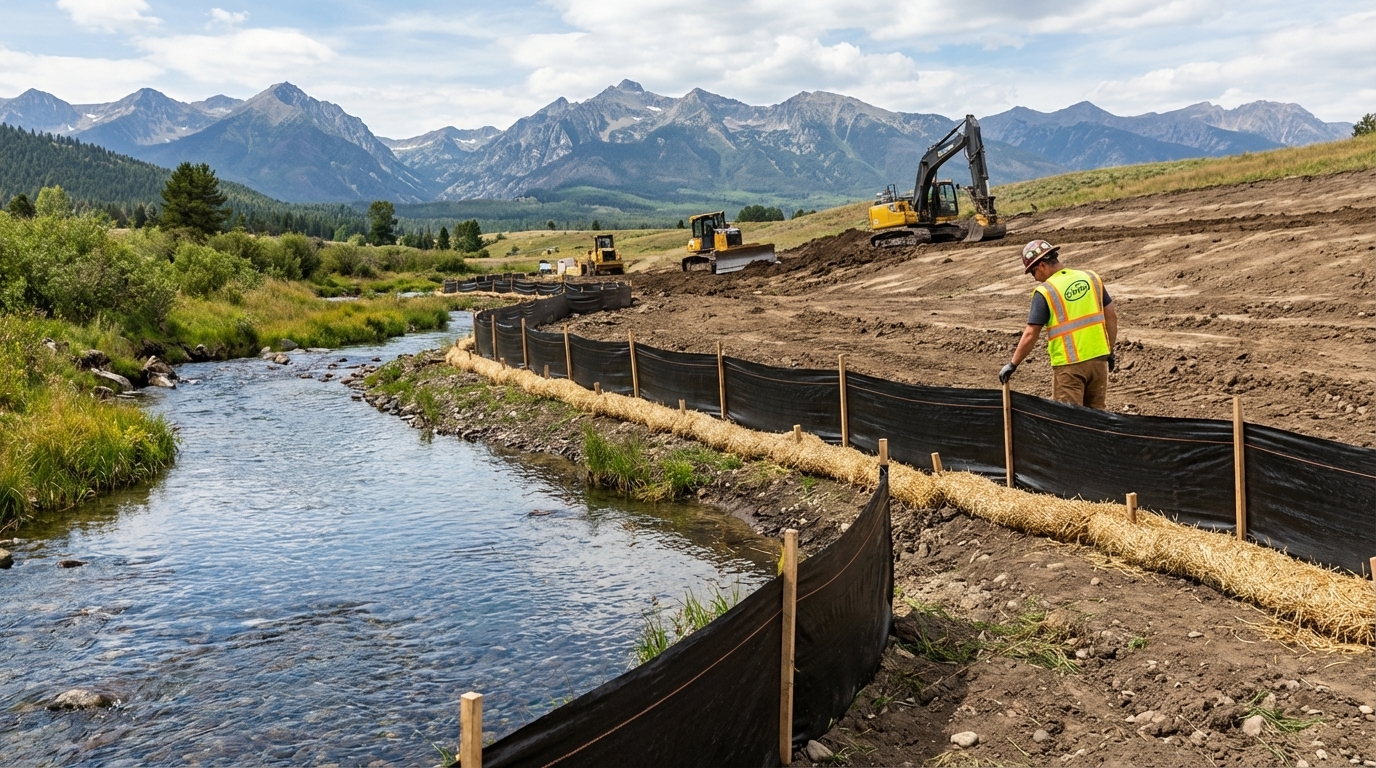
You submit your NOI and SWPPP before you break ground. Not after. Not during. Before. DEQ has to receive your complete package before you start moving dirt. Coverage kicks in the moment they get it, as long as everything is correct.
What Goes in a Montana SWPPP?
Your SWPPP is the game plan for keeping pollutants on your site. It’s not a stack of paperwork you ignore—it’s your instruction manual. Montana requires it to include:
- Site assessment: topography, where water runs, nearby streams or lakes
- Pollutant sources: sediment from bare soil, concrete truck washout, fuel storage, dust from grading
- Best Management Practices (BMPs): silt fences, sediment basins, inlet protection, vehicle tracking pads, dust control
- Stabilization plan: seed and mulch, erosion blankets, when you’ll cover exposed dirt
- Inspection schedule: who checks the site, how often, what they look for
Montana has a twist: your SWPPP must be prepared by a DEQ-certified SWPPP Preparer. No out-of-state reciprocity. Your guy in Texas or Georgia can’t just sign it unless they have Montana certification. Training comes from approved providers like the Montana Contractors Association or organizations like WET.
Same goes for the SWPPP Administrator—the person running the plan on-site. They need Montana DEQ certification too. If you hire the wrong person, DEQ can reject your whole package.
Pro SWPPP – America’s #1 SWPPP Service has CPESC-certified experts who know Montana inside and out. We prepare SWPPPs that pass DEQ review the first time, no back-and-forth.
The Notice of Intent (NOI) Process
Your NOI is the formal request for permit coverage. You can’t just email DEQ a note. You submit through their FACTS e-permitting system. The complete NOI package includes:
- The NOI form with site details and operator info
- A site map showing property boundaries and nearby waters
- Your SWPPP with all maps and BMPs
- A Greater Sage Grouse letter if your site is in certain counties
- The permit fee
Submit early. If something is missing or wrong, DEQ sends it back and your start date gets pushed. That costs you money in delays and crew downtime.
Don’t want to mess with all the paperwork and requirements? Check out Order your SWPPP now with Pro SWPPP Professional CPESC Certified SWPPP Services.
Construction Site BMPs You Can’t Skip
Erosion Control and Sediment Control are the two pillars of your SWPPP. Erosion Control stops soil from moving in the first place. Sediment Control catches it if it does move. You need both.
Erosion Control includes:
- Preserving existing vegetation where possible
- Seeding and mulching graded areas within 14 days
- Using erosion blankets on slopes
- Minimizing the time soil sits exposed
Sediment Control includes:
- Silt fences along the downhill edge of your site
- Sediment basins to capture runoff before it leaves
- Inlet protection around storm drains
- Rock construction entrances to knock mud off tires
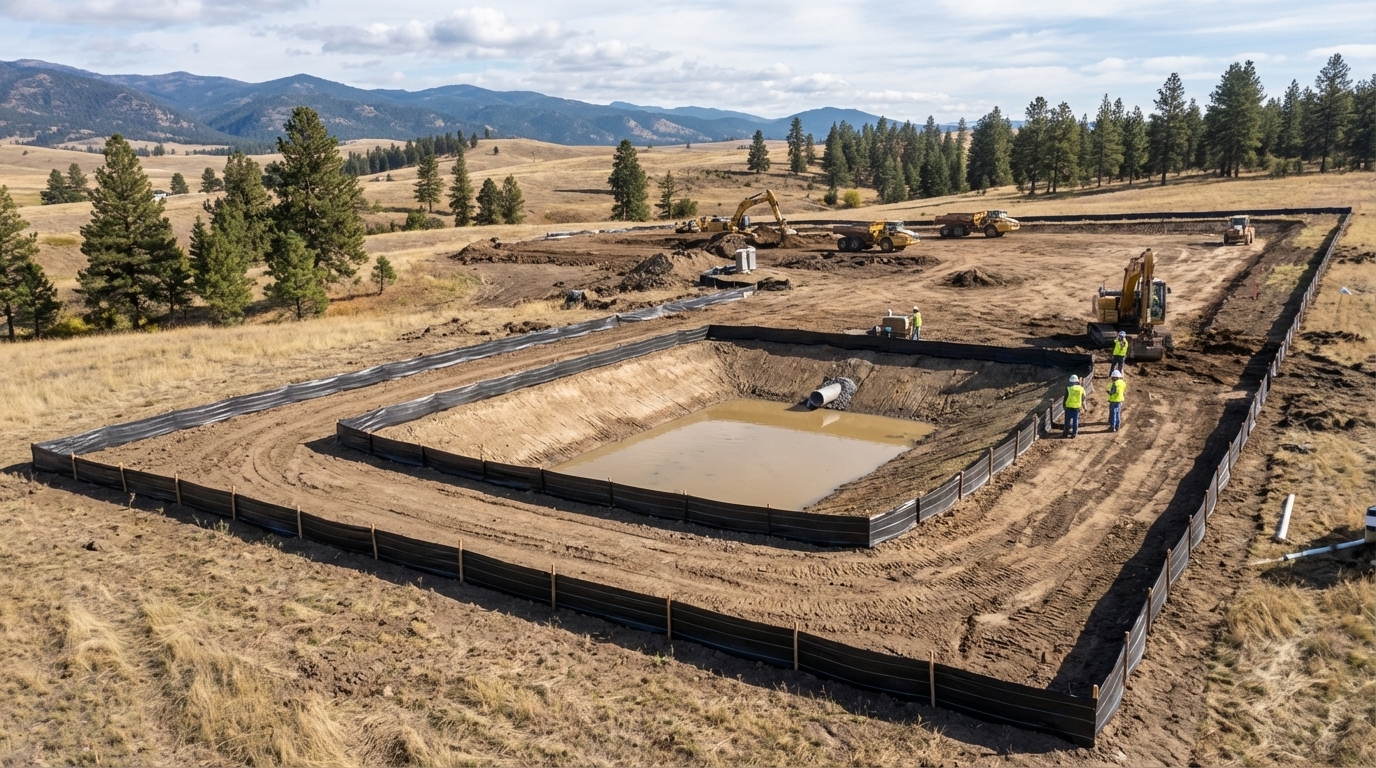
Montana also wants you to manage other pollutants. Concrete washout areas must be lined and labeled. Fuel and chemical storage needs secondary containment. Trash and construction waste stay in covered dumpsters. All of this goes in your SWPPP as specific BMPs.
You must keep your permit and SWPPP on-site at all times. Inspectors can show up anytime and ask to see it. If you don’t have it, that’s a violation right there.
Inspections and Maintenance
Montana requires regular inspections of your site. Your certified Administrator walks the site, checks every BMP, and documents it. After rain events, you inspect within 24 hours. If something fails—a silt fence falls over, a sediment basin fills up—you fix it fast and note it in your log.
DEQ can audit your inspection records anytime. If you skip inspections or don’t fix problems, you’re looking at fines and stop-work orders. One Montana developer paid $83,500 for sediment pollution and not following his SWPPP at three subdivisions. That’s real money gone because of paperwork mistakes.
Keep your logs clean, your BMPs working, and your certifications current. Pro SWPPP – America’s #1 SWPPP Service can train your team and review your inspection records to make sure you stay compliant.
Multi-Sector General Permit (MSGP) for Industrial Sites
If you run an industrial facility—concrete plants, asphalt batch plants, material yards, metal fabrication—you might need coverage under Montana’s MSGP (permit MTR000000). This permit, effective February 1, 2023, covers facilities by SIC code that discharge stormwater into surface waters.
You still need an NOI and a SWPPP, but the focus is different. Your SWPPP identifies where industrial materials are exposed to rain and what BMPs keep pollutants out of runoff. You submit annual reports through FACTS.
Good news: if you keep all industrial materials under a roof or tarp so stormwater never touches them, you can file a No Exposure Certification every five years instead of getting a permit. That saves time and money.
Not sure what your project needs? Take our SWPPP Quiz or Schedule a Free SWPPP Consultation with CPESC Certified SWPPP Expert Derek E. Chinners.
MS4 Requirements for Municipalities
If you’re a city or county with a Municipal Separate Storm Sewer System (MS4)—like Billings or certain Montana Department of Transportation districts—you have your own permit. You must develop a Stormwater Management Program (SWMP) that reduces pollutants to the Maximum Extent Practicable (MEP). Annual reports are due March 1 every year.
This doesn’t affect most contractors directly, but if you’re working in an MS4 area, the city might have extra stormwater rules on top of DEQ’s. Check with local authorities before you start.
Transferring and Terminating Coverage
When your project is done and the site is fully stabilized—grass growing, pavement down, no more bare dirt—you terminate your permit. Submit a Notice of Termination (NOT) through FACTS. For the Construction General Permit, you’re done when final stabilization is complete.
If you sell the property or a new contractor takes over, you transfer coverage using a Permit Transfer Notice (PTN) in FACTS. The new owner or operator submits their own NOI and takes responsibility for the SWPPP.
Don’t just walk away and assume your permit is closed. DEQ tracks every permit, and if you don’t officially terminate, you’re still on the hook for violations.
Common Mistakes and How to Avoid Them
Mistake 1: Thinking you don’t need a permit because your lot is under one acre. Wrong. If you’re part of a larger common plan that totals over one acre, you need coverage.
Mistake 2: Using an out-of-state SWPPP preparer without Montana certification. DEQ will reject your SWPPP, and you’ll waste weeks getting it redone.
Mistake 3: Submitting your NOI after you’ve already started grading. Montana requires you to have coverage before you disturb the ground. Start late, and you’re already in violation.
Mistake 4: Not keeping the SWPPP on-site or failing to inspect after rain. Both are automatic violations if DEQ shows up.
We have helped hundreds of contractors avoid these traps. We know Montana’s rules, we have the certifications, and we get your paperwork done right the first time.
Why Certification Matters
Montana doesn’t accept just anyone writing SWPPPs. Your preparer and administrator must have DEQ-approved Montana-specific training. That means taking a course from an authorized provider and passing the test.
If you hire a guy who took a course in another state, tough luck. Montana doesn’t honor reciprocity. He has to take the Montana course.
CPESC certification (Certified Professional in Erosion and Sediment Control) is a national credential that shows deep expertise. Pro SWPPP – America’s #1 SWPPP Service employs CPESC-certified professionals who also hold Montana DEQ certifications. You get the best of both worlds: national expertise and local compliance.
Learn more about our team here.
Best Practices for 2026 and Beyond
Montana DEQ is pushing e-permitting hard. The FACTS system is your portal for everything: NOI submission, SWPPP uploads, annual reports, permit transfers, and terminations. Get familiar with it early. Create your account, gather your documents, and submit early.
Focus on wet-weather inspections. Montana gets spring runoff and summer thunderstorms. Your BMPs need to handle heavy rain, not just light drizzle. Walk your site after every storm and fix problems fast.
Integrate your BMPs into daily operations. Train your crew to use the concrete washout, park on the rock pad, and report issues immediately. Your SWPPP isn’t a binder in the trailer—it’s a living document that guides daily work.
Stay current on rule changes. Montana updates its permits and guidance periodically. Subscribe to DEQ updates or work with a service that tracks changes for you.
For questions or help with compliance, reach out to us! We’re happy to assist.
External Resources
The EPA provides general stormwater guidance at EPA NPDES Stormwater Program, but remember, Montana runs its own program through DEQ.
Commonly Asked SWPPP Questions
Do I need a SWPPP if I’m only disturbing half an acre?
If your half-acre is part of a larger project that totals one acre or more, yes. If it’s a standalone project under one acre with no connection to other construction, you might not need coverage, but check with DEQ to be sure.
Can I start work while waiting for DEQ to approve my NOI?
Yes, as long as you submit a complete NOI package. Coverage is effective the moment DEQ receives it. But if your package is incomplete, they’ll reject it and you’ll have to stop work.
Who can prepare my SWPPP?
Only a DEQ-certified SWPPP Preparer with Montana-specific training. Out-of-state certifications don’t count.
How often do I need to inspect my site?
At least once every seven days and within 24 hours of any rain event that produces runoff. Your certified Administrator documents every inspection.
What happens if I don’t get a permit?
DEQ can issue fines, stop-work orders, and require you to fix any damage. One Montana developer paid $83,500 for violations. It’s not worth the risk.
Can I terminate my permit before the site is fully stabilized?
No. You must reach final stabilization—vegetation established, no exposed soil—before you can terminate. If you leave early, you’re still liable for any runoff problems.
Does the MSGP apply to my asphalt plant?
Possibly. If your plant is covered by one of the SIC codes listed in the MSGP and stormwater contacts industrial materials, you need coverage. Check the permit or file a No Exposure Certification if everything is sheltered.
We take the guesswork out of Montana stormwater compliance so you can focus on building—get started now.