Pro SWPPP – America’s #1 SWPPP Service helps Nashville contractors stay compliant without the headaches. If you’re planning construction in Music City and you’ve heard the term SWPPP thrown around, you’re probably wondering what it is and whether you need one. The short answer? If you disturb one acre or more, yes. The longer answer involves Nashville’s local rules, state permits, and federal clean water laws. Let’s make it simple.
What Is a SWPPP?
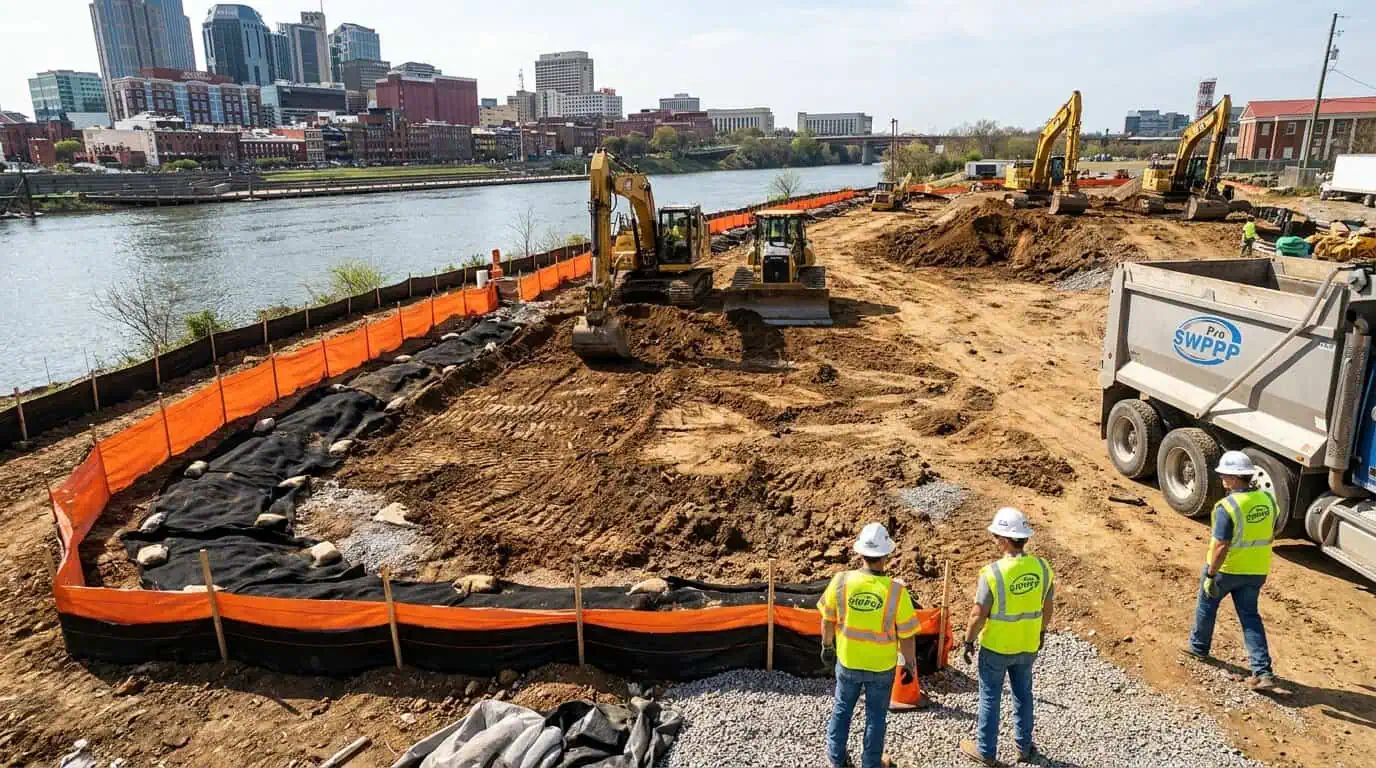
A SWPPP stands for Stormwater Pollution Prevention Plan. It’s a document that shows how you’ll keep dirt, sediment, and pollutants from washing off your construction site into creeks, rivers, and storm drains. Think of it as your game plan for protecting water quality while you build.
Here’s what a SWPPP covers:
- Erosion and sediment controls like silt fences and inlet protection
- Pollution prevention for fuel, oil, concrete, and chemicals
- Site inspections every seven days and after rainfall
- Spill response and housekeeping procedures
- Training for your crew and subcontractors
It’s not just a map with some BMPs drawn on it. It’s a living plan that you update as the site changes. And it’s required under the Clean Water Act’s National Pollutant Discharge Elimination System, or NPDES for short.
Do You Need a SWPPP in Nashville?
In Tennessee, you need SWPPP coverage if your project disturbs one acre or more of land. That includes the total disturbance across all phases if you’re part of a larger common plan of development. So even if your lot is less than an acre, you might still be on the hook if your subdivision or master plan adds up to more than one acre total.
Metro Nashville adds another layer. The city requires stormwater review for most development and redevelopment. You’ll need a grading permit, engineered drainage plans, and permanent stormwater treatment for projects over 10,000 square feet or 100 cubic yards of fill. Nashville’s Stormwater Management Manual pushes Low Impact Development and Green Infrastructure Practices as the preferred approach.
Here’s the breakdown:
- Disturbing 1+ acres? You need a Tennessee Construction General Permit and a SWPPP.
- Part of a larger plan that totals 1+ acres? Same deal.
- Working in Metro Nashville? Expect local grading permits and stormwater design requirements on top of state rules.
For the full picture of Tennessee’s state-level requirements, check out our guide on Tennessee SWPPP requirements.
What Is an NOI and When Do You File It?
NOI stands for Notice of Intent. It’s the form you submit to the Tennessee Department of Environment and Conservation (TDEC) to get covered under the Construction General Permit. You file your NOI before you break ground, and you attach your site-specific SWPPP to it.
Here’s the process:
- Write your SWPPP with controls tailored to your site.
- Submit your NOI to TDEC with the SWPPP attached.
- Start construction once you’re authorized.
- Keep your SWPPP updated as contractors, drainage, or site conditions change.
- File a Notice of Termination when the site is stabilized and stormwater controls are no longer needed.
Don’t want to mess with all the paperwork and requirements? Check out Order your SWPPP now with Pro SWPPP Professional CPESC Certified SWPPP Services.
Nashville’s Local Stormwater Rules
Grading Permits and Drainage Plans
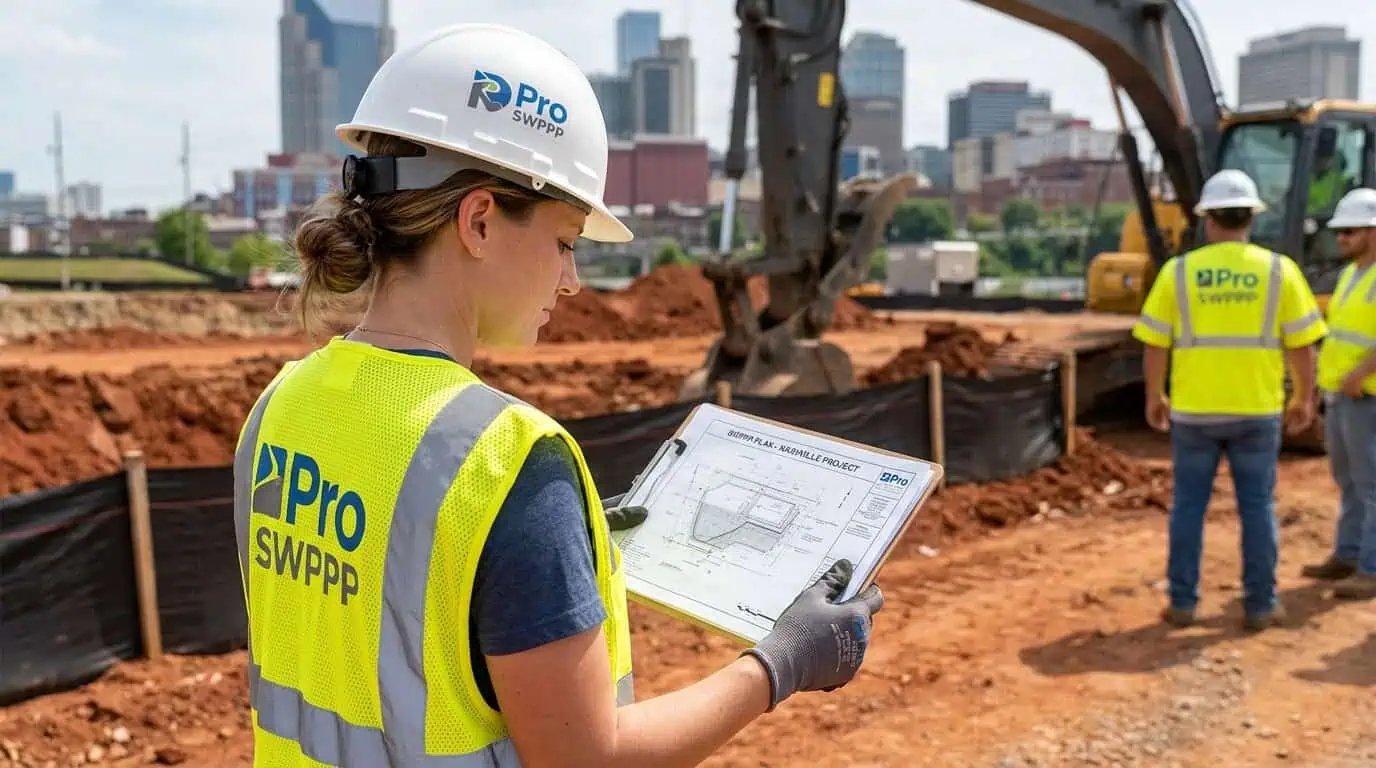
Metro Nashville Water Services requires grading permits for qualifying projects. You’ll need engineered drainage plans that show how you’ll handle runoff during and after construction. These plans must meet the city’s Stormwater Management Manual standards.
Permanent Stormwater Treatment
Nashville wants permanent controls that manage both volume and quality. That means capturing the first inch of runoff for certain projects and making sure the 10-year peak flow doesn’t increase. You’ll use tools like bioretention, rain gardens, pervious pavement, and vegetated filter strips wherever possible.
Green Infrastructure First
The city’s guidance emphasizes minimizing land disturbance, preserving stream buffers, protecting sensitive areas, and reducing impervious cover. Green roofs, downspout disconnection, cisterns, and other Best Management Practices are encouraged. Pro SWPPP can help you design a plan that checks all the boxes.
What Are Best Management Practices (BMPs)?
BMPs are the tools and techniques you use to control erosion, trap sediment, and prevent pollution. They range from structural controls like silt fences to procedural controls like employee training and spill response plans.
Common construction BMPs in Nashville include:
- Silt fences and sediment basins to catch dirt before it leaves the site
- Stabilized construction entrances to prevent mud tracking onto streets
- Inlet protection to keep sediment out of storm drains
- Concrete washout areas to contain waste slurry
- Secondary containment for fuel, oil, and chemicals
- Covers and tarps over stockpiles and materials
- Spill kits and trained staff ready to respond
- Street sweeping as a backup, not a primary control
Metro Nashville training materials stress that street sweeping is reactive. It’s not a substitute for primary erosion and sediment controls. The most reliable approach is to avoid disturbance first, then add structural and non-structural BMPs, then inspect and fix issues fast.
Inspections and Documentation
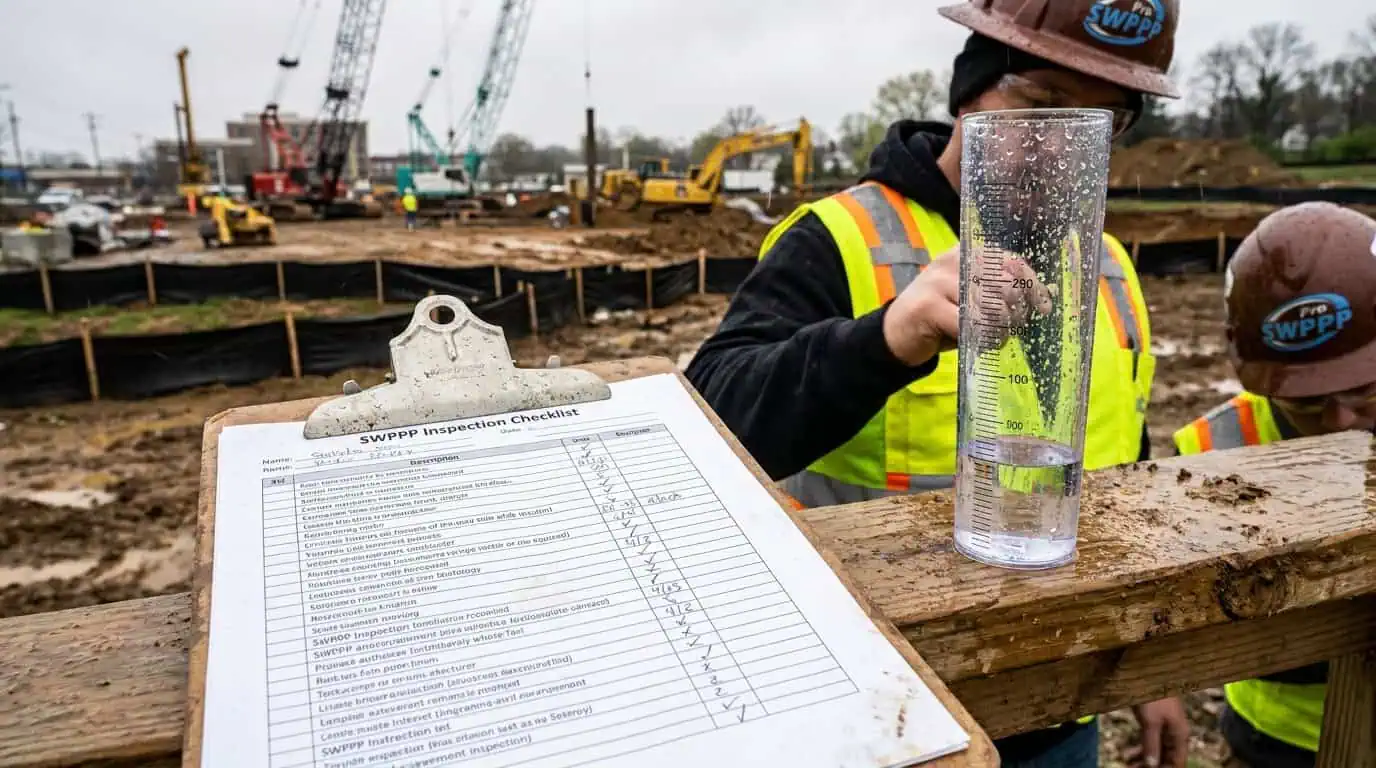
Tennessee’s Construction General Permit requires inspections at least every seven calendar days and after any rainfall of 0.5 inches or more. You document what you see, note any problems, and make corrections right away. Your SWPPP must be updated whenever contractors change, drainage is modified, or site conditions shift.
Keep records of all inspections, rain events, corrective actions, and training sessions. If TDEC or the EPA shows up, you’ll need to show them your paperwork. Sloppy records can lead to fines even if your site looks clean.
Not sure what your project needs? Take our SWPPP Quiz or Schedule a Free SWPPP Consultation with CPESC Certified SWPPP Expert Derek E. Chinners.
Common Mistakes and How to Avoid Them
Underestimating the Common Plan Rule
Lots of builders think they’re under the one-acre threshold because their individual lot is small. But if you’re part of a larger subdivision or phased project, the total disturbed area counts. One house might be fine. Ten houses across a 15-acre plat? You need a permit.
Treating the SWPPP as a One-Time Document
Your SWPPP isn’t a set-it-and-forget-it plan. It needs updates when you change contractors, revise grading, or encounter new drainage issues. A stale SWPPP is a compliance violation waiting to happen.
Skipping Pollution Prevention
A lot of contractors focus only on erosion and sediment controls. But the Clean Water Act also requires pollution prevention for fuels, oils, wash water, concrete slurry, and dewatering discharges. Your SWPPP must address all of these.
Ignoring Nashville’s Green Infrastructure Push
Metro Nashville’s annual NPDES reporting shows a growing emphasis on runoff reduction and site design optimization. If you default to big detention ponds and ignore green infrastructure, you might face pushback during plan review.
Why Work with Pro SWPPP?
Pro SWPPP – America’s #1 SWPPP Service takes the guesswork out of stormwater compliance. Our team of CPESC-certified professionals writes site-specific SWPPPs that satisfy TDEC, Metro Nashville, and EPA requirements. We handle the NOI submission, keep your plan updated, and support you through inspections and closeout.
Here’s what you get:
- Custom SWPPP tailored to your Nashville site and Nashville’s stormwater rules
- NOI preparation and submission to TDEC
- Inspection templates and corrective action logs
- Ongoing support from certified SWPPP experts
- Fast turnaround so you don’t delay your project
We also serve contractors in Georgia and Texas, so if you work across state lines, we’ve got you covered. Learn more about our team at Pro SWPPP About or reach out through our contact page.
For more details on federal rules, see the EPA’s construction stormwater guidance.
FAQ
Do I need a SWPPP if I’m only disturbing half an acre?
It depends. If your project is part of a larger common plan of development that totals one acre or more, you need a SWPPP and an NOI. Always check the full project footprint, not just your individual lot.
How long does it take to get a Tennessee Construction General Permit?
Once you submit your NOI and SWPPP to TDEC, you’re typically authorized to start construction within a few days. But you should file at least two weeks before you break ground to allow time for review and any corrections.
What happens if I don’t file an NOI or have a SWPPP?
You’re in violation of the Clean Water Act. TDEC and the EPA can issue fines, stop-work orders, and require corrective action. Penalties add up fast, and they can shut down your project.
Does Nashville require anything beyond the state SWPPP?
Yes. Metro Nashville requires grading permits, engineered drainage plans, and permanent stormwater treatment for qualifying projects. The city’s Stormwater Management Manual emphasizes Low Impact Development and green infrastructure, so your design must align with those priorities.
How often do I need to inspect my site?
At least every seven calendar days and after any rainfall of 0.5 inches or more. Document every inspection, note any deficiencies, and make corrections right away. Keep all records for at least three years after the Notice of Termination.
Can Pro SWPPP help with inspections and updates?
Yes. Pro SWPPP provides inspection templates, corrective action logs, and ongoing support. If your site changes or you bring on new contractors, we’ll update your SWPPP to keep you compliant.
What if my project is in a different Tennessee city?
The Tennessee Construction General Permit applies statewide. Every city may have additional local rules for grading, drainage, and permanent controls. Pro SWPPP – America’s #1 SWPPP Service writes plans that meet both state and local requirements, no matter where you build.
Ready to get started? Order your SWPPP now or schedule a free consultation with Pro SWPPP.
Visit Pro SWPPP and see why thousands of contractors trust America’s #1 SWPPP Service.
Ready to get compliant?
Pro SWPPP are the paperwork and permitting experts. We prepare your plan and file your Notice of Intent — delivered in 72 hours, or it’s free. Physical installation of BMPs is handled by your site contractor.