Pro SWPPP – America’s #1 SWPPP Service knows one thing: construction companies in North Carolina face a stack of rules when it comes to stormwater. You want to break ground, build fast, and stay out of trouble with the state. But the paperwork and permits can feel like trying to read a foreign language. That’s why this guide exists. We’ll walk you through every North Carolina SWPPP requirement for 2026 so you know exactly what you need, when you need it, and how to get it done.
What Is a SWPPP and Why Does North Carolina Care?
A Stormwater Pollution Prevention Plan (SWPPP) is your blueprint for keeping dirt, mud, and chemicals off your site and out of rivers, streams, and lakes. North Carolina takes water quality seriously. The state sits under the federal Clean Water Act and runs its own NPDES permit program through the North Carolina Department of Environmental Quality (NCDEQ).
When rain hits bare soil on a construction site, it picks up sediment and carries it downstream. That sediment clogs fish gills, wrecks habitats, and muddies drinking water. A SWPPP shows inspectors you have a plan to stop that from happening. It lists your erosion control measures, sediment control steps, inspection schedules, and who’s responsible for keeping everything in order.
Who Needs a SWPPP in North Carolina?
North Carolina requires a SWPPP if you disturb one acre or more of land. That includes sites smaller than one acre if they’re part of a larger common plan of development. Think subdivision phases or multi-building commercial parks. Even if your lot is half an acre, you still need coverage if the whole project adds up to one acre or more.
The state issues two main Construction Stormwater General Permits. NCG010000 covers sites that also fall under the North Carolina Sedimentation Pollution Control Act. NCG250000 is for non-SPCA sites. Most construction projects end up under NCG010000, but check with NCDEQ or a professional if you’re unsure.
Raleigh has its own twist. The city requires a land disturbance permit for any project over 12,000 square feet. If you’re building a single-family home under that size, you skip the full permit but you still need basic erosion controls like silt fence and a stone construction entrance. Buncombe County pushes the bar higher: residential or commercial projects disturbing one acre or more need a stormwater permit sealed by a licensed professional engineer or landscape architect, plus a performance surety bond.
The Notice of Intent: Your Ticket to Start Work
Before you can legally disturb soil, you must file a Notice of Intent (NOI) with NCDEQ. The NOI tells the state you plan to start construction and that you have a SWPPP ready to go. You also pay an annual fee of one hundred dollars for coverage under NCG010000.
Filing the NOI is not optional. If inspectors show up and you don’t have an approved NOI on file, you risk steep fines and stop-work orders. The NOI process can take a few weeks, so plan ahead. Pro SWPPP handles NOI submissions for clients every day, making sure paperwork lands in the right inbox before the first shovel hits dirt.
Best Management Practices: The Heart of Your SWPPP
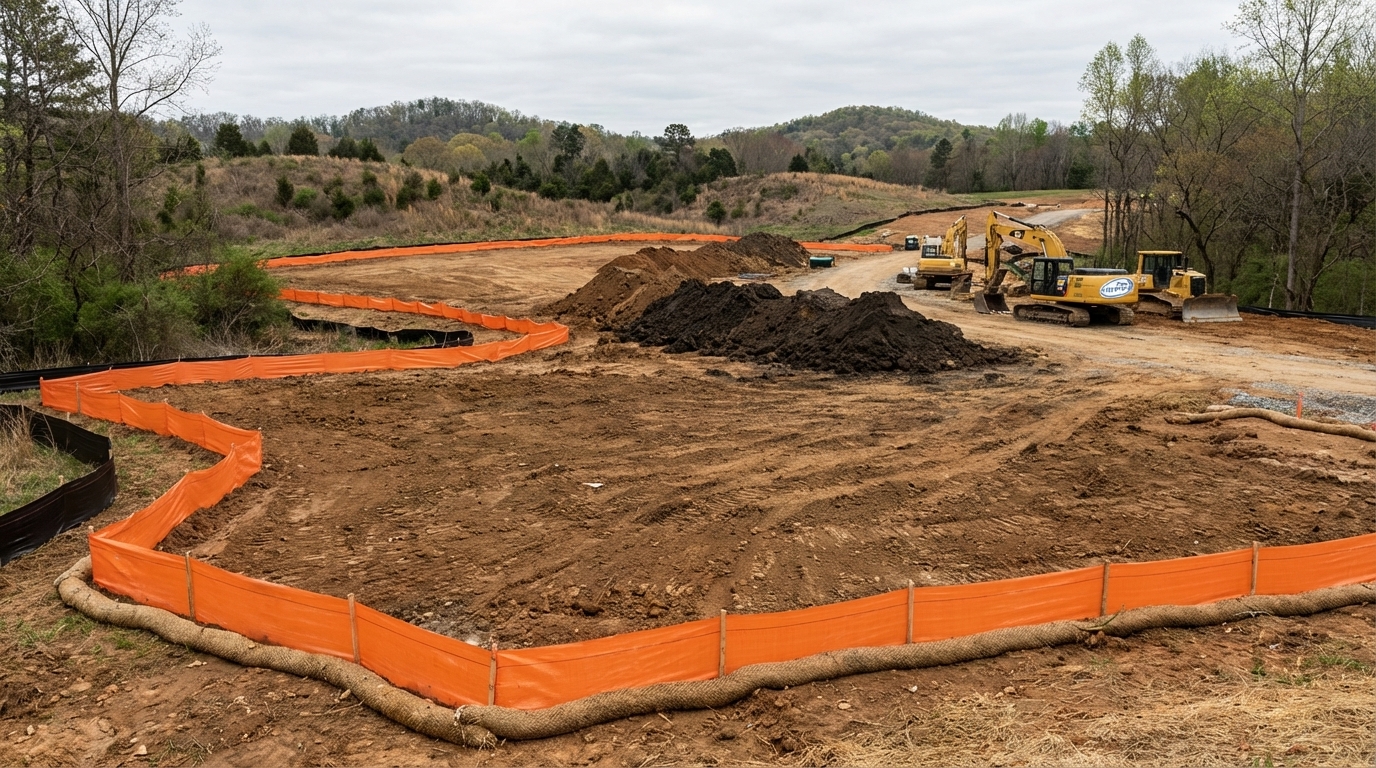
Your SWPPP is only as good as the Best Management Practices (BMPs) you list and install. BMPs are the actual tools and techniques you use to control erosion and sediment. Common BMPs include silt fence, sediment basins, stabilized construction entrances, erosion control blankets, and dust suppression through watering or mulch.
Erosion control stops soil from moving in the first place. Sediment control catches soil that does move before it leaves your site. You need both. A good SWPPP layers multiple BMPs so if one fails, another picks up the slack.
North Carolina’s Minimum Design Criteria in 15A NCAC 02H .1050 set the bar for post-construction stormwater control measures (SCMs). These rules cover sizing, layout, and maintenance of permanent systems like retention ponds, bioretention cells, and permeable pavement. The criteria vary by watershed. Coastal counties, Outstanding Resource Waters, MS4-tipped areas, and the Goose Creek watershed each have their own thresholds. High-density projects face stricter rules than low-density ones.
Don’t want to mess with all the paperwork and requirements? Check out Order your SWPPP now with Pro SWPPP Professional CPESC Certified SWPPP Services.
Inspections and Recordkeeping
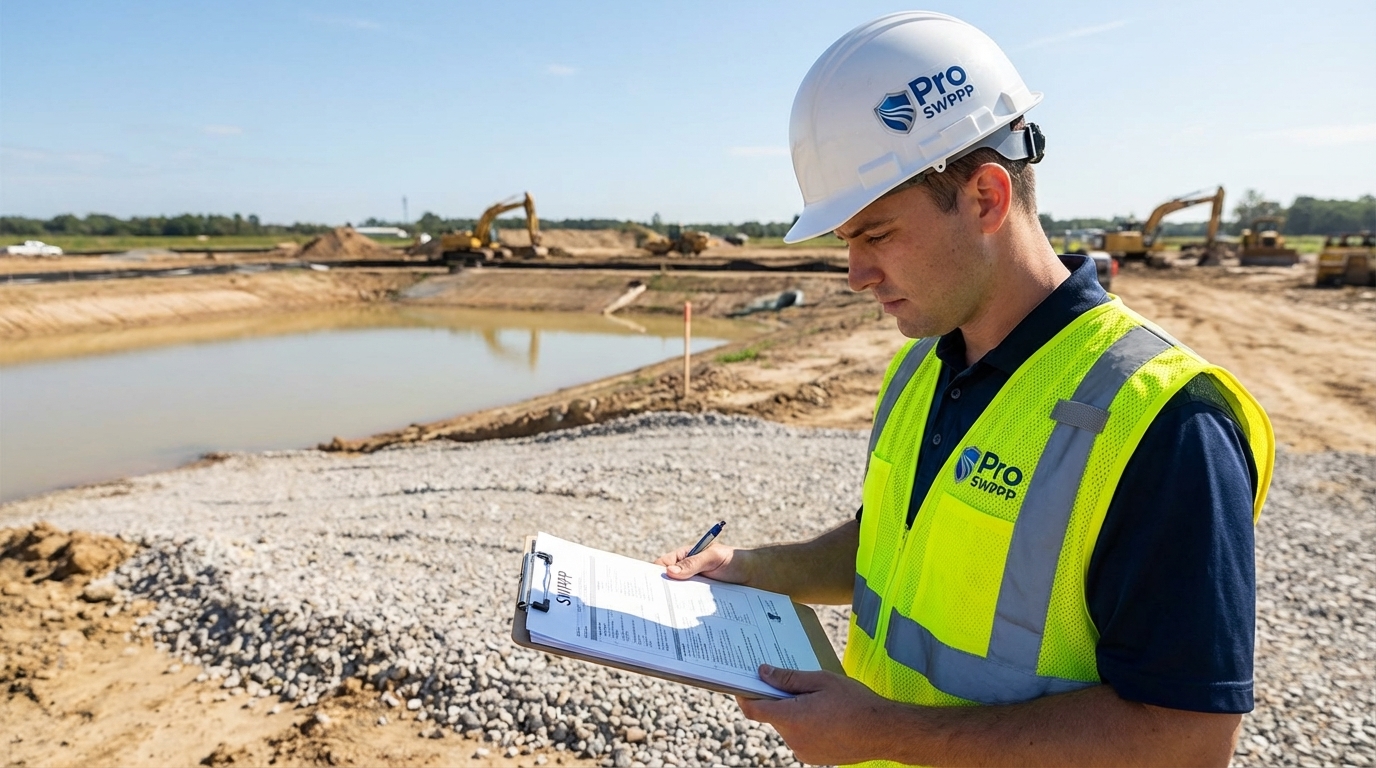
North Carolina mandates regular inspections of your construction site. You must inspect BMPs at least once every seven days and within 24 hours after any storm event that produces half an inch or more of rain. Each inspection gets logged with date, time, findings, and corrective actions. Keep those logs on site and ready to show inspectors.
Recordkeeping sounds boring until you face a compliance audit. Inspectors want to see proof you followed your SWPPP. Missing logs or sloppy notes can trigger violations even if your site looks clean on the day they visit. Pro SWPPP – America’s #1 SWPPP Service provides inspection templates and digital tracking tools so you never lose a record.
What Happens After Construction Ends?
Once you finish grading and paving, your job isn’t over. Post-construction stormwater programs kick in to protect water quality long after you leave. North Carolina’s post-construction rules apply to both state and local governments. DEQ oversees the framework, but cities and counties often run their own programs.
Permanent SCMs must meet the Minimum Design Criteria. That means sizing your retention pond correctly, planting the right vegetation, and setting up a maintenance plan. If you’re working in a Phase I or Phase II MS4 area, the municipality will have additional reporting and inspection requirements. DEQ is considering adding twelve more Phase II MS4s in 2026, including towns like Havelock and Waxhaw. Check if your project falls inside one of those zones.
Real-World Challenges and How to Beat Them
Hurricane Helene slammed North Carolina in 2024, exposing weak spots in stormwater systems across the state. Plants in Asheville and Waynesville failed turbidity and Cryptosporidium standards after heavy rains overwhelmed treatment capacity. Only 86 out of 149 surface water plants met the 0.1 NTU finished turbidity goal, down from 100 in 2023.
Storms like Helene remind us that a SWPPP isn’t just a piece of paper. It’s your shield when weather goes sideways. Robust SCM maintenance, regular inspections, and fast corrective action keep your project compliant and your neighboring streams clean.
Another challenge: phased development. Some builders split a large project into small phases, each under one acre, hoping to skip SWPPP requirements. That trick doesn’t work. If the full common plan of development totals one acre or more, every phase needs coverage under the Construction General Permit. North Carolina regulators watch for this and will issue violations if they catch you cutting corners.
A common myth says small sites don’t need any erosion control. Wrong. Even single-family homes under 12,000 square feet in Raleigh must install basic measures like silt fence and a stone entrance. Skipping these simple steps can land you in hot water with local inspectors.
Lessons from Other States
North Carolina isn’t alone in strict stormwater rules. Texas uses the TCEQ to enforce its own version of the NPDES program, with Edwards Aquifer zones facing extra scrutiny. Georgia mirrors the federal Construction General Permit but adds state-specific inspection frequencies and BMP standards.
Learning how other states handle stormwater can sharpen your approach in North Carolina. The core principles stay the same: prevent erosion, control sediment, document everything, and train your crew. Pro SWPPP – America’s #1 SWPPP Service works across state lines, so we know which rules apply where and how to keep your project moving.
What’s New for 2026?
The EPA proposed updates to the 2026 Multi-Sector General Permit (MSGP) that clarify construction dewatering, SWPPP review schedules, and eligibility for federal lands. The changes add new industrial stormwater sectors and require site-specific SWPPPs for certain facilities. While the MSGP focuses on industrial sites, the updates signal a trend toward tighter oversight and more detailed documentation. Expect North Carolina to follow suit with its own permit tweaks.
NCDEQ’s 2024 Local Government Stormwater Infrastructure Investment (LASII) program prioritizes funding for water quality and quantity projects. If you’re a municipality or developer planning infrastructure upgrades, 2026 could bring fresh grant opportunities. Keep an eye on DEQ announcements and apply early.
Resiliency is the buzzword post-Helene. NCDEQ is rolling out optimization training and special studies for coagulation and jar testing at water plants. Construction sites will see parallel pressure to prove their SCMs can handle extreme weather. That means bigger basins, tougher vegetation, and backup BMPs.
How Pro SWPPP Makes It Easy
We take the guesswork out of North Carolina stormwater compliance. Our team of CPESC-certified professionals writes SWPPPs that pass inspection the first time. We file your NOI, track your inspections, update your plan when site conditions change, and train your crew on BMP installation.
We know every watershed rule, every county quirk, and every DEQ form. You focus on pouring concrete and framing walls. We handle the stormwater paperwork. Our clients stay compliant, avoid fines, and keep projects on schedule.
Not sure what your project needs? Take our SWPPP Quiz or Schedule a Free SWPPP Consultation with CPESC Certified SWPPP Expert Derek E. Chinners.
Practical Tips to Stay Compliant
Start early. Don’t wait until the week before groundbreaking to think about your SWPPP. Give yourself at least a month to prepare the plan, file the NOI, and order materials for your BMPs.
Train your crew. A perfect SWPPP on paper means nothing if workers don’t know how to install silt fence or maintain a sediment basin. Hold a site walk before you start and review the plan with everyone who touches dirt.
Inspect after every rain. The seven-day rule is the minimum. Smart contractors check BMPs after every storm, even light ones. Catching a torn silt fence early saves you from a washout and a violation.
Keep digital records. Paper logs get soaked, torn, or lost. Use a phone app or cloud folder to snap photos and upload inspection notes in real time. When an inspector asks for records, you pull them up in seconds.
Budget for maintenance. BMPs wear out. Silt fence sags, sediment basins fill, and mulch washes away. Set aside money and crew time for repairs and replacements throughout the project.
The Bottom Line
North Carolina SWPPP requirements for 2026 are clear: disturb one acre or more, and you need a plan, an NOI, and a commitment to erosion and sediment control. Whether you’re building in Raleigh, Buncombe County, or a small town near the coast, the rules protect water quality and hold you accountable.
The cost of non-compliance is steep. Fines, stop-work orders, and damaged reputation add up fast. The cost of doing it right is small when you partner with experts who know the system inside and out.
For more information about stormwater regulations, visit the EPA’s NPDES Construction page. If you have questions about our services or want to learn more about the team behind Pro SWPPP, check out our About page or reach out through our Contact Us page.
SWPPP FAQs
Do I need a SWPPP for a half-acre site in North Carolina?
If your half-acre site is part of a larger common plan of development that totals one acre or more, yes. If it’s a standalone project under one acre with no connection to other phases, you may not need a full SWPPP but you still need basic erosion controls. Check with NCDEQ or a professional to be sure.
How much does it cost to file an NOI in North Carolina?
The annual fee for coverage under NCG010000 is one hundred dollars. That fee goes to NCDEQ and covers your permit for one year. If your project runs longer, you renew each year.
What happens if I don’t have a SWPPP and an inspector shows up?
You face fines, stop-work orders, and possible legal action. North Carolina takes stormwater violations seriously. The best move is to get your SWPPP and NOI in place before you break ground.
Can I write my own SWPPP or do I need a professional?
You can write your own SWPPP, but most contractors hire a certified professional. Counties like Buncombe require plans sealed by a licensed PE or LA. Even if your county doesn’t require a seal, a professional plan is more likely to pass inspection and keep you compliant.
How often do I need to inspect my BMPs?
At least once every seven days and within 24 hours after any storm that drops half an inch or more of rain. Many contractors inspect more often to catch problems early.
What are the Minimum Design Criteria in North Carolina?
The MDC in 15A NCAC 02H .1050 set rules for sizing and designing post-construction stormwater control measures. The criteria vary by watershed and project type. You need to meet these standards for permanent systems like retention ponds and bioretention cells.
Does Pro SWPPP work in other states besides North Carolina?
Yes. Pro SWPPP – America’s #1 SWPPP Service provides SWPPP development, NOI filing, and compliance support across the United States. Whether you’re building in North Carolina, Texas, Georgia, or anywhere else, we’ve got you covered.
Ready to lock in your North Carolina construction stormwater compliance for 2026? Trust Pro SWPPP to deliver the plan, the paperwork, and the peace of mind you need. Get started on your SWPPP today.