Pro SWPPP – America’s #1 SWPPP Service helps construction teams in Odessa stay compliant without drowning in paperwork. If you’re breaking ground on one acre or more, you need a Stormwater Pollution Prevention Plan. This article shows you exactly when you need a SWPPP, when you need a Notice of Intent, and how to get it done fast.
The rules can feel confusing. You’ve got the Clean Water Act at the federal level. Then the Texas Commission on Environmental Quality handles permits. And the City of Odessa runs its own stormwater program on top of that.
Let’s break it all down in simple terms so you know exactly what your project requires.
When You Need a SWPPP in Odessa
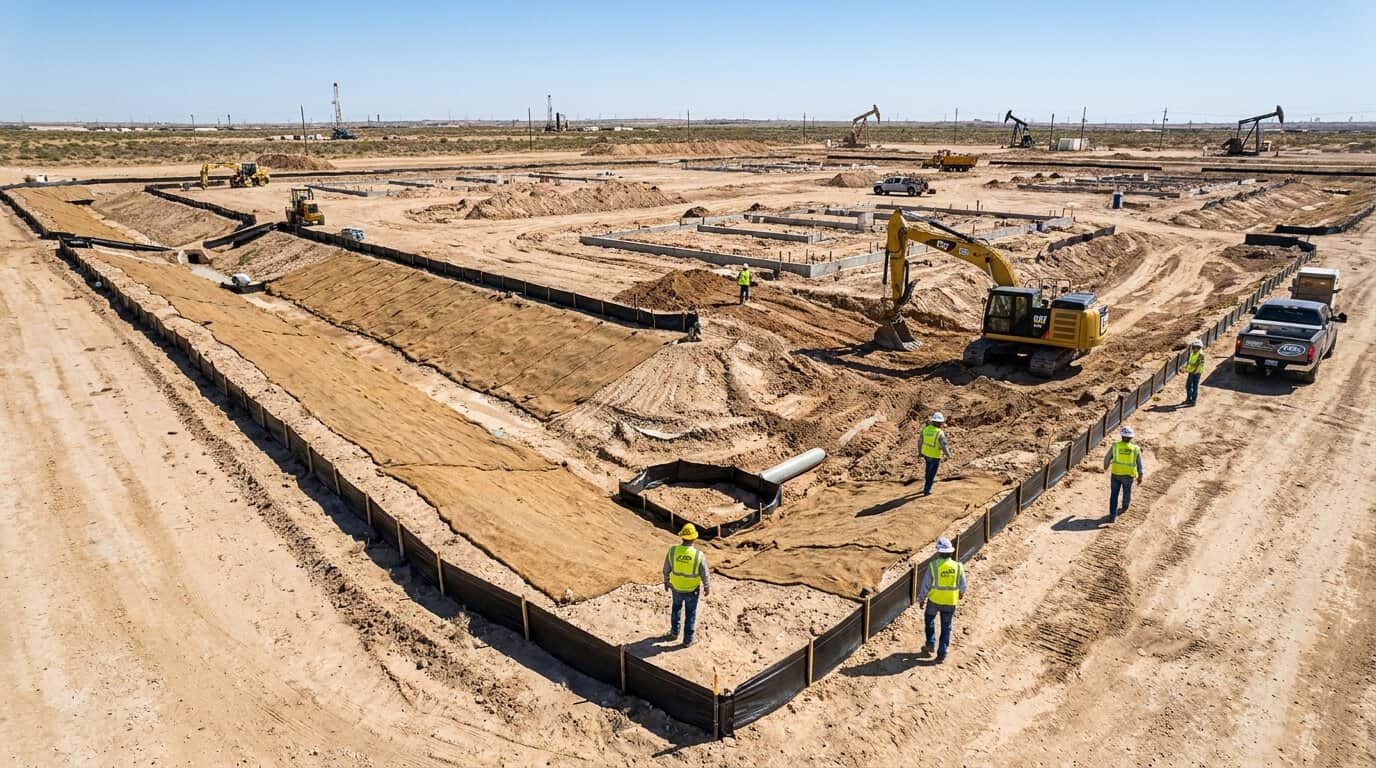
If your project disturbs one acre or more of soil, you need a SWPPP. Period. That’s the trigger under the Texas Pollutant Discharge Elimination System.
It doesn’t matter if you’re building a warehouse, a parking lot, or a housing development. One acre equals 43,560 square feet. Most serious construction hits that threshold fast.
Even if your site is smaller than one acre, you still might need a SWPPP. Here’s when:
- Your site is part of a larger common plan of development that totals one acre or more
- Your project discharges near protected waters or environmentally sensitive areas
- The City of Odessa imposes stricter local rules for your specific location
A SWPPP is a living document. It describes how you will prevent pollutants like sediment, chemicals, and trash from washing into storm drains. You must have it ready before you break ground.
What Goes Into a SWPPP
Your SWPPP must include several key sections. First, a site description and map showing where soil will be disturbed, where water flows, and where nearby streams or storm drains are located.
Second, you identify pollution sources. This includes stockpiles, fueling areas, washout locations, and anywhere chemicals or waste are stored.
Third, you describe your Best Management Practices. These are the physical controls and procedures you use to keep pollutants out of stormwater runoff. Examples include:
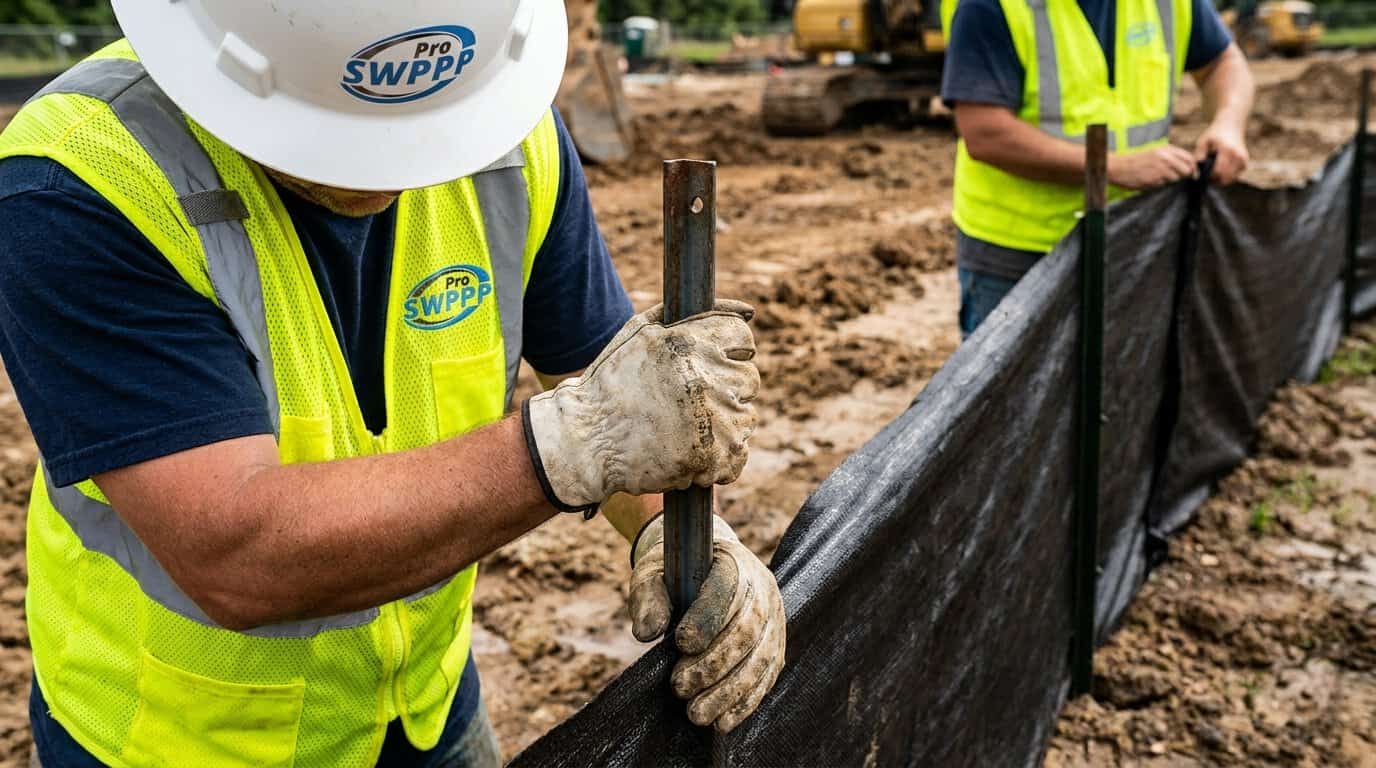
- Silt fences and sediment barriers for Erosion Control
- Stabilized construction entrances to prevent tracking mud onto roads
- Inlet protection around storm drains
- Temporary seeding or mulch on exposed soil
- Designated washout areas for concrete trucks and equipment
- Covered storage for paints, solvents, and fuels
Fourth, your plan must lay out inspection schedules. Odessa follows the TCEQ Construction General Permit rules. You can inspect once every seven days, or once every 14 days plus within 24 hours after any rain event of half an inch or more.
Fifth, assign clear responsibilities. Who installs the silt fence? Who checks it after storms? Who fixes problems? Put names and roles in writing.
Don’t want to mess with all the paperwork and requirements? Check out Order your SWPPP now with Pro SWPPP Professional CPESC Certified SWPPP Services.
When You Need a Notice of Intent
A Notice of Intent is different from a SWPPP. The NOI is your application for permit coverage under the Texas Pollutant Discharge Elimination System Construction General Permit.
You file the NOI with TCEQ, not the City of Odessa. Sites five acres or larger almost always need an NOI. Sites smaller than five acres but part of a larger common plan also need one.
If your site is between one and five acres and not part of a bigger development, you typically file a Small Construction Site Notice instead of a full NOI. The notice is simpler and cheaper.
How to File Your NOI
TCEQ uses an online system called STEERS. You submit your NOI at least 48 hours before you start construction. You’ll need details about your site, the owner, the operator, and your SWPPP.
You don’t upload your SWPPP to TCEQ. Instead, you keep it on site. Inspectors from the City of Odessa or TCEQ can ask to see it at any time.
Once your NOI is approved, you receive a permit number. Post that number at the site entrance so everyone knows you have coverage.
The Difference Between SWPPP and NOI
Think of it this way. The SWPPP is your plan. The NOI is your permission slip. You need both if you’re over five acres or part of a larger development.
Projects one to five acres need a SWPPP and a Small Site Notice. Projects under one acre that are standalone usually don’t need either, unless local rules say otherwise.
Pro SWPPP – America’s #1 SWPPP Service handles both the SWPPP creation and the NOI filing for you. No guesswork. No missed deadlines.
Odessa-Specific Requirements
The City of Odessa runs a Municipal Separate Storm Sewer System program. That means they have their own stormwater rules on top of the state requirements.
Odessa offers a free SWPPP Generator tool on their website. It’s a template that helps you build a compliant plan. Use it as a starting point, then customize it for your site.
Generic templates without site-specific maps and BMPs are a common cause of violations. Inspectors want to see details that match your actual dirt and drainage.
Inspection Frequency in Odessa
You can choose between two inspection schedules. Option one is once every seven calendar days. Option two is once every 14 days, plus within 24 hours after any storm that drops half an inch or more.
Whichever option you pick, document it in your SWPPP. You can only change your inspection schedule at the beginning of a month.
Keep inspection reports on file for at least three years after your permit ends. Missing records are one of the top reasons for enforcement action.
Managing Construction Chemicals
Odessa stormwater staff emphasize proper handling of paints, solvents, oils, and other chemicals. Store them under cover or in sealed containers. Never let wash water from cleaning tools flow into storm drains.
Set up designated washout areas for concrete trucks. Line them so wash water can’t seep into the ground or run off. Clean them out regularly.
Not sure what your project needs? Take our SWPPP Quiz (link) or Schedule a Free SWPPP Consultation with CPESC Certified SWPPP Expert Derek E. Chinners.
Common Mistakes and How to Avoid Them
Many contractors think that if they’re under five acres, they don’t need a SWPPP. Wrong. In Texas, any site one acre or larger requires a SWPPP and permit coverage.
Another mistake is using a template plan without customizing it. Inspectors see right through boilerplate text. They want your actual site map, your actual BMPs, and your actual drainage patterns.
West Texas Weather Challenges
Odessa sits in a semi-arid climate. You can go weeks without rain, then get hit with a sudden downpour. Long dry spells make crews forget about stormwater controls.
Then a big storm rolls in and washes sediment straight into the storm system. Keep your BMPs in place even when it’s dry. Check them before every forecast storm.
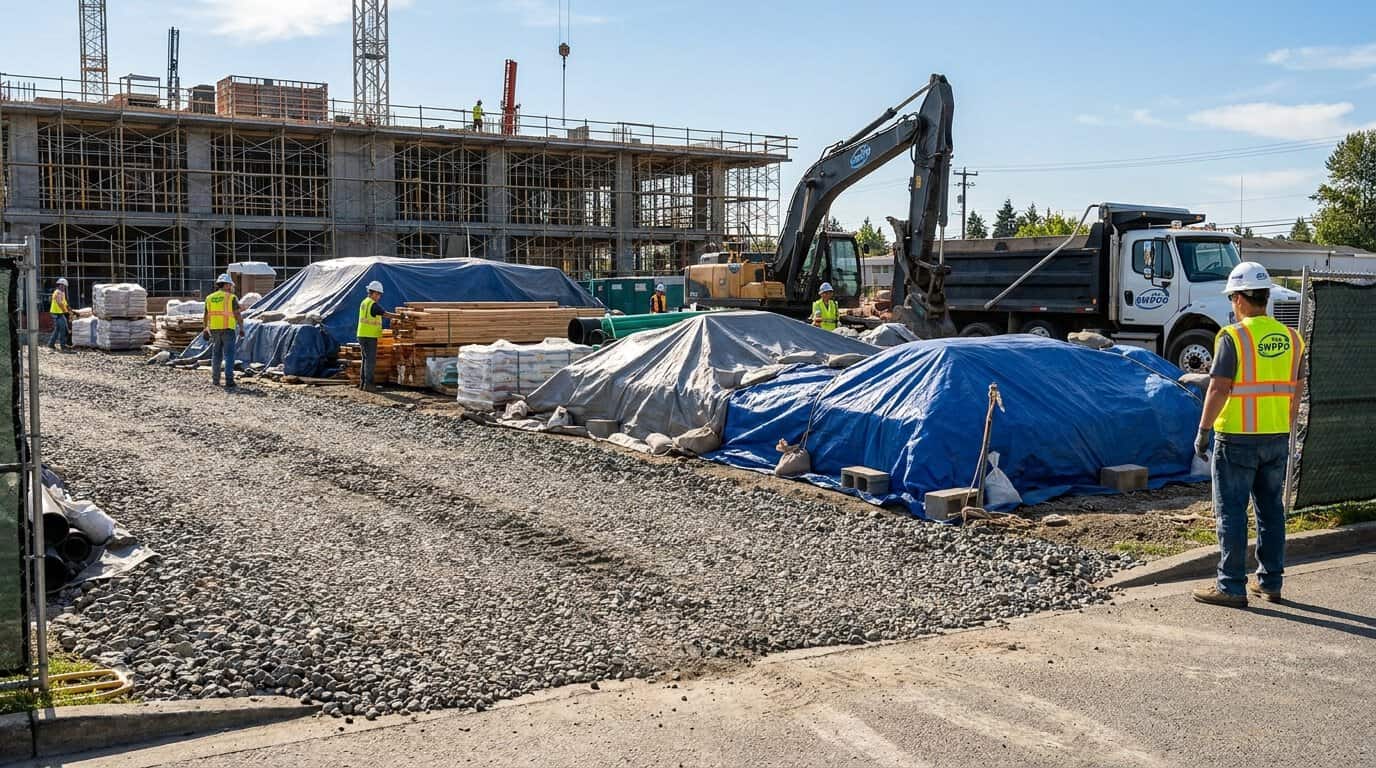
Cover stockpiles with tarps or plastic sheeting. Pre-position extra silt fence and inlet protection so you can deploy them fast when weather changes.
Poor Documentation
Missing inspection logs are the easiest way to get a violation. Set up a simple system. Use a standard form. Keep a binder on site or a digital folder everyone can access.
Every time you inspect, write it down. Every time you fix a BMP or add a new control, update the SWPPP. Every time it rains more than half an inch, document your post-storm check.
Unclear Responsibilities
BMP failures often happen because nobody knows who’s in charge. The general contractor thinks the grading sub is handling silt fence. The grading sub thinks the GC is doing it. Meanwhile, the fence falls over and sediment flows off site.
Put clear roles in your SWPPP. Include stormwater duties in subcontractor agreements. Hold weekly toolbox talks about BMP upkeep and spill response.
Pro SWPPP – America’s #1 SWPPP Service includes training support and site-specific role assignments in every plan we write. You’ll know exactly who does what.
Best Practices for Odessa Construction Sites
Choose BMPs that perform well in high-intensity storms. Rock check dams, stabilized entrances, and robust inlet protection work better than light-duty options.
Use treatment trains. That means layering multiple controls in sequence. A silt fence might catch coarse sediment, then a filter sock catches finer particles, and a media filter at the outfall polishes what’s left.
No-Exposure Principle
The best way to prevent pollution is to keep materials covered. Store everything under a roof or tarp. Contain wash water. Prevent any uncontrolled discharge to storm drains.
Organize your laydown yard. Use covered dumpsters. Sweep up trash and sediment daily. Keep drains clear so they don’t clog and overflow.
Adaptive Management
Your SWPPP should change as your site changes. When you move to a new phase, update your map. When you bring in new chemicals, add them to your materials list.
If a BMP isn’t working, fix it or replace it. Don’t wait for an inspector to tell you. Catch problems early and correct them fast.
Some teams go beyond the minimum and test stormwater quality at BMP outfalls. Simple field test strips can reveal if a control is failing before it becomes a compliance issue.
Why Choose Pro SWPPP
Pro SWPPP – America’s #1 SWPPP Service specializes in Texas construction sites. We know TCEQ rules inside and out. We know Odessa’s local requirements.
Our team includes CPESC-certified professionals. That means Certified Professional in Erosion and Sediment Control. We don’t just fill in templates. We design site-specific plans that pass inspections the first time.
We also handle NOI filing, inspection scheduling, and plan updates. You get a complete package, not just a PDF you have to figure out on your own.
Speed Without Sacrificing Quality
Most contractors need their SWPPP fast. We deliver plans in days, not weeks. But we never cut corners. Every plan includes custom maps, detailed BMP locations, and clear inspection protocols.
We serve projects across the country. Whether you’re in Georgia, Texas, or anywhere else, we’ve got you covered.
Ongoing Support
Compliance doesn’t end when you get your plan. We offer training, site visits, and amendment services. If your project changes, we update your SWPPP at no extra charge for the first revision.
Need help with a Notice of Termination when your project wraps up? We handle that too. From NOI to NOT, Pro SWPPP – America’s #1 SWPPP Service is with you every step.
Learn more on our About page or reach out through our Contact Us form.
FAQ
Do I need a SWPPP in Texas?
Yes, if your project disturbs one acre or more of soil. You also need a SWPPP if your site is part of a larger common plan that totals one acre or more, even if your portion is smaller.
What is the difference between a SWPPP and an NOI?
A SWPPP is your stormwater pollution prevention plan. An NOI is your application for permit coverage. You keep the SWPPP on site and file the NOI with TCEQ.
How often do I need to inspect my site in Odessa?
You can choose to inspect once every seven days, or once every 14 days plus within 24 hours after any rain event of half an inch or more. Document your choice in your SWPPP.
Can I use a template SWPPP?
Templates are a good starting point, but you must customize them with site-specific details. Generic plans without your actual maps, drainage, and BMPs often fail inspections.
What happens if I don’t have a SWPPP?
Operating without required permit coverage can result in fines, stop-work orders, and enforcement action from TCEQ or the City of Odessa. Penalties can run thousands of dollars per day.
How long do I keep SWPPP records?
You must keep inspection reports, rainfall logs, and SWPPP amendments for at least three years after your permit terminates.
Do I need a SWPPP for a project under one acre?
Usually no, unless your project is part of a larger common plan or discharges to sensitive waters. Check with the City of Odessa or a compliance professional to be sure.
How do I terminate my permit when the project is done?
You file a Notice of Termination with TCEQ after you achieve final stabilization. That usually means 70 percent vegetative cover or equivalent permanent erosion controls.
Ready to get started? Order your SWPPP now or schedule a free consultation with Pro SWPPP.
Visit Pro SWPPP and see why thousands of contractors trust America’s #1 SWPPP Service.
Official Stormwater Resources for Odessa
Last verified: June 2026. Odessa construction stormwater compliance is governed by the Texas Commission on Environmental Quality (TCEQ) under the TPDES Construction General Permit (TXR150000). Confirm current requirements directly with the regulators: