Pro SWPPP helps contractors in Phoenix avoid fines, delays, and headaches. If you’re planning construction in Phoenix and you’ve heard the words “SWPPP” or “NOI,” you might be wondering what they mean and whether you need them. The short answer: if you disturb land, you probably do. Let’s break it down so you can stay legal and keep your project moving.
What Is a SWPPP?
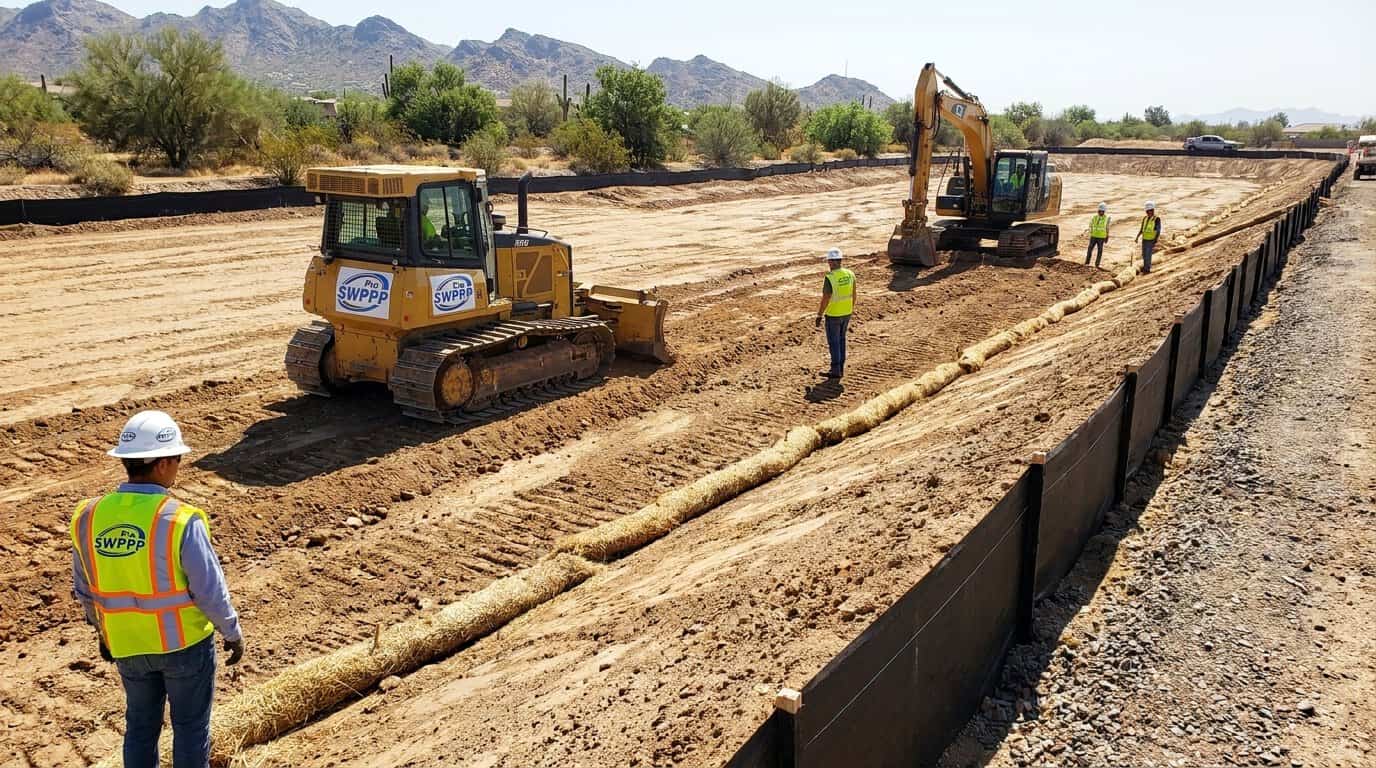
A SWPPP is a Stormwater Pollution Prevention Plan. It’s a written document that shows how you will keep dirt, mud, and chemicals from washing off your construction site into streets, storm drains, and waterways. Think of it as your playbook for clean stormwater.
Under the federal Clean Water Act and the NPDES program, any construction project that disturbs one acre or more must have a SWPPP. That includes grading, trenching, and clearing trees. Even if your site is smaller than one acre, you still need a SWPPP if your project is part of a larger development that adds up to one acre or more.
Phoenix construction sites face unique challenges. Desert soils dry out fast, then monsoon rains hit hard. Sediment can move quickly. That’s why having a solid plan for erosion control and sediment control is not optional. It’s the law.
What Is an NOI?
An NOI is a Notice of Intent. It’s the form you file with Arizona ADEQ to get permit coverage under the Construction General Permit (CGP). Filing your NOI tells the state you’re starting construction and that you have a SWPPP in place.
You must file your NOI before you disturb any land. No exceptions. Once ADEQ approves your NOI, you receive authorization to discharge stormwater from your site as long as you follow your SWPPP and use proper Best Management Practices (BMPs).
Here’s the key: your SWPPP and your NOI work together. The NOI is your permit application. The SWPPP is your operating manual. You need both.
Phoenix SWPPP Requirements for Construction
Phoenix follows state and federal stormwater rules. For detailed coverage of Arizona’s permit framework, see our guide on Arizona SWPPP requirements. In Phoenix, you must meet these basic requirements:
- Prepare a site-specific SWPPP before breaking ground
- File your NOI with ADEQ and receive authorization
- Install erosion and sediment controls before land disturbance
- Keep your SWPPP on-site and available for inspections
- Update your SWPPP when site conditions change
- Conduct inspections at least weekly and within 24 hours of any rain event over 0.5 inches
- Stabilize disturbed soil within 14 days if work stops
- Submit a Notice of Termination (NOT) when the project is done and the site is stabilized
Phoenix added another layer. As of March 1, 2024, projects one acre or larger must also complete a site-specific maintenance plan for post-construction stormwater controls. This means your work doesn’t end when you finish grading. You need a plan for maintaining any basins, drywells, or green infrastructure you install.
Pro SWPPP keeps your plans updated and compliant from start to finish. We know Phoenix rules inside and out.
Common BMPs Required on Phoenix Sites
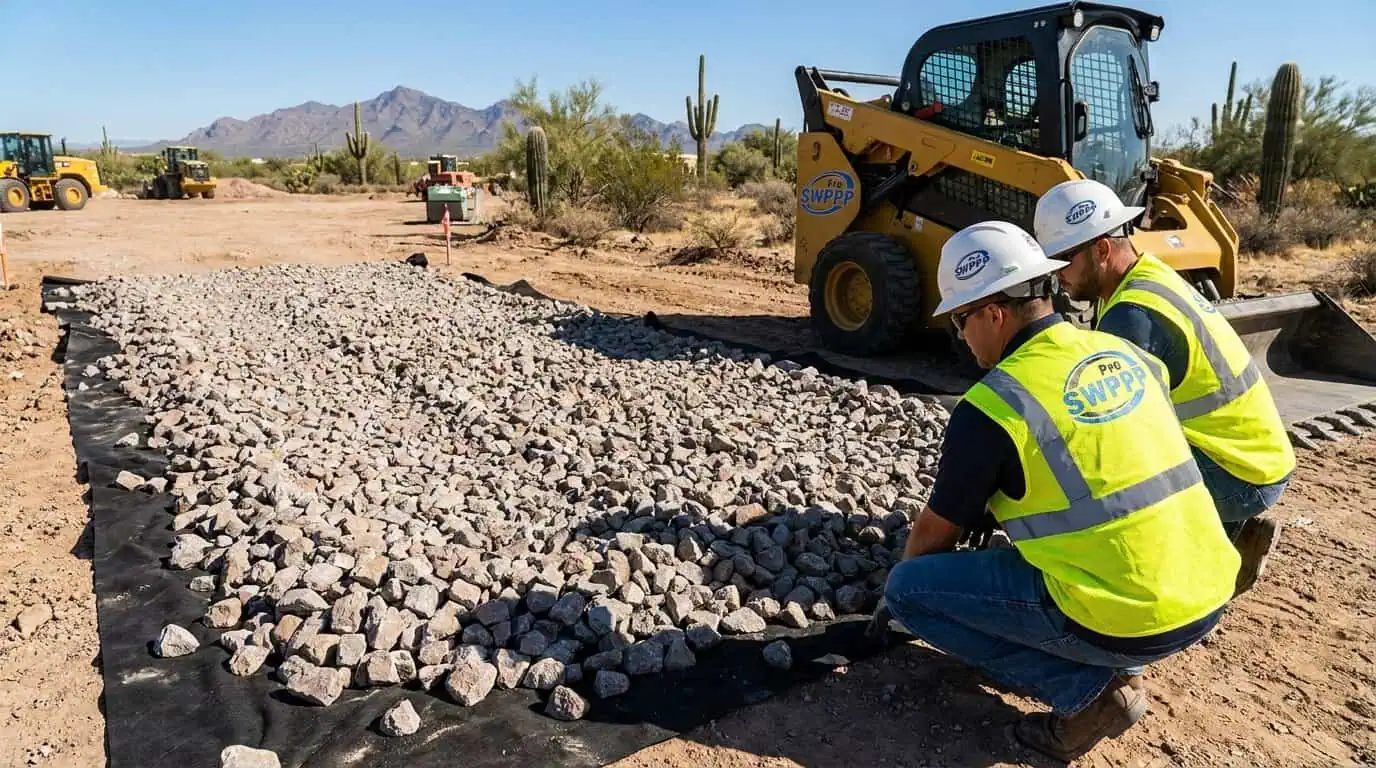
BMPs are the physical controls you install to stop pollution. Every Phoenix SWPPP must list which BMPs you will use and where. Here are the most common ones:
- Perimeter silt fences or wattles to catch sediment
- Stabilized construction entrance to prevent track-out onto streets
- Storm drain inlet protection to keep dirt out of the drainage system
- Dust control measures during dry months
- Concrete washout bins to contain waste water
- Spill kits and containment for fuels, oils, and chemicals
- Temporary or permanent seeding, mulch, or rock to stabilize bare soil
Track-out is a big deal in Phoenix. If mud and dirt get on public roads, you’ll get a notice fast. Install a 50-foot stabilized entrance using aggregate and filter fabric. Sweep streets daily if needed. This one BMP prevents most visible violations.
Inspection and Documentation
Your SWPPP is a living document. That means you can’t write it once and forget it. You must inspect your site every week and after every storm that drops more than half an inch of rain. Document what you find. If a BMP isn’t working, fix it right away and write down what you did.
Keep all inspection reports, updated site maps, and corrective action records with your SWPPP. Arizona inspectors will ask to see them. If you can’t show proof of weekly inspections, you’re out of compliance even if your BMPs look good.
Don’t want to mess with all the paperwork and requirements? Check out Order your SWPPP now with Pro SWPPP Professional CPESC Certified SWPPP Services.
Common Mistakes Phoenix Contractors Make
Thinking Small Sites Are Exempt
If your project is under one acre but part of a common plan of development, you still need permit coverage. A subdivision with ten half-acre lots counts as a five-acre project. Each lot needs its own SWPPP or a master plan covering all phases.
Waiting Too Long to Stabilize
EPA and ADEQ require stabilization within 14 days if work stops. Many contractors wait until the end of the job. That’s a violation. Seed, mulch, or cover any area that won’t be worked for two weeks.
Treating the SWPPP as a One-Time Form
Your SWPPP must change as your site changes. If you shift the grading plan, add a new phase, or install different BMPs, update your document. Keep the latest version on-site at all times.
Skipping Post-Construction Planning
Phoenix now tracks long-term stormwater controls. If you install a detention basin or drywell, you need a maintenance plan. The city will inspect it. Plan for this upfront, not at the end.
Why Phoenix’s Desert Climate Matters
Phoenix isn’t like Georgia or Texas. The desert means intense dust, long dry spells, and sudden monsoon storms. Bare soil can lose tons of sediment in one rain event. That’s why phased grading and prompt stabilization matter more here than in wetter climates.
During dry months, dust control is critical. Use water trucks, tackifiers, or mulch to keep soil in place. When monsoon season hits, make sure all perimeter controls and inlet protections are installed and maintained. A single storm can overwhelm poorly designed BMPs.

How Pro SWPPP Makes Phoenix Compliance Easy
Pro SWPPP takes the guesswork out of Phoenix stormwater compliance. We prepare site-specific SWPPPs, file your NOI with ADEQ, and provide inspection support. Our team is led by CPESC Certified experts who know Phoenix rules, desert conditions, and local inspector expectations.
We don’t use cookie-cutter templates. Every SWPPP we write is tailored to your site’s soil, slope, drainage, and construction phasing. We include detailed BMP specifications, inspection checklists, and maintenance schedules. When conditions change, we update your plan fast.
Not sure what your project needs? Take our SWPPP Quiz or Schedule a Free SWPPP Consultation with CPESC Certified SWPPP Expert Derek E. Chinners.
Recent Arizona Permit Changes
Arizona ADEQ reissued the 2024 Multi-Sector General Permit (MSGP) effective January 16, 2025. While this permit covers industrial facilities, it signals a statewide trend toward tighter documentation and digital recordkeeping. Expect more online submissions and stricter inspection standards for construction permits too.
Phoenix’s post-construction program is another sign that stormwater oversight is expanding. The city now maintains an inventory of public and private stormwater controls and inspects them regularly. If you own or develop property in Phoenix, plan for long-term compliance, not just construction-phase compliance.
Step-by-Step: Getting Permit Coverage in Phoenix
Here’s how to stay legal from day one:
- Determine if your project disturbs one acre or more (or is part of a larger plan)
- Prepare a site-specific SWPPP with maps, BMP details, and inspection procedures
- File your NOI with ADEQ and pay the permit fee
- Wait for ADEQ authorization before starting land disturbance
- Install perimeter controls, entrance stabilization, and inlet protection first
- Post your permit authorization and SWPPP contact info at the site entrance
- Inspect weekly and after storms, document findings, and fix problems immediately
- Update your SWPPP whenever site conditions or BMPs change
- File your Notice of Termination (NOT) when the site is stabilized and final vegetation is established
Want help with any of these steps? Contact us and let Pro SWPPP handle the details.
FAQ
Do I need a SWPPP if my project is under one acre?
Yes, if your project is part of a common plan of development that will disturb one acre or more. For example, a residential subdivision with multiple small lots still requires permit coverage for the entire development.
What happens if I start construction before filing my NOI?
You are in violation of the Clean Water Act and Arizona regulations. You may face fines, stop-work orders, and mandatory corrective actions. Always file your NOI and receive authorization before disturbing land.
How often do I need to inspect my site?
At least once per week and within 24 hours of any storm that drops more than 0.5 inches of rain. Document every inspection and any corrective actions you take.
Can I use the same SWPPP for multiple projects?
No. Each project needs a site-specific SWPPP that reflects the actual soil, slope, drainage, and BMPs for that location. Generic templates will not pass inspection.
What is the 14-day stabilization rule?
If you stop work on any part of your site for more than 14 days, you must stabilize that area with seed, mulch, rock, or other cover. This prevents erosion during inactive periods.
Does Phoenix require post-construction maintenance plans?
Yes. As of March 1, 2024, projects one acre or larger must complete a site-specific maintenance plan for any permanent stormwater controls like basins, drywells, or green infrastructure.
Who can prepare my SWPPP?
Anyone can write a SWPPP, but it must meet all federal and state requirements. Hiring a CPESC Certified professional ensures your plan is compliant, thorough, and ready for inspection. Learn more about our team.
Where can I find EPA stormwater guidance?
The EPA provides detailed information on the NPDES Construction General Permit and best management practices for construction sites.
Final Thoughts
Phoenix SWPPP requirements are straightforward once you understand the three-part system: permit triggers, active construction controls, and post-construction maintenance. Don’t wait until you get a notice or a fine. Prepare your SWPPP before you break ground, install BMPs right away, and keep your documentation current.
Pro SWPPP makes compliance simple, fast, and affordable. We handle your SWPPP, NOI filing, inspection support, and plan updates so you can focus on building.
Ready to get started? Order your SWPPP now or schedule a free consultation with Pro SWPPP.
Visit Pro SWPPP and see why contractors nationwide rely on America’s #1 SWPPP Service.