Reno and Washoe County construction projects that disturb 1 acre (43,560 square feet) or more must prepare a SWPPP and file a Notice of Intent with the Nevada Division of Environmental Protection under Construction General Permit NVR100000 before grading starts. Washoe County reviews the same project separately under Truckee Meadows MS4 requirements.
What Is a SWPPP and What Is an NOI in Nevada?
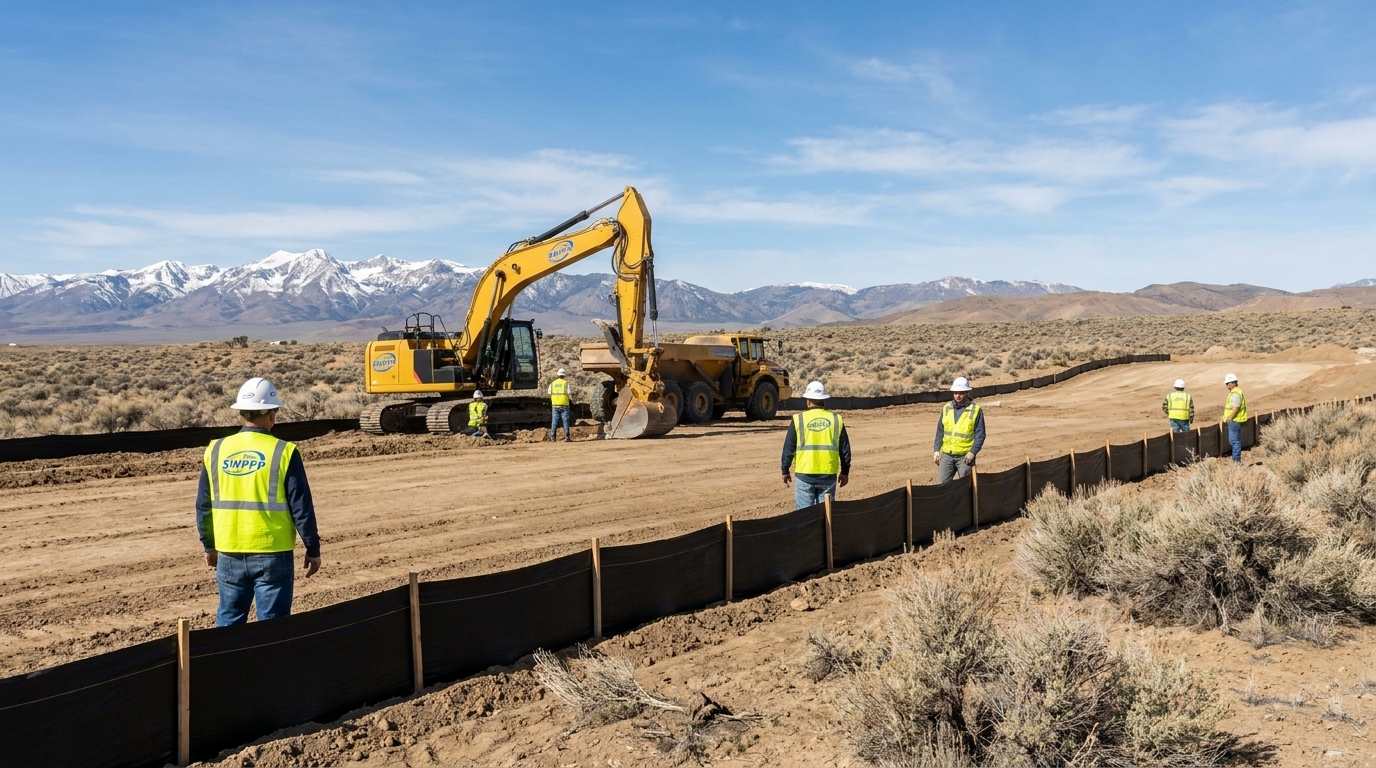
A SWPPP is the site-specific written plan showing how a project will keep sediment, debris, and chemicals out of the storm drain. It lists Best Management Practices, the inspection schedule, training records, and corrective-action procedures. Nevada uses the term SWPPP statewide, and NDEP requires one under permit NVR100000.
The NOI, or Notice of Intent, is the separate form filed with NDEP to obtain coverage under that permit. You submit the NOI, NDEP issues written authorization, and only then can land disturbance of 1 acre or more legally begin.
Projects need both documents. The NOI creates the legal coverage; the SWPPP is the living document that stays on site and proves the permit conditions are being met every week the job runs. The EPA describes a SWPPP as a site-specific, written document that identifies potential sources of stormwater pollution at the construction site, describes practices to reduce pollutants in stormwater discharges from the site, and identifies procedures the operator will implement to comply with the terms and conditions of a construction general permit, per the U.S. EPA construction stormwater program.
Not sure if you even need one?
Answer a few questions about your site and find out in under two minutes.
What Is the Acreage Threshold in Reno and Washoe County?
Nevada Construction General Permit NVR100000 applies at 1 acre, or 43,560 square feet, of total land disturbance. Washoe County uses the same figure: hit 43,560 square feet and NDEP coverage must be in hand before county development review moves forward.
Sub-acre projects are pulled in when they are part of a larger common plan of development. A half-acre pad that is phase one of a 5-acre subdivision is covered by the 5-acre total, because NDEP counts the entire plan rather than the individual slice.
County review can also require stormwater controls on smaller sites near drainage infrastructure even where state permit coverage is not triggered. For the statewide picture, see our guide to Nevada SWPPP requirements.
What Does Washoe County Add on Top of the State Permit?
Reno, Sparks, and unincorporated Washoe County sit inside the Truckee Meadows MS4, the municipal separate storm sewer system that discharges toward the Truckee River. Construction runoff in that basin is regulated locally as well as by NDEP.
Washoe County development review can require post-construction stormwater quality management plans, long-term maintenance agreements, and documented proof of state permit coverage before a grading or building permit is issued.
County checklists also want specifics rather than intent. Naming silt fence is not enough; the submittal must show location, sizing for the contributing drainage area, inspection frequency, and who performs repairs when a control fails.
| Requirement | Authority | Trigger | When It Is Due |
|---|---|---|---|
| SWPPP | Nevada Division of Environmental Protection | 1 acre (43,560 sq ft) or more | Before the NOI is filed |
| Notice of Intent (NOI) | NDEP, permit NVR100000 | 1 acre or more, or larger common plan | Before any land disturbance |
| Grading / development review | Washoe County or City of Reno | Regulated grading in the Truckee Meadows MS4 | Before permit issuance; NDEP proof required |
| Inspection and training logs | Kept on site for NDEP and county review | Active permit coverage | Every 7 days; training at least annually |
What Must a Compliant Reno SWPPP Contain?
Washoe County stormwater guidance organizes a compliant plan into 5 phases: planning and organization, site assessment, BMP selection and design, implementation, and evaluation and inspection. A plan missing any one of them is incomplete at review.
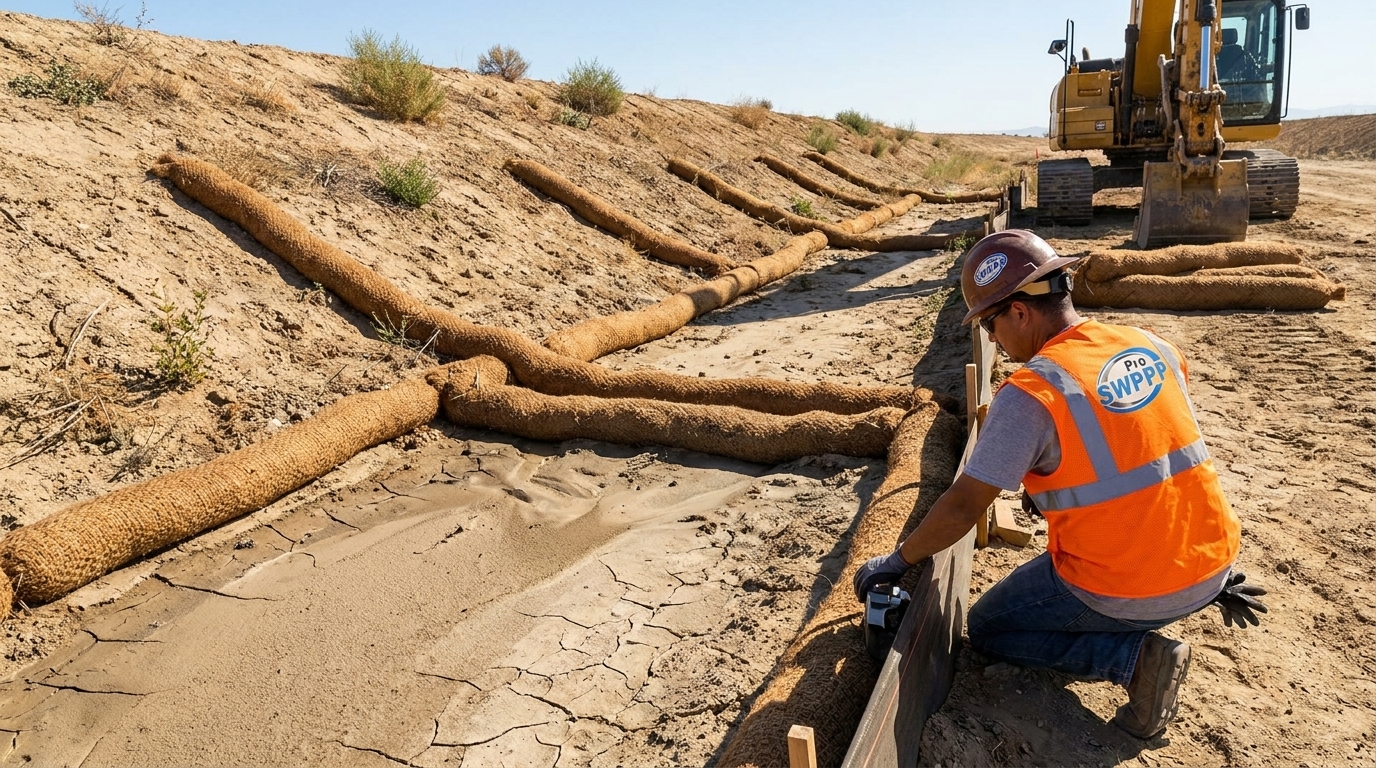
Planning maps where stockpiles, concrete washouts, and fuel tanks sit. Site assessment documents soil type, slope percentages, and drainage paths. BMP selection matches controls to Reno high-desert conditions, where wind moves as much sediment as rain does.
Implementation is where most projects slip. The plan must be executed in the field, maintained, inspected on schedule, and amended whenever grading, staging, or the limits of disturbance change. Pro SWPPP writes and updates that documentation; physical installation of BMPs is handled by your site contractor.
How Often Must You Inspect a Reno Construction Site?
Nevada Construction General Permit NVR100000 requires inspection at least once every 7 calendar days, plus an inspection within 24 hours of the end of a storm event of 0.5 inches or greater that produces discharge from the site.
Each entry logs the date, the inspector, conditions observed, deficiencies found, and corrective actions with completion dates. Those logs stay on site because inspectors ask for them during unannounced visits.
Training is a separate obligation. Washoe County guidance calls for stormwater training at least annually so crews can recognize a failing control before it becomes a documented violation.
Just want a number first?
Tell us about your project and we will send a written estimate, no obligation.
Which BMPs Actually Work in Reno High Desert Conditions?
Reno is not Georgia or Texas. Arid soils, sustained wind, and short high-intensity monsoon bursts mean controls have to manage airborne dust as well as sheet flow.
Controls commonly specified on Truckee Meadows projects include:
- Stabilized construction entrances to stop track-out onto public streets
- Silt fence and fiber rolls along the downgradient perimeter
- Sediment basins sized to the contributing drainage area
- Covered material storage with secondary containment for fuels and chemicals
- Concrete washout areas with clear signage
- Daily housekeeping and street sweeping
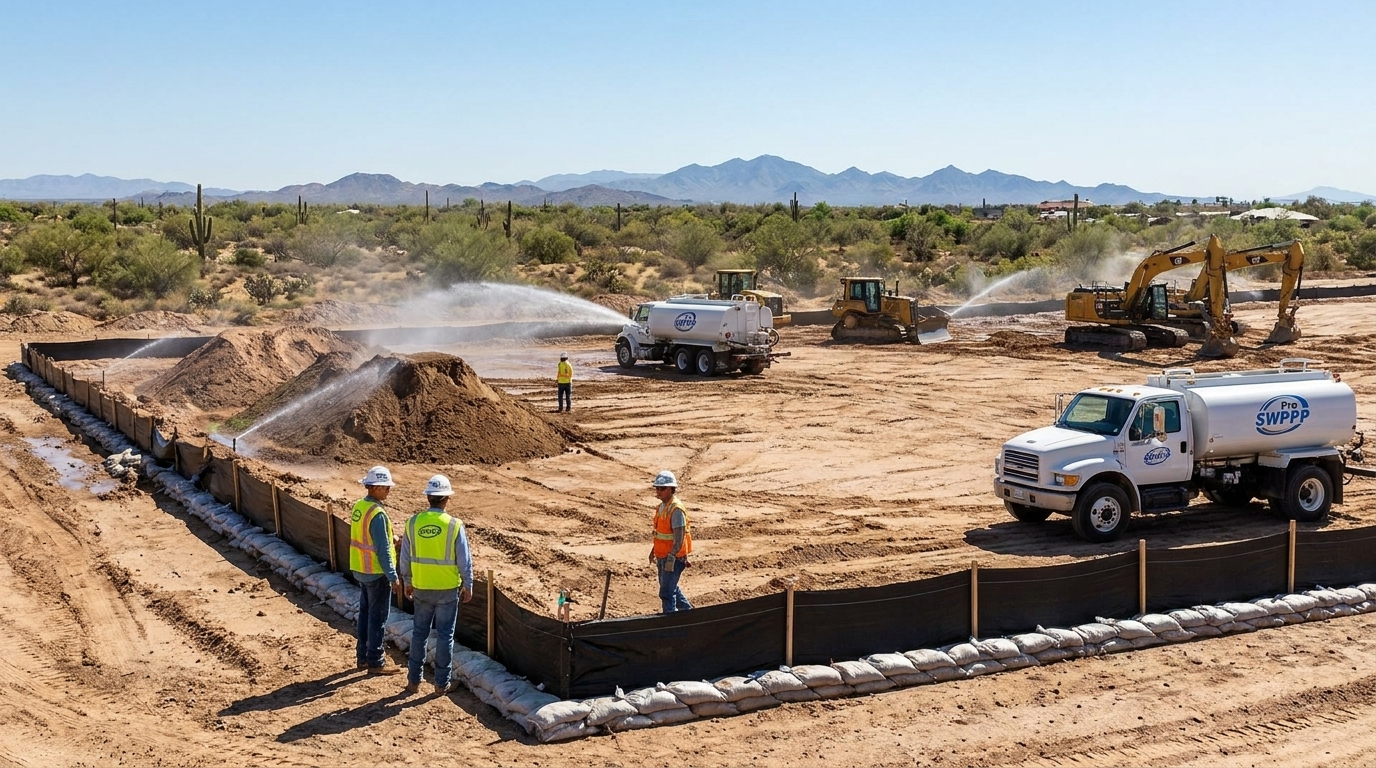
- Watering, mulching, and seeding to hold exposed soil
Nevada released a Construction Site BMP Manual adopted by NDOT effective March 7, 2025, with updated guidance on control selection and maintenance. It is mandatory on state highway projects and a sound reference for everyone else.
Why Does Dust Control Count as Stormwater Compliance?
Wind moves sediment off site with no rain at all, and that sediment still reaches Truckee Meadows storm drains. Stabilizing exposed ground quickly, watering haul routes, and seeding as soon as an area reaches final grade all reduce the sediment load your controls have to catch later.
What Mistakes Cost Reno Contractors the Most?
Assuming sub-acre means exempt is the first. Common-plan aggregation and proximity to drainage infrastructure both pull small Washoe County sites back under review.
Treating the SWPPP as a one-time form is the second. County guidance treats it as a living document, so a new material, a regrade, or an expanded limit of disturbance all require an amendment.
Assuming county approval replaces state coverage is the third. Washoe County review may require proof of NDEP authorization, but the SWPPP itself must satisfy NVR100000 conditions independently.
Skipping inspections because the site looks clean is the fourth, and it is the most expensive. Documentation gaps are what inspectors cite: missing logs, missing training records, and missing corrective-action notes produce penalties assessed per day of violation and can trigger stop-work orders on repeat findings.
Why Work With Pro SWPPP in Northern Nevada?
Pro SWPPP, LLC is a stormwater documentation and permitting firm. Plans for Reno and Washoe County projects are prepared by a Certified Professional in Erosion and Sediment Control and delivered in 72 hours, so permit coverage is not the item holding up your grading approval.
The deliverable covers the site-specific SWPPP narrative and map, drainage-based control selection, NOI support, inspection forms, training documentation, and corrective-action logs. Your contractor performs the field work; we own the paperwork behind it.
Learn more about Pro SWPPP or reach out through our contact page to talk through a Northern Nevada project.
Reno SWPPP FAQ
Do I need a SWPPP in Reno if my project is under 1 acre?
Usually not on its own, but there are two exceptions. If the site is part of a larger common plan of development exceeding 1 acre, NVR100000 coverage applies. Washoe County can also require stormwater controls during development review for smaller sites near drainage infrastructure.
What is the difference between an NOI and a SWPPP?
The NOI is the form filed with NDEP to obtain coverage under permit NVR100000. The SWPPP is the detailed site-specific plan that stays on the job site and documents how permit conditions are met. Both are required, and the SWPPP must exist before the NOI is filed.
How often must I inspect BMPs in Washoe County?
At least once every 7 calendar days, plus within 24 hours of the end of a storm event of 0.5 inches or greater that generates discharge. Log every inspection, note deficiencies, and document the corrective action and its completion date in the same record.
Who installs the BMPs specified in my SWPPP?
Your site contractor does. Pro SWPPP prepares the plan, selects and locates each control, and supplies the inspection and recordkeeping documentation. Physical installation of BMPs, grading, and all field construction remain the responsibility of the contractor holding the grading permit.
What happens if I have no SWPPP when the inspector arrives?
The site is out of compliance with the Clean Water Act and Nevada permit NVR100000. Penalties are assessed per day of violation, and the inspector can issue a stop-work order that stays in place until a compliant SWPPP is produced and every violation is corrected.
Can Pro SWPPP handle NOI filing and county submittal documents?
Yes. Pro SWPPP prepares the SWPPP, supports NOI filing with NDEP, and assembles the documentation Washoe County requires for development review, including training records and inspection forms. The full compliance paperwork package is handled so your team can stay focused on construction.
Complicated site? Talk it through.
Speak directly with a CPESC-certified stormwater expert with 20+ years of experience.