Pro SWPPP – America’s #1 SWPPP Service helps contractors and developers across South Texas stay compliant without the headaches. If you’re planning to break ground anywhere from San Antonio to Corpus Christi, Laredo, or the Rio Grande Valley, you need to know two things: when you need a stormwater pollution prevention plan and when you need to file extra paperwork with the state. Get it wrong and you risk fines, project delays, and a whole lot of stress.
This guide walks you through every South Texas SWPPP requirement. You’ll learn exactly what the rules say, what the Texas Commission on Environmental Quality (TCEQ) expects, and how to stay on the right side of the law. Best of all, you’ll see how Pro SWPPP takes the burden off your plate so you can focus on building.
What Is a SWPPP and Why Does South Texas Care?
A Stormwater Pollution Prevention Plan is your blueprint for keeping dirt, sediment, and pollutants out of rivers, lakes, and streams when it rains. The federal Clean Water Act started the ball rolling decades ago. Today every state runs its own version of the National Pollutant Discharge Elimination System, called NPDES. In Texas, that’s the Texas Pollutant Discharge Elimination System – TPDES for short.
TCEQ writes the rules for construction stormwater across the entire state. That means a site in Houston follows the same state permit as a site in the Rio Grande Valley. South Texas doesn’t get special exemptions just because it’s hotter or drier. In fact, local cities and counties sometimes add tougher rules on top of state law. They can’t weaken what TCEQ requires, but they can make you jump through extra hoops.
The short version: disturb one acre or more and you need a plan. Disturb five acres or more and you also need to file a Notice of Intent with the state. Miss either step and you’re breaking the law before the first shovel hits dirt.
The One-Acre Rule: When Your Project Needs a SWPPP
TCEQ’s Construction General Permit – permit number TXR150000 – kicks in when you disturb one acre or more of land. That includes clearing, grading, digging, and any other activity that exposes soil. It also includes projects smaller than one acre if they’re part of a larger common plan of development that will eventually disturb one acre or more.
Here’s what that means in plain English. You’re building a small warehouse on half an acre. Normally you’d be exempt. But if that warehouse sits inside a master-planned business park that will disturb ten acres total, you’re part of the larger plan. You need a SWPPP even though your slice is small.
Your SWPPP must be written and ready before you disturb the first square foot of soil. You can’t write it as you go. You can’t finish it next week. The plan lives on-site in a binder or electronic file, and inspectors can ask to see it at any time.
What Goes Into a Compliant SWPPP
A real SWPPP is not a generic template with your project name stamped on top. TCEQ expects a site-specific document that reflects your actual dirt, slopes, weather, and drainage. Every compliant plan includes:
- Site description: Address, owner, operator, soil type, slope, nearby waterways, and which municipal separate storm sewer system (MS4) you drain into.
- Detailed site map: Show disturbed areas, stockpile zones, drainage flow, outfalls, and every best management practice you install.
- Best Management Practices (BMPs): Erosion controls like seeding and mulch, sediment controls like silt fence and sediment basins, and good housekeeping like concrete washout areas and fueling protocols.
- Construction sequencing: The order you clear, grade, install utilities, pour concrete, and pave. Include when you install and remove each BMP.
- Stabilization plan: How and when you’ll cover bare soil. Inactive areas must be stabilized within fourteen days statewide, or seven days if you’re near surface water.
- Inspection schedule: Who inspects, how often, what triggers an inspection (like a half-inch rain event), and how you document findings.
- Corrective action logs: What you did when a BMP failed or wasn’t working right, plus the date you fixed it.
- Recordkeeping: Training records, rain logs, inspection forms, SWPPP updates, permit copies. Keep everything for at least three years after you close out the permit.
Pro SWPPP builds every one of these sections for you. Our CPESC-certified experts know South Texas soils, storm patterns, and local MS4 quirks. We deliver a plan that matches your site, not a cookie-cutter PDF.
Don’t want to mess with all the paperwork and requirements? Order your SWPPP now with Pro SWPPP Professional CPESC Certified SWPPP Services.

The Five-Acre Rule: When You Need a Notice of Intent
Projects that disturb five acres or more, or smaller sites that are part of a larger common plan disturbing five acres or more, must file a Notice of Intent at least 48 hours before construction starts. You submit the NOI through TCEQ’s online STEERS system. Once approved, you print the first page and post it on-site along with your Construction Site Notice and operator contact information.
The NOI fee runs around $225, plus any consultant or service fees. You’ll also need to notify the local MS4 if your runoff enters a municipal storm drain. Some cities in South Texas – San Antonio, Corpus Christi, Brownsville, and others – have their own notification forms and thresholds. They might require an NOI for projects under five acres or ask for additional design standards like detention ponds or water-quality volume calculations.
Once your site is done and stabilized, you file a Notice of Termination. Texas practitioners typically use around 70 percent vegetative cover or equivalent permanent stabilization as the benchmark. Until you file that NOT and TCEQ closes your permit, every SWPPP obligation stays in force.
One to Five Acres: Full SWPPP, No State NOI, But Watch Local Rules
Sites between one and five acres need a complete SWPPP and must post a Construction Site Notice on-site. State rules don’t require you to file an NOI with TCEQ. But many South Texas cities and counties do require local permits, notifications, or erosion-control plan reviews for projects in that size range. Always check with your local planning or public works department before you assume you’re exempt from extra paperwork.
South Texas Enforcement Trends: What’s Changing in 2026
The rules haven’t changed much on paper. What’s changing is how strictly inspectors enforce them. Recent guidance from TCEQ and industry experts shows a clear shift toward performance-based compliance. Generic SWPPPs that don’t match field conditions are automatic violations, even if your BMPs work. Inspectors compare your written plan to what’s actually installed. If your map shows a sediment basin in the southwest corner but it’s really in the northeast corner, you’re in violation.
Stabilization deadlines are another hot-button issue. Fourteen days for inactive areas, seven days near surface water. Inspectors are citing more projects for bare soil that sits too long. South Texas gets short, intense storms that can move a lot of dirt fast, so don’t assume dry weather buys you extra time.
Inspection reports need real detail now. “BMPs okay” doesn’t cut it anymore. Document weather, BMP condition, specific deficiencies, and dated corrective actions. If you move or add a BMP, update your site map immediately.
Multi-operator sites – common in subdivisions and large commercial developments – must have a written division of responsibilities. Who maintains the perimeter controls? Who updates the SWPPP when phasing changes? Who handles inspections? Put it in writing and keep contact info current.
Missing posting requirements (Construction Site Notice, NOI first page, operator contact) are treated as instant violations. Make sure your signs are weatherproof, legible, and in the right spot.
Not sure what your project needs? Take our SWPPP Quiz or schedule a free SWPPP consultation with CPESC Certified SWPPP Expert Derek E. Chinners.
Industrial Sites and the Multi-Sector General Permit
Construction isn’t the only activity that needs a stormwater plan. Industrial facilities – ports, oil and gas support yards, manufacturing plants, trucking terminals – often fall under TCEQ’s Multi-Sector General Permit, TXR050000. That permit requires a stormwater pollution prevention plan (sometimes called SWP3) similar in scope to a construction SWPPP.
TCEQ renewed the MSGP in 2021 and is proposing a 2026 renewal with several updates. The new permit will allow electronic SWPPPs, clarify MS4 notification requirements, update NAICS codes to 2022 classifications, and tweak sector-specific benchmark monitoring levels. Facilities covered under the MSGP should review and update their plans before the new permit takes effect in August 2026.
Pro SWPPP handles industrial SWPPPs just as easily as construction plans. We work with clients across Georgia, Texas, and beyond to keep facilities compliant year after year.
Local Challenges: Infrastructure, Equity, and Real-World Conditions
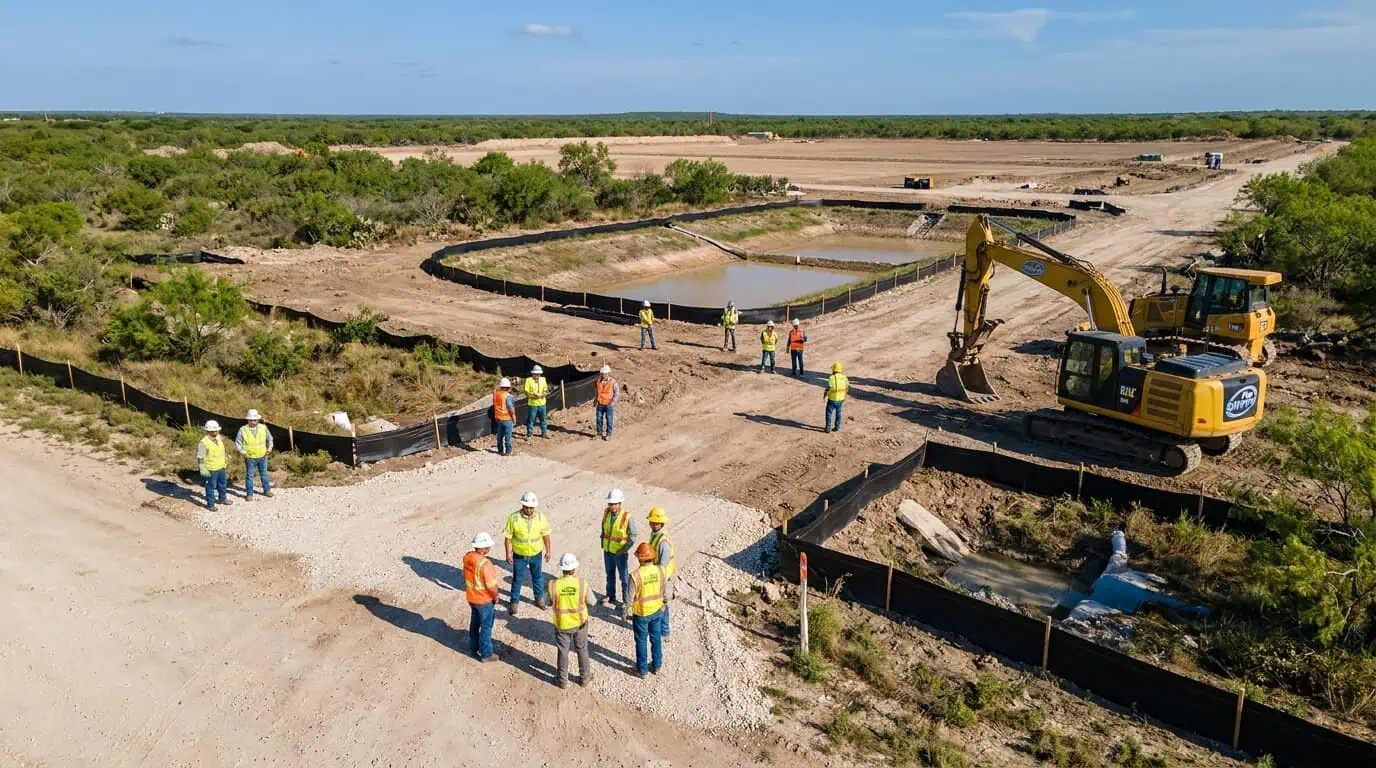
South Texas includes some of the fastest-growing metro areas in the country, but it also includes unincorporated communities – colonias – with limited stormwater infrastructure. Recent research in the Lower Rio Grande Valley documented poorly maintained roadside drainage channels, flooding issues, and gaps in local government capacity.
When construction or industrial stormwater discharges enter areas with weak drainage systems, the impact is worse. Sediment clogs channels, pollutants concentrate in standing water, and vulnerable neighborhoods bear the brunt. That’s why robust SWPPP implementation matters so much in South Texas. Your BMPs aren’t just paperwork. They protect real communities downstream.
Enforcement agencies know this. They’re scrutinizing projects near underserved areas more closely and expecting contractors to go beyond minimum compliance when site conditions or receiving waters warrant it.
Best Practices for South Texas Construction Sites
South Texas weather swings from bone-dry to downpour in hours. Your SWPPP needs to handle both extremes. Here’s what works:
- Phase your clearing: Don’t strip more land than you can stabilize or protect in two weeks.
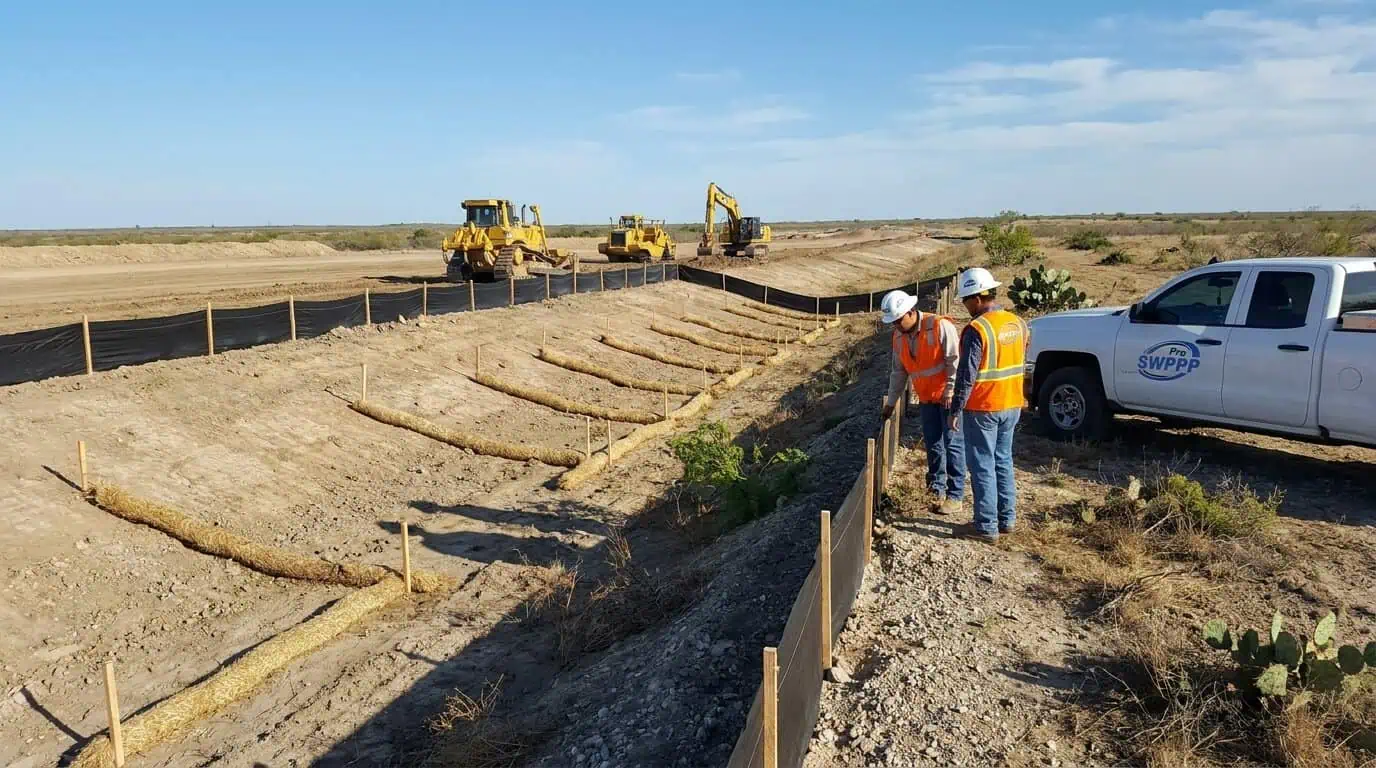
- Install perimeter controls early: Silt fence, fiber rolls, or sediment barriers go in before you touch the dirt.
- Use stabilized construction entrances: Rock pads keep mud off the street and prevent tracking sediment into the MS4.
- Seed and mulch fast: Temporary seeding or erosion blankets on slopes and inactive areas cut erosion by 90 percent or more.
- Inspect after every rain: Half an inch or more triggers a documented inspection. Look for washouts, clogged inlets, and failed BMPs. Fix problems within 24 hours or document why you need more time.
- Keep your SWPPP current: Treat it as a living document. Update maps when you move stockpiles, add utilities, or shift phasing.
- Train your crew: Everyone on-site should know where BMPs are, what not to dump in storm drains, and who to call if something fails.
Pro SWPPP doesn’t just hand you a binder and walk away. We offer inspection services, staff training, and plan updates as your project evolves. You get a partner who understands South Texas soil, slopes, and storms.
Common Mistakes and How to Avoid Them
Thinking Under Five Acres Means No SWPPP
Wrong. If you disturb one acre or more, you need a full SWPPP and a Construction Site Notice. You don’t file an NOI with the state (unless your local MS4 requires it), but you still need the plan and all the inspections, BMPs, and recordkeeping that go with it.
Using a Generic Template
Templates are a starting point, not a finished product. TCEQ expects site-specific details. If your plan says sandy loam but your site is clay, that’s a mismatch. If your map shows a detention pond you never built, that’s a violation. Inspectors compare paper to pavement, and generic plans fail that test.
Ignoring Stabilization Deadlines
Fourteen days for inactive areas, seven days near water. Mark those deadlines on your schedule. Seed, mulch, or cover bare soil before time runs out. Don’t gamble on dry weather. South Texas storms arrive fast and hit hard.
Vague Inspection Reports
“Everything looks good” is not acceptable. Write down weather conditions, which BMPs you checked, what you found, and what you fixed. Date every entry. If an inspector can’t reconstruct your compliance history from your logs, you’re asking for a citation.
Confusion on Multi-Operator Sites
Subdivisions and mixed-use projects often have a site developer, utility contractor, and multiple lot builders all working at once. Who maintains the perimeter fence? Who inspects after rain? Write it down in the SWPPP and update contact info as lots sell or subcontractors change.
Why Pro SWPPP Is the Smart Choice for South Texas Projects
Pro SWPPP takes the guesswork out of stormwater compliance. We’re CPESC-certified, we know TCEQ rules inside out, and we’ve worked on projects from one-acre tear-downs to hundred-acre master plans. When you work with us, you get:
- Site-specific plans: We visit your site, review soils and slopes, map drainage, and write a plan that matches reality.
- Fast turnaround: Most projects get a complete SWPPP in days, not weeks.
- Inspection and training support: We don’t disappear after delivery. Need inspections? We do those. Need to train your crew? We handle that too.
- Updates as you build: Phasing changed? New utility trench? We update your plan and maps so you stay compliant start to finish.
- Local MS4 coordination: We know which South Texas cities require extra paperwork and we help you navigate their systems.
You can try to write your own SWPPP. You can hire the cheapest consultant you find online. Or you can work with the team contractors trust from coast to coast. Visit our About page to learn more about our experience and credentials, or reach out through our Contact Us page with any questions.
FAQ
Do I need a SWPPP in Texas?
Yes, if your project disturbs one acre or more of land, or if it’s part of a larger common plan that will disturb one acre or more. The SWPPP must be complete before you start construction and kept on-site for the life of the project.
When do I file a Notice of Intent with TCEQ?
File an NOI if your project disturbs five acres or more, or if it’s part of a larger common plan disturbing five acres or more. Submit through STEERS at least 48 hours before breaking ground. Projects between one and five acres need a SWPPP and Construction Site Notice but no state NOI, unless your local MS4 requires one.
What is a Construction Site Notice?
A Construction Site Notice is a placard you post on-site that tells inspectors and the public your project is covered under the TPDES stormwater permit. It includes your project name, operator contact, and a statement that you have a SWPPP. It’s required for all projects one acre and larger.
How often do I inspect my site?
TCEQ and industry guidance recommend inspections at least once every fourteen days and within 24 hours after any rainfall of half an inch or more. Your SWPPP should spell out your inspection schedule, who performs inspections, and how you document findings.
Can I use a template SWPPP?
Templates are fine as a starting point, but your final SWPPP must be site-specific. It needs accurate soil types, slopes, drainage patterns, BMP locations, and construction sequencing that match your actual project. Generic templates that don’t reflect real conditions are violations.
What happens if I don’t have a SWPPP?
Operating without a required SWPPP is a violation of the Clean Water Act and Texas law. You can face fines, stop-work orders, and enforcement actions from TCEQ or EPA. Penalties can run thousands of dollars per day.
Do South Texas cities have extra requirements?
Many do. Cities like San Antonio, Corpus Christi, and Brownsville have their own MS4 permits and may require local erosion-control permits, plan reviews, or notifications even for projects under five acres. Always check with your local planning or public works department.
How long do I keep SWPPP records?
Texas guidance says keep all SWPPP documents, inspection logs, and corrective action records for at least three years after you file your Notice of Termination and close out the permit.
What BMPs work best in South Texas?
Focus on phased clearing, perimeter silt fence, stabilized construction entrances, temporary seeding, and erosion blankets on slopes. South Texas storms are short and intense, so redundant controls and fast repair are key. Rock check dams and inlet protection help manage high sediment loads.
Can Pro SWPPP help with inspections and training?
Absolutely. We offer inspection services, staff training, and ongoing plan updates. You’re not buying a document and getting ghosted. You’re getting a compliance partner for the life of your project.
Ready to get started? Order your SWPPP now or schedule a free consultation with Pro SWPPP.
Visit Pro SWPPP and see why contractors nationwide rely on America’s #1 SWPPP Service.
Official Stormwater Resources for South Texas
Last verified: June 2026. South Texas construction stormwater compliance is governed by the Texas Commission on Environmental Quality (TCEQ) under the TPDES Construction General Permit (TXR150000). Confirm current requirements directly with the regulators: