Pro SWPPP – America’s #1 SWPPP Service helps thousands of contractors cut through the confusion every single year. Here’s the truth: most people who start a construction project in Virginia have no idea whether they need a SWPPP, an NOI, or both. And that confusion costs them time, money, and sometimes massive fines.
If you’re planning to disturb one acre or more of soil in Virginia, the Clean Water Act requires you to get a permit. That permit is called the NPDES Construction General Permit (CGP). And to get that permit, you need two things: a Stormwater Pollution Prevention Plan (SWPPP) and a Notice of Intent (NOI).
Let’s break this down so a fourth-grader could understand it.
What Is a SWPPP?
A SWPPP is your written game plan. It shows how you’re going to keep dirt, chemicals, and trash from washing into streams, rivers, and lakes during construction. Think of it like a recipe that tells you exactly what to do to protect water quality.
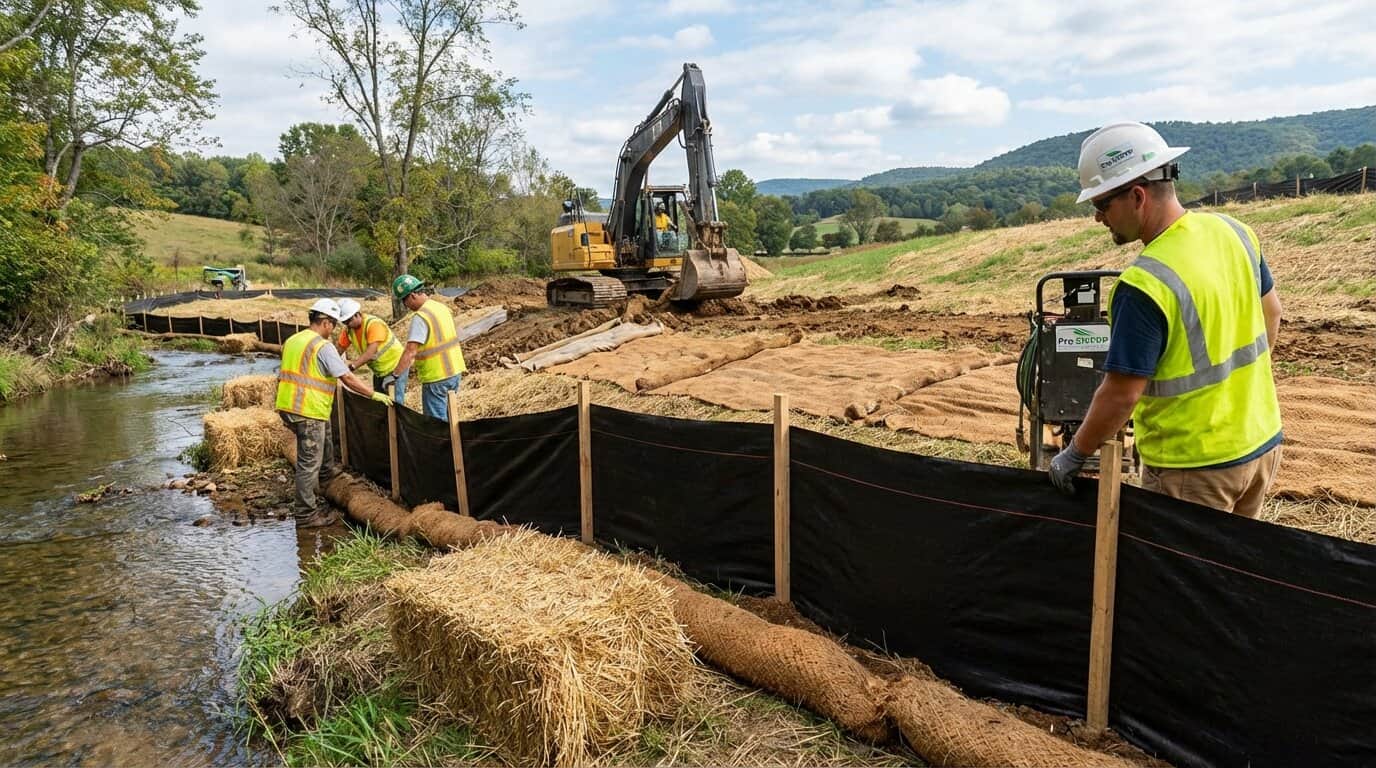
Your SWPPP must include a site map, a list of all the stuff you’re storing on site, your Best Management Practices (BMPs), your Erosion Control plan, and your Sediment Control measures. It also needs inspection schedules and a plan for what happens when it rains.
Virginia requires your SWPPP to be ready before you submit your NOI. If you’re a new facility or you don’t have a current permit, you must finish your SWPPP before you even send in your registration statement. If you’re continuing from an old permit, you get 90 days after coverage is granted.
Here’s what makes Virginia different from states like Texas or Georgia: Virginia uses the Virginia Pollutant Discharge Elimination System (VPDES) permit program. The rules are coded in 9VAC25-151-80, and they just got updated in January 2026. The state tightened the inspection timelines and added new requirements for waste container management.
What Is an NOI?
An NOI is your formal request for permit coverage. It’s a form you fill out that says, “Hey, I’m about to start construction, and here’s my plan to keep stormwater clean.” You can’t legally start dirt work until your NOI is approved and you have permit coverage.
The NOI tells the Virginia Department of Environmental Quality (DEQ) who you are, where your site is, what kind of work you’re doing, and when you plan to start. It also confirms that you have a SWPPP ready to go.
So the short answer is: you need both. The SWPPP is your plan. The NOI is your permission slip.
When Do You Need These Documents in Virginia?
If your project disturbs one acre or more, you need a SWPPP and an NOI. That’s the federal threshold under the Clean Water Act. Even if you’re only disturbing 0.9 acres but you’re part of a larger common plan of development that totals one acre or more, you still need coverage.
Virginia also requires coverage for smaller sites in certain cases. If your site is near sensitive waters or if local ordinances are stricter, you might need a permit even for sites under one acre.
Don’t want to mess with all the paperwork and requirements? Check out Order your SWPPP now with Pro SWPPP Professional CPESC Certified SWPPP Services.
What Happens If You Skip the SWPPP or NOI?
Short answer: bad things. The EPA and Virginia DEQ can fine you up to $55,808 per day per violation. That’s not a typo. Every single day you operate without a permit is a separate violation.
I’ve seen contractors get hit with six-figure fines because they thought they could “just start digging” and deal with permits later. One guy in Virginia started grading without an NOI and got slapped with a $120,000 penalty before he even poured a foundation.
Beyond fines, you can be issued a stop-work order. That means your crew sits idle, your equipment sits idle, and you’re still paying for everything while making zero progress. It’s the fastest way to blow a budget and miss a deadline.
Virginia’s 2026 SWPPP Updates You Need to Know
Virginia published major updates to the SWPPP rules in the Virginia Register on January 26, 2026. Here’s what changed:
- If you inspect on a ten-business-day cycle, you now have 24 hours after a storm to complete your inspection. It used to be 48 hours.
- You have four business days to log your site inspections in your SWPPP. Before, there was no set deadline.
- You must cover or close waste containers during wet weather and at the end of each business day, unless you can prove no discharge will happen.
These changes mean you need tighter processes and better documentation. The state is cracking down on sloppy record-keeping and delayed responses after rain events.
What Goes Into a Virginia SWPPP?
Your SWPPP must include these elements:
- A detailed site description with maps showing property boundaries, structures, and impervious surfaces
- A complete list of every chemical, fuel, paint, or material stored on site that could touch stormwater
- A three-year history of spills and leaks, updated within 60 days of any new incident
- Stormwater sampling data from the past three years
- Specific control measures for each exposure area, including type and location
- Sediment and erosion control measures with flow velocity dissipation devices at discharge points
- Annual outfall evaluations to check for unauthorized discharges
- Maintenance schedules and backup practices for all BMPs
This is a lot. And if you miss one piece, your plan can be rejected. That’s why Pro SWPPP – America’s #1 SWPPP Service exists. We handle every detail so you don’t have to become a stormwater expert overnight.
How Often Do You Need to Inspect?
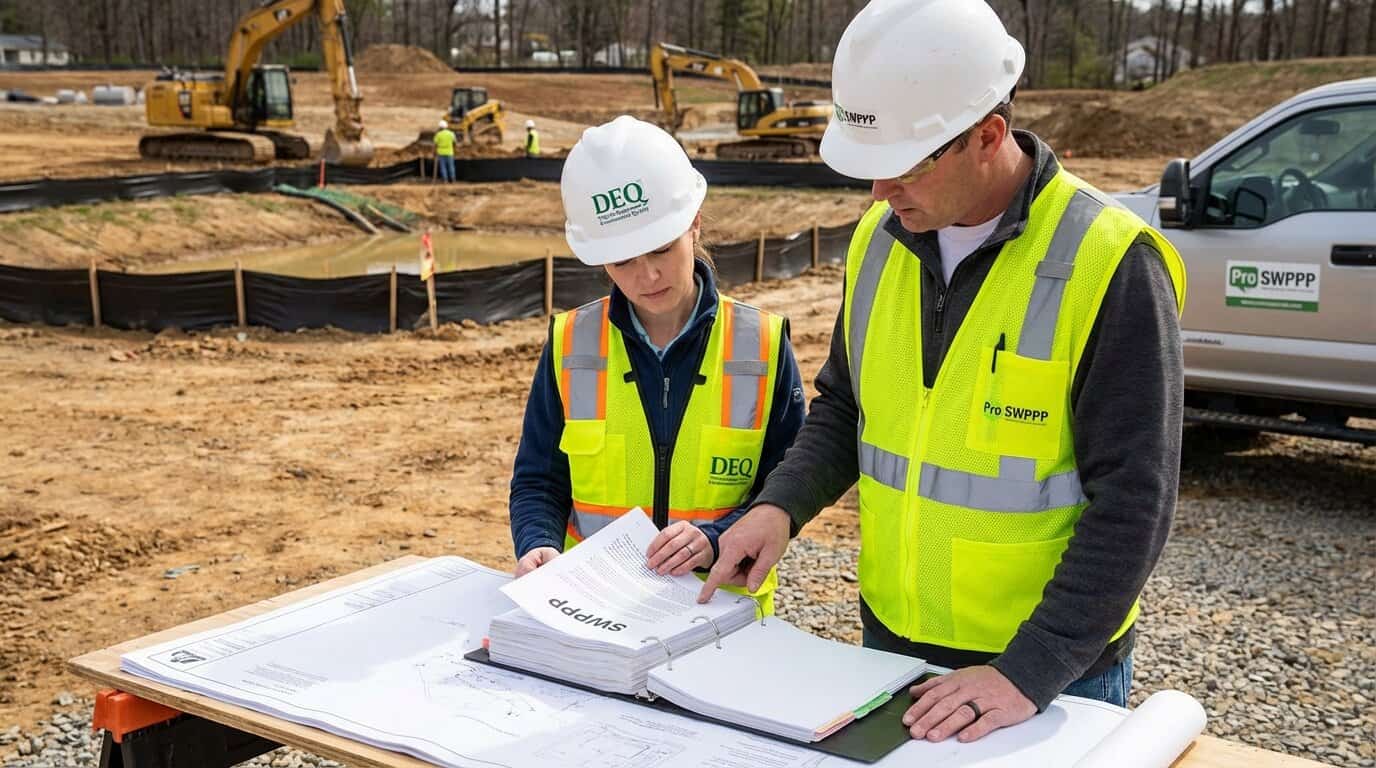
Virginia requires routine inspections at least once per calendar quarter. You also need at least one annual inspection during an actual stormwater discharge event. That means you or your crew need to be out there when it’s raining or right after.
If you maintain Virginia Environmental Excellence Program (VEEP) E3 or E4 status, you can apply for a waiver from routine inspections. But most contractors don’t qualify for that exemption.
After you find a problem during an inspection, you have 60 days to fix it. If the fix needs to happen before the next storm, you need to move faster. Waiting around is not an option.
How Pro SWPPP Makes This Easy
Pro SWPPP – America’s #1 SWPPP Service has CPESC-certified experts who know Virginia regulations inside and out. We prepare your SWPPP, submit your NOI, track your inspections, and keep your documentation up to date. You focus on building. We focus on keeping you compliant.
We’ve worked with contractors across Virginia who were buried in paperwork and confused about deadlines. One client came to us three days before breaking ground with no SWPPP and no NOI. We got him fully permitted in 48 hours. Another client was facing a stop-work order because his SWPPP was incomplete. We fixed it, submitted the updates, and had him back to work in less than a week.
Not sure what your project needs? Take our SWPPP Quiz (link) or Schedule a Free SWPPP Consultation with CPESC Certified SWPPP Expert Derek E. Chinners.
Common Mistakes Virginia Contractors Make
Mistake one: thinking the SWPPP is a one-time document. It’s not. You need to update it within 60 days whenever site conditions change, you have a spill, or the DEQ tells you to.
Mistake two: ignoring the three-year pollutant history. This isn’t just a historical list. You must update it within 60 days of any new spill or leak.
Mistake three: assuming VEEP exemptions cover everything. Even if you qualify for a routine inspection waiver, sector-specific requirements might still apply.
Mistake four: waiting until the last minute to submit your NOI. The approval process can take weeks. If you wait until the day before you want to start, you’re going to miss your start date.
How Long Does It Take to Get Approved?
Once you submit your NOI, Virginia DEQ reviews it and issues a permit or asks for corrections. The timeline varies, but plan for two to four weeks. If your SWPPP has errors or missing info, it takes longer.
That’s why working with Pro SWPPP – America’s #1 SWPPP Service saves you time. We submit complete, accurate documents the first time. No back-and-forth. No delays.
What About Existing Plans?
If you already have a Spill Prevention Control and Countermeasure plan under Clean Water Act Section 311, you can incorporate it into your SWPPP. But it has to meet or exceed Virginia’s requirements. Any missing elements need to be developed separately and added to your SWPPP.
This is a smart move if you’re already doing the work. Just make sure you document how your existing plan meets the SWPPP standards. If you’re not sure, we can help you figure it out. Visit our contact page to get started.
What’s Coming Next for Virginia Stormwater?
Starting July 1, 2026, the Virginia DEQ will take over as the Virginia Stormwater Management Program (VSMP) administrator in certain areas. This shift affects how applications are reviewed and who handles enforcement.
Virginia is also moving from CAST-19 to CAST-23 modeling tools. This upgrade helps track pollutant load reductions more accurately and adjusts for climate change conditions. The Phase 7.0 suite is expected by 2028.
The state is pouring record funding into agricultural BMPs and expanding wetland restoration projects. These changes don’t affect most construction sites directly, but they show how serious Virginia is about water quality.
Why You Can’t Afford to Guess
Stormwater compliance isn’t something you want to figure out on your own. The rules are complex, the deadlines are tight, and the penalties are steep. One mistake can cost you tens of thousands of dollars and weeks of lost time.
Pro SWPPP – America’s #1 SWPPP Service takes the guesswork out of the process. We know what Virginia DEQ wants, we know how to prepare bulletproof documents, and we know how to keep you on schedule. Learn more about our team and process here.
FAQ
Do I need a SWPPP if I’m only disturbing 0.5 acres?
Usually no, unless your site is part of a larger common plan of development that totals one acre or more. Local ordinances or proximity to sensitive waters might also trigger requirements for smaller sites.
Can I submit my NOI before I finish my SWPPP?
No. Virginia requires your SWPPP to be complete before you submit your NOI. The NOI confirms that you have a plan ready to implement.
What happens if I change site conditions after I get my permit?
You must update your SWPPP within 60 days of any change. If the change affects your BMPs or control measures, you need to implement the updates before the next storm event if possible.
How long is my VPDES permit valid?
The Construction General Permit is typically valid for five years, but your coverage lasts only as long as your project. You must submit a Notice of Termination (NOT) when your site is stabilized and construction is complete.
Do I need to hire someone to write my SWPPP?
No, but it’s a smart move. A CPESC-certified professional knows the regulations, catches errors before they become violations, and saves you time. Most contractors find it cheaper to hire an expert than to risk fines or delays.
What’s the difference between erosion control and sediment control?
Erosion control stops soil from moving in the first place. Sediment control captures soil after it’s already moving. Both are required BMPs in your SWPPP.
Get your Virginia SWPPP and NOI handled the right way, the first time, with Pro SWPPP – America’s #1 SWPPP Service.