Pro SWPPP – America’s #1 SWPPP Service helps construction teams across Virginia stay legal and avoid fines. If you’re breaking ground on a building, road, or subdivision in Virginia, you need to understand stormwater rules fast. Miss one step and you could face $25,000 per day in fines, plus a shutdown. This guide explains exactly what Virginia requires in 2026 so you can keep your project moving.
What Is a SWPPP and Why Does Virginia Care?
A Stormwater Pollution Prevention Plan (SWPPP) is your written game plan to keep mud, oil, trash, and chemicals out of rivers, lakes, and streams during construction. The Clean Water Act says you must protect water quality. Virginia enforces these rules through the National Pollutant Discharge Elimination System (NPDES) permit program, managed by the Virginia Department of Environmental Quality (DEQ).
When rain hits bare dirt, it picks up sediment and pollutants. That runoff flows into storm drains and straight into Virginia’s waterways. A SWPPP lists the Best Management Practices (BMPs) you will use to stop that pollution before it leaves your site. Think silt fences, gravel bags, inlet protection, and stabilized entrances.
Do You Need a SWPPP in Virginia?
Yes, if your project disturbs one acre or more of land. This includes grading, clearing trees, trenching, or any activity that exposes soil. Even projects smaller than one acre need a SWPPP if they are part of a larger common plan of development or sale that adds up to one acre or more.
A “common plan” means multiple construction activities happening under one master plan. For example, a 20-lot subdivision might have five builders working on individual half-acre lots. Together, they disturb ten acres, so each builder needs coverage under the Construction General Permit (CGP) and must follow a SWPPP.
Virginia’s Construction General Permit (VAR10)
Virginia’s permit is called the General Virginia Pollutant Discharge Elimination System (VPDES) Permit for Discharges of Stormwater from Construction Activities, or VAR10 for short. To get covered, you file a Registration Statement (the Virginia version of a Notice of Intent) with DEQ before you disturb any soil.
The VAR10 requires you to prepare a SWPPP before you file your Registration Statement. You must keep the SWPPP on site at all times. Inspectors from DEQ or your local Erosion and Sediment Control (ESC) program can ask to see it during visits.
What Goes Into a Virginia SWPPP?
Your SWPPP is not a one-page form. It is a living document with maps, schedules, and detailed descriptions. At a minimum, it must include:
- Site Description: Location, soil types, existing vegetation, nearby water bodies, and drainage patterns.
- Construction Sequence: Phases of work, from clearing to final stabilization.
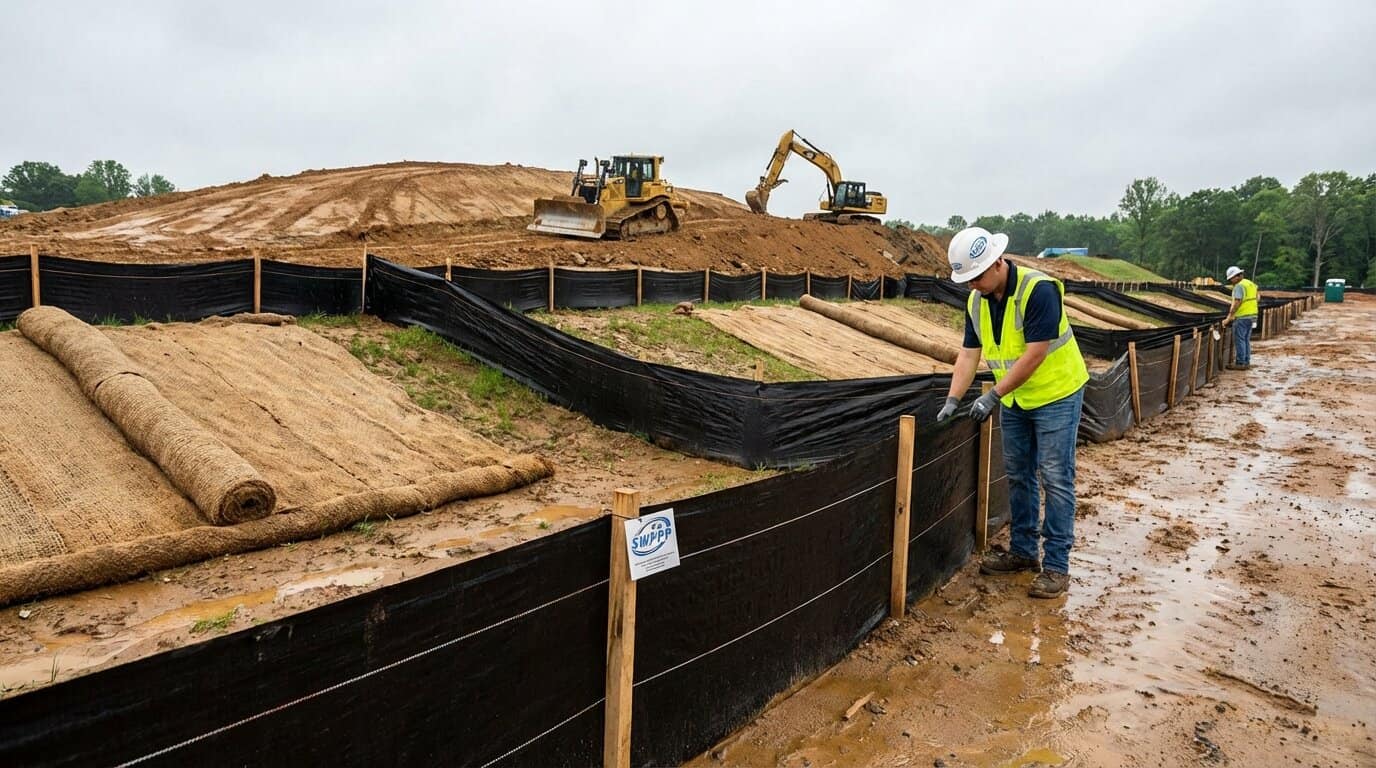
- BMP Selection: Specific erosion control and sediment control measures you will install, such as silt fences, check dams, storm drain inlet protection, and stabilized construction exits.
- Inspection Schedule: Who will inspect, how often (at least once every seven days and within 24 hours after any storm event of 0.5 inches or more), and how you will document findings.
- Maintenance Plan: Procedures to repair or replace BMPs that fail.
- Responsible Parties: Names and contact information for the owner, operator, and SWPPP preparer.
- Spill Prevention: How you will store fuel, chemicals, and waste to prevent spills.
- Final Stabilization: Plans to seed, mulch, or pave all disturbed areas so erosion stops for good.
Virginia DEQ also requires you to post a copy of your permit coverage and SWPPP contact information on a sign visible from the street.
Don’t want to mess with all the paperwork and requirements? Check out Order your SWPPP now with Pro SWPPP Professional CPESC Certified SWPPP Services.
Erosion and Sediment Control vs. SWPPP
Virginia has two layers of stormwater oversight: state DEQ permits (VAR10) and local Erosion and Sediment Control (ESC) programs. Your county or city ESC office reviews plans and issues local permits before you break ground. The ESC plan and the SWPPP often overlap, but the SWPPP must meet or exceed ESC requirements and address all pollutants, not just sediment.
Your local ESC inspector will visit your site regularly. If they find violations, they can issue stop-work orders or fines. Pro SWPPP – America’s #1 SWPPP Service understands how to align your SWPPP with both state and local rules so you pass every inspection.
Common BMPs Used in Virginia
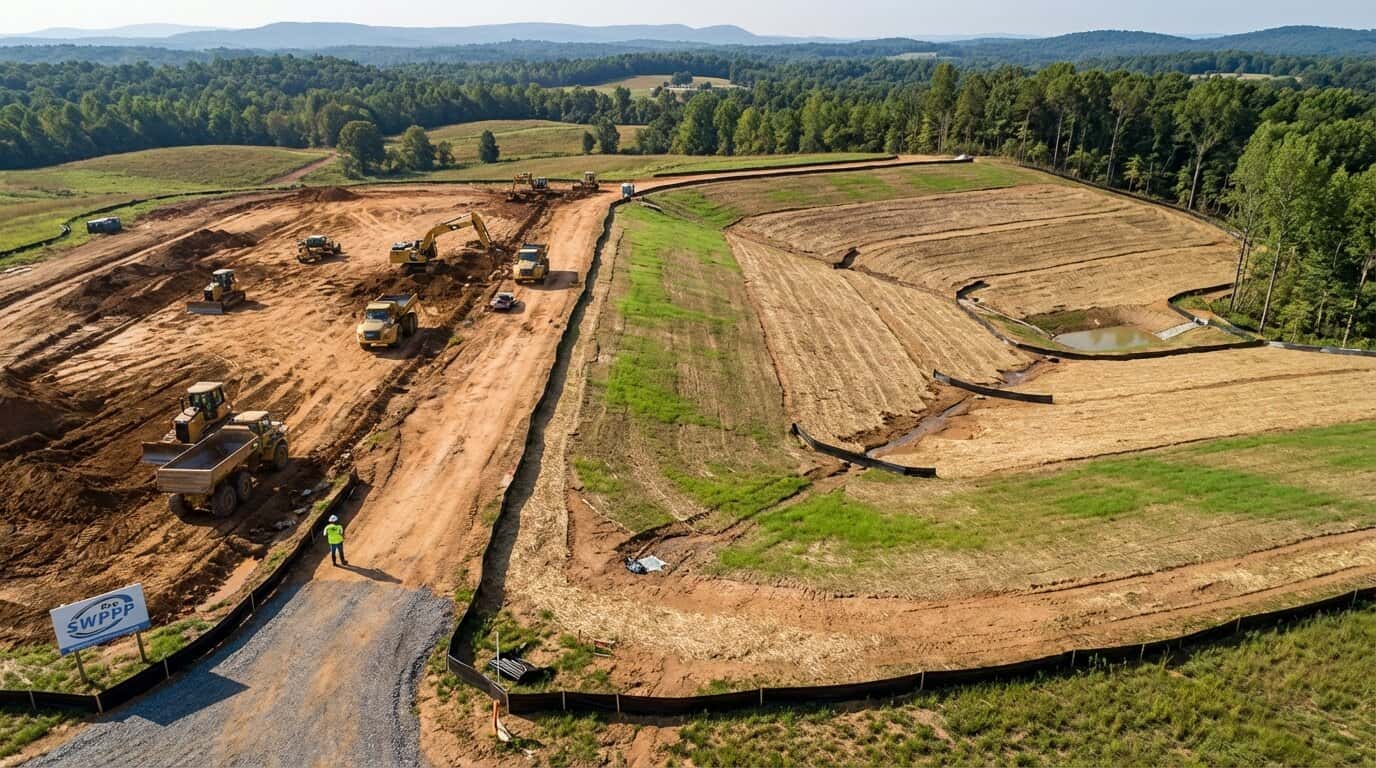
Virginia soils range from sandy coastal plains to red clay in the Piedmont and rocky ridges in the mountains. Your BMP selection depends on site conditions. Common practices include:
- Silt Fencing: Fabric barriers along slopes to trap sediment.
- Sediment Basins: Temporary ponds that settle out mud before water leaves the site.
- Check Dams: Rock or sandbag barriers in ditches to slow runoff.
- Inlet Protection: Filters around storm drains to catch sediment.
- Stabilized Construction Entrances: Gravel pads that knock mud off tires before trucks hit public roads.
- Temporary Seeding and Mulching: Quick-growing grass or straw blankets to protect bare soil between phases.
- Dust Control:Water trucks or tackifiers to keep dust from blowing off site.
Install BMPs before you disturb soil. If you clear trees on Monday, silt fences and inlet protection must be in place by the end of that day. Waiting until later violates your permit and risks a fine.
Inspections and Maintenance
Your SWPPP is a living document. Virginia requires weekly inspections and additional inspections within 24 hours of any rain event that drops 0.5 inches or more. The inspector must be a qualified person trained in erosion and sediment control. Many contractors hire a Certified Professional in Erosion and Sediment Control (CPESC) to lead inspections.
Each inspection must be documented in writing. Note the date, weather, BMPs inspected, problems found, and corrective actions taken. Keep these records with your SWPPP. If a silt fence tears, fix it immediately. If a sediment basin fills with mud, clean it out before the next storm.
Failing to inspect or maintain BMPs is one of the top reasons projects get fined. Pro SWPPP – America’s #1 SWPPP Service can train your crew on inspection procedures and provide customized checklists so nothing slips through the cracks.
Filing Your Registration Statement (NOI)
Once your SWPPP is ready, file your Registration Statement through DEQ’s online portal or by mail. Include the project location, operator information, estimated acreage, and a copy of your SWPPP or a link to where it is stored. DEQ reviews the filing and issues a permit number. You cannot start land disturbance until you receive confirmation of coverage.
Most contractors file 30 to 60 days before breaking ground to allow time for review. If DEQ finds problems, they will ask you to revise your SWPPP before granting coverage.
Not sure what your project needs? Take our SWPPP Quiz (link) or Schedule a Free SWPPP Consultation with CPESC Certified SWPPP Expert Derek E. Chinners.
How Virginia Compares to Other States
Every state enforces the Clean Water Act, but details vary. Texas uses the Texas Commission on Environmental Quality (TCEQ) and requires a paper NOI plus a separate ESC plan. Georgia has a state CGP managed by EPD and mandates 24-hour post-storm inspections. Virginia sits in the middle: strong local ESC oversight, online filing, and a clear permit framework.
If you work in multiple states, Pro SWPPP – America’s #1 SWPPP Service can coordinate all your permits and plans from one team. We know the differences and keep you compliant everywhere you build.
What Happens If You Skip the SWPPP?
Operating without permit coverage or a SWPPP is illegal. DEQ can fine you up to $25,000 per day per violation. Local ESC inspectors can issue stop-work orders, and you may face civil lawsuits from downstream property owners if your runoff damages their land.
Even if you file for coverage, failing to follow your SWPPP is still a violation. If your plan says you will inspect weekly and you skip two weeks, that is a violation. If you promise silt fences and never install them, that is a violation. The penalties add up fast.
Amendments and Updates
Construction projects change. If you add acreage, shift your grading plan, or swap BMPs, update your SWPPP within seven days. Major changes may require you to amend your Registration Statement with DEQ. Keep a log of all revisions so inspectors can see the current version.
Your SWPPP stays active until you achieve final stabilization and file a Notice of Termination (NOT). Final stabilization means all soil is covered with vegetation, pavement, or structures, and no more construction activity will occur. Only then can you close out your permit.
Why Pro SWPPP Is Your Best Partner in Virginia
Pro SWPPP – America’s #1 SWPPP Service has prepared thousands of SWPPPs across the country, including hundreds in Virginia. Our team holds CPESC certifications and stays current on every DEQ rule change. We prepare custom plans that match your site, handle all filings, and train your crew on inspections and maintenance.
We treat your SWPPP as a living document. When Virginia updates its permit or your project scope changes, we revise your plan at no extra charge. You get 24/7 access to your documents online, plus phone support whenever you need answers. Learn more at our About page or reach out through our Contact Us page.
Real-World Virginia SWPPP Example
A residential developer in Loudoun County planned a 15-acre subdivision. The site had steep slopes, clay soils, and a small creek along the rear property line. The local ESC office required a sediment basin, perimeter silt fencing, and stabilized entrances. The developer hired Pro SWPPP – America’s #1 SWPPP Service to prepare the SWPPP and file the VAR10 Registration Statement.
We mapped drainage patterns, specified phased grading to limit exposed soil, and scheduled weekly CPESC inspections. When a summer thunderstorm dropped two inches in an hour, our inspector documented the event and verified that all BMPs held. The project passed every DEQ and ESC inspection and closed out on time with zero fines.
Tips to Stay Compliant in 2026
- File your Registration Statement at least 30 days before land disturbance.
- Install all BMPs before you disturb any soil.
- Inspect weekly and after every storm of 0.5 inches or more.
- Document every inspection in writing.
- Fix problems immediately; do not wait for the next inspection.
- Update your SWPPP within seven days of any major change.
- Keep your SWPPP on site and accessible to inspectors.
- Post your permit sign where the public can see it.
- File your Notice of Termination only after final stabilization.
External Resources
For official guidance, visit the EPA’s NPDES stormwater page. Virginia DEQ also publishes detailed manuals and BMP standards on its website.
FAQ
Do I need a SWPPP for a project smaller than one acre in Virginia?
Yes, if your small project is part of a larger common plan of development that totals one acre or more. Even if you only disturb half an acre, you need VAR10 coverage and a SWPPP if the overall subdivision or site plan exceeds one acre.
How much does a SWPPP cost in Virginia?
Prices vary by site size and complexity. A basic one-acre residential lot may cost a few hundred dollars, while a large commercial or highway project can run several thousand. Pro SWPPP – America’s #1 SWPPP Service offers flat-rate pricing with no hidden fees. Contact us for a free quote.
Can I write my own SWPPP?
Virginia does not require a licensed professional to prepare a SWPPP, but the person who writes it must be qualified and trained in erosion and sediment control. Many owners and contractors choose to hire a CPESC to ensure the plan meets all state and local rules and passes inspection the first time.
What is the difference between a SWPPP and an ESC plan?
An Erosion and Sediment Control (ESC) plan is required by your local government and focuses on sediment. A SWPPP is required by DEQ under the VAR10 permit and covers all pollutants, including fuels, chemicals, and trash. Your SWPPP must meet or exceed your ESC plan.
How long does it take to get VAR10 coverage?
DEQ typically processes Registration Statements within two to four weeks. If your SWPPP is complete and accurate, approval is fast. Incomplete filings can delay your project by weeks or months.
What happens if I forget to inspect after a rain event?
Skipping a required inspection is a permit violation. If DEQ or your local ESC office discovers the gap during an audit, you may face fines or a stop-work order. Always document every inspection, even if no problems are found.
Can I use the same SWPPP for multiple projects?
No. Each construction site needs its own SWPPP tailored to that location’s soils, slopes, drainage, and BMPs. You may reuse templates and boilerplate language, but site-specific details must be accurate.
Do I need to update my SWPPP if I change contractors?
Yes. Your SWPPP lists responsible parties and contact information. If a new contractor takes over, amend the plan within seven days and notify DEQ if required by your permit.
Pro SWPPP – America’s #1 SWPPP Service makes Virginia compliance simple, fast, and affordable. Visit https://proswppp.com to get started today.