
What Is CESCL Certification and Who Needs It in Washington?
CESCL stands for Certified Erosion and Sediment Control Lead, a Washington credential earned through a 16-hour Ecology-approved course. The Construction Stormwater General Permit requires a CESCL on construction sites disturbing 1 acre or more, and the certification remains valid for 3 years before an 8-hour refresher is needed.
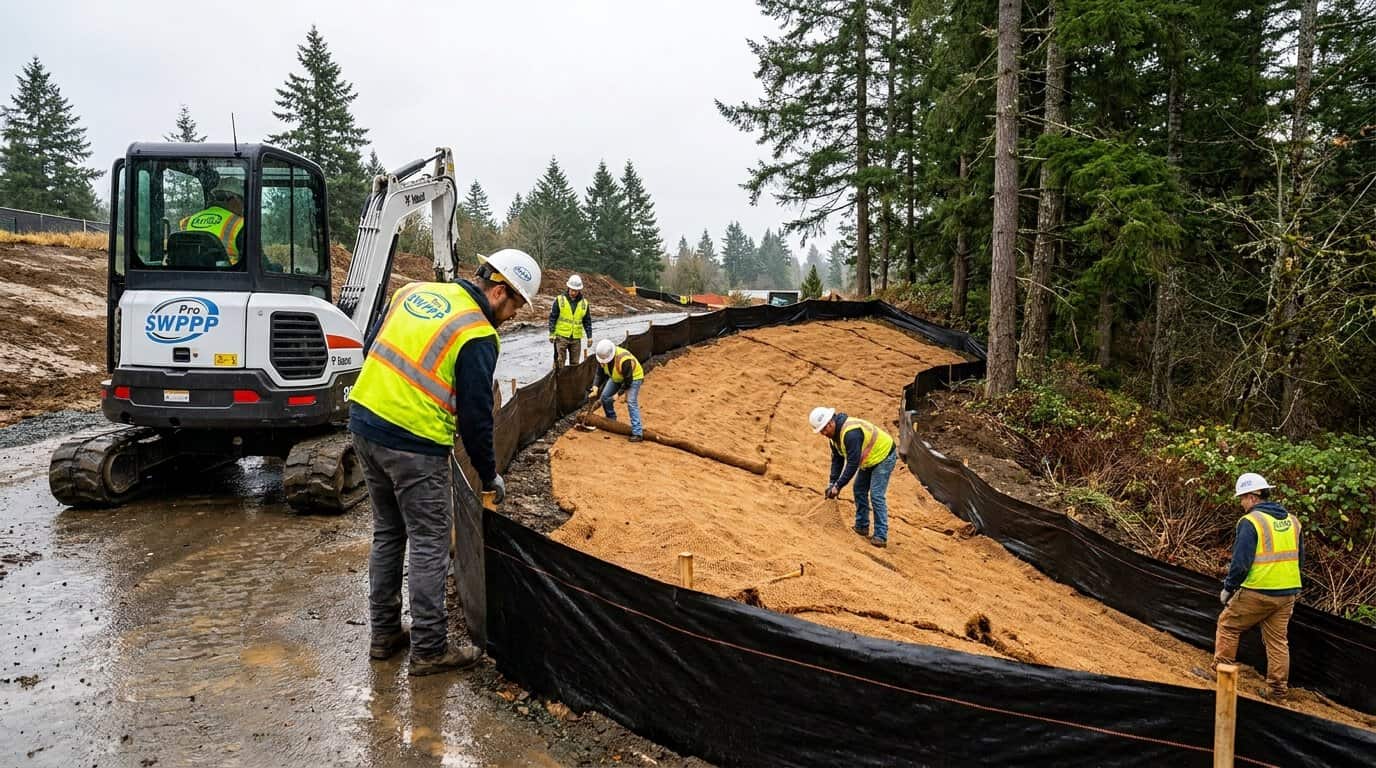
What Exactly Is a CESCL?
A CESCL is an individual credential, not a company certification and not a permit. It certifies that one named person has completed erosion and sediment control training that the Washington State Department of Ecology recognizes for its Construction Stormwater General Permit.
The credential exists because the permit assigns real judgment to the person walking the site. That person decides whether a BMP is functioning, whether a discharge needs sampling, and whether the SWPPP has to be revised before the next storm.
Ecology sets the standard through the permit and recognizes courses that meet it. Training is delivered by approved providers rather than by Ecology directly, which is why course prices, formats, and card-issuing timelines differ between providers while the underlying requirement does not.
Not sure if you even need one?
Answer a few questions about your site and find out in under two minutes.
Who Is Required to Hold CESCL Certification?
The requirement attaches to the site, not the job title. Any construction site with Construction Stormwater General Permit coverage that disturbs 1 acre or more must have a CESCL, and that person must be available to perform the required inspections.
One acre is 43,560 square feet, which arrives faster than most crews expect. Four quarter-acre residential lots in one common plan, a mid-size commercial pad, a parking lot expansion, or a few thousand feet of utility trench with staging will all cross it.
Ecology states the personnel standard in the permit: site inspections must be conducted by a person who is knowledgeable in the principles and practices of erosion and sediment control. On permitted sites of 1 acre or more, that person must hold current CESCL certification. On sites below 1 acre, the knowledge requirement still applies even where the card does not.
Local jurisdictions can be stricter than the state. Some Washington cities and counties require a certified inspector below the 1-acre line as a permit condition, so confirm with the local permitting office before assuming the state threshold governs. Seattle and King County specifics are covered in our Seattle and King County construction stormwater guide.
How Many Training Hours Does CESCL Certification Take?
Initial certification is a 16-hour course, normally delivered as two 8-hour days, followed by an exam. Renewal is an 8-hour refresher course with a shorter exam. Both are offered by Ecology-approved training providers in classroom, hybrid, and online formats.
The curriculum tracks the permit rather than general construction practice. Coursework covers the Construction Stormwater General Permit, the 13 required SWPPP elements, erosion and sediment control BMP selection, inspection and documentation procedures, turbidity and pH sampling, and when a SWPPP must be revised.
The exam is the gate. A passing score produces the CESCL card carried on site, and inspectors ask to see it alongside the SWPPP and the inspection log during a site visit.
Pro SWPPP does not provide or issue CESCL training. Register directly with an Ecology-approved training provider; Ecology maintains the current provider information on its education and training pages.
How Long Does a CESCL Card Last and How Do You Renew It?
A CESCL card is valid for 3 years from the date training was completed, not from the date the card arrived. That distinction costs people their renewal window, so record the training date rather than the mail date.
Renewal is the 8-hour refresher course plus its exam, roughly half the classroom time of initial certification. Set a reminder 6 months before expiration, because approved courses do not run every week and seats fill.
Let the card lapse and the short path can close. Providers commonly limit refresher eligibility to a narrow window after expiration, after which the full 16-hour initial course must be retaken. Confirm the exact policy with your provider before assuming a lapsed card can be refreshed.
| Feature | CESCL | CPESC |
|---|---|---|
| Scope | Washington state credential tied to the Ecology construction permit | National professional certification recognized across states |
| Initial requirement | 16-hour approved course plus exam | Documented education and professional experience plus a proctored exam |
| Renewal | 8-hour refresher every 3 years | Continuing education units on the certifying body cycle |
| Typical role | Onsite inspector required at 1 acre or more | Plan preparer, designer, and program-level reviewer |
| Accepted in Washington | Yes, the default credential | Yes, Ecology accepts CPESC in place of CESCL |
What Does a CESCL Actually Do on Site?
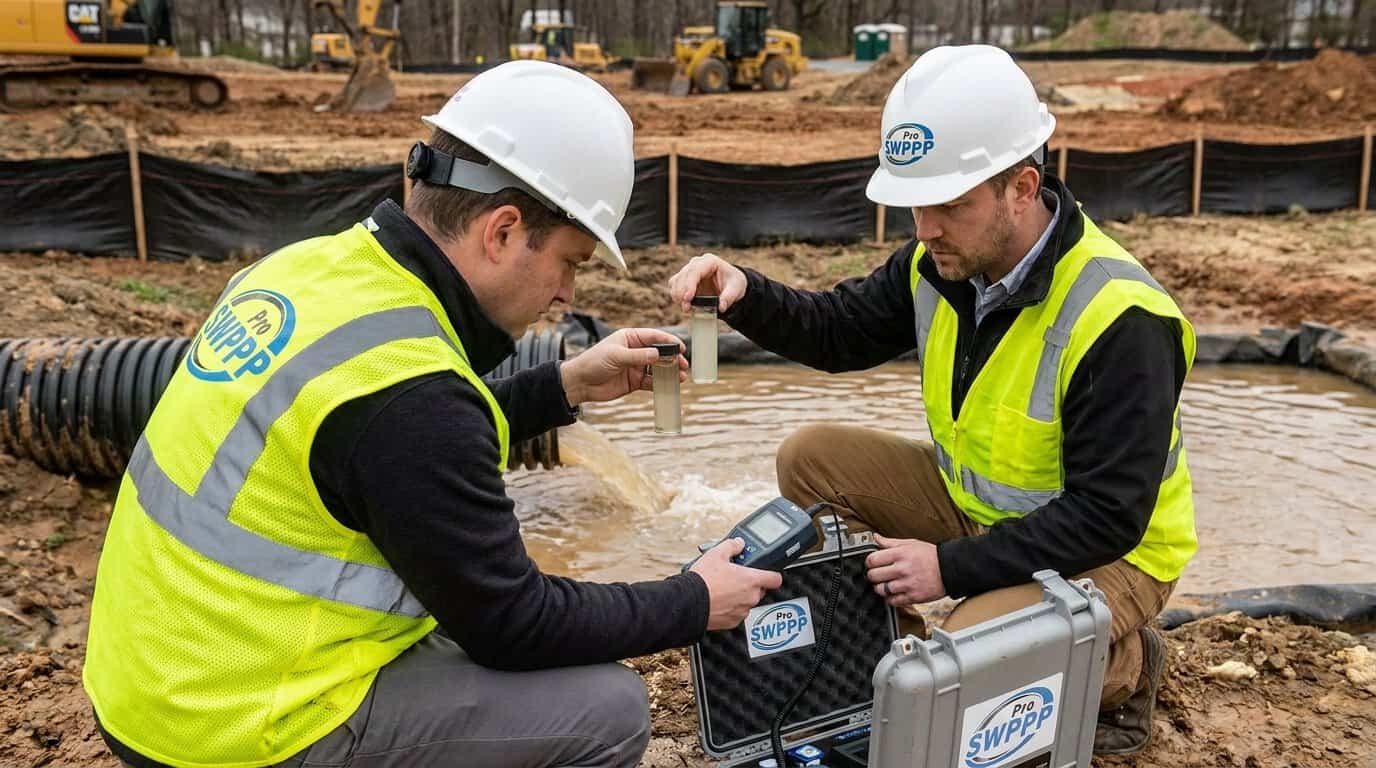
The CESCL is the permit-designated set of eyes on erosion and sediment control. The role is inspection, documentation, sampling, and calling for corrective action, not performing the earthwork. Physical installation of BMPs is handled by your site contractor.
Core duties under the Construction Stormwater General Permit include:
- Inspect the site at least once every calendar week, and within 24 hours of any discharge from the site.
- Record each inspection in writing, including conditions found, BMP status, and corrective actions with completion dates.
- Direct maintenance and repair of failing controls, then verify the fix on a follow-up walk.
- Sample discharges for turbidity, tracking the 25 NTU benchmark and the 250 NTU action level.
- Sample pH where concrete, recycled concrete, or engineered soils are in play, keeping discharges within the 6.5 to 8.5 range.
- Update the SWPPP when phasing, controls, or site conditions change.
Availability is part of the job. Ecology expects the CESCL to be on site or on call during construction, which means responding to a failed perimeter control during a storm rather than waiting for the next scheduled weekly walk.
How Much Does CESCL Certification Cost and Where Does the Real Expense Sit?
Course pricing is set by each approved training provider and varies by format and location, so request current pricing from the provider rather than relying on a published figure. The larger costs are the 16 hours of paid field time for initial certification and the 8 hours for each 3-year renewal.
Certifying a single employee is the expensive false economy. If that one person leaves, is injured, or takes vacation, an active 1-acre site has no qualified inspector and inspections stop, which is a permit violation whether or not sediment ever leaves the site.
Two or three certified staff per active crew is the common answer. Staggering their training dates also staggers the 3-year renewals, so the company never loses all coverage in the same month.
Just want a number first?
Tell us about your project and we will send a written estimate, no obligation.

Is CPESC Accepted Instead of CESCL in Washington?
Yes. Ecology accepts a current CPESC, the Certified Professional in Erosion and Sediment Control credential, in place of CESCL certification. A CPESC holder does not need a separate CESCL card to serve as the site inspector on a Washington permitted site.
The two credentials are aimed at different work. CESCL is a 16-hour course credential focused on field inspection under one state permit. CPESC is a national professional certification requiring documented education and experience plus a proctored exam, and it travels across state lines.
Practically, contractors working only in Washington certify field staff as CESCL, while designers and multi-state professionals pursue CPESC. Plans from Pro SWPPP are prepared under the direction of Derek E. Chinners, CPESC.
What Are the Most Common CESCL Mistakes?
Waiting until the week before mobilization to schedule training is first. Approved courses do not run continuously, and a 16-hour class with a full roster can push a start date by weeks.
Missing the 3-year expiration is second. Certification dates from training completion, and a lapsed card can force the full 16-hour course instead of the 8-hour refresher, which doubles both the cost and the lost field time.
Third is treating the card as the compliance program. A CESCL with no inspection forms, no photo record, and a SWPPP that no longer matches site conditions still produces violations. Ecology inspectors read the log, not just the card.
How Does the CESCL Fit With the SWPPP?
The SWPPP is the written plan covering the 13 elements Ecology requires, with a narrative and drawings. The CESCL is the person who verifies in the field that what is drawn is what exists, and who documents the gap when it is not.
The two fail together. A generic plan gives the CESCL nothing specific to inspect against, and a detailed plan with no certified inspector produces no record that it was ever implemented. Both are cited during an Ecology inspection.
Pro SWPPP prepares the documentation side: the 13-element SWPPP narrative and drawings, the Ecology Notice of Intent, and inspection and maintenance log templates your CESCL uses on site. Pro SWPPP does not provide CESCL training, perform site inspections, or install BMPs.
Learn more about our team, review our Washington SWPPP requirements guide, or contact us with a site-specific question. Federal background on the underlying program is available from the EPA NPDES construction stormwater page.
Washington CESCL Certification FAQ
How many hours is CESCL certification?
Initial CESCL certification is a 16-hour course, usually run as two 8-hour days, followed by an exam. Renewal is an 8-hour refresher course with a shorter exam. Courses are delivered by Ecology-approved training providers in classroom, hybrid, and online formats, and the card is issued after a passing score.
How long is a CESCL card valid?
Three years from the date the training was completed, not the date the card was received. Because approved refresher courses do not run every week, set a reminder about 6 months before expiration. Letting the card lapse can require retaking the full 16-hour initial course instead of the 8-hour refresher.
Do all Washington construction sites need a CESCL?
No. The requirement applies to sites with Construction Stormwater General Permit coverage disturbing 1 acre or more. Below that, the permit still expects inspections by someone knowledgeable in erosion and sediment control, and some cities and counties impose stricter local rules, so confirm with the local permitting office.
Who accredits CESCL training?
The Washington State Department of Ecology sets the standard through the Construction Stormwater General Permit and recognizes courses that meet it. Training itself is delivered by approved providers, not by Ecology. Verify a course is currently Ecology-approved before paying, because an unrecognized class will not satisfy the permit condition.
Does Pro SWPPP offer CESCL training?
No. Pro SWPPP prepares SWPPP documentation, Notice of Intent filings, and inspection log templates, and does not provide or issue CESCL training, perform site inspections, or install BMPs. Register for CESCL training directly with an Ecology-approved provider, then use the plan and forms in the field.
Is CPESC accepted in place of CESCL?
Yes. Ecology accepts a current CPESC, the national Certified Professional in Erosion and Sediment Control credential, as equivalent to CESCL. A CPESC holder does not need a separate CESCL card in Washington. CPESC requires documented education and experience plus a proctored exam, so it takes considerably longer to earn.
How often must a CESCL inspect the site?
At least once every calendar week, and within 24 hours of any discharge from the site. Each inspection is documented in writing with conditions found, BMP status, and corrective actions. Turbidity sampling tracks a 25 NTU benchmark and a 250 NTU action level, and pH is kept within 6.5 to 8.5 where required.
Can one CESCL cover several job sites?
Only if that person can physically meet the weekly and post-discharge inspection obligations on every site, including during storms. Most contractors certify two or three employees so coverage survives vacations, illness, and turnover. Stagger training dates so the 3-year renewals do not all come due in the same month.
Complicated site? Talk it through.
Speak directly with a CPESC-certified stormwater expert with 20+ years of experience.