Pro SWPPP – America’s #1 SWPPP Service here with the truth: if you’re digging up 1 acre or more in Washington State in 2026, you need a Stormwater Pollution Prevention Plan (SWPPP) and a Notice of Intent (NOI) filed 60 days before you touch dirt. Miss that window? You’re staring down thousands in fines per day, stop-work orders, and angry regulators. This guide breaks down exactly what Washington demands, who needs what, and how to stay compliant without losing sleep.
What Is a SWPPP and Why Washington State Requires It
A SWPPP is your playbook for keeping mud, chemicals, and junk out of streams during construction. The Clean Water Act says if you disturb 1 acre or more – or less than 1 acre if you’re part of a bigger project totaling 1 acre – you need a SWPPP and coverage under Washington’s Construction Stormwater General Permit (CSWGP). Counties like King and Snohomish add their own rules: disturb soil near a wetland or salmon stream, even half an acre, and you’re on the hook.
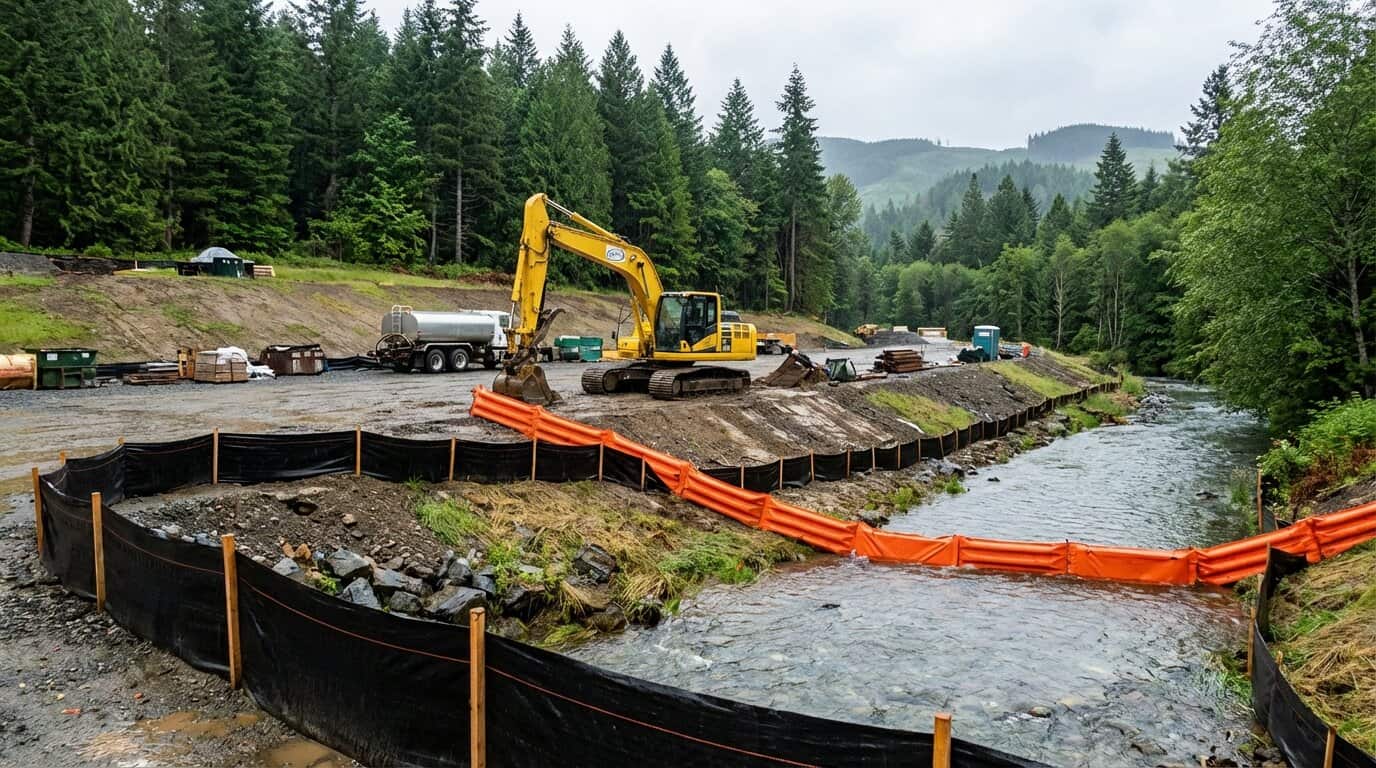
Washington is serious about this because rain is constant, hills are steep, and endangered salmon live in those creeks. Silt from your site can choke fish habitat and trigger lawsuits. The state’s Department of Ecology enforces the NPDES permit system, which rolls up to the EPA. Your SWPPP lists every Best Management Practice (BMP) – silt fences, sediment basins, stabilized entrances – and proves you’ve got a plan to stop erosion and sediment from leaving your property.
Washington State 2026 CSWGP Changes: What’s New
On January 1, 2026, Washington’s updated Construction Stormwater General Permit took effect, and it’s stricter than the old 2021 version. Here’s what changed:
- Weekly water sampling for all sites under 5 acres: You now test turbidity and pH every week, using a calibrated meter for pH (no more litmus strips). Sites 1 acre or smaller that used to skip this? Not anymore.
- CESCL inspections only: Every inspection – weekly and within 24 hours of 0.5 inches of rain or discharge – must be done by a Certified Erosion & Sediment Control Lead. No shortcuts with untrained crew.
- Monthly Discharge Monitoring Reports (DMRs): You file these with Ecology every month for your entire permit coverage, not just when you feel like it.
- No crushed concrete for access roads: It’s banned as stabilization material now.
- Expanded triggers: The permit now covers grading, haul roads, and detailed soil-disturbing activities that might have slipped through before.
Small sites face higher costs because of these new sampling and inspection rules. A project that would’ve coasted under the old permit now needs weekly testing kits, a CESCL on speed-dial, and monthly paperwork. Pro SWPPP – America’s #1 SWPPP Service handles all of this for you, so you don’t have to decode pH meters at 6 a.m. in the rain.
When You Need an NOI in Washington
The Notice of Intent (NOI) is your ticket to legal stormwater discharge. File it electronically with the Department of Ecology at least 60 days before you disturb soil. That’s not a suggestion – it’s the law. The NOI links to your SWPPP and activates your CSWGP coverage. If your project changes – you add acreage, hit contaminated soil, or shift your staging area – you update your site map and notify Ecology.
Late NOI filing is the number-one mistake contractors make. You think you can slide it in last-minute, then Ecology shuts you down day one. Sixty days means sixty days. Plan accordingly.
Don’t want to mess with all the paperwork and requirements? Check out Order your SWPPP now with Pro SWPPP Professional CPESC Certified SWPPP Services.
Core SWPPP Components Washington Expects
Your SWPPP is a living document, not a binder you print once and forget. It must include:
- Site map: Show stormwater flow paths, BMP locations, discharge points, and sensitive areas like wetlands.
- Erosion Control BMPs: Hydroseeding, mulch, erosion blankets to hold soil in place.
- Sediment Control BMPs: Silt fences, sediment basins, check dams to trap mud before it leaves.
- Inspection schedule: Weekly CESCL visits, post-rain checks within 24 hours of 0.5 inches.
- Monitoring plan: Turbidity and pH testing (pH must stay between 6.5 and 8.5), recorded in logs.
- Maintenance logs: Sweeping streets, cleaning inlet filters, repairing torn fences.
Washington’s Eastern and Western Stormwater Manuals give you BMP specs. Use them. Ecology provides a free SWPPP template on their website. Pro SWPPP – America’s #1 SWPPP Service takes those templates and customizes them for your exact site, so inspectors see a plan that fits reality.

Inspections and Reporting: The Weekly Grind
Under the 2026 permit, a CESCL must inspect your site every week and within 24 hours after any storm that drops 0.5 inches or more or causes discharge. That includes drizzle that accumulates – don’t ignore small storms. The inspector checks every BMP, logs damage, and orders repairs. You submit monthly DMRs to Ecology with all your water quality data and maintenance notes.
Skipping an inspection or fudging a DMR is how you get fined. Ecology cross-checks rain gauges and site logs. One Everett project – Sendero Townhome – used a 5,000-gallon dewatering tank, weekly testing, and on-time DMRs. Result? Zero fines, zero delays. That’s the standard.
Penalties for Non-Compliance: Real Money, Real Fast
Violate Washington’s stormwater rules and you’re looking at thousands of dollars per day in fines, stop-work orders, and potential lawsuits from environmental groups. If your sediment hits a salmon stream with endangered species, penalties multiply. The state doesn’t mess around. Compare that to drier states like Texas, where rain is less frequent and enforcement can be lighter – Washington’s climate and ecology make compliance non-negotiable.
Common Mistakes Contractors Make
Here’s what trips people up:
- Late NOI filing: Waiting until week two to file a form that needs 60 days.
- Thinking under 1 acre is always exempt: If you’re part of a common plan totaling 1 acre or you’re near a wetland, local rules pull you in.
- Treating the SWPPP as static: Sites change – you add a haul road, a basin shifts – and you never update the plan.
- Skipping post-drizzle inspections: A quarter-inch here, a quarter-inch there adds up to 0.5 inches. That’s a trigger.
- Using uncertified inspectors: Your foreman can’t do CESCL work unless they’re certified. Period.
Pro SWPPP – America’s #1 SWPPP Service trains your crew, keeps your SWPPP current, and never misses a filing deadline. We’ve done this in Georgia, Texas, and all over the country, so Washington’s rules are second nature.
Best Practices to Stay Compliant
Hire a CPESC-certified expert to draft your SWPPP and train your team. Use Ecology’s templates as a starting point, then customize for your site. Implement BMPs from the Western or Eastern Washington Stormwater Manuals. Train employees within 90 days if they’re full-time, 30 days if temporary. Keep an on-site binder with your SWPPP, NOI, inspection logs, and DMRs so inspectors can grab it any time.
Install BMPs before you start grading. Don’t wait for rain to scramble. Schedule CESCL visits in advance and set calendar reminders for post-storm checks. Calibrate your pH meter per 40 CFR 136.3 specs – Ecology will ask. Document everything: photos, dates, weather, repairs. A good log is your best defense if a regulator shows up.
Not sure what your project needs? Take our SWPPP Quiz (link) or Schedule a Free SWPPP Consultation with CPESC Certified SWPPP Expert Derek E. Chinners.
How Pro SWPPP Takes the Pain Out of Washington Compliance
Pro SWPPP – America’s #1 SWPPP Service writes your SWPPP, files your NOI 60 days out, arranges CESCL inspections, runs your water tests, and submits monthly DMRs. We know the 2026 permit inside and out, and we’ve worked with Ecology’s inspectors for years. You get a customized plan, not a cookie-cutter template. We update your SWPPP when your site changes, train your crew on erosion and sediment control, and keep you off the penalty list.
Our team includes CPESC-certified professionals who live and breathe Best Management Practices. We’ve handled small residential splits and big commercial developments. We know when King County’s wetland buffer rules kick in and how Snohomish County interprets the CSWGP. You get one point of contact, clear answers, and no surprises. Learn more about our approach on our About page or reach out on our Contact page.
Washington vs. Other States: Why It’s Tougher Here
Washington’s frequent rain, steep terrain, and sensitive salmon habitat make stormwater compliance more rigorous than in states with less precipitation. Texas might see a few inches of rain a month and enforce the Construction General Permit (CGP) with lighter sampling; Washington demands weekly tests year-round and 24-hour post-storm inspections. Local counties add layers that the EPA’s baseline NPDES permit doesn’t require. If you’ve run projects in drier climates, don’t assume the same playbook works here.
FAQ
Do I need a SWPPP if my site is under 1 acre?
Maybe. If your small site is part of a larger common plan that totals 1 acre or more, you need a SWPPP and NOI. Some Washington counties also require SWPPPs for sites under 1 acre if they’re near wetlands, streams, or other sensitive areas. Check local ordinances before you assume you’re exempt.
How far in advance must I file my NOI in Washington?
At least 60 days before you disturb soil. This is a hard deadline. File late and you risk fines and project delays. The NOI is submitted electronically to the Department of Ecology through their Water Quality Permit system.
What are the new 2026 CSWGP water quality testing rules?
All sites under 5 acres now require weekly turbidity and pH sampling. Sites 1 acre or smaller, previously exempt, must test weekly too. pH must be measured with a calibrated meter (no strips), and results go into your monthly DMR. pH must stay between 6.5 and 8.5.
Who can perform site inspections under the 2026 permit?
Only a Certified Erosion & Sediment Control Lead (CESCL). Inspections must happen weekly and within 24 hours of any storm that produces 0.5 inches of rain or causes discharge. No one else can sign off on compliance.
What happens if I don’t file an NOI or skip inspections?
You face thousands of dollars in fines per day, stop-work orders, and potential lawsuits. If sediment reaches a salmon stream with endangered species, penalties escalate. Washington enforces stormwater rules strictly because of its climate and ecology.
Can I use crushed concrete to stabilize my construction entrance?
No. The 2026 CSWGP bans crushed concrete as a stabilization material for access roads and entrances. Use quarry spalls, gravel, or other approved materials listed in the Western or Eastern Washington Stormwater Manuals.
How often do I file Discharge Monitoring Reports?
Monthly, for the entire duration of your permit coverage. Each DMR includes water quality test results, inspection logs, and maintenance records. Submit them electronically to Ecology on time – late reports trigger enforcement.
What BMPs does Washington require for erosion and sediment control?
Your SWPPP must include erosion control BMPs like hydroseeding, mulch, and erosion blankets, plus sediment control BMPs like silt fences, sediment basins, and check dams. Refer to the Western or Eastern Washington Stormwater Manuals for design specs and installation guidance.
Ready to lock down your Washington State SWPPP and NOI without the stress? Visit Pro SWPPP – America’s #1 SWPPP Service and let our CPESC-certified team handle compliance from day one.