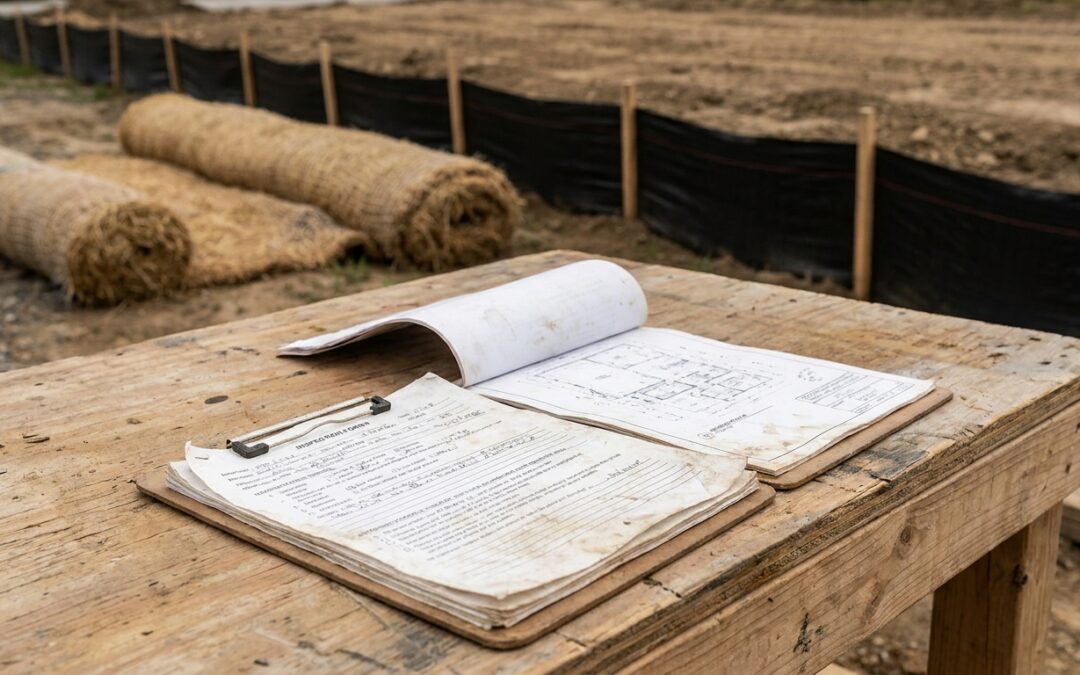
The person authorized to sign a construction stormwater SWPPP and certify inspections depends on whether the project is covered by the EPA Construction General Permit or a state-administered NPDES program. Each jurisdiction sets its own signatory and inspector-qualification requirements, so no uniform nationwide rule applies.
Pro SWPPP prepares stormwater plans for contractors nationwide.
Not sure whether your project needs a SWPPP? Take the SWPPP quiz.
Who can sign a construction SWPPP under the EPA Construction General Permit?
For projects covered by the 2022 EPA Construction General Permit, the SWPPP must be signed and dated by the Notice of Intent signatory or a duly authorized representative who meets the permit's signatory requirements. The authorization must identify an individual or position with responsibility for the overall operation of the regulated activity or for relevant environmental matters.
A subcontractor or independent third party cannot serve as the duly authorized representative merely because it prepared the SWPPP. The signatory authority must come from the operator's organizational structure, not from the act of plan preparation.
These signatory requirements appear in Part 7.2.10 and Appendix G, Part G.11 of the 2022 EPA CGP as modified.
Who can certify construction SWPPP inspections under the EPA Construction General Permit?
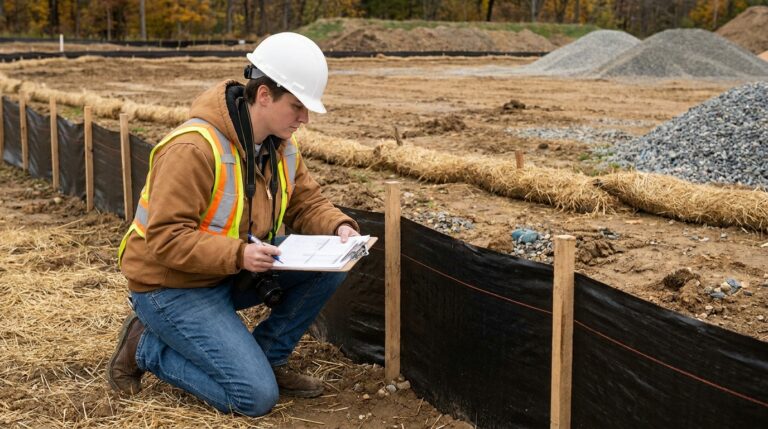
Inspection reports under the 2022 EPA CGP must be signed by the operator's authorized signatory or duly authorized representative. The person who performs the inspection may be an employee or a hired third party, but the inspector's performance of the inspection does not by itself authorize that person to sign the certification.
This means the inspection function and the certification function are distinct. A qualified inspector conducts the site visit and documents conditions; the authorized signatory then certifies the report under the permit's signatory requirements.
The EPA Construction General Permit FAQ clarifies this distinction between conducting an inspection and certifying the report.
See the SWPPP plan request form.
What qualifications must a construction SWPPP inspector hold under the 2022 EPA CGP?
For projects obtaining 2022 CGP coverage on or after February 17, 2023, the person conducting inspections must be a qualified person who either completed EPA's construction-inspection course and passed its exam or holds a current qualifying inspection certification or license covering the permit's specified subject areas. The EPA construction inspection training course consists of five modules and a final exam, taking approximately seven hours to complete.
For projects covered before February 17, 2023, the 2022 CGP uses a different minimum: inspection personnel must have appropriate knowledge, skills, and training concerning erosion and sediment controls, pollution prevention, site conditions, and control effectiveness. No specific course or credential is mandated for these earlier-covered projects.
These qualification requirements appear in Part 6.3 of the 2022 EPA CGP as modified.
How do state-administered programs differ on construction SWPPP signatures and inspector qualifications?
A state may administer its own construction stormwater permit, impose different signatory rules, require a licensed or state-recognized qualified inspector, or use separate electronic certification procedures. There is no reliable nationwide rule that allows the EPA CGP requirements to be applied automatically to every state.
Some states distinguish between the person conducting an inspection and the person certifying it. Others require a state-issued professional license or a Department-recognized credential that differs from the EPA course.
For example, New York's current materials require a Qualified Inspector who is a New York-licensed Professional Engineer, Registered Landscape Architect, or another Department-recognized person as defined by the applicable construction permit for projects involving stormwater-management practices. Projects limited to erosion-and-sediment-control practices may allow a Certified Professional in Erosion and Sediment Control. Inspection reports must be signed by the Qualified Inspector conducting and certifying the inspection under the applicable New York program procedures, according to New York City DEP Qualified Inspector Guidance dated November 22, 2024.
That New York example cannot be generalized to other states. A state-by-state answer requires reviewing each state's current construction general permit, implementing rule, and any required certification or portal instructions.
Where can contractors find the signatory and inspector requirements for a construction SWPPP in each state?
Start by determining whether the project falls under EPA or state jurisdiction. The EPA administers the NPDES program in some states and territories; in others, an authorized state agency issues the construction stormwater permit.
If the project is in an EPA-administered area, consult the current EPA Construction General Permit and its appendices for signatory and qualified-person definitions. If the state administers its own program, review the state's construction general permit, notice of intent instructions, and any guidance on qualified inspectors or authorized signatories.
State environmental agencies typically publish permit documents, fact sheets, and inspector-qualification guidance on their stormwater or NPDES program pages. When in doubt, contact the issuing agency directly or work with a stormwater consultant familiar with the jurisdiction.
Request a project-specific SWPPP estimate.
Can the same person prepare a construction SWPPP, conduct inspections, and sign certifications?
Whether the same person may perform all three functions depends on the permit and the person's relationship to the operator. Under the EPA CGP, a third-party consultant may prepare the SWPPP and conduct inspections, but that consultant cannot sign the SWPPP or certify inspection reports unless the operator has formally designated the consultant as a duly authorized representative meeting the permit's signatory criteria.
The authorization must identify an individual or position with responsibility for the overall operation of the regulated activity or for relevant environmental matters. Merely hiring someone to write a plan or perform an inspection does not confer signatory authority.
State programs may impose additional restrictions or allow different arrangements. Some states require the inspector to hold a specific professional license and to sign the inspection report directly; others separate the inspection function from the certification signature in a manner similar to the EPA CGP.
What else should contractors know about construction SWPPP signatures and inspection certifications?
Does the construction SWPPP signature need to be notarized?
Neither the EPA Construction General Permit nor most state permits require notarization of the SWPPP signature. The permit requires a certification statement, which is a legal declaration that the information is true and accurate to the best of the signatory's knowledge, but notarization is not part of that certification process.
Can an electronic signature be used for a construction SWPPP and inspection reports?
The EPA CGP and many state permits accept electronic signatures that comply with applicable federal and state electronic-signature laws. Some state programs use online portals that require electronic submission and certification; others accept scanned signatures on PDF documents. Check the permit's appendices or the issuing agency's guidance for any specific electronic-signature requirements or approved formats.
What happens if the authorized signatory for a construction SWPPP changes during the project?
If the person designated as the authorized signatory leaves the company or changes roles, the operator should update the duly authorized representative designation or identify a new signatory who meets the permit's criteria. Some permits require notification of signatory changes; others simply require that each document be signed by a currently authorized person. Maintain a current written designation of the duly authorized representative and update it whenever organizational changes affect signatory authority.
Can a general contractor sign a construction SWPPP if a subcontractor is the permit holder?
Only the operator—the party that obtains permit coverage—or that operator's duly authorized representative may sign the SWPPP and certify inspections. If the subcontractor is the operator under the permit, the general contractor cannot sign unless the subcontractor has formally designated the general contractor as a duly authorized representative meeting the permit's signatory requirements. Signatory authority follows the permit relationship, not the construction contract hierarchy.
Do state inspector qualifications for construction SWPPP ever exceed the EPA CGP requirements?
Yes. Some state programs require inspectors to hold a state-issued professional license, complete a state-specific training course, or obtain a credential recognized by the state environmental agency. These requirements may be more restrictive than the EPA CGP's qualified-person standard. Always verify the inspector-qualification requirements of the permit that actually covers the project, whether EPA or state-administered.
Discuss the SWPPP scope for your project.
By Derek E. Chinners, CPESC — Founder & Stormwater Consultant, Pro SWPPP, LLC