If you’re a contractor in the U.S. and someone just told you your job needs a SWPPP, you might be wondering what that even means and whether you need some kind of “SWPPP certification.” Pro SWPPP – America’s #1 SWPPP Service is here to clear up the confusion. SWPPP certification isn’t a single card you carry in your wallet. It’s a combination of training, plan preparation, and official sign-offs that prove you and your team are legally qualified to manage stormwater pollution on a construction site. This guide walks you through everything you need to know about SWPPP certification, what it actually costs, who needs it, and how to stay compliant without losing your mind.
Here’s the truth: every year, thousands of contractors get hit with fines because they didn’t understand SWPPP requirements or thought they could skip the paperwork. The EPA and state agencies don’t mess around. If your plan isn’t certified correctly or your inspectors aren’t trained, you’re opening yourself up to serious penalties. The good news? Once you understand the system, it’s straightforward. Let’s break it down.
What Does SWPPP Certification Actually Mean?
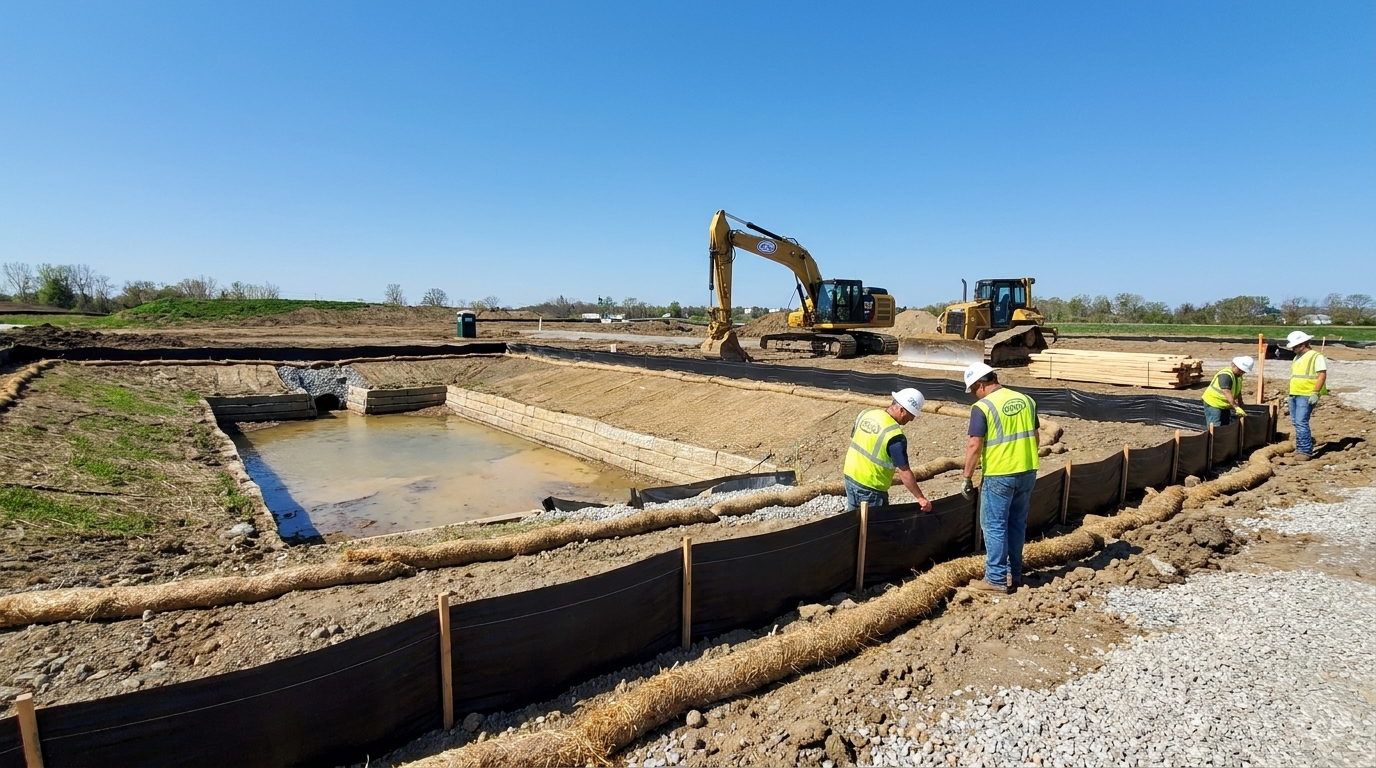
Let’s start with the basics. SWPPP stands for Stormwater Pollution Prevention Plan. It’s a written document that describes how you’re going to keep dirt, chemicals, and other pollutants from washing off your construction site into streams, rivers, and lakes. If you’re disturbing one acre or more of land, federal law and most state laws require you to have a SWPPP before you start work.
When people talk about “SWPPP certification,” they’re really talking about three separate things. First, the SWPPP document itself has to be signed and certified by an authorized person who takes legal responsibility for it. Second, the people doing your stormwater inspections need to be trained and certified as “Qualified Persons.” Third, in some states, the person who writes the SWPPP also needs a specific state credential or professional certification.
Here’s what that looks like in practice:
- Plan certification: A responsible official (often the general contractor, project owner, or their designated rep) signs the SWPPP and certifies under penalty of law that it’s accurate and will be followed.
- Inspector certification: The people conducting your weekly or post-rain inspections must complete training and pass an exam, then keep their certificate of completion with the SWPPP.
- State or professional credentials: Some states require a state-issued “Qualified SWPPP Practitioner” certificate or a third-party professional designation like Certified Professional in Erosion and Sediment Control (CPESC).
Pro SWPPP handles all three layers for you. We prepare the plan, certify it with our CPESC-certified experts, train your team or provide qualified inspectors, and make sure every signature and certificate is in place before you break ground.
Not sure your site even triggers the requirement? Take the 60-second SWPPP quiz before you spend a dollar on training.
The Federal Baseline: EPA’s Construction General Permit
The federal government sets the floor for SWPPP requirements through the National Pollutant Discharge Elimination System (NPDES). The EPA Construction General Permit (CGP) applies in states where EPA, not the state, is the permitting authority. That includes Massachusetts, New Hampshire, New Mexico, the District of Columbia, most U.S. territories, and many tribal lands.
In all other states, the state environmental agency runs an EPA-authorized NPDES program and issues its own construction stormwater permit. The state permit usually mirrors the federal CGP but often adds stricter rules. That means the EPA’s CGP is your baseline, and your state may pile more requirements on top.
What the Federal CGP Requires
Under the EPA’s 2022 Construction General Permit, you must develop a SWPPP before you submit your Notice of Intent (NOI) for permit coverage. The NOI is your formal application to discharge stormwater. No SWPPP, no coverage. No coverage, no legal work.
Your SWPPP must include:
- A list of all operators and their responsibilities on the site.
- A description of your construction activities, total disturbed area, and project timeline.
- Site maps showing stormwater flow, slopes, BMPs (best management practices), outfalls, and nearby waterways.
- Detailed descriptions of erosion and sediment controls, stabilization measures, and pollution prevention practices.
- Inspection and maintenance procedures, including who’s doing the inspections and how often.
- Copies of your NOI, EPA acknowledgment letter with your NPDES ID, and all inspection reports.
The SWPPP must be signed and dated by an authorized representative using the certification language in the permit. That signature is legally binding. If the plan is inaccurate or you don’t follow it, the person who signed it can face civil and even criminal penalties.
Qualified Person Training Under the Federal CGP
The EPA requires that site inspections be conducted by a “Qualified Person.” To meet that definition under the CGP, your inspector must complete EPA’s Construction Inspection Training Course. It’s about seven hours long, split into five modules, with a 40-question final exam. You need at least 80% to pass.
Once you pass, EPA issues a certificate of completion. That certificate must be kept with your SWPPP as proof that your inspections are being done by trained personnel. If an inspector shows up without the certificate, you’re out of compliance.
Pro SWPPP can train your staff or provide our own CPESC-certified inspectors so you never have to worry about this step. We’ve trained hundreds of construction teams across nationwide, and we know exactly what inspectors need to pass audits.
How State Programs Differ from the Federal Baseline
Most U.S. states run their own NPDES construction stormwater programs. Texas has the TCEQ, Georgia has the EPD, California has the SWRCB, and so on. Each state issues its own Construction General Permit, and each one can be stricter than the EPA’s version.
Common ways strict states go beyond the federal floor include:
- Mandatory state certification programs: Some states require inspectors or SWPPP preparers to hold a state-issued credential, not just EPA training.
- More frequent inspections: EPA’s CGP sets minimums (often every seven days or after certain rain events), but states like California may require weekly inspections plus inspections after every 0.5-inch rain.
- Stricter BMP design standards: States may mandate specific sediment basin sizes, stabilization timelines, or types of controls that go beyond “good engineering practices.”
- Electronic reporting portals: While EPA uses its NeT system for NOIs, many states have their own online portals with different forms, fees, and document upload requirements.
For contractors working in multiple states, this is a nightmare. You can’t just copy-paste a SWPPP from one state to another and expect it to fly. Pro SWPPP operates nationwide and knows the quirks of each state’s program. We tailor every SWPPP to the exact permit and local rules for your project location, so you’re never caught off guard.
Examples of State-Specific Certification Requirements
In Texas, for example, the TCEQ doesn’t require a separate state certification for inspectors beyond the EPA training, but it does require detailed NOI submissions and specific BMP maintenance logs. In Georgia, the EPD has its own training courses and expects inspectors to document their credentials in the SWPPP. California’s SWRCB requires a Qualified SWPPP Developer (QSD) and Qualified SWPPP Practitioner (QSP), both of which need state-recognized training and certification.
Bottom line: always check your state’s Construction General Permit and associated guidance before you start. And if that sounds like too much work, that’s exactly why Pro SWPPP’s Texas services and Georgia services exist. We handle the state-specific stuff for you.
Who Needs to Be Certified, and When?
Let’s get specific. If you’re the general contractor, project owner, or site superintendent, you probably need to be the person who signs and certifies the SWPPP and the NOI. That makes you the “operator” under the permit, and you’re legally responsible for everything in the plan.
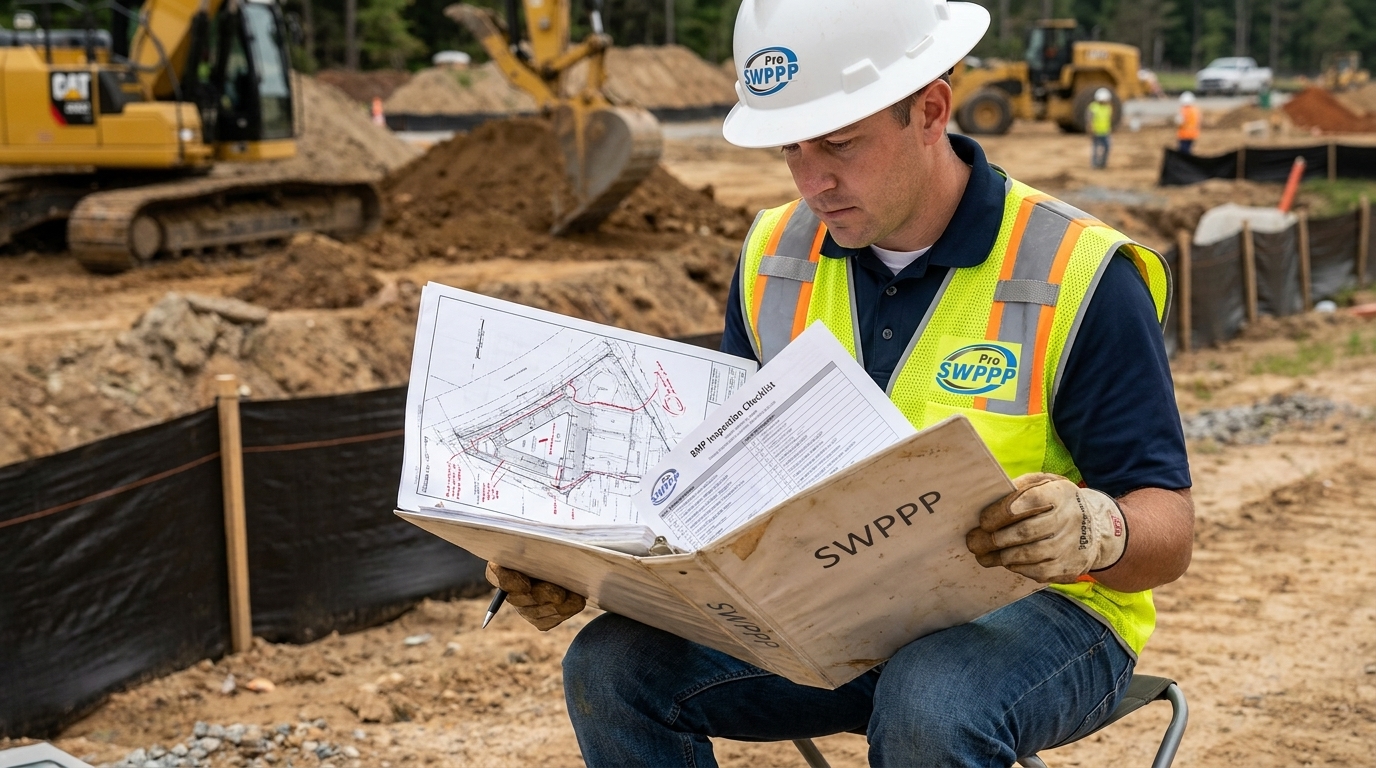
If you have staff doing weekly inspections, those people need to be trained and certified as Qualified Persons. If you hire a consultant to write the SWPPP, that consultant should be a professional engineer, CPESC, or hold the state credential required in your jurisdiction.
You need these certifications before you submit your NOI and before any dirt gets moved. EPA and state agencies are clear: SWPPP first, NOI second, then work begins. If you flip that order, you’re starting off in violation.
What If You Don’t Have In-House Expertise?
Most contractors don’t have a CPESC on staff or time to send someone through a day-long training course. That’s fine. You can hire Pro SWPPP to develop your SWPPP, sign and certify it with our CPESC credentials, and provide trained inspectors for the life of your project. We’ve done this on sites nationwide for 20+ years, and we deliver plans in 72 hours or less.
Don’t want to mess with all the paperwork? Order your SWPPP now with Pro SWPPP Professional CPESC Certified SWPPP Services.
How to Get Your Team Trained and Certified
If you decide to handle SWPPP inspections in-house, here’s the step-by-step process to get your team certified as Qualified Persons:
- Enroll in EPA’s Construction Inspection Training Course or an equivalent state-approved program.
- Complete all five modules and the final exam (you need 80% or higher to pass).
- Download and print your certificate of completion.
- Keep a copy of the certificate with your SWPPP at all times.
- Make sure your inspector knows how to document findings, identify BMP failures, and trigger corrective actions.
The EPA course is free and available online, but it’s not easy. It covers regulatory background, BMP types, inspection techniques, and how to update your SWPPP when things change. Expect to spend a full workday on it.
Many contractors skip the training or use untrained laborers for inspections because they don’t realize it’s required. That’s a fast track to a violation notice. Regulators check inspector credentials as soon as they show up on site. If your inspector can’t produce the certificate, you’re in trouble.
State Training Programs and Third-Party Certifications
Some states offer or require their own training courses. For example, California’s QSD and QSP programs include state-specific exams and ongoing education requirements. Other states accept CPESC or Certified Inspector of Sediment and Erosion Control (CISEC) credentials as proof of competence.
If your state has a mandatory program, you must use it. The EPA training alone won’t cut it. Pro SWPPP stays current on every state’s requirements, so when you work with us, you never have to second-guess whether your credentials are good enough.
What It Costs to Get SWPPP Certified
There’s no single price tag for “SWPPP certification,” but here are the typical costs contractors face:
- Training courses: EPA’s course is free, but many contractors use private or state-approved programs that charge tuition, ranging from a few hundred to over a thousand dollars per person.
- Professional services: Hiring a consultant (engineer, CPESC, or QSD) to develop your SWPPP can cost anywhere from $1,500 to $5,000+, depending on project size and complexity.
- Inspection services: If you outsource weekly inspections, expect to pay $300 to $800 per inspection, depending on site size and location.
- Indirect costs: Staff time for training, implementing BMPs, corrective actions, and maintaining records adds up fast.
The hidden cost is noncompliance. EPA civil penalties start at thousands of dollars per day, and state fines can be even higher. A single violation notice can wipe out your profit margin on a project. Investing in proper SWPPP certification and services up front is cheap insurance.
Pro SWPPP offers flat-rate pricing, transparent quotes, and no surprise fees. We’ve prepared SWPPPs for projects from 1 acre to 100+ acres, and we’ll tell you exactly what it costs before you commit. Get a free SWPPP estimate — no obligation.
The Notice of Intent (NOI) and SWPPP Certification Connection
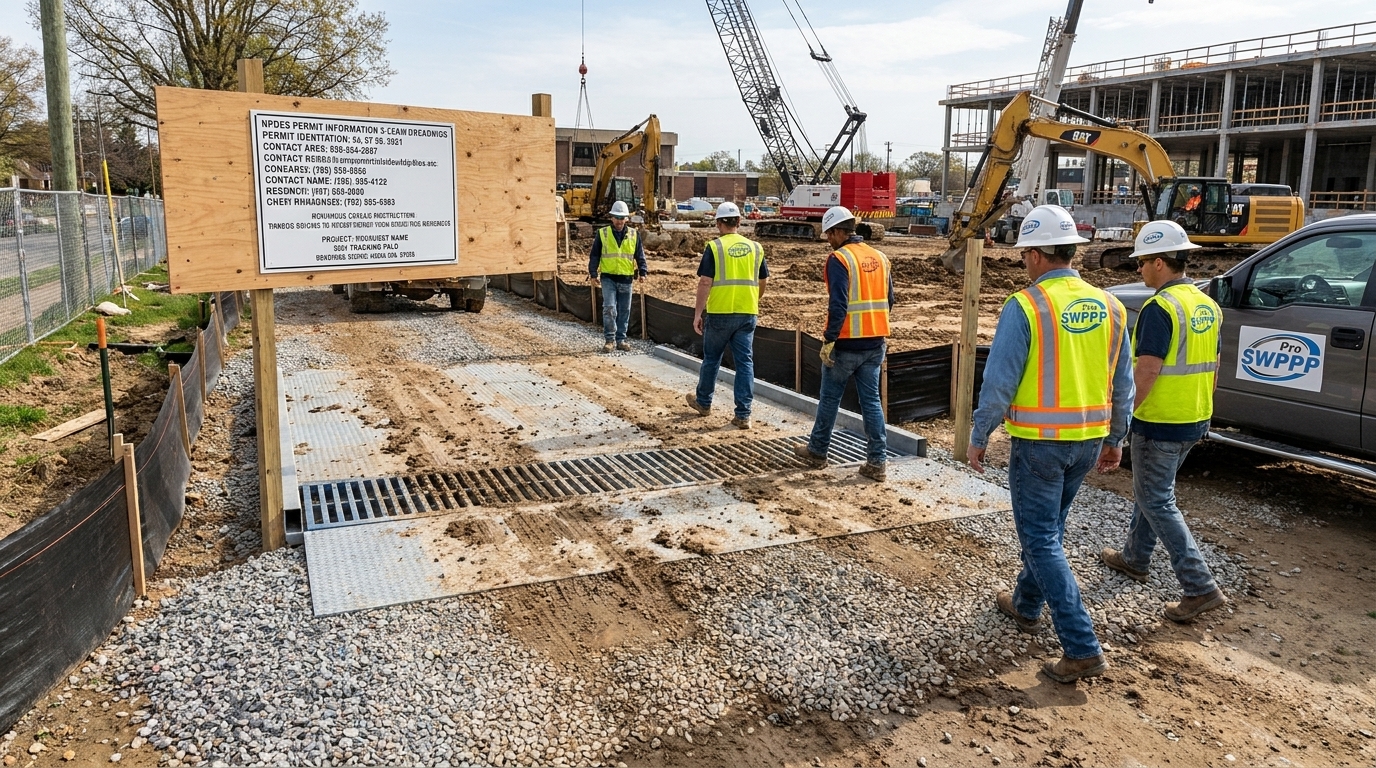
Your Notice of Intent is the formal application that gets you permit coverage to discharge stormwater. Under EPA’s CGP, you submit your NOI electronically through the NPDES eReporting Tool (NeT). Most states have their own online portals.
Here’s the critical part: you cannot submit an NOI until your SWPPP is finished. The permit makes this crystal clear. Once you get permit coverage, you must include a copy of your NOI, the acknowledgment letter with your NPDES ID, and a copy of the permit itself in your SWPPP.
The NOI form includes certification language, just like the SWPPP. The person who signs it is certifying that the information is true and that the SWPPP is complete and will be implemented. If you lie or skip steps, the signature exposes you to legal liability.
Common NOI Mistakes That Trigger Violations
Contractors mess up NOIs in a few predictable ways:
- Submitting the NOI before the SWPPP is done (or pretending the SWPPP is done when it’s not).
- Failing to list all operators or co-permittees on the NOI.
- Not keeping a copy of the NOI acknowledgment letter with the SWPPP.
- Starting construction before receiving permit coverage (the acknowledgment letter with your tracking number).
Any of these mistakes can result in a notice of violation before you even get your equipment on site. Pro SWPPP walks you through the entire NOI process and makes sure every form is complete, every signature is in place, and every document is filed where it belongs.
Not sure what your project needs? Schedule a Free SWPPP Consultation with CPESC Certified SWPPP Expert Derek E. Chinners.
What Happens If You Get SWPPP Certification Wrong
Let’s talk about the consequences of screwing this up. SWPPP violations are some of the most common Clean Water Act enforcement actions in the construction industry. Regulators love them because the violations are easy to document and the penalties add up fast.
Common violation scenarios include:
- No SWPPP on site, or a SWPPP that’s incomplete or outdated.
- SWPPP prepared but not implemented (BMPs described in the plan don’t exist on the ground).
- Inspections conducted by untrained personnel or not conducted at all.
- Inspection reports missing, incomplete, or not kept with the SWPPP.
- False or misleading certifications on the SWPPP or NOI.
Enforcement and Penalties
EPA and state agencies can issue administrative orders, civil penalties, and in extreme cases, criminal charges. Civil penalties under the Clean Water Act can reach tens of thousands of dollars per day of violation. States often have their own fine schedules that can be even steeper.
When an inspector shows up, they compare what’s on the ground to what’s in your certified SWPPP. If your silt fences are falling down, your inlet protection is missing, and your inspector’s training certificate is nowhere to be found, you’re getting a violation notice on the spot.
The financial hit is bad enough, but enforcement actions also delay your project, damage your reputation, and can get you disqualified from future public bids. It’s not worth the risk.
Inspection Frequency and What Qualified Persons Actually Do
Let’s break down what “Qualified Person” inspections look like in real life. Under the EPA CGP, inspections must occur at least once every seven calendar days, or every 14 days if you meet certain conditions and inspect within 24 hours of a rain event of 0.25 inches or more in 24 hours.
State permits often tighten this up. Some require weekly inspections plus inspections after every rainfall, regardless of amount. Some require daily inspections during active earthwork.
During an inspection, your Qualified Person must:
- Walk the entire site and check the condition of all BMPs (silt fences, sediment basins, inlet protection, stabilization, etc.).
- Look for areas of active erosion, sediment tracking onto roads, and any discharges leaving the site.
- Document findings in a written inspection report with photos and notes.
- Identify any corrective actions needed and make sure they happen within the timeframe required by the permit (often within 24 hours to 7 days, depending on severity).
- Update the SWPPP if site conditions have changed or new BMPs are needed.
All inspection reports must be kept with the SWPPP. Inspectors must have their training certificate available on site. This is non-negotiable.
Pro SWPPP provides fully documented inspection services with same-day or next-day reports, photos, and corrective action tracking. We know exactly what regulators expect to see in the reports, because reading them the way an inspector will is the whole job.
Recent Changes Every Contractor Should Know About
The EPA updated its Construction General Permit in 2022, and those changes are now in effect. The new permit clarified several gray areas and increased documentation requirements. Key updates include:
- Stronger emphasis on completing the SWPPP before submitting the NOI.
- More detailed requirements for site maps, BMP descriptions, and eligibility documentation.
- Formalized training and certification for Qualified Persons, including the EPA inspection course and required certificates kept with the SWPPP.
- Expanded electronic reporting through NeT, including NOIs, Notices of Termination (NOTs), and inspection documentation in some cases.
States are following suit, updating their own permits to align with or exceed the 2022 CGP. If your last project was under an older permit, don’t assume the rules are the same. Review the current permit and guidance for your state before you start your next job.
Pro SWPPP tracks every permit update, federal and state, so our clients never get caught using outdated templates or procedures. When you work with us, you’re always compliant with the latest rules. Learn more on our About page.
Why Pro SWPPP is the SWPPP Service Contractors Trust
Here’s why contractors nationwide — and 180+ five-star Google reviews — choose Pro SWPPP – America’s #1 SWPPP Service for their stormwater compliance needs:
CPESC Certified Experts
Every SWPPP we deliver is prepared and certified by a Certified Professional in Erosion and Sediment Control (CPESC). That’s the gold standard credential in the stormwater industry, recognized by EPA and state agencies nationwide. When you work with Pro SWPPP, you’re not getting a generic template filled out by someone who Googled “SWPPP.” You’re getting a plan designed by a family-owned firm with 20+ years in stormwater compliance.
Nationwide Coverage
We operate nationwide, from coast to coast. Whether your project is in Texas, Georgia, California, Florida, or anywhere in between, we know the local permit requirements, state-specific BMPs, and regional agency quirks. We’ve prepared SWPPPs for residential subdivisions, commercial developments, highway projects, and industrial sites of every size.
72-Hour Turnaround
We deliver complete, certified SWPPPs in 72 hours or less. Most projects get turned around in 48 hours. That means you can go from signing the contract to submitting your NOI in under a week. No delays, no excuses.
Inspection Services and Ongoing Support
Pro SWPPP doesn’t just hand you a binder and disappear. We provide weekly inspections, post-rain inspections, corrective action tracking, SWPPP updates, and full documentation for the life of your project. Our inspectors show up on time, document everything with photos and detailed notes, and help you stay ahead of any compliance issues.
Transparent Pricing, No Hidden Fees
We give you a flat-rate quote up front, and that’s what you pay. No surprise charges, no hourly billing that spirals out of control. You know exactly what SWPPP compliance costs before you commit.
When you choose Pro SWPPP, you’re choosing peace of mind. You’re choosing a team that’s been in the trenches with contractors just like you for 20+ years. We’ve seen every kind of project, every kind of site condition, and every kind of regulatory curveball. And we know how to win.
FAQ
Do I need SWPPP certification if my project is under 1 acre?
It depends. If your project is part of a larger common plan of development that will ultimately disturb 1 acre or more, you need a SWPPP and permit coverage, even if your individual phase is under 1 acre. Some local governments also require SWPPPs for projects under 1 acre. Check with your state agency and local stormwater office to be sure.
Can I write my own SWPPP without hiring a consultant?
Yes, technically you can. EPA and most states allow the operator to prepare their own SWPPP as long as it meets all the content requirements in the permit. However, most contractors don’t have the expertise to do it correctly, and mistakes lead to violations. Hiring a CPESC-certified professional like Pro SWPPP is the safest, fastest way to get it done right.
How long does the EPA Qualified Person training take?
EPA’s Construction Inspection Training Course takes about seven hours to complete, including the final exam. You can do it at your own pace online. You need to score at least 80% on the exam to pass and receive your certificate.
What happens if my inspector’s certificate expires or gets lost?
EPA’s Qualified Person certificates don’t have an expiration date under the federal CGP, but some state programs require periodic re-certification or continuing education. If your certificate gets lost, you can usually download a replacement from the training provider’s website. Always keep a backup copy with your SWPPP and one in your office files.
How much does a SWPPP violation fine cost?
EPA civil penalties under the Clean Water Act can reach up to tens of thousands of dollars per day of violation. State fines vary widely but often start at several thousand dollars and escalate quickly for repeat or serious violations. The exact amount depends on the severity, duration, and whether you cooperated with inspectors. Avoiding violations is always cheaper than paying fines.
Do I need a new SWPPP for every project, or can I reuse one?
Every project needs its own site-specific SWPPP. You can’t copy-paste a plan from one site to another, even if the projects are similar. Each SWPPP must include site maps, drainage patterns, BMP locations, and eligibility documentation unique to that project. Reusing a SWPPP from another site is a guaranteed violation.
How long do I need to keep my SWPPP and inspection records after the project is done?
EPA requires you to keep your SWPPP and all related records for at least three years after your Notice of Termination (NOT) is submitted and permit coverage ends. Some states require longer retention periods (five years or more). Keep everything organized and archived in case of an audit or enforcement action down the road.
Ready to get started? Order your SWPPP now or schedule a free consultation with Pro SWPPP.
Want a number for your project before you commit? Get a free SWPPP estimate — flat rate, no hourly billing.
Still deciding whether your site even needs a plan? Take the 60-second SWPPP quiz.
By Derek E. Chinners, CPESC — Founder & Stormwater Consultant, Pro SWPPP, LLC
Related: What is a SWPPP? · When is a SWPPP required? The 1-acre rule and common plans · What does a SWPPP inspector do, and when do you hire one? · How often are SWPPP inspections required?