If you are building or digging in Missouri and you move one acre or more of dirt, you need a stormwater plan. That plan is called a SWPPP. It keeps mud and pollutants out of rivers, streams, and lakes. Pro SWPPP – America’s #1 SWPPP Service – helps contractors all over Missouri get compliant fast. We handle the paperwork so you can focus on the job site.
Missouri requires every project that disturbs an acre or more to get a stormwater permit. The state calls it the Missouri Land Disturbance Stormwater General Operating Permit. You cannot start grading until you have that permit in hand. Many contractors think they can skip the SWPPP or do it themselves. That almost always ends in fines, stop-work orders, and angry inspectors.
Pro SWPPP takes the stress out of Missouri stormwater compliance. Our team is CPESC certified with 20+ years of experience nationwide. We know Missouri’s rules inside and out. We deliver your permit-ready SWPPP in seventy-two hours or less. You get the plan, the forms, and the peace of mind that you are legal from day one.
SWPPP Requirements in Missouri: What You Need to Know
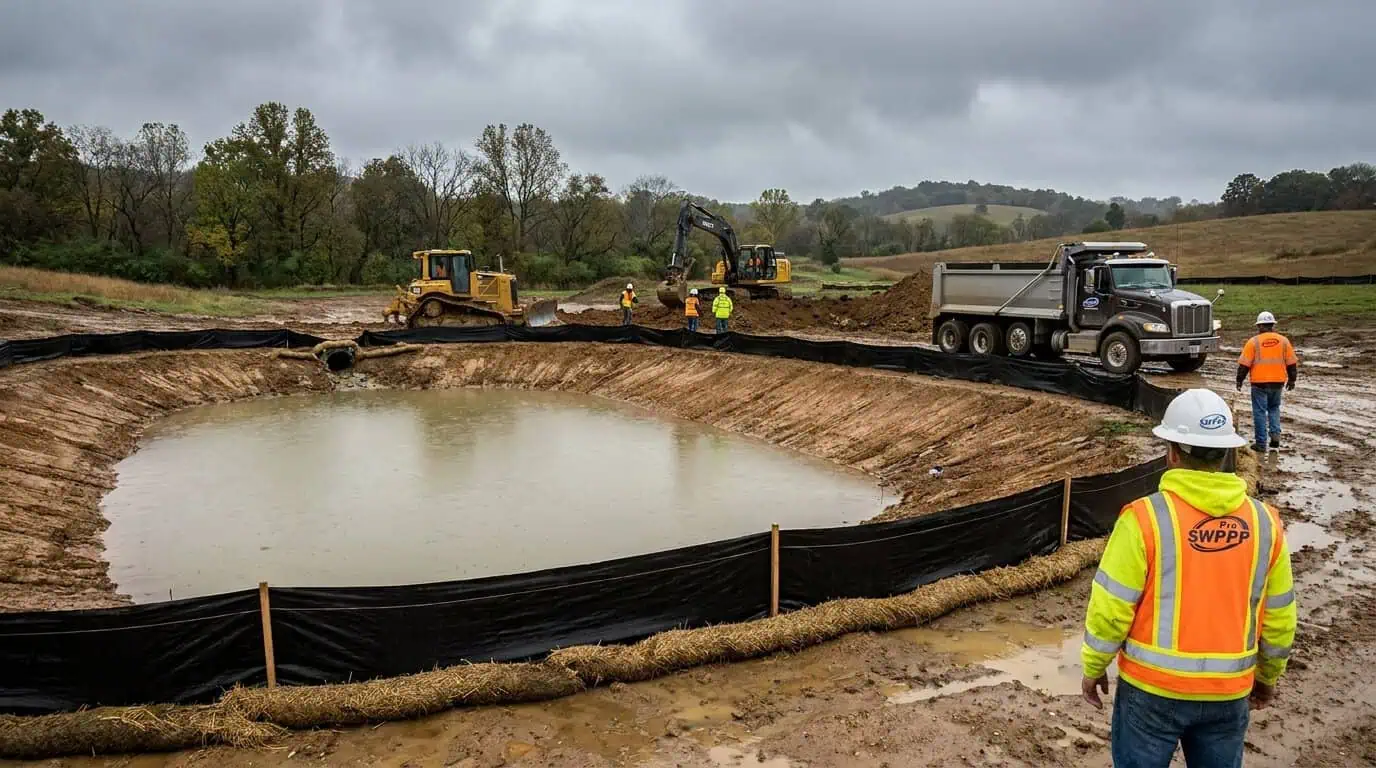
A SWPPP is a Stormwater Pollution Prevention Plan. It is a written document that shows how you will stop mud, trash, and chemicals from washing off your site when it rains. The Missouri Department of Natural Resources requires one for any construction project that touches one acre or more. That includes grading, excavation, demolition, and building.
Your SWPPP must list every Best Management Practice (BMP) you will use. BMPs are things like silt fences, inlet protection, rock entrances, sediment basins, and stabilized construction exits. The plan also needs a site map showing where you will install each BMP. It must describe how you will inspect the site and fix problems within seven days.
Pro SWPPP writes SWPPPs nationwide every year. We know exactly what Missouri inspectors want to see. We include all required maps, forms, inspection logs, and maintenance schedules. You get a complete, ready-to-use plan that passes state review on the first try.
Who Needs a SWPPP in Missouri
You need a SWPPP if your project disturbs one acre or more of soil. That includes:
- New home subdivisions and commercial buildings
- Road and highway construction
- Demolition and site clearing
- Utility trenching and pipeline work
- Solar farms and wind energy projects
- Parking lots and driveways over one acre
Even if your project is smaller than one acre, you still need a SWPPP if it is part of a larger common plan. For example, a builder putting up ten homes on quarter-acre lots must get a permit because the total disturbance exceeds one acre.
Industrial facilities also need stormwater permits. Any factory, warehouse, or plant with outdoor storage or material handling must get an industrial stormwater permit. Missouri has eleven industrial categories based on SIC codes. We will explain industrial permits in a later section.
What Happens If You Skip the SWPPP
Starting work without a SWPPP is a violation of the Clean Water Act. Missouri can issue fines up to tens of thousands of dollars per day. Inspectors can stop your project completely until you get compliant. Neighbors can also report you, and the state takes those complaints seriously.
Banks and lenders often require proof of stormwater compliance before releasing construction draws. If you do not have a valid permit, your funding can freeze. That delays the entire project and costs you money every single day.
Pro SWPPP keeps you out of trouble. We file your application, write your plan, and deliver everything you need to stay legal. Our clients avoid fines and keep their projects on schedule.
Don’t want to mess with all the paperwork? Order your SWPPP now with Pro SWPPP Professional CPESC Certified SWPPP Services.
Missouri Stormwater Regulatory Framework
The Missouri Department of Natural Resources (MDNR) runs the state’s stormwater program. Missouri has delegated authority from the U.S. Environmental Protection Agency to issue permits under the National Pollutant Discharge Elimination System (NPDES). That means Missouri writes and enforces its own permits, but the rules must meet federal Clean Water Act standards.
The state regulations are found in 10 CSR 20-6.200. Those rules explain who needs a permit, how to apply, what goes in a SWPPP, and what happens if you violate the permit. The federal EPA still oversees the program, but MDNR handles all day-to-day permitting and enforcement.
Missouri uses general permits for most construction and industrial sites. A general permit covers many similar projects under one set of rules. If your site is unusual or high-risk, MDNR can require a site-specific permit with custom conditions and a public comment period.
State Agency Contact Information
The MDNR Water Protection Program issues all stormwater permits. You can reach them at their Jefferson City office or through the online MoGEM portal. All construction permits are now submitted electronically. Paper applications are no longer accepted.
Local city and county governments may also have stormwater rules. Some cities require pre-construction meetings or additional erosion control measures. Always check with your local building department before you start work.
Pro SWPPP stays current on every Missouri requirement. We know the state rules, the local overlays, and the common mistakes that trigger violations. We handle all the paperwork so you do not have to learn every regulation yourself.
Relationship Between State and Federal Rules
Missouri’s program mirrors the federal NPDES construction general permit. The one-acre threshold, the BMP requirements, and the inspection schedules all match federal minimums. Missouri adds a few extras, like mandatory electronic filing and specific inspection frequency options.
If you work in multiple states, you already know the basics. Missouri just packages it a little differently. Pro SWPPP writes plans for Texas, Georgia, and nationwide. We adapt to each state’s forms and portals without missing a beat.
Construction General Permit (CGP) in Missouri
Missouri’s construction general permit is called the Missouri Land Disturbance Stormwater General Operating Permit. The permit number starts with MO-RA. You apply for it through the MoGEM ePermitting system. Once approved, the permit is good for five years as long as you follow all conditions.
You must have your SWPPP written before you submit your permit application. The permit application asks questions about your BMPs, your inspection schedule, and your site conditions. If your SWPPP is incomplete, MDNR will reject your application.
Pro SWPPP writes your SWPPP first, then helps you fill out the permit application correctly. We make sure every box is checked and every attachment is included. You get your permit faster with zero back-and-forth.
Who Needs the Construction General Permit
Any construction activity that disturbs one acre or more needs this permit. That includes grading, excavation, demolition, clearing, and building. If your project is part of a larger development, you count all the phases together.
Governmental entities like cities and counties use a different permit. That permit is called the Area-Wide Land Disturbance Stormwater General Operating Permit (MO-R100xxx). It requires Form G (MO 780-1408) and separate fees. Most private contractors use the standard MO-RA permit.
If you are a homeowner building your own house, you still need a permit if you clear one acre or more. The rules apply to everyone, not just professional contractors.
Permit Thresholds and Exemptions
The magic number in Missouri is one acre. Anything under one acre is exempt from the state stormwater permit. But watch out: local cities may have stricter rules. Some municipalities require erosion control plans for projects as small as a quarter acre.
Even if you are exempt from the state permit, you still have to follow Missouri Water Quality Standards. If your small project causes mud to flow into a stream, MDNR can require you to get a permit or issue a violation. It is safer to have a plan in place no matter the size.
Pro SWPPP can write a simplified erosion control plan for smaller projects. You get the protection without the full permit process. Contact us at Pro SWPPP to discuss your project size.
Permit Duration and Renewal
Missouri construction permits are valid for five years. Most projects finish long before that. When your site is fully stabilized and final inspections are complete, you submit a Notice of Termination (NOT). That closes out your permit and ends your inspection obligations.
If your project takes longer than five years, you must renew the permit. MDNR will send a renewal notice before expiration. You update your SWPPP, pay a new fee, and continue under the renewed permit.
Pro SWPPP tracks your permit expiration dates. We remind you when renewals are due and handle all the paperwork. You never have to worry about an expired permit shutting down your site.
Industrial Stormwater Permits in Missouri
Industrial facilities with outdoor material handling, storage, or processing need an industrial stormwater permit. Missouri covers eleven industrial categories and thirty sectors based on Standard Industrial Classification (SIC) codes. If your facility has stormwater runoff that could carry pollutants, you need a permit.
Common industries include:
- Manufacturing plants and factories
- Scrap yards and recycling centers
- Asphalt and concrete batch plants
- Warehouses with outdoor loading docks
- Auto salvage and repair shops
- Chemical storage and distribution
Industrial permits require a SWPPP just like construction permits. The difference is that industrial SWPPPs focus on preventing contamination from materials, not just sediment. You must describe every potential pollutant source and how you will control it.
How to Apply for an Industrial Permit
Industrial facilities apply using Form E (Application for General Permit) and Form G (Stormwater Permit). You submit both forms to MDNR along with the required fee. If your facility is unusual or high-risk, MDNR may require a site-specific permit using Form A and Form C or EPA Form 2F.
Your SWPPP must be complete before you apply. It needs to include a site map, a list of all materials stored outdoors, spill prevention procedures, and an inspection schedule. Pro SWPPP writes industrial SWPPPs that pass MDNR review the first time.
Industrial permits are also valid for five years. You must update your SWPPP within thirty days if you change operations, add new materials, or install new equipment. Pro SWPPP offers annual review services to keep your plan current.
Industrial vs Construction Permits
Construction permits cover temporary projects. Industrial permits cover ongoing operations. Construction SWPPPs focus on erosion and sediment. Industrial SWPPPs focus on chemical spills, material handling, and long-term pollutant control.
Both permits require inspections, BMP maintenance, and record keeping. Both can result in fines if you violate the terms. Pro SWPPP handles both types of permits with the same expert service.
Required BMPs for Missouri Construction Sites
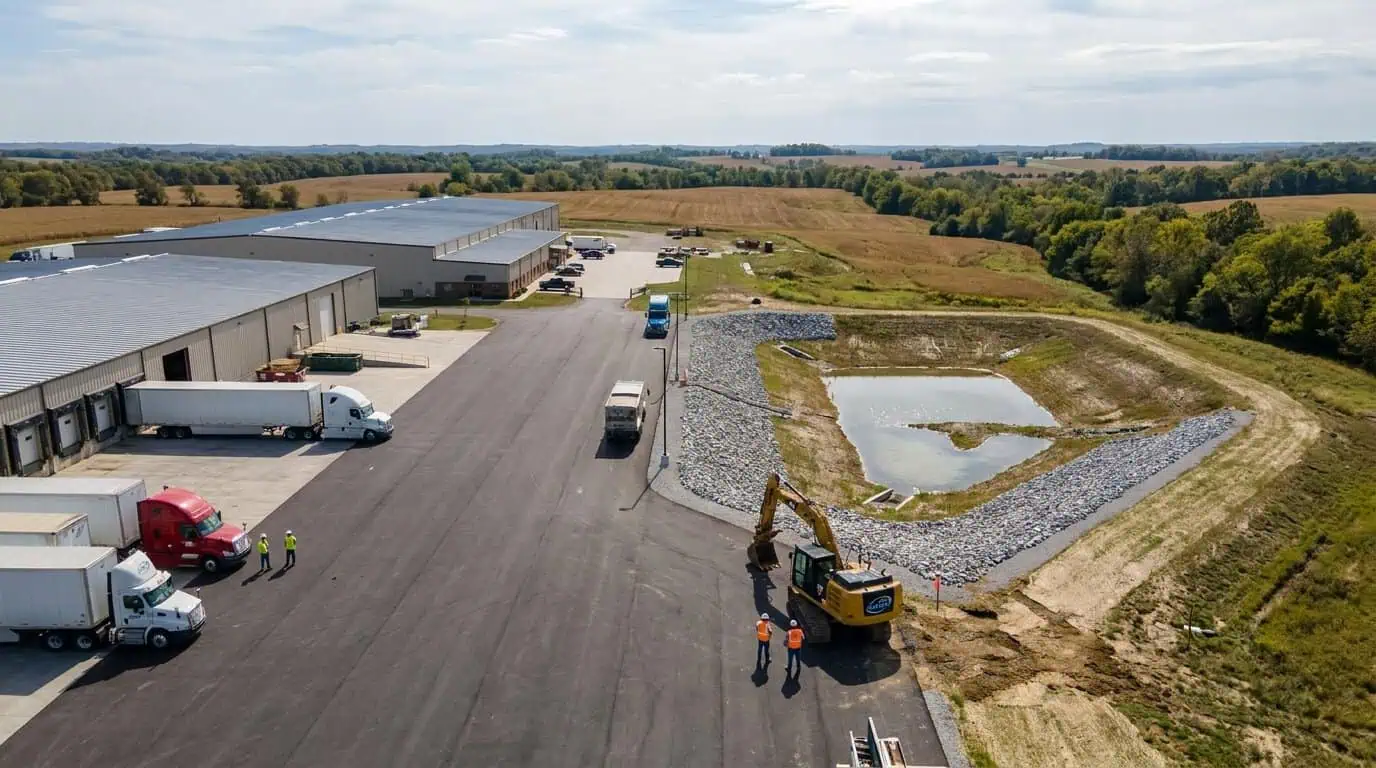
Best Management Practices (BMPs) are the tools and techniques you use to control stormwater runoff. Missouri requires every SWPPP to list all BMPs you will install, where you will put them, and how you will maintain them. If you do not install the BMPs listed in your plan, you are in violation.
Common BMPs include:
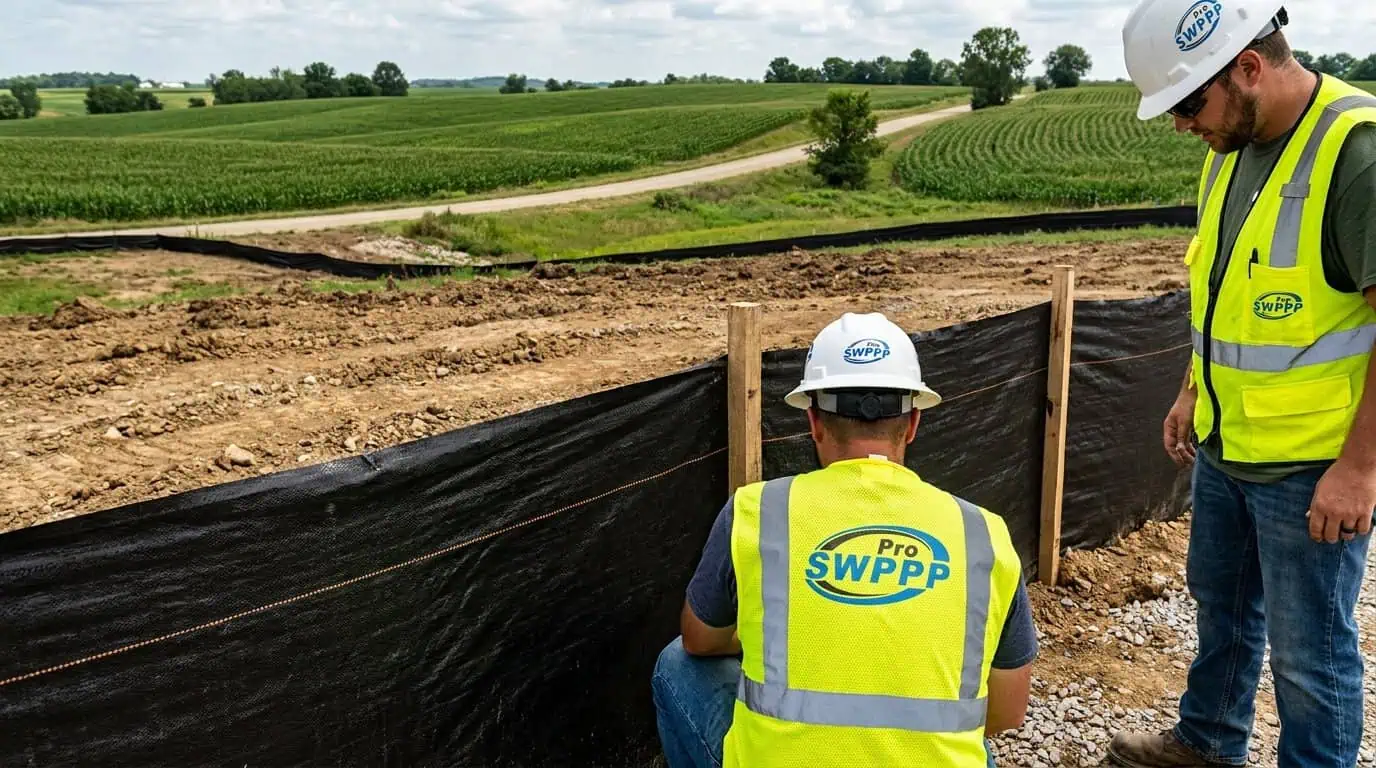
- Silt fences around the site perimeter
- Inlet protection on storm drains
- Rock construction entrances to keep mud off the road
- Sediment basins to settle out dirt before water leaves the site
- Slope drains and check dams to slow down runoff
- Dust control with water trucks or mulch
- Concrete washout bins for truck chute rinsing
- Stabilization with seed, straw, or erosion control blankets
Your SWPPP must show each BMP on a site map. The map needs to be clear and accurate. Inspectors will compare your map to what they see on the ground. If BMPs are missing or installed wrong, you get a violation.
Pro SWPPP creates detailed, color-coded site maps that are easy to follow. We also include photos and installation instructions so your field crew knows exactly what to do. Our plans pass inspection every time.
Erosion Control BMPs
Erosion control stops soil from washing away. Common erosion control BMPs in Missouri include:
- Temporary and permanent seeding
- Mulch and straw blankets
- Erosion control blankets and mats
- Slope protection with rip-rap or turf reinforcement
- Phased grading to limit exposed soil
Missouri requires you to stabilize disturbed areas as soon as possible. If an area will sit idle for more than fourteen days, you must seed or mulch it. Final stabilization must happen before you can terminate your permit.
Pro SWPPP includes a detailed stabilization schedule in every plan. We tell you when to seed, what seed mix to use, and how to protect slopes until grass grows in.
Sediment Control BMPs
Sediment control traps dirt before it leaves your site. Common sediment control BMPs include:
- Silt fences along the down-slope perimeter
- Sediment basins or traps at low points
- Inlet protection on every storm drain
- Sediment tubes or wattles in ditches
- Filter bags on dewatering pumps
Sediment control must be installed before you start grading. Missouri requires perimeter controls first. Then you install inlet protection and sediment basins. If you do it out of order, inspectors will cite you.
Pro SWPPP provides a sequencing chart that shows the order of BMP installation. We make sure your crew installs everything correctly from day one.
Dewatering and Concrete Washout
If you pump water off your site, you must treat it first. Missouri prohibits untreated dewatering discharges. You must use filter bags, sediment tanks, or infiltration areas. You also need a daily log of the volume pumped and the equipment used.
Concrete washout bins are required on every site. Drivers must rinse chutes into the bin, not on the ground. The bin must be clearly marked and kept away from storm drains. Pro SWPPP includes washout details and daily log templates in every plan.
Maintenance and Repair Requirements
BMPs do not work if you do not maintain them. Missouri requires you to inspect all BMPs regularly and fix problems within seven days. If a silt fence falls down, you have one week to put it back up. If a sediment basin fills with mud, you have seven days to clean it out.
Your SWPPP must include a maintenance schedule. Pro SWPPP provides weekly and monthly checklists so you know exactly what to check and when. We also include repair procedures and contact information for BMP suppliers.
Not sure what your project needs? Schedule a Free SWPPP Consultation with CPESC Certified SWPPP Expert Derek E. Chinners.
SWPPP Inspection Requirements in Missouri
Missouri requires regular inspections of every construction site. You must document each inspection in writing and keep the records with your SWPPP. Inspections must happen during normal work hours, Monday through Friday. If you skip inspections, you are in violation even if your BMPs are perfect.
You have two inspection frequency options in Missouri:
- Option A: Inspect every seven calendar days, plus within forty-eight hours of a storm event equal to or greater than the two-year, twenty-four-hour storm (roughly 0.36 inches or more). If the storm hits on a non-workday, you have seventy-two hours.
- Option B: Inspect every fourteen calendar days, plus within twenty-four hours of any storm that drops 0.25 inches or more.
Most contractors choose Option A because weekly inspections are easier to remember. Pro SWPPP provides inspection logs for both options. You just fill in the date, check the boxes, and note any repairs needed.
What to Check During Inspections
Every inspection must cover the entire site. You need to check:
- All perimeter silt fences and sediment barriers
- Inlet protection on storm drains
- Sediment basins and traps for capacity and damage
- Construction entrances for mud tracking
- Stockpile covers and concrete washout bins
- Any areas of active erosion or sediment release
- Stormwater discharges for visible sediment or discoloration
You must document the condition of each BMP. If something is broken or not working, write it down and fix it within seven days. Take photos of any problems and the repairs. Those photos prove you took action if MDNR questions your compliance.
Pro SWPPP includes photo placeholders in every inspection log. Our clients snap pictures with their phones and attach them to the weekly report. It takes five minutes and keeps you out of trouble.
Qualified Inspector Requirements
Missouri does not require a specific certification for inspectors, but the inspector must be trained in erosion and sediment control. That usually means a site superintendent, project manager, or SWPPP administrator. You cannot send a laborer with no training to do inspections.
Pro SWPPP offers inspector training for your team. We walk your crew through what to look for, how to fill out the logs, and when to call for help. Our clients feel confident doing inspections because they know what matters.
Storm Event Inspections
Storm event inspections are triggered by rain. You need a rain gauge on site or access to nearby weather data. When a storm meets the threshold, you have twenty-four to seventy-two hours to inspect, depending on your option.
Storm inspections focus on how the BMPs performed during runoff. Did the silt fence hold? Did any sediment leave the site? Is the sediment basin full? You document what happened and make repairs as needed.
Pro SWPPP provides storm event checklists that are separate from routine inspections. You can see at a glance what to check and what to fix. Our logs meet MDNR requirements and impress inspectors every time.
Inspection Record Retention
You must keep all inspection records on site with your SWPPP. MDNR or local inspectors can ask to see them at any time. Records must go back to the start of the project. If you lose your logs, you have no proof of compliance.
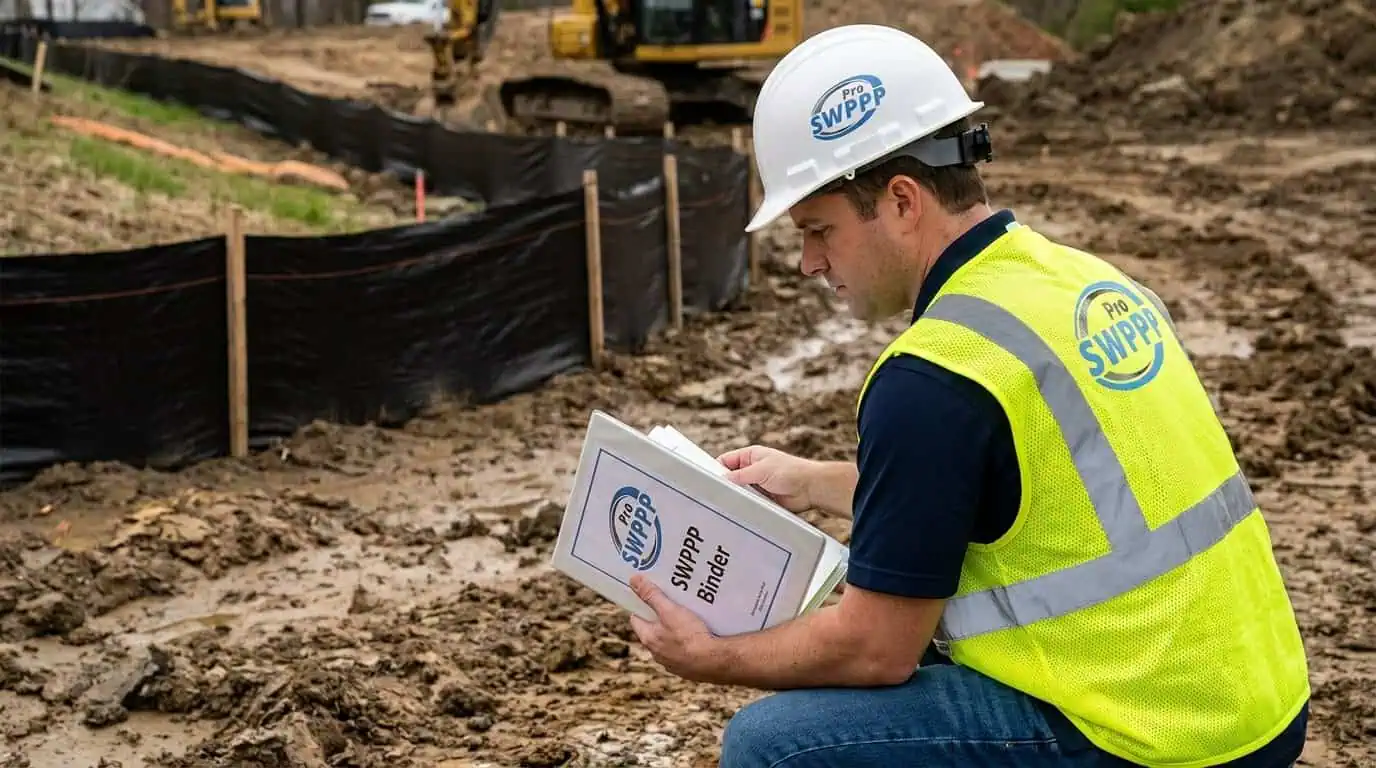
Pro SWPPP includes a three-ring binder template with tabs for inspections, maintenance, and permit documents. Everything stays organized and ready for inspection. Our clients pass audits with zero stress.
Enforcement and Penalties in Missouri
Missouri takes stormwater violations seriously. MDNR can issue fines, stop-work orders, and even criminal charges for repeat offenders. The Clean Water Act allows penalties up to tens of thousands of dollars per day. Each day you are out of compliance counts as a separate violation.
Common violations include:
- Starting work without a permit
- Missing or incomplete SWPPP
- Failing to install required BMPs
- Skipping required inspections
- Allowing sediment to discharge off site
- Not fixing BMP failures within seven days
If an inspector finds a problem, you usually get a warning and a deadline to fix it. If you ignore the warning, MDNR can issue a Notice of Violation (NOV) and start the penalty process. Banks and insurance companies hate NOVs. They can freeze your funding and raise your rates.
Pro SWPPP keeps you compliant from the start. Our plans include every required BMP, every inspection schedule, and every maintenance procedure. We also offer on-site training so your crew knows how to stay legal. Compliance is always cheaper than fines.
Typical Fine Ranges
Missouri fines vary based on the severity of the violation. A first-time paperwork issue might get a warning. A major sediment discharge into a stream can trigger fines in the tens of thousands. Repeat offenders face higher penalties and possible criminal prosecution.
Federal Clean Water Act fines can reach up to $50,000 per day per violation. Missouri state fines are lower but still painful. The best strategy is to avoid violations completely. Pro SWPPP helps you do that with thorough, compliant plans.
Stop-Work Orders and Compliance Deadlines
If MDNR issues a stop-work order, all construction activity must halt immediately. You cannot pour concrete, grade dirt, or even move equipment until the violation is corrected. Every day of delay costs you money and damages your reputation.
Most stop-work orders come from missing permits or major sediment discharges. The solution is simple: get your permit before you start and follow your SWPPP. Pro SWPPP delivers permit-ready plans in seventy-two hours so you never face a delay.
Recent Enforcement Actions in Missouri
Detailed statewide enforcement statistics are not widely published, but local news reports show MDNR does enforce stormwater rules. Inspectors visit sites regularly. Neighbors report violations. Complaints trigger investigations. The risk is real.
Pro SWPPP clients avoid enforcement actions because our plans are thorough and our training is clear. We have written thousands of SWPPPs across Missouri. Our track record speaks for itself. For more about our experience, visit Pro SWPPP About.
How to File Your NOI in Missouri
Missouri uses an electronic system called MoGEM (Missouri Gateway for Environmental Management) for all construction permit applications. You cannot submit a paper application. Everything happens online. The system walks you through each step, but it helps to know what you need before you start.
Here is the step-by-step process to file your construction stormwater permit:
Step One: Register in MoGEM
Go to the MoGEM portal and create an account. You will need an email address, company name, and contact information. Once registered, you can access the ePermitting system. Keep your login credentials safe. You will use them to check permit status and file amendments.
Step Two: Complete Your SWPPP
Before you apply for the permit, you must have a finished SWPPP. The permit application asks specific questions about your BMPs, site conditions, and inspection schedule. If your SWPPP is incomplete, you cannot answer the questions correctly.
Pro SWPPP delivers your completed SWPPP in seventy-two hours or less. We include all required sections, site maps, and inspection forms. You get a permit-ready plan with zero guesswork.
Step Three: Fill Out the Online Application
Log into MoGEM and start a new permit application. The system will ask for:
- Project location and legal description
- Total acreage to be disturbed
- Type of construction activity
- List of BMPs you will install
- Inspection frequency option (A or B)
- Receiving water body name
- Estimated start and completion dates
You will also upload a copy of your SWPPP and site map. Make sure your files are clear and readable. Blurry maps or incomplete plans will delay approval.
Step Four: Pay the Permit Fee
Missouri charges a permit fee based on project size. The fee is paid online through MoGEM using a credit card or electronic check. Once payment is processed, your application moves to MDNR review.
Step Five: Wait for Approval
MDNR typically reviews and approves permit applications within a few business days. If your application is complete and your SWPPP is solid, approval is fast. If MDNR finds problems, they will send a request for additional information. Fix the issues and resubmit.
Pro SWPPP clients get approved quickly because our plans are always complete and accurate. We know what MDNR wants to see. We include it the first time.
Step Six: Post Your Permit Sign
Once your permit is approved, you must print the permit certificate and post a sign at the site entrance. The sign must include your permit number and MDNR contact information. Inspectors will check for the sign during site visits.
Pro SWPPP provides a printable sign template with every plan. You just fill in your permit number, print, and post. Easy compliance.
Step Seven: Start Work and Keep Records
You can begin construction once your permit is issued and the sign is posted. Keep a copy of your SWPPP, your permit certificate, and all inspection logs on site. MDNR or local inspectors can ask to see them at any time.
Pro SWPPP includes a complete record-keeping binder with every plan. You get tabs for permits, inspections, maintenance, and amendments. Everything stays organized and inspection-ready.
Filing for Industrial or Area-Wide Permits
Industrial and governmental area-wide permits use different forms. Industrial facilities submit Form E (Application for General Permit) and Form G (Stormwater Permit) through MoGEM. Governmental entities use Form G (MO 780-1408) for the MO-R100 area-wide permit.
Pro SWPPP handles all permit types. We know which forms to use and how to fill them out correctly. You get the right permit for your project with zero confusion.
Why Pro SWPPP is Missouri’s Best SWPPP Service
Pro SWPPP has been writing stormwater plans for 20+ years. We have worked nationwide on projects of every size. Our team is CPESC certified, meaning we hold the highest credential in erosion and sediment control. When you hire Pro SWPPP, you get experts who know Missouri rules inside and out.
We deliver your permit-ready SWPPP in seventy-two hours or less. That includes the full plan, site maps, inspection logs, and all required forms. You get everything you need to apply for your permit and pass inspections. No back-and-forth. No delays. Just fast, professional service.
CPESC Certified Experts
CPESC stands for Certified Professional in Erosion and Sediment Control. It is the gold standard in stormwater compliance. Our lead planners hold this certification and stay current on every state regulation. When you work with Pro SWPPP, you work with the best in the business.
Other companies use templates or cookie-cutter plans. We customize every SWPPP to your site conditions, soil type, slope, and local requirements. You get a plan that works for your project, not a generic document that might pass inspection.
20+ Years of Experience, Nationwide Coverage
Pro SWPPP has written plans for projects in Missouri, Texas, Georgia, California, Florida, and nationwide. We know how each state’s rules differ and what inspectors look for. That experience means your plan is compliant the first time.
We have worked on everything from small residential subdivisions to massive highway projects and industrial facilities. No project is too big or too small. Pro SWPPP scales to meet your needs.
Seventy-Two Hour Turnaround Guaranteed
Most SWPPP companies take a week or more to deliver a plan. Pro SWPPP delivers in seventy-two hours or less. You send us your site information, and we send back a complete, permit-ready SWPPP in three days. If you have an urgent deadline, we can often deliver even faster.
Speed does not mean shortcuts. Every plan is reviewed by a CPESC-certified professional before delivery. You get accuracy and speed in one package.
Full Compliance Support
Pro SWPPP does not just hand you a document and disappear. We offer on-site training, inspection support, and plan amendments as your project evolves. If MDNR requests changes, we update your plan at no extra charge. If you need help during an inspection, we are one phone call away.
Our clients stay compliant because we stay involved. We are your partner, not just your vendor. For more information, visit our contact page.
Transparent Pricing
Pro SWPPP offers flat-rate pricing with no hidden fees. You know the cost up front. No surprises. No hourly billing. Just one price for a complete, compliant SWPPP. We also offer discounts for multiple projects and long-term clients.
Compare that to hiring a local consultant who charges by the hour and takes weeks to deliver. Pro SWPPP saves you time and money while delivering better results.
Trusted by Thousands of Contractors
Pro SWPPP has served thousands of contractors, developers, and facility managers across the country. Our clients trust us because we deliver on time, every time. We have a five-star reputation and a track record of zero permit denials. When you need a SWPPP in Missouri, Pro SWPPP is the name you can trust.
Read more about our services and see why contractors nationwide choose Pro SWPPP at Pro SWPPP.
FAQ
Do I need a SWPPP in Missouri if my project is less than one acre?
If your project disturbs less than one acre and is not part of a larger common plan, you are exempt from the state stormwater permit. But local cities may have stricter rules. Some municipalities require erosion control plans for projects as small as a quarter acre. Always check with your local building department. Even if you are exempt, Missouri Water Quality Standards still apply. If your site causes pollution, MDNR can require you to get a permit or issue a violation.
How long does it take to get a stormwater permit in Missouri?
Once you submit a complete application through MoGEM, MDNR typically reviews and approves permits within a few business days. If your SWPPP is incomplete or your application has errors, approval can take longer. Pro SWPPP ensures your application is complete and accurate the first time. Our clients usually get approved in less than a week.
Can I write my own SWPPP in Missouri?
Yes, you can write your own SWPPP. Missouri does not require you to hire a professional. But most contractors do not have time to learn all the regulations, find the right forms, and create detailed site maps. A single mistake can delay your permit or trigger a violation. Pro SWPPP writes hundreds of SWPPPs every year. We know what works and what does not. For the cost of a few hours of your time, you get a plan that passes inspection every time.
What happens if I get a violation notice?
If MDNR issues a violation notice, you must correct the problem immediately. The notice will include a deadline, usually seven to thirty days. If you fix the issue and document the repairs, the violation often closes with no fine. If you ignore the notice, MDNR can issue fines and stop-work orders. Pro SWPPP clients rarely get violations because our plans are thorough and our training is clear. If you do get a notice, we help you respond and fix the problem fast.
Do I need a SWPPP for demolition projects?
Yes. Demolition that disturbs one acre or more requires a stormwater permit and SWPPP. Tearing down a building kicks up dust and can expose contaminated soil. You need BMPs to control sediment and protect water quality. Pro SWPPP writes demolition SWPPPs that cover dust control, debris management, and sediment barriers. You get full compliance for demo and rebuild projects.
How often do I need to inspect my site in Missouri?
Missouri offers two inspection frequency options. Option A requires inspections every seven calendar days plus within forty-eight hours of a qualifying storm event. Option B requires inspections every fourteen calendar days plus within twenty-four hours of a storm that drops 0.25 inches or more. Most contractors choose Option A because weekly inspections are easier to remember. Pro SWPPP provides inspection logs for both options with easy-to-follow checklists.
Can Pro SWPPP help with local city requirements?
Yes. Many Missouri cities have additional stormwater requirements on top of the state permit. Some require pre-construction meetings, stricter BMP standards, or additional forms. Pro SWPPP stays current on local overlays in cities across Missouri. We include local requirements in your SWPPP so you meet both state and city rules. If your city requires a special form or review, we handle it.
Ready to get started? Order your SWPPP now or schedule a free consultation with Pro SWPPP.
Missouri stormwater compliance does not have to be confusing or stressful. Pro SWPPP takes the burden off your shoulders. We write your plan, file your permit, train your crew, and keep you compliant from start to finish. You focus on building. We handle the paperwork. Thousands of contractors trust Pro SWPPP because we deliver results every single time.
For more information about stormwater best practices, visit the U.S. EPA NPDES Stormwater Program.
Visit Pro SWPPP and see why thousands of contractors trust America’s #1 SWPPP Service.
Stop Babysitting Missouri’s Stormwater Paperwork
Here’s the open secret of construction stormwater compliance: every state and county runs its own version of the same headache — a clunky permit portal, a Notice of Intent that has to be filed just so, fees, inspection logs, and a review team that loves bouncing things back “with revisions.” Missouri is no exception. You didn’t get into construction to moonlight as a stormwater clerk at 9 PM.
That’s the entire point of Pro SWPPP. We handle all of it — your Missouri SWPPP, the permit filing, and the CPESC certification it requires — done in 72 hours, with 24-hour expedited turnaround when the clock’s against you. You break ground; we wrestle the bureaucracy.
Skip the Paperwork. Get Back to Your Build.
Your Missouri SWPPP, permit filing, and CPESC certification — done for you in 72 hours, 24-hour rush available, or it’s FREE.
✅ Order Your Missouri SWPPP — The Easy Way →
📞 Talk to THE SWPPP Authority →
Schedule a call with Derek E. Chinners — Founder & Stormwater Consultant, CPESC · 833-GET-SWPPP