Pro SWPPP – America’s #1 SWPPP Service – has closed out hundreds of stormwater permits nationwide, and we see the same mistake every week: contractors think their permit ends when the last truck leaves the site. It doesn’t. Not even close. Until you file a valid Notice of Termination and the regulator accepts it, you’re still the permittee. That means inspections, fees, liability, and enforcement risk continue ticking. This guide walks you through exactly how to close out a stormwater permit the right way, so you can walk away clean.
What Is a Notice of Termination and Why Does It Matter?
A Notice of Termination, or NOT, is the official paperwork that tells EPA or your state environmental agency that your stormwater permit coverage is ending. Until that NOT is submitted and approved, you are legally still covered under the permit. That carries real consequences.
You remain responsible for all permit conditions: weekly or biweekly inspections, maintaining best management practices, updating your SWPPP, and in many states, paying annual permit fees. If a storm washes sediment off your “finished” site and you haven’t filed a valid NOT, you’re on the hook for a violation.
The NOT is not automatic. You cannot just stop complying and assume coverage lapses. Under the EPA Construction General Permit and most state permits, you must actively submit termination paperwork within 30 calendar days after you meet one of the allowed termination conditions. Miss that window or file an incomplete NOT, and your permit stays open.
What Happens If You Don’t File a NOT
Contractors who walk away without filing a NOT face three problems. First, ongoing compliance obligations. You’re still required to inspect, maintain BMPs, and keep records even though construction is done. Second, continued fees. In California, annual stormwater fees keep accruing until the Regional Water Board approves your NOT. Third, enforcement exposure. If sediment discharges or the site destabilizes after you leave, inspectors see an open permit with no one maintaining it, and enforcement action follows.
Pro SWPPP has seen projects where the general contractor assumed coverage ended at substantial completion, only to receive a Notice of Violation six months later for failing to maintain stabilization and file termination paperwork. The fines and corrective costs far exceed the time it takes to file a proper NOT.
Not sure whether your site still needs permit coverage at all? Take the 60-second SWPPP quiz and find out in a minute.
When Are You Allowed to Terminate Stormwater Permit Coverage?
Federal and state permits define specific conditions that allow termination. You cannot file a NOT simply because you want to. You must meet at least one triggering condition, and you must certify that it’s true.
Final Stabilization of the Site
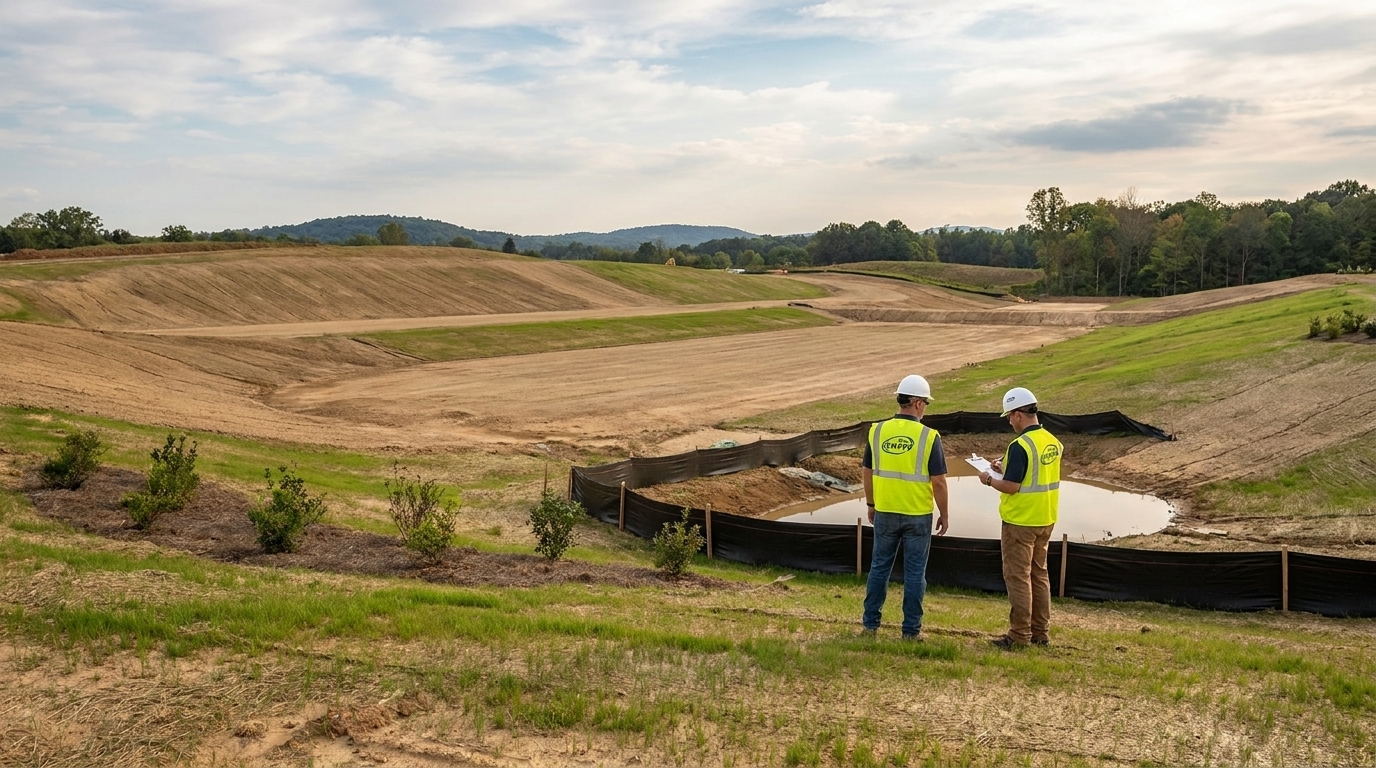
This is the most common reason for termination on construction projects. Final stabilization means all earth-disturbing activities are complete, and all areas you controlled are permanently stabilized. For vegetative stabilization, the EPA Construction General Permit requires uniform perennial vegetative cover with a density of at least 70 percent of pre-disturbance levels, or equivalent alternative stabilization.
You must also remove all temporary BMPs and potential pollutants unless they’re needed for permanent site use. Silt fence, sediment basins, stockpile covers, washout areas – all must be gone or converted to permanent features. If post-construction stormwater controls like bioretention cells or permanent ponds are required, they must be installed and functional before you can claim final stabilization.
- All disturbed soil is vegetated or covered with rock, pavement, or structures
- Temporary erosion controls are removed
- No construction materials, waste, or equipment remain that could generate pollutants
- Permanent stormwater BMPs are built and operating
Some states add stricter thresholds. California requires that you upload photographs proving final stabilization when you submit your NOT. Texas expects you to document that disturbed areas won’t erode before the next rain. Pro SWPPP routinely includes final-stabilization photo packages with our NOT filings to meet these state requirements.
Transfer of Control to Another Operator
If you’ve handed off the entire site to another operator and that operator has obtained their own permit coverage, you can terminate. The key is that the new operator must already be covered. You can’t terminate and leave a coverage gap.
This scenario is common when a general contractor finishes rough grading and a site-development contractor takes over for utilities and final paving. The GC files a NOT, certifying transfer, and the new contractor files a Notice of Intent under their own permit. Both must happen within 30 days of the transfer.
Coverage Under a Different Permit
Sometimes a site transitions from a construction permit to an industrial stormwater permit, or to a site-specific individual permit. When that happens, the construction operator can terminate the CGP coverage and the new permit takes over. This is rare but does occur on complex sites like industrial facilities or mining operations.
Industrial Sites: Cessation of Operations
For facilities covered under the EPA Multi-Sector General Permit or state industrial permits, termination is allowed when operations cease and there are no more discharges of stormwater associated with industrial activity. All industrial materials must be removed or covered so that stormwater no longer contacts them. Necessary sediment and erosion controls must be in place to prevent post-closure discharges.
Mining and certain other sectors have additional termination conditions tied to reclamation milestones. Pro SWPPP works with industrial clients to ensure that permit termination aligns with actual site conditions and regulatory requirements.
Don’t want to mess with all the paperwork? Order your SWPPP now with Pro SWPPP Professional CPESC Certified SWPPP Services.
How to Submit a Notice of Termination: Federal EPA Process
If your project is in a state where EPA administers the NPDES stormwater program directly (Idaho, Massachusetts, New Hampshire, New Mexico, and the District of Columbia), you’ll use EPA’s electronic system. Even in EPA-authorized states, understanding the federal baseline helps, because state processes mirror it.
Using the NPDES eReporting Tool
EPA requires electronic submission of NOTs through the NPDES eReporting Tool, often called NeT or CGP-NeT for construction permits. You log in with your EPA credentials, select your permit tracking number, and fill out the NOT form. The system walks you through certifying which termination condition you’re using, uploading supporting documents, and providing contact information.
Paper NOTs are allowed only if your EPA Regional Office grants a waiver from electronic reporting. In practice, waivers are rare and granted only for technological hardship. Plan on using the online portal.
What Information You Must Provide
Every NOT requires the same core information:
- NPDES permit tracking number or site ID
- Operator name and contact information
- Site name, address, and legal description
- Reason for termination (which condition applies)
- Date the termination condition was met
- Certification statement signed by an authorized official
The certification carries legal weight. You’re swearing under penalty of law that the information is true and complete. EPA’s 2022 Construction General Permit FAQs emphasize that you must take and submit photographs showing that the site is stabilized. Those photos become part of the NOT record.
When Does Termination Actually Take Effect?
Under the EPA Construction General Permit and Multi-Sector General Permit, permit coverage terminates at midnight on the day EPA receives and processes a complete and accurate NOT. If EPA later determines your NOT was incomplete or that you didn’t actually meet a termination condition, the NOT is invalid and you remain covered.
This is a critical point. Submitting a NOT does not automatically end your coverage. The NOT must be both complete and truthful. If you file a NOT claiming final stabilization but half the site is bare dirt, EPA can reject it and you’re still the permittee.
State-Specific NOT Requirements: Why They’re Stricter Than EPA
Most states run their own NPDES stormwater programs under EPA authorization. These state programs must be at least as protective as EPA’s rules, and many states add layers of requirements, fees, and approval steps. You cannot assume that the EPA process applies in your state. You need to know your state’s specific portal, forms, and conditions.
California: SMARTS Portal and Regional Approval
California requires all NOTs to be filed electronically through SMARTS, the Stormwater Multiple Application and Report Tracking System. The NOT must be certified by the Legally Responsible Person or their Duly Authorized Representative. Supporting documents must include photographs proving final stabilization, a final post-construction BMP plan, and a long-term maintenance agreement if applicable.
Here’s the big difference: California makes clear that you remain responsible for permit compliance and payment of annual fees until the Regional Water Quality Control Board approves your NOT. Submission alone does not end your obligations. If the Regional Board finds your NOT incomplete, they’ll reject it and you stay covered. Pro SWPPP includes California-specific NOT packages with our California SWPPP services to avoid rejection and delay.
Texas: STEERS e-Permits and Immediate Termination
Texas Commission on Environmental Quality requires NOTs to be submitted online through STEERS, the state’s e-Permitting system. Waivers from electronic reporting are available but uncommon. Texas explicitly states that permit coverage terminates at midnight on the day a paper NOT is postmarked, or immediately upon electronic confirmation of receipt for online NOTs.
This means Texas termination is faster and more predictable than California’s approval-based model. However, you still must meet all termination conditions, and TCEQ can enforce if you file a false NOT. Pro SWPPP handles hundreds of Texas NOTs every year through our Texas SWPPP services, ensuring same-day electronic filing when projects are ready to close.
Georgia and Other EPA-Authorized States
Georgia Environmental Protection Division administers the state’s NPDES program and uses its own online portal for NOI and NOT submissions. Like California and Texas, Georgia prohibits paper filings except under waiver. Georgia’s NOT form requires certification that all land-disturbing activities are complete, stabilization standards are met, and temporary BMPs are removed.
Other EPA-authorized states follow similar patterns. Each has its own online system, its own form fields, and often its own documentation requirements. Pro SWPPP maintains current knowledge of NOT procedures nationwide, so contractors don’t have to track regulatory changes in every jurisdiction. Visit our Georgia SWPPP services page to see how we handle state-specific filings.
Final Stabilization: What It Really Means and How to Prove It
Final stabilization is not subjective. Permits define it with measurable criteria. If you can’t prove you’ve met those criteria, your NOT will be rejected or you’ll face enforcement.
Vegetative Stabilization Standards
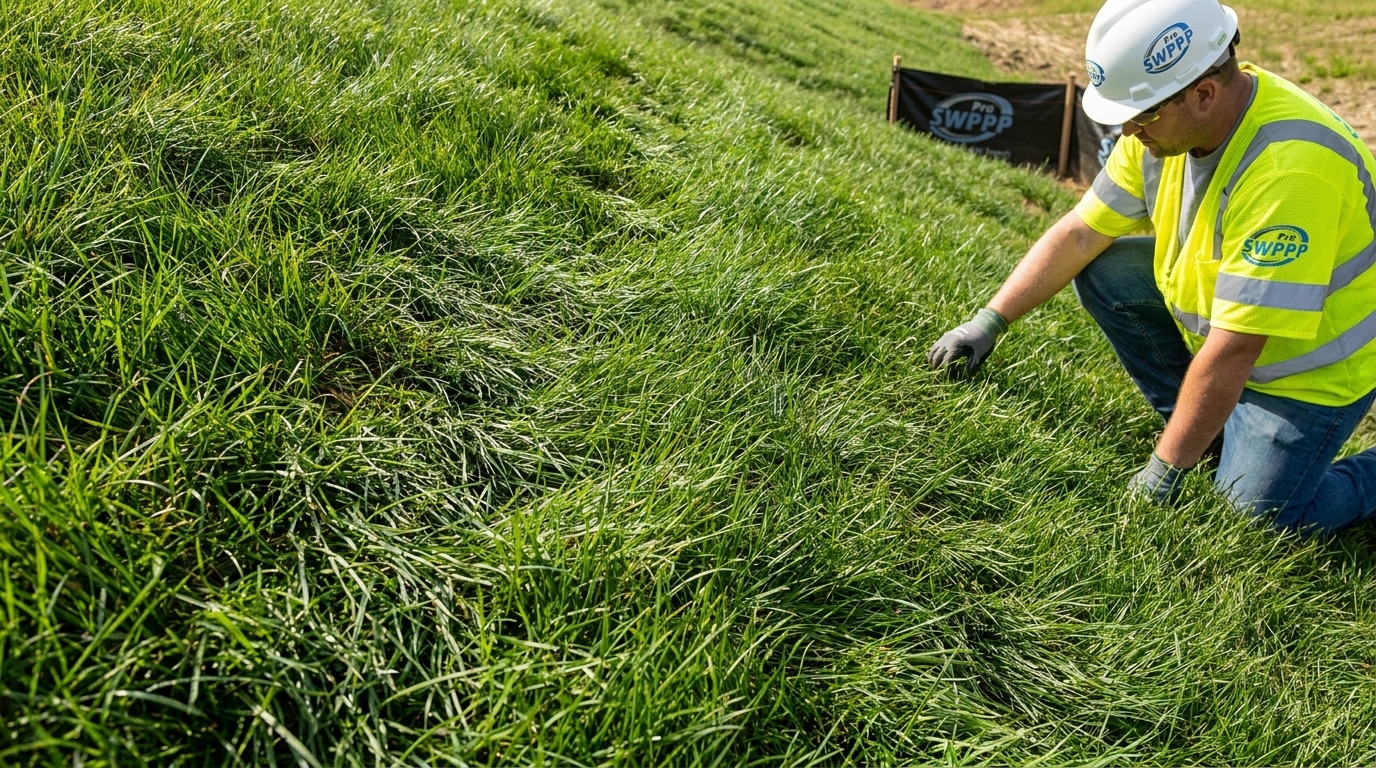
The EPA Construction General Permit requires uniform perennial vegetative cover with a density of 70 percent of pre-disturbance native cover. That means if the surrounding undisturbed area has thick grass or brush, your seeded areas need to reach 70 percent of that density before you can claim stabilization.
In arid climates or rock-covered regions, 70 percent density may not be achievable. In those cases, the permit allows equivalent non-vegetative stabilization: gravel, riprap, geotextiles, or other permanent cover that prevents erosion as effectively as vegetation would. You must document why vegetation isn’t feasible and what alternative you’re using.
Non-Vegetative Stabilization Options
Non-vegetative stabilization is common on commercial and industrial sites. Pavement, concrete, building footprints, and landscaping rock all count as permanent stabilization, as long as they cover the entire disturbed area. Temporary mulch or erosion-control blankets do not count unless they’re anchored and intended to remain in place permanently.
The key is that no exposed soil remains that could erode. If your site is 90 percent paved but has 10 percent bare slopes, you have not achieved final stabilization. Those slopes need vegetation, rock cover, or retaining structures.
Photographic Documentation
EPA’s 2022 Construction General Permit FAQs make clear that you must take and submit photographs showing final stabilization. The photos don’t need to cover every square foot, but they must be representative. Inspectors want to see wide shots of the site, close-ups of vegetated or stabilized slopes, and images of areas that were the hardest to stabilize.
States often require the same. California’s NOT instructions call for uploading photos to SMARTS. Texas expects you to have photos on file even if the online form doesn’t require upload. Pro SWPPP includes a final-stabilization photo set with every NOT we file, time-stamped and GPS-tagged, so there’s no question that conditions were met on the date of termination.
Not sure what your project needs? Schedule a Free SWPPP Consultation with CPESC Certified SWPPP Expert Derek E. Chinners.
Timing: The 30-Day Rule and Why It Matters
Federal and state permits require that you submit your NOT within 30 calendar days after meeting a termination condition. This is not a suggestion. It’s a permit requirement, and missing the deadline is a violation.
Start the Clock at the Right Time
The 30-day clock starts when you actually meet the termination condition, not when you decide to file. If final stabilization is achieved on June 1, your NOT is due by July 1. If you wait until August to file, you’ve been out of compliance for a month, even if the site was stable the whole time.
Some contractors misunderstand this and think the 30 days start when they finish construction activities. Wrong. The clock starts when stabilization is complete and verified. That might be weeks after the last grading pass, depending on how fast vegetation establishes or how long it takes to install permanent BMPs.
Plan Ahead to Hit the Deadline
Pro SWPPP recommends scheduling a pre-termination site walk about two weeks before you expect to be done. Verify that stabilization is on track, temporary BMPs are ready for removal, and all required post-construction controls are built. Line up your photographer and your certified professional to prepare the NOT package. That way, the day you achieve final stabilization, you can file the NOT immediately.
Waiting until the last minute creates risk. If the regulator finds your NOT incomplete and sends it back for corrections, you’re past the 30-day window and technically in violation. Filing early, as soon as conditions are met, protects you.
Removing Temporary BMPs and Pollutant Sources
A valid NOT requires that you remove all temporary erosion and sediment controls unless they’re being converted to permanent features. It also requires that you remove all potential pollutants and pollutant-generating activities that were associated with construction.
What Must Be Removed
Silt fence, sediment basins, inlet protection, construction entrance rock, stockpile covers, concrete washout bins, portable toilets, fuel tanks, and any construction materials or waste must be gone. If a temporary sediment basin is being converted to a permanent stormwater pond, document that in your NOT. Otherwise, remove it and restore the area.
Inspectors look for this. A site that still has silt fence hanging or a sediment trap full of muck is not ready for termination. Pro SWPPP has seen NOTs rejected because the contractor left a few rolls of silt fence and a pallet of erosion blankets on site. Remove everything, take photos, and then file.
Permanent Post-Construction BMPs
Many permits and local ordinances require permanent stormwater management features: bioretention cells, permeable pavement, sand filters, or detention ponds. These must be fully constructed and functional before you can terminate. Functional means they’re graded correctly, planted, and able to treat runoff as designed.
Some states require that you submit as-built drawings or a final post-construction plan with your NOT, showing that these features are built to spec. Pro SWPPP coordinates with civil engineers to include as-builts in the NOT package so the regulator can verify compliance in one review.
Who Enforces NOT Rules and What Happens If You Get It Wrong
Enforcement of stormwater permits is handled by EPA in the few states where EPA is the permitting authority, and by state environmental agencies in EPA-authorized states. Either way, failing to file a NOT or filing a false NOT is a permit violation that can trigger enforcement.
Inspection and Complaint-Driven Enforcement
Regulators don’t typically audit every NOT that’s filed. Enforcement usually starts with a complaint, a routine site inspection, or a discharge event. An inspector drives by a site, sees erosion and no BMPs, checks the permit database, and finds an open permit with no recent inspections or a pending NOT that doesn’t match site conditions. That triggers an investigation.
Complaints from neighbors or downstream property owners are also common. If sediment washes off your “completed” site during a storm, someone will call the state hotline. The state will look up the permit, see it’s still active, and issue a Notice of Violation.
Consequences of Invalid or Missing NOTs
If your NOT is incomplete or the regulator determines you didn’t actually meet the termination conditions, the NOT is invalid. You remain a permittee, required to comply with all permit terms. That means you must resume inspections, maintain BMPs, and correct any violations that occurred while you thought you were terminated.
Filing a false certification is more serious. Permit certifications are signed under penalty of law. Claiming final stabilization when the site is bare dirt, or certifying removal of pollutants when drums of chemicals are still on site, can result in administrative penalties, civil fines, and in egregious cases, criminal referral.
Pro SWPPP will not file a NOT unless we have verified site conditions. We require photos, a final inspection report, and sign-off from the site operator. That protects our clients and keeps the standard our 180+ five-star Google reviews were built on.
Ongoing Fees and Liability
In California, annual stormwater fees continue until the Regional Water Board approves your NOT. A project that’s done in March but doesn’t get NOT approval until July will owe fees for the entire fiscal year. Other states may assess per-acre fees or flat annual permit fees. Check your state’s fee schedule and plan NOT timing accordingly.
Liability also continues. If someone is injured on the site or if pollution occurs, and your permit is still active, you’re the responsible party on record. Closing out the permit cleanly protects you from future claims tied to the site.
Why Pro SWPPP is the SWPPP Service Contractors Trust
Pro SWPPP – America’s #1 SWPPP Service – has prepared and filed hundreds of Notices of Termination nationwide, and we know every state’s portal, every documentation requirement, and every way a NOT can be rejected. Our CPESC-certified professionals ensure that your NOT is complete, accurate, and filed on time so you can close out your permit with zero risk.
20+ Years of Experience, One Standard of Excellence
We are a family-owned firm with 20+ years in stormwater compliance. We’ve seen permit rules change, portals get upgraded, and enforcement priorities shift. That experience means we catch issues before they become violations. We know that Texas wants immediate electronic confirmation, that California requires Regional Board approval, and that Georgia expects as-built drawings for certain projects. You don’t have to learn those details. We handle them.
CPESC Certified Professionals on Every Project
Every SWPPP and every NOT that leaves Pro SWPPP is reviewed and certified by a Certified Professional in Erosion and Sediment Control. That’s the gold standard in our industry. When you see the CPESC seal on your NOT, you know it meets or exceeds every regulatory requirement. Regulators recognize that certification, and it speeds approval.
72-Hour Turnaround, Even on Rush Projects
We know construction schedules don’t wait. When your project hits final stabilization, you need the NOT filed now, not next month. Pro SWPPP delivers complete NOT packages within 72 hours of receiving site photos and final inspection data. Need it faster? Call us. We’ve filed same-day NOTs when contractors needed to close out before a sale or lease.
Nationwide Coverage, Local Knowledge
Pro SWPPP operates nationwide, and we maintain current knowledge of every state’s stormwater program. Whether your project is in California, Texas, Georgia, Florida, or anywhere else, we know the rules. We know the portals. We know the inspectors. That local knowledge, backed by our nationwide scale, means you get the same Pro SWPPP quality no matter where you build. Learn more at our About page.
End-to-End Support from NOI to NOT
Most contractors who use Pro SWPPP for permit termination also used us for their original SWPPP and NOI. That continuity matters. We already have your site data, your SWPPP, your inspection history, and your contact information. When it’s time to terminate, we pull your file, schedule the final walk, and prepare the NOT package. You’re not starting from scratch with a new consultant who has to learn your project.
If you didn’t use Pro SWPPP at the start, no problem. We can pick up your project mid-stream and handle termination. We’ll review your existing SWPPP, verify site conditions, and file a compliant NOT. Get a free SWPPP estimate and we will price the close-out before you commit.
FAQ
Do I have to file a Notice of Termination, or does my permit just expire?
You must file a NOT. Stormwater permits do not expire automatically when construction ends. Coverage continues until you submit a valid NOT and the regulator accepts it. Walking away without filing leaves you liable for ongoing compliance, fees, and enforcement if site conditions deteriorate.
How long does it take for a NOT to be approved?
It depends on the state. In Texas, coverage terminates immediately upon electronic confirmation. In California, the Regional Water Board reviews your NOT and may take several weeks to approve it. EPA states typically process NOTs within a few days if the submission is complete. Pro SWPPP tracks your NOT status and follows up with the regulator if approval is delayed.
Can I file a NOT if vegetation hasn’t fully established yet?
No. The permit requires that vegetative cover meet a specified density standard, typically 70 percent of pre-disturbance cover, before you can claim final stabilization. If your seeding is still thin, you must wait. Some contractors use temporary erosion-control blankets or mulch to speed establishment, but the NOT cannot be filed until the standard is met.
What happens if I file a NOT and then have to come back for punch-list work?
If you file a valid NOT and coverage is terminated, you cannot re-disturb the site without obtaining new permit coverage. If you know punch-list work is coming that will disturb stabilized areas, delay filing the NOT until all work is truly complete. If unexpected work arises after termination, you may need to file a new NOI to cover the additional disturbance.
Do I need to keep my SWPPP records after filing a NOT?
Yes. Most permits require that you retain your SWPPP, inspection reports, and all compliance records for at least three years after permit termination. EPA and state regulators can audit closed permits, and you must be able to produce documentation if requested. Pro SWPPP provides clients with a complete digital archive of all SWPPP documents and inspection records at project close-out.
Can Pro SWPPP file my NOT even if I didn’t use you for the original SWPPP?
Absolutely. We can take over any project at any stage. We’ll review your existing SWPPP, conduct a final site inspection, prepare the NOT package with photos and documentation, and file it through the correct state or federal portal. Many contractors come to Pro SWPPP for NOT services after struggling with confusing state portals or rejected filings from other providers.
What if my state rejects my NOT?
If the state or EPA determines your NOT is incomplete or that termination conditions weren’t met, they’ll reject it and notify you of the deficiencies. You remain covered under the permit and must correct the issues, then refile. Pro SWPPP’s NOTs are rarely rejected because we verify all conditions and documentation before filing. If a rejection does occur, we work with the regulator to resolve it quickly at no additional cost to you.
Ready to get started? Order your SWPPP now or schedule a free consultation with Pro SWPPP.
Contractors nationwide have left Pro SWPPP 180+ five-star Google reviews. Get a free estimate or schedule a call with a stormwater expert.
By Derek E. Chinners, CPESC — Founder & Stormwater Consultant, Pro SWPPP, LLC
Related: What Is a SWPPP? · When Is a SWPPP Required? The 1-Acre Rule and Common Plans · What Is a Notice of Intent (NOI)? · California SWPPP Requirements · SWP3 Texas: What TCEQ Requires