You can skip the SWPPP on a small construction site only when three things are true at once: the disturbance is at least 1 but under 5 acres, the rainfall erosivity factor (R) for your exact construction window is below 5, and your permitting authority actually allows the waiver. Miss any one and you need permit coverage and a plan. Pro SWPPP – America’s #1 SWPPP Service – hears one question more than almost any other: “Is there any way to avoid writing a SWPPP altogether?” The answer is yes, but only if your project meets those criteria. The Low Erosivity Waiver (LEW, sometimes called LREW) is the single best way to legally skip SWPPP preparation on small construction sites. But getting it wrong can cost you tens of thousands of dollars in fines and project delays. This guide walks you through exactly what LEW is, when you can use it, how to calculate eligibility, and what happens if you misuse it.
We’ll cover the federal baseline and explain how state programs differ. We’ll show you the real math behind the waiver, the certification process, and the enforcement risks. If you’re looking to cut paperwork without cutting corners, this is everything you need to know.
What Is the Low Erosivity Waiver and When Can You Actually Use It?
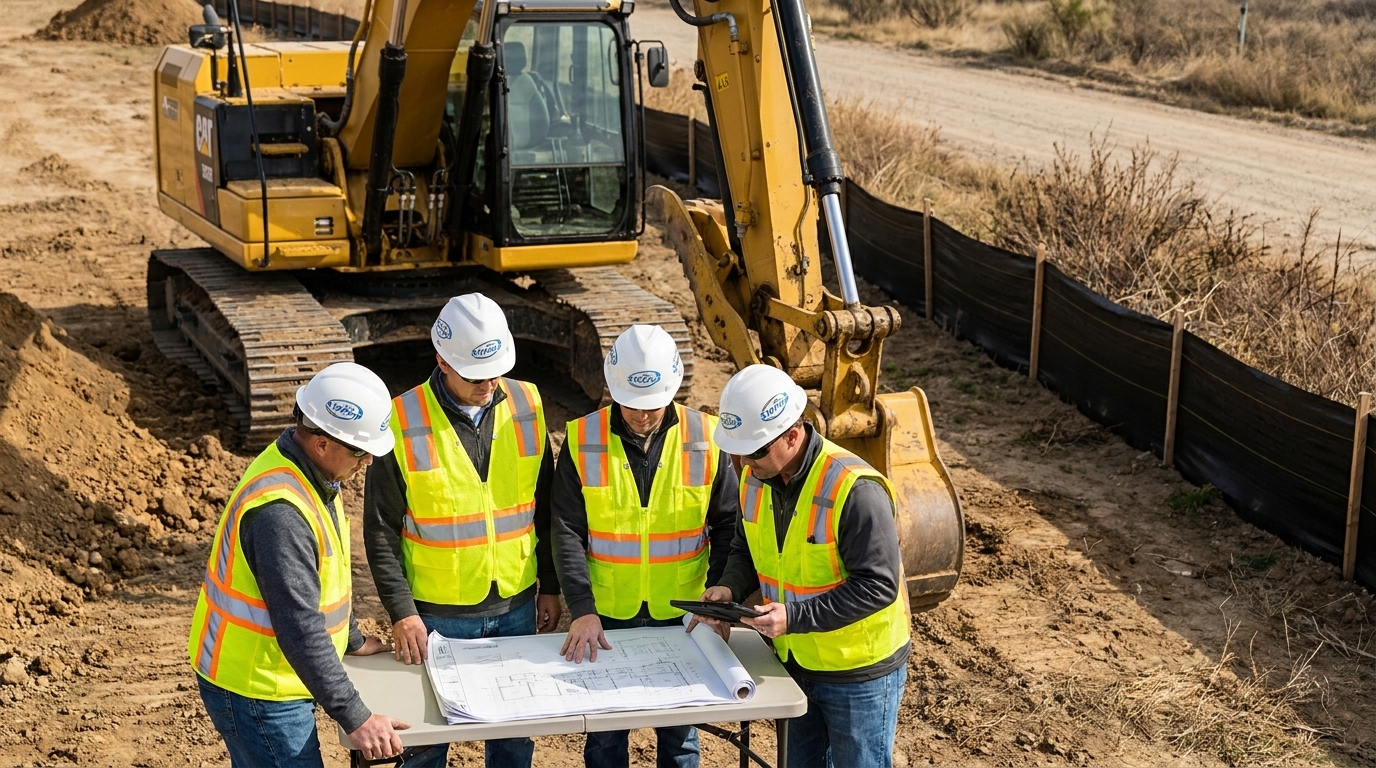
The Low Erosivity Waiver is a provision in the EPA’s NPDES stormwater program that lets you skip NPDES permit coverage on small construction sites. That means no permit, no Notice of Intent (NOI), and no formal SWPPP document. But it only works if three things are true at the same time.
The Three Hard Requirements
First, your total disturbed area must be less than five acres. This includes everything: building pads, access roads, utility trenches, staging areas, stockpiles, and borrow or disposal areas under your control. If your project is part of a larger common plan that will disturb five acres or more, you cannot use LEW. Period.
Second, the rainfall erosivity factor (R) for the actual construction window must be less than five. R is a number from the Revised Universal Soil Loss Equation (RUSLE) that measures how much rainfall erosion potential your site will experience between the day you break ground and the day you achieve final stabilization. You calculate it using your construction start date, your final stabilization date, and erosivity index tables for your location.
Third, your state or EPA permitting authority must actually allow LEW. The federal Clean Water Act regulations give states the option to offer waivers, but some states choose not to allow them at all. In those states, even a one-acre site with R less than one still needs permit coverage and a SWPPP.
What LEW Does Not Do
LEW waives the permit requirement. It does not waive your obligation to control erosion and sediment. You still need basic best management practices (BMPs) like silt fence, stabilized entrances, and sediment traps to prevent discharges that violate water quality standards. If your site causes visible sediment plumes, turbidity, or other impacts, agencies can still enforce under state water quality laws even if you have a valid LEW.
LEW also does not exempt you from local ordinances. Many counties and cities require their own erosion and sediment control plans and inspections regardless of NPDES coverage. You still have to comply with those.
How to Calculate the Rainfall Erosivity Factor (R) for Your Project
This is the make-or-break step. Most contractors skip LEW because they think the calculation is too complicated, but it’s actually straightforward if you follow the steps. Pro SWPPP – America’s #1 SWPPP Service – can help you run these numbers, but here’s how to do it yourself.
Step One: Identify Your Construction Start and End Dates
You need two dates: the day of first soil disturbance and the day of final stabilization. Final stabilization means all soil-disturbing activities are complete, temporary erosion controls are removed, and permanent vegetation or other permanent stabilization has been established. In most climates, vegetation establishment takes 60 to 90 days after seeding, so your “end date” is usually several months after you finish grading.
If your project schedule spans multiple seasons or an entire year, your R factor will almost always be too high to qualify. LEW works best for short, dry-season projects.
Step Two: Use the EPA Erosivity Calculator or EI Tables
EPA provides an online Rainfall Erosivity Factor Calculator that automates the math. You enter your zip code or county, your start and end dates, and the tool returns your project-specific R factor. If your state requires a different method, they will tell you in their fact sheets or permit.
If you prefer to calculate manually, you use Erosivity Index (EI) tables and isoerodent maps. The EI table shows the percentage of annual erosivity that occurs in each half-month for your location. The isoerodent map shows the annual R value for your region. You multiply the percentage of EI during your construction period by the annual R to get your project R.
Step Three: Check If R Is Less Than Five
If your calculated R is less than five, you are mathematically eligible for LEW (assuming your acreage and state program also qualify). If R is five or greater, you must obtain permit coverage and write a SWPPP. There is no gray area and no rounding down.
Practical example: A two-acre site in the desert Southwest with construction from June 15 to August 30 (dry season) might have an R of 2.3. That qualifies. The same two-acre site with construction from March 1 to October 31 (spanning monsoon season) might have an R of 18. That does not qualify.
Federal EPA Rules vs. State Programs: Where LEW Is and Isn’t Allowed
The federal baseline for LEW comes from 40 CFR 122.26(b)(15)(i)(A), which authorizes waivers for small construction activity where the rainfall erosivity factor is less than five. EPA’s Construction General Permit (CGP) applies in areas where EPA is the direct permitting authority: large parts of Indian Country, some territories, and a handful of states where the state has not received full NPDES authorization.
Most states have EPA-authorized NPDES programs and issue their own state Construction General Permits. Those permits must meet or exceed federal requirements, but states have the option to not allow waivers. Some states mirror the EPA approach and allow LEW with the same criteria. Other states have tightened the rules or eliminated waivers entirely.
Examples of State Variations
Texas (TCEQ) allows LEW for small sites using the EPA calculator or equivalent method, with certification submitted through the state’s online system. Georgia (EPD) similarly allows LEW with the same R-less-than-five threshold and requires certification through their NPDES portal. California (SWRCB) has historically been stricter and in some regions does not allow LEW, requiring permit coverage even on very small, dry-season projects.
You must check your specific state’s Construction General Permit and fact sheets. Do not assume that because LEW exists in federal regulations, your state will honor it. Pro SWPPP can help you confirm state-specific rules and avoid costly mistakes.
Where EPA Is the Permitting Authority
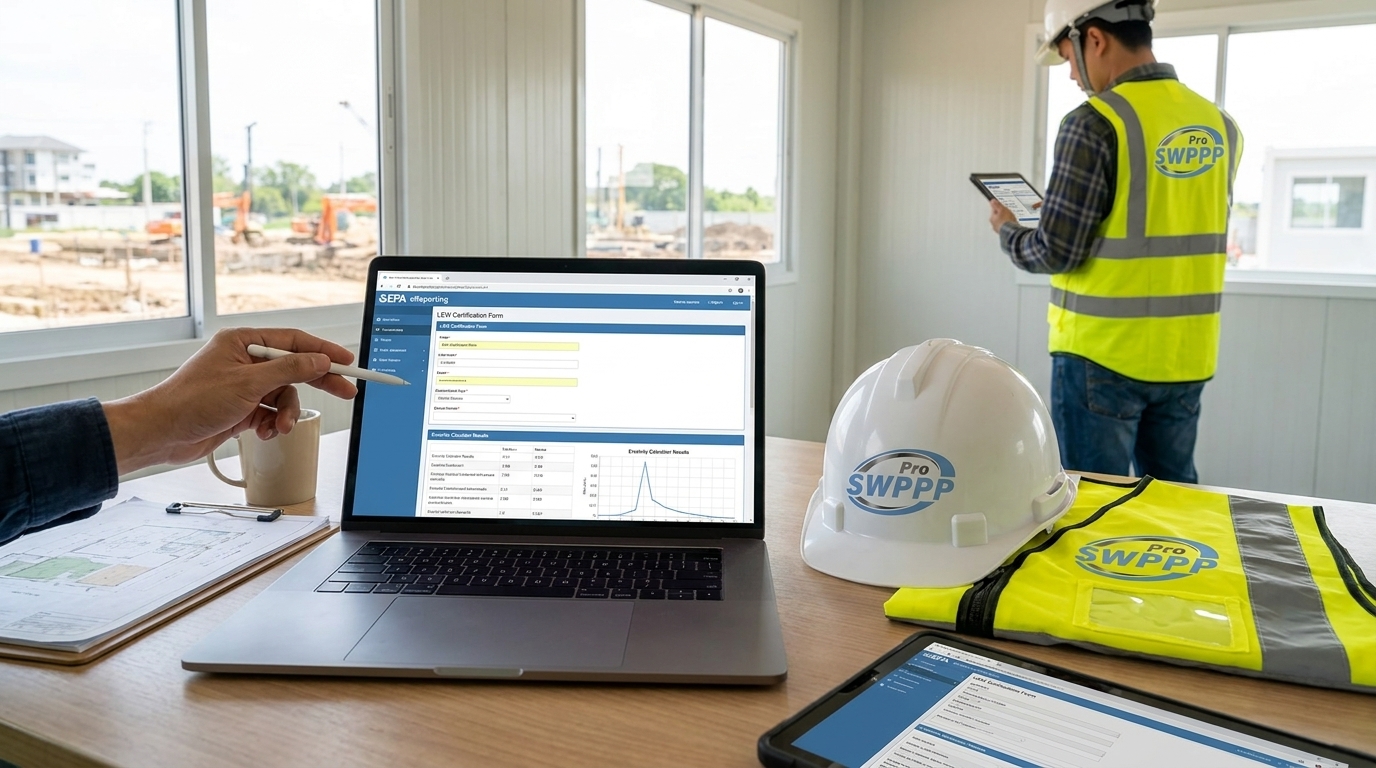
In EPA-jurisdiction areas, you submit LEW certifications through the EPA’s NPDES eReporting Tool or CGP electronic system. The process is similar to filing an NOI, with formal fields for operator information, site location, disturbed acreage, construction dates, and calculated R factor. You must have an authorized representative sign a certification statement that the information is true and accurate.
EPA treats LEW certifications seriously. Submitting false or incomplete information can result in enforcement for unpermitted discharges under the Clean Water Act.
What You Actually Submit and When: The LEW Certification Process
Filing a LEW certification is not a loophole or a workaround. It is a formal, legally binding statement that your project meets waiver criteria. The process varies slightly between EPA and state programs, but the core elements are the same.
Required Information on the LEW Certification Form
- Operator name, address, phone, and contact information
- Site name, address, county, and GPS coordinates (latitude and longitude)
- Total disturbed acreage
- Projected construction start date (first soil disturbance)
- Projected final stabilization date
- Calculated R factor for the construction period, with method used (EPA calculator or manual calculation)
- Signature of an authorized representative certifying that construction will occur only when R is less than five and that all information is accurate
In EPA-jurisdiction areas, you submit this electronically through the CGP eReporting system. In state-jurisdiction areas, you submit through the state’s online portal or paper form as specified in the state permit. Some states require you to keep a copy on-site and submit it only on request during inspections.
Timing and Duration of the Waiver
Your LEW certification is valid only for the construction period and dates you specify. If your project extends beyond the end date you certified, or if you add acreage or phases that change the R factor or total disturbance, you must either submit a revised LEW (if still eligible) or obtain permit coverage immediately.
Do not wait until an inspector shows up. If your actual construction window no longer qualifies for LEW, you are operating without permit coverage the moment R goes above five or acreage goes above five acres. That exposes you to enforcement as an unpermitted discharger.
What Happens If You Get LEW Wrong: Enforcement and Penalties
Misusing LEW is not a paperwork error. It is treated the same as operating without NPDES permit coverage. EPA and state agencies have broad enforcement authority under the Clean Water Act, and penalties for unpermitted discharges can reach tens or hundreds of thousands of dollars.
Common Mistakes That Trigger Enforcement
- Miscalculating R factor by using wrong dates, wrong EI zone, or ignoring wet-season extensions
- Underestimating disturbed acreage by omitting staging areas, haul roads, or utility corridors
- Claiming LEW in a state that does not allow waivers
- Failing to update certification when project schedule slips into wetter months
- Ignoring that the project is part of a larger common plan exceeding five acres
Enforcement typically begins with a notice of violation (NOV) or inspection report. The agency will determine that permit coverage was required, calculate the period of unpermitted discharge, and assess penalties based on the severity and duration of violations. If your site caused visible sediment discharge to waters of the U.S., penalties escalate quickly.
Real-World Penalty Ranges
Under the Clean Water Act, statutory maximum penalties are adjusted annually for inflation and can exceed $50,000 per day per violation. In practice, enforcement settlements for construction stormwater violations (including misused waivers) often range from $10,000 to $200,000 depending on the number of violations, environmental harm, and compliance history.
Even if no penalty is assessed, you will be required to immediately obtain permit coverage, prepare a SWPPP, install or upgrade BMPs, and possibly halt work until compliance is achieved. The project delay and emergency compliance costs often exceed what you saved by skipping the SWPPP in the first place.
Why Contractors Get Caught
State and EPA inspectors routinely visit construction sites, especially those near sensitive waters or in response to complaints. They check for permit coverage first. If you claim LEW, they will ask to see your certification, verify your acreage, check your construction dates, and sometimes recalculate your R factor on the spot. If any element does not match, you are in violation.
Third-party complaints (from neighbors, environmental groups, or downstream property owners) also trigger inspections. A visible sediment plume after a storm is often the first sign that draws regulatory attention.
Do You Still Need Erosion Controls and Inspections Under LEW?
Yes. LEW waives the NPDES permit requirement, not your obligation to prevent pollution. You still need to implement reasonable erosion and sediment controls consistent with good engineering practice and local codes.
BMPs You Should Still Use
- Perimeter silt fence or sediment barriers
- Stabilized construction entrances to prevent track-out
- Sediment traps or basins at discharge points
- Inlet protection for storm drains
- Dust control during dry periods
- Stockpile covers or berms to prevent runoff
- Temporary or permanent seeding and mulching as areas are completed
Even without a formal SWPPP, many contractors document their BMPs in an internal plan or checklist. This serves as proof of good faith if an inspector or complaint arises.
Inspection Frequency
You are not required to conduct the weekly and post-storm inspections specified in most CGPs, because you are not covered by those permits. However, EPA and state agencies can inspect your site at any time to verify LEW eligibility and check for water quality violations. Local governments may also have their own inspection requirements regardless of NPDES status.
Best practice: walk your site after every significant storm and document that controls are functioning. Keep photos and notes. If an inspector questions your LEW, you want to show that you took erosion control seriously.
How to Schedule Your Project to Maximize LEW Eligibility
R factor is time-dependent, which means you can sometimes engineer your schedule to qualify for LEW. This works best in regions with distinct wet and dry seasons.
Compress Earthwork Into Dry Seasons
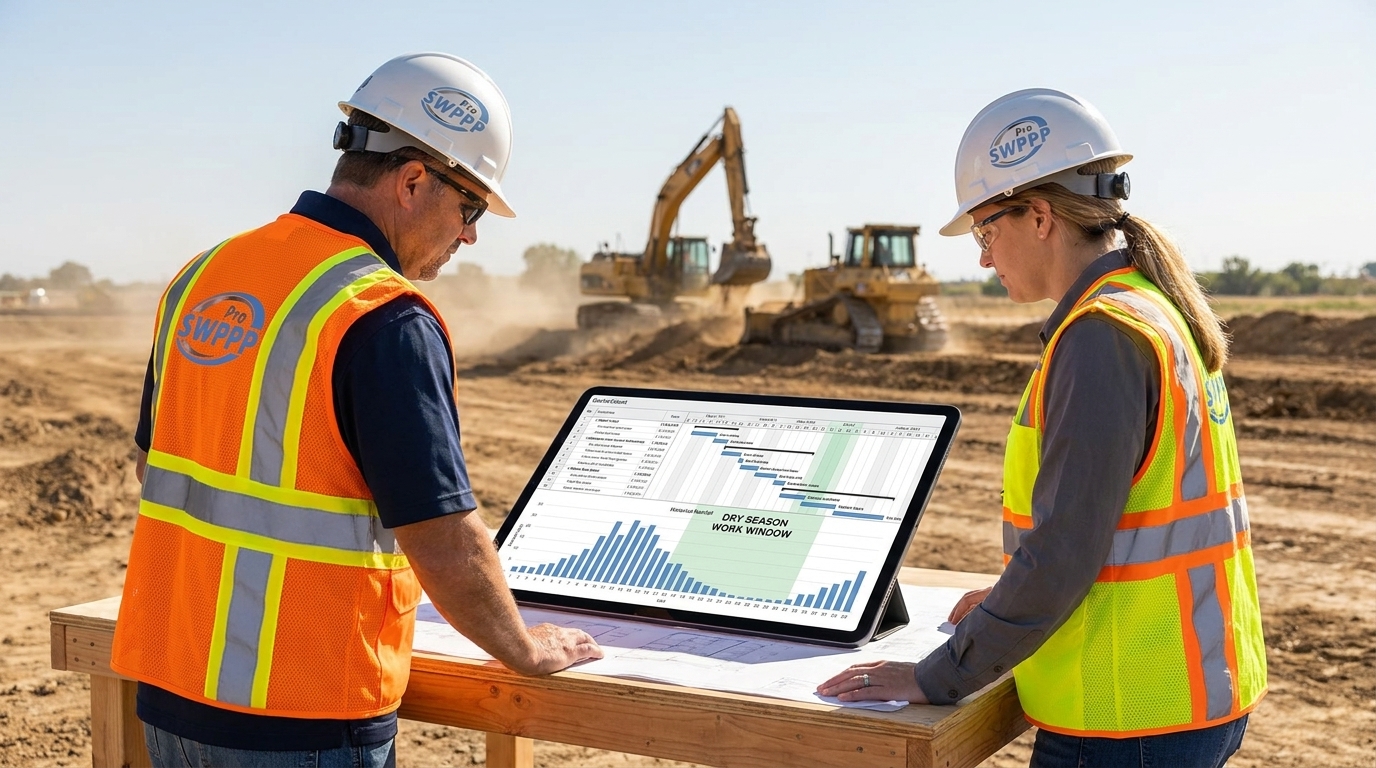
If your project allows flexibility, schedule all soil disturbance and grading during the lowest-rainfall months. For example, in the southwestern U.S., construction from May through September (avoiding monsoon season) will produce a much lower R than construction from October through April. In the Southeast, winter dry spells can offer windows for low-R scheduling.
Run the EPA calculator with different start and end dates to see how R changes. Sometimes shifting your start date by two weeks can drop R below five.
Accelerate Final Stabilization
The sooner you achieve final stabilization, the shorter your construction window and the lower your R. Consider:
- Using fast-growing cover crops or hydroseed instead of conventional seeding
- Installing permanent erosion control blankets or turf reinforcement mats to speed vegetation establishment
- Sequencing work so disturbed areas are stabilized in phases rather than all at the end
If you can shave 30 to 60 days off your final stabilization date, you may qualify for LEW where you otherwise would not.
Plan for Contingencies
Even the best schedules slip. If your certified LEW end date is September 30 and you are still grading in October because of weather delays or change orders, you are no longer eligible. Have a backup plan: know the steps to file an NOI and prepare a SWPPP quickly if your project extends into higher-erosivity months.
Pro SWPPP – America’s #1 SWPPP Service – offers 72-hour turnaround on SWPPP preparation, which means you can pivot from LEW to full permit coverage mid-project without major delays. Texas and Georgia contractors use this service regularly when schedules change unexpectedly.
Is LEW Really Worth It, or Should You Just Get a SWPPP?
LEW can save you money and time on small, short-duration projects in low-rainfall areas. But it is not always the smart choice, even when you technically qualify.
When LEW Makes Sense
- Your project is well under five acres with no chance of expansion
- Your schedule is firm and fits entirely within a dry season
- Your calculated R is comfortably below five (not 4.9)
- Your state allows LEW and the certification process is simple
- You have basic erosion controls in place and confidence you won’t cause water quality violations
In these cases, LEW is a legitimate, cost-effective way to skip the SWPPP and avoid permit fees.
When You Should Get a SWPPP Instead
- Your R factor is borderline (4.5 to 5.0) and any schedule slip will disqualify you
- Your project is phased or likely to expand, putting you close to five acres
- Your site is near sensitive waters, impaired streams, or high-visibility areas where any sediment discharge will trigger complaints
- Your state program is known for aggressive enforcement and does not look favorably on waivers
- You are unfamiliar with erosion control and want the structure and inspection discipline of a formal SWPPP
A SWPPP costs a few hundred to a few thousand dollars. An enforcement action for misused LEW costs tens of thousands. When in doubt, get the SWPPP.
The Hidden Value of a SWPPP
Even if LEW is technically available, a SWPPP gives you a documented plan, clear BMP responsibilities, inspection records, and a defensible compliance history. If something goes wrong, your SWPPP and inspection logs are your first line of defense in negotiations with regulators.
Pro SWPPP has prepared SWPPPs nationwide for 20+ years. We see contractors use LEW successfully on small, simple sites, but we also see contractors regret skipping the SWPPP when projects get complicated or schedules change. A professional SWPPP is insurance as much as it is a compliance document.
Don’t want to mess with all the paperwork? Order your SWPPP now with Pro SWPPP Professional CPESC Certified SWPPP Services.
Why Pro SWPPP is the SWPPP Service Contractors Trust
Pro SWPPP is a family-owned firm delivering fast, reliable, CPESC-certified SWPPPs for 20+ years, backed by 180+ five-star Google reviews. We operate nationwide and understand both federal EPA requirements and state-specific rules. Whether you need a full SWPPP, help calculating LEW eligibility, or emergency compliance support mid-project, we have the expertise to keep your project moving.
CPESC Certified and Experienced
Our lead professional, Derek E. Chinners, is a Certified Professional in Erosion and Sediment Control (CPESC) with deep experience in construction stormwater compliance nationwide. CPESC certification is the gold standard in the industry and is recognized by EPA and state agencies as proof of technical competence. When you work with Pro SWPPP, you work with certified experts who know the regulations inside and out.
72-Hour Turnaround
We know contractors operate on tight schedules. Pro SWPPP delivers complete, site-specific SWPPPs in 72 hours or less. That includes site maps, BMP selection, inspection schedules, and all required certifications. If your LEW falls through or your project scope changes, you can have a compliant SWPPP in hand before the next rain event.
Nationwide Coverage, Local Knowledge
We have worked in Texas, Georgia, California, Florida, North Carolina, Arizona, and every other state. We stay current on state CGP updates, local ordinances, and regional BMP standards. When you call Pro SWPPP, you get answers specific to your state and your project, not generic advice from a national call center.
Support Beyond the Document
Pro SWPPP does not just hand you a PDF and disappear. We offer ongoing support for inspections, NOI filings, amendment requests, and enforcement response. If an inspector shows up with questions or you need to modify your SWPPP mid-project, we are a phone call away. Learn more about our team and services here.
Not sure what your project needs? Schedule a Free SWPPP Consultation with CPESC Certified SWPPP Expert Derek E. Chinners.

FAQ
Can I use LEW if my project is exactly five acres?
No. LEW is only available for projects disturbing less than five acres. If your total disturbed area equals or exceeds five acres, you must obtain NPDES permit coverage and prepare a SWPPP, regardless of your R factor.
What if my R factor is 4.9? Is that close enough?
No. The threshold is R less than five. If your calculated R is 4.9, you technically qualify. But if your calculation method is slightly off or an inspector recalculates using a different tool, you could end up over five. When R is that close, many contractors choose to get a SWPPP rather than risk enforcement.
Do I still need a SWPPP if I have LEW?
You do not need a formal NPDES permit SWPPP if your LEW is valid. However, you still need erosion and sediment controls, and many contractors prepare an informal BMP plan for internal use. Local ordinances may also require an erosion control plan separate from NPDES requirements.
How do I know if my state allows LEW?
Check your state’s Construction General Permit and fact sheets. Look for sections on waivers or small construction activity exemptions. If the permit is silent on waivers or explicitly states that waivers are not allowed, you cannot use LEW. Pro SWPPP can help you confirm state-specific rules quickly.
What happens if my project schedule changes after I file LEW?
If your actual construction dates extend beyond the certified period or shift into higher-erosivity months such that R becomes five or greater, you must immediately obtain NPDES permit coverage and prepare a SWPPP. Operating outside the certified LEW window is treated as unpermitted discharge and can result in enforcement.
Can I use LEW on a residential subdivision if only one phase is under five acres?
It depends on whether the phase is part of a larger common plan of development. If the entire subdivision will eventually exceed five acres, LEW is not available for any phase, even if individual phases are small. The “common plan” rule is strict and includes phased construction under single ownership or control.
Is LEW the same thing as a TMDL waiver or equivalent analysis waiver?
No. The EPA Phase II rule allows three types of waivers for small construction: Rainfall Erosivity Waiver (LEW), TMDL-based waiver, and equivalent analysis waiver. LEW is by far the most common because it is based solely on the R factor. TMDL and equivalent analysis waivers require additional studies and approvals. When contractors talk about waivers, they almost always mean LEW.
Not sure whether your site is under 5 acres or whether your state allows the waiver? Take the 60-second SWPPP quiz, or see when a SWPPP is required for the full threshold rules.
Want the R-factor run for your dates and a flat-rate number if you do need a plan? Get a free SWPPP estimate.
Ready to move? Order your SWPPP now or schedule a call with a stormwater expert.
By Derek E. Chinners, CPESC — Founder & Stormwater Consultant, Pro SWPPP, LLC
Related: What is a SWPPP? · When is a SWPPP required? · SWPPP and the RUSLE equation · Notice of Intent
For more information on federal construction stormwater requirements, visit the EPA NPDES Construction Stormwater page.