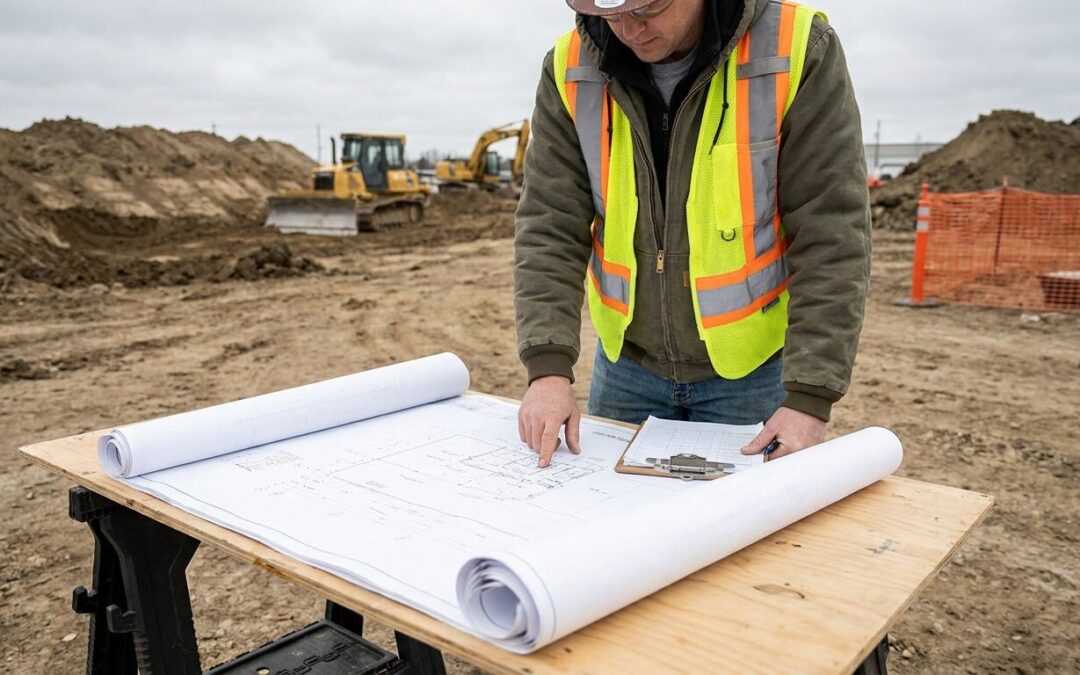
California SB 205 does not require construction contractors to present a stormwater permit to renew a business license. The statute applies to businesses subject to California's Industrial General Permit, which regulates industrial facilities with outdoor material storage and potential stormwater exposure, not construction projects or contractors.
Pro SWPPP prepares stormwater plans for contractors nationwide.
Not sure whether your project needs a SWPPP? Take the SWPPP quiz.
What does California SB 205 require for business licensing and SWPPP compliance?
California SB 205, effective January 1, 2020, requires certain businesses to provide stormwater permit information when applying for or renewing a city or county business license. Before issuing or renewing the license, the local jurisdiction determines whether the business's primary Standard Industrial Classification codes indicate potential coverage under the General Permit for Storm Water Discharges Associated with Industrial Activities Excluding Construction Activities.
Covered businesses must demonstrate enrollment in the NPDES permit program, under penalty of perjury, by providing one of four identifiers for each facility: a Waste Discharger Identification (WDID) number, a WDID application number, a Notice of Non-Applicability (NONA) identification number, or a No Exposure Certification (NEC) identification number. Any one of the four satisfies the statute, so a business that has only just filed its Notice of Intent is compliant on the strength of the WDID application number alone. The State Water Resources Control Board administers the permit program and holds the underlying records.
The requirement is codified at Business and Professions Code section 16000.3 for cities and section 16100.3 for counties, with the State Water Board's list-publication duty at Water Code section 13383.10. Senate Bill 891, effective January 1, 2023, amended all three: the requirement now reaches any equivalent instrument or permit, such as a business tax certificate issued solely to raise revenue; the identification numbers are public records available under the California Public Records Act; and NONA and NEC holders must upload their supporting documentation into SMARTS. An article that stops at the original 2020 statute is three years out of date.
The statute permits cities and counties to create a provisional renewal procedure allowing up to three months to comply. Whether such a procedure exists depends on the local jurisdiction where the business operates. More information is available from the California Water Resources Control Board SB 205 guidance.
Which California businesses are subject to the Industrial General Permit and SWPPP under SB 205?
The Industrial General Permit covers facilities engaged in specific industrial activities with outdoor material storage, processing or loading areas exposed to stormwater. Examples include manufacturing plants, scrap yards, chemical storage facilities, concrete batch plants and certain equipment yards.
The permit applies when industrial materials or activities are exposed to rain or runoff, creating potential for pollutant discharge. A business qualifies based on its SIC code and the nature of its outdoor operations, not simply because it holds a contractor's license or performs construction work.
Construction contractors who operate a permanent yard or facility with outdoor material storage may be subject to the Industrial General Permit for that facility. That coverage is separate from construction-project permit requirements and would trigger SB 205 documentation at business-license renewal for the facility itself.
See the SWPPP plan request form.
How does California SB 205 apply to construction contractors and SWPPP requirements?
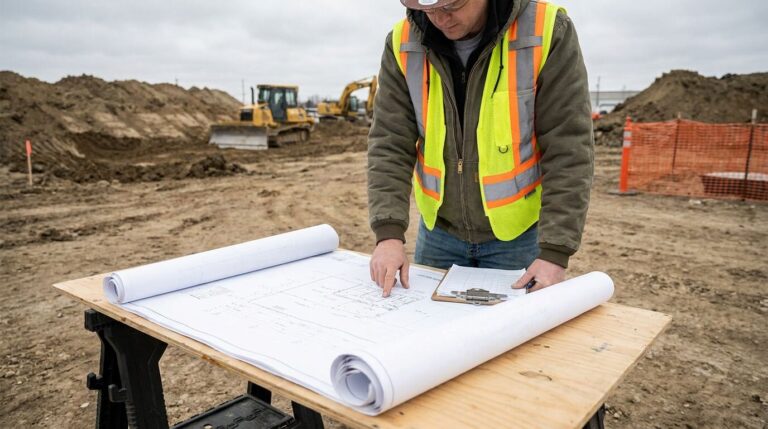
For most construction contractors, SB 205 does not require stormwater permit documentation at business-license renewal. The statute targets industrial facilities, not construction projects or the contractors who build them.
A general contractor, grading contractor or specialty trade contractor renewing a business license will not be asked for construction permit information under SB 205 unless the contractor also operates a regulated industrial facility. The city or county reviews the business's SIC codes to determine applicability, and construction contracting codes do not automatically trigger the requirement.
This distinction is important: SB 205 addresses the business entity and its primary industrial activities, while construction stormwater requirements apply to individual projects based on land disturbance. A contractor may need construction permit coverage for a project while facing no SB 205 documentation requirement at license renewal.
What are California's construction SWPPP requirements separate from SB 205?
California requires NPDES construction permit coverage for projects that disturb one acre or more of land, or smaller projects that are part of a larger common plan of development disturbing at least one acre. The State Water Resources Control Board administers the Construction General Permit through its regional boards.
Permit coverage requires filing a Notice of Intent, preparing a site-specific SWPPP, implementing erosion and sediment controls, conducting regular inspections and maintaining compliance records. These obligations are tied to the project and its land-disturbance activity, not to the contractor's business-license status.
The project owner or operator—typically the developer or general contractor—holds responsibility for obtaining coverage and ensuring compliance. Subcontractors working on a covered project must follow the SWPPP requirements but do not file separate permits for their portion of the work. Full California construction requirements are detailed in the California SWPPP requirements guide.
Can a California contractor's yard trigger SB 205 SWPPP requirements?
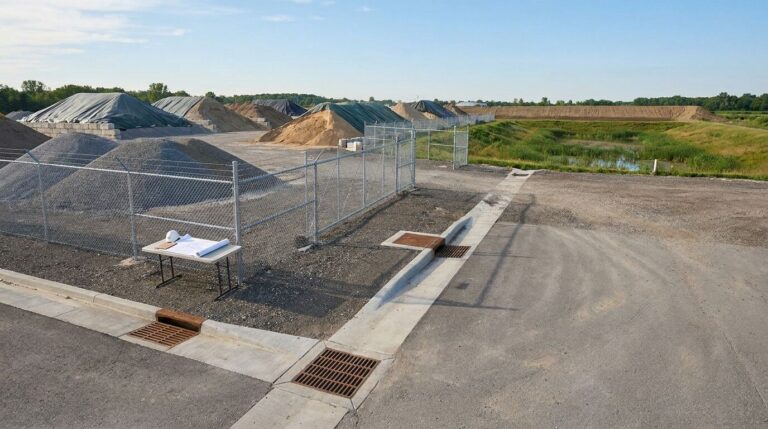
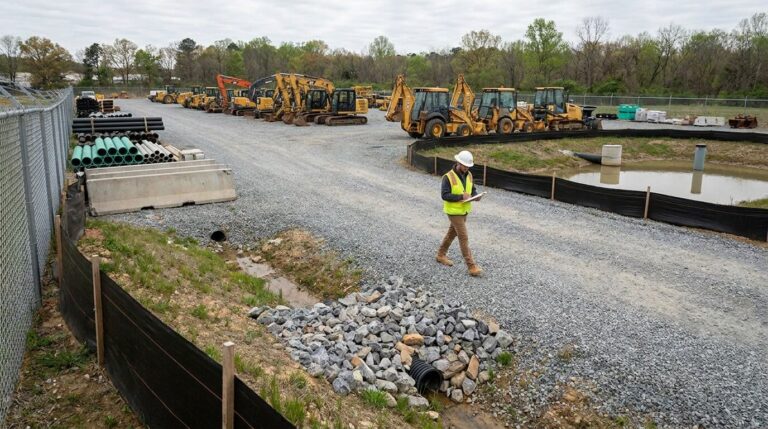
Yes, if the contractor operates a permanent facility with outdoor industrial activities exposed to stormwater. A contractor's yard used for equipment storage, material stockpiling, vehicle maintenance or concrete washout may qualify as an industrial facility subject to the Industrial General Permit.
The determination depends on the types of materials stored outdoors, the activities conducted and whether pollutants could be discharged in stormwater runoff. A simple equipment parking area with no exposed materials may not require coverage, while a yard with fuel storage, chemical handling or material processing likely does.
If the facility requires Industrial General Permit coverage, the contractor must provide the WDID number or other documentation when renewing the business license under SB 205. This requirement is separate from any construction project permits the contractor obtains for individual jobs.
Request a project-specific SWPPP estimate.
How do California construction and industrial SWPPP permits differ under SB 205?
California's Construction General Permit and Industrial General Permit serve different purposes and cover different activities. The Construction General Permit applies to temporary land-disturbance projects, while the Industrial General Permit covers ongoing operations at permanent facilities.
Construction permits require a project-specific SWPPP describing erosion and sediment controls, inspection schedules and stabilization measures. Coverage terminates when the project is complete and the site is stabilized. Industrial permits require a facility-based SWPPP addressing material storage, spill prevention, good housekeeping and monitoring, with coverage continuing as long as the facility operates.
A contractor may need both types of coverage simultaneously: construction permits for active projects and an industrial permit for the company's own yard or facility. SB 205 applies only to the industrial permit, not to construction project coverage.
What should California contractors know about SB 205 and SWPPP business licensing?
Does California SB 205 apply to every city and county for SWPPP business licensing?
Yes, SB 205 applies statewide to initial business-license applications and renewals submitted on or after January 1, 2020. Every California city and county must determine whether an applicant's business activities fall under the Industrial General Permit and request appropriate documentation. Implementation details, including any provisional renewal procedures, vary by jurisdiction.
What happens if a California contractor cannot provide SB 205 SWPPP documentation?
SB 205 itself carries no license-denial provision and no fine or civil penalty; the only consequence written into the statute is that the information is submitted under penalty of perjury. What happens next is set locally, and it varies. The statute lets a city create a provisional procedure giving a renewing business up to three months to comply, which is what Milpitas does; Sacramento County instead closes the application after 90 days and keeps the non-refundable fee; other jurisdictions simply hold the license until the form is complete. Ask the local business-license office which approach it takes rather than assume a statewide rule.
Do California construction project SWPPPs satisfy SB 205 requirements?
No. SB 205 requires documentation of Industrial General Permit coverage for the business's facility, not construction project permits. A contractor with multiple active construction projects and valid Construction General Permit coverage for each project still must provide industrial permit information if the contractor's own yard or facility is subject to the Industrial General Permit. The two permit types are not interchangeable.
How does a California contractor determine whether a facility needs industrial SWPPP coverage under SB 205?
The State Water Resources Control Board provides guidance on industrial permit applicability based on SIC codes and facility activities. Contractors should review the types of materials stored outdoors, the potential for pollutant exposure to stormwater and whether the facility's primary activities match the regulated industrial categories. When in doubt, consulting with a stormwater professional or contacting the regional water board can clarify whether coverage is required.
Does California SB 205 change construction SWPPP requirements?
No. SB 205 does not alter the requirements for construction projects. California's Construction General Permit, the one-acre threshold, SWPPP preparation, inspection schedules and compliance obligations remain unchanged. SB 205 addresses business licensing for industrial facilities, not construction project permitting. Contractors must continue to obtain construction permit coverage and prepare SWPPPs for qualifying projects regardless of SB 205.
Discuss the SWPPP scope for your project.
By Derek E. Chinners, CPESC — Founder & Stormwater Consultant, Pro SWPPP, LLC
Related: What is a SWPPP? · When is a SWPPP required? The one-acre and common-plan rule · California SWPPP requirements · California QSD and QSP requirements · Industrial facility SWPPP and MSGP requirements