When you’re building a new gas station or convenience store, Pro SWPPP – America’s #1 SWPPP Service gets one question more than any other: Do I need a SWPPP for my project? The short answer is yes, almost always. If you’re moving dirt on 1 acre or more, or you’re part of a larger development that adds up to 1 acre, you need a Stormwater Pollution Prevention Plan. The federal Clean Water Act and the EPA’s NPDES Construction General Permit make this clear. Most states run their own stricter programs, but the 1-acre trigger is the baseline everywhere. Gas stations and convenience stores almost always hit that threshold once you add up the building pad, parking lot, fuel islands, underground tanks, utilities, and access roads. This guide walks you through exactly when you need a SWPPP, who enforces it, what it costs, and how to stay compliant without slowing down your project.
Not sure whether your site crosses the threshold? Take the 60-second SWPPP quiz and find out before you break ground.
Does a Gas Station or Convenience Store Construction Project Need a SWPPP?
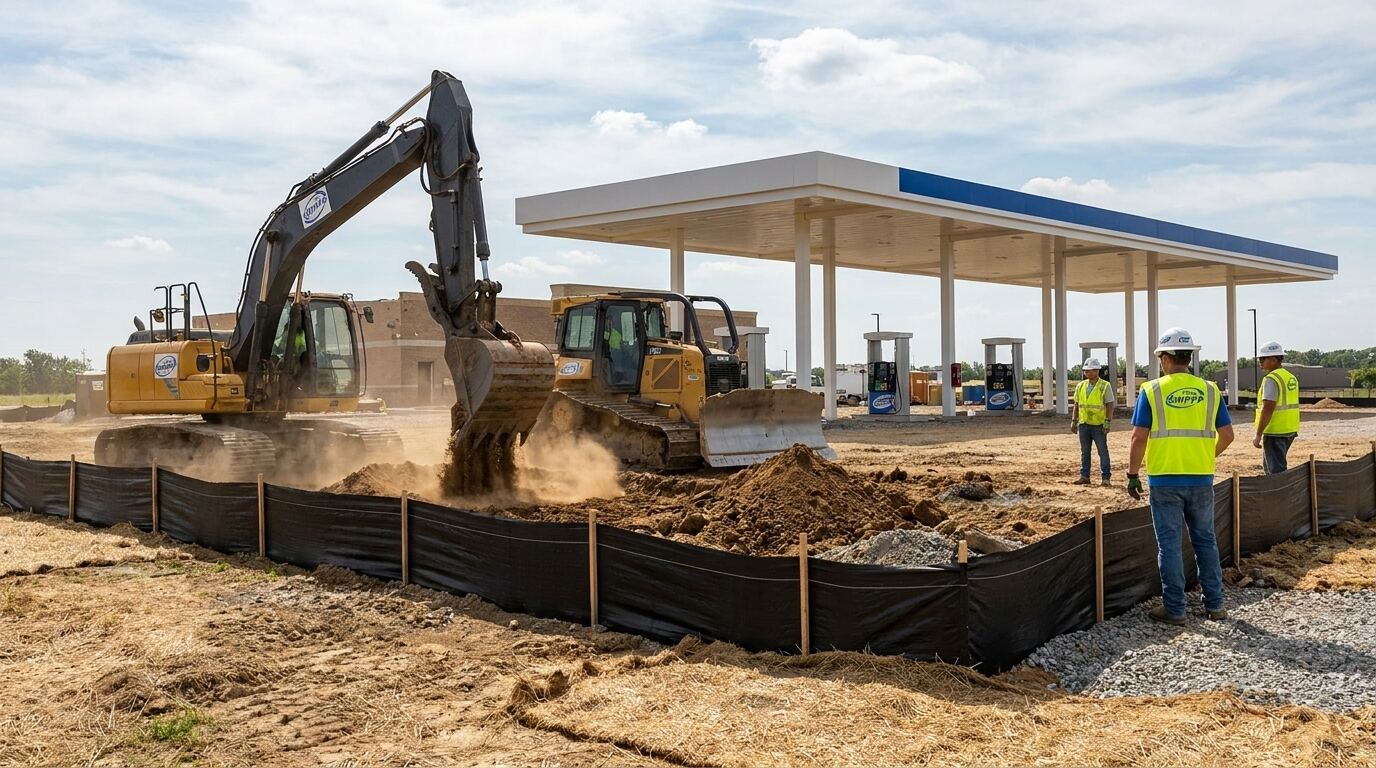
Yes. Almost every new gas station or convenience store build requires a SWPPP and federal NPDES Construction General Permit coverage. Here’s why: the EPA Construction General Permit (CGP) applies to any construction activity that disturbs 1 acre or more of land, or is part of a larger common plan of development that will ultimately disturb 1 acre or more. Most gas station projects easily exceed that threshold.
A typical gas station site includes the building, canopy, fuel islands, underground storage tanks, parking and drive lanes, stormwater management features, utilities, and off-site road or sidewalk improvements. When you add all that up, you’re looking at 1.5 to 3 acres of disturbance or more. Even smaller sites often qualify because they’re part of a larger retail center or shared parking development, making them part of a common plan.
The only time you might not need a SWPPP is if your project disturbs less than 1 acre, is not part of any larger plan, and discharges stormwater somewhere other than waters of the United States. That scenario is rare for commercial builds. If you’re tearing down an old station and rebuilding, or adding a new c-store to an existing pad, measure carefully. The moment your total disturbed area crosses 1 acre, you need permit coverage and a SWPPP before you can start grading.
What Counts as “Disturbed Land”?
Disturbed land means any area where you clear vegetation, grade, excavate, or otherwise expose soil. For a gas station, that includes:
- Building foundation and canopy footprint
- Fuel island pads and underground tank excavation zones
- Parking lots, drive aisles, and access roads
- Utility trenches for power, water, sewer, and stormwater lines
- Stormwater detention basins or infiltration areas
- Off-site improvements like turn lanes, sidewalks, or drainage swales
Add it all up before you assume you’re under the threshold. Pro SWPPP helps contractors calculate disturbed acreage accurately so you know right away if you need coverage.
The “Common Plan of Development” Rule
Even if your individual gas station pad is only 0.8 acres, you still need a SWPPP if it’s part of a larger shopping center, multi-tenant retail park, or master-planned development that totals 1 acre or more. The EPA defines a common plan as any announcement or documentation (plat, blueprint, marketing plan, zoning request) that identifies the scope of the project. If you share parking, utilities, or stormwater facilities with adjacent lots, you’re almost certainly part of a common plan.
This rule catches a lot of contractors by surprise. Always ask the property owner or developer for the full site plan and confirm the total disturbed acreage across all phases.
Who Enforces SWPPP Requirements for Gas Stations?
The federal Clean Water Act created the NPDES program, but enforcement happens at two levels: EPA in some places, and state environmental agencies in most others. You need to know which agency runs the show where you’re building.
EPA vs. State NPDES Programs
Most states have EPA-authorized NPDES programs, meaning the state environmental agency issues construction stormwater permits and enforces SWPPP requirements. States like Texas (TCEQ), Georgia (EPD), and California (SWRCB) run their own programs with rules at least as strict as the federal baseline. In those states, you file your Notice of Intent with the state, follow the state construction general permit, and deal with state inspectors.
In a handful of jurisdictions, EPA remains the permitting authority. These include Massachusetts, New Hampshire, New Mexico, the District of Columbia, most U.S. territories, and certain tribal lands. If you’re building in one of those places, you apply for coverage under the federal EPA Construction General Permit and submit your NOI to EPA. EPA maintains a current list of state program authorizations so you can confirm who’s in charge before you start.
What Enforcement Looks Like
Whether it’s EPA or your state agency, enforcement powers are serious. Inspectors can show up at your site anytime during construction to check your SWPPP, verify BMPs are installed and maintained, and review inspection logs. If they find violations, they can issue notices of violation, administrative orders to halt work, or assess civil penalties. Fines are calculated per day per violation, so a site without a SWPPP or with failing erosion controls can rack up penalties quickly.
For gas station projects, enforcement focuses on high-risk areas: fuel islands, tank excavations, large paved areas, and storm drain inlets. Inspectors know these sites have extra pollution potential, so they look harder. Pro SWPPP designs plans that anticipate inspector concerns and keep you compliant from day one.
Don’t want to mess with all the paperwork? Order your SWPPP now with Pro SWPPP Professional CPESC Certified SWPPP Services.
The Step-by-Step Process to Get Permit Coverage and a SWPPP
Getting your SWPPP and permit coverage in place before you break ground is not optional. Here’s the exact process, step by step.
Step 1: Calculate Disturbed Acreage and Determine if Coverage is Required
Measure every part of your site that will be cleared, graded, or excavated. Include the building, parking, tanks, utilities, and off-site work. If the total is 1 acre or more, or part of a larger common plan, you need coverage.
Step 2: Identify the Permitting Authority
Check whether your state runs its own NPDES construction stormwater program or if EPA issues the permit. For example, Texas SWPPP services fall under TCEQ’s Construction General Permit, while Georgia SWPPP services are managed by Georgia EPD. In Massachusetts, you’d apply to EPA Region 1.
Step 3: Prepare Your SWPPP
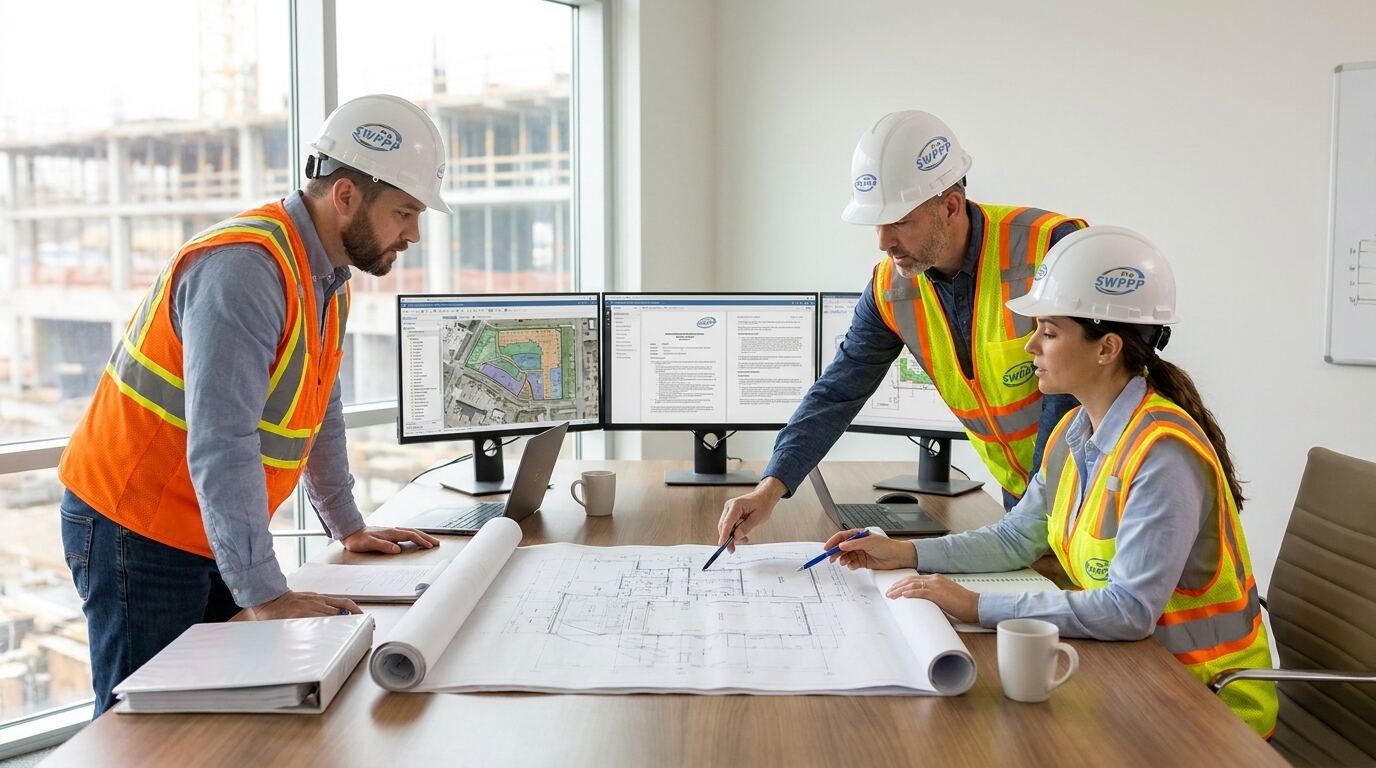
Your SWPPP must be site-specific and ready before you file your Notice of Intent. It’s not a generic template. The plan identifies pollution sources, describes best management practices (BMPs) for erosion control and stormwater pollution prevention, sets inspection schedules, and includes spill response procedures. For a gas station, the SWPPP must address fueling areas, tank excavations, dewatering, vehicle maintenance zones, and large paved surfaces.
Pro SWPPP has prepared SWPPPs for gas stations and convenience stores nationwide, backed by 180+ five-star Google reviews. We know what inspectors look for and what BMPs work in real-world conditions.
Step 4: File Your Notice of Intent (NOI)
The NOI is your application for coverage under the construction general permit. You submit it to the state environmental agency or EPA, depending on your location. The NOI includes project details, operator information, disturbed acreage, receiving waters, and a statement that your SWPPP is complete and will be implemented. Most states and EPA use electronic filing systems. You cannot start construction until your NOI is submitted and, in some states, until you receive permit authorization.
Step 5: Implement the SWPPP on Site
Once your NOI is filed and coverage is active, install your BMPs before you disturb any soil. Perimeter silt fence, inlet protection, stabilized construction entrances, sediment traps, and stockpile covers must be in place and maintained throughout construction. Your SWPPP is a living document: if site conditions change or BMPs fail, update the plan and adjust controls on the ground.
Step 6: Conduct Inspections and Keep Records
Under the 2022 EPA Construction General Permit, inspections are required at least once every seven calendar days and within 24 hours of the end of any storm event producing 0.25 inches or more (or 3.25 inches of snowmelt). The 0.5-inch figure many contractors still quote came from the older 2017 permit. Some states have stricter schedules. Document every inspection, note any deficiencies, and complete corrective actions within the timeframe the permit specifies (often 7 to 14 days). Keep all records on site and available for inspector review.
Step 7: Achieve Final Stabilization and File a Notice of Termination (NOT)
You can only terminate permit coverage after final stabilization is complete. For a gas station, that means paving is finished, landscaping is installed and established, and no bare soil remains that could erode. Once stabilization is verified, file a Notice of Termination with the permitting authority to close out your coverage.
Special BMP Concerns for Gas Stations and Convenience Stores
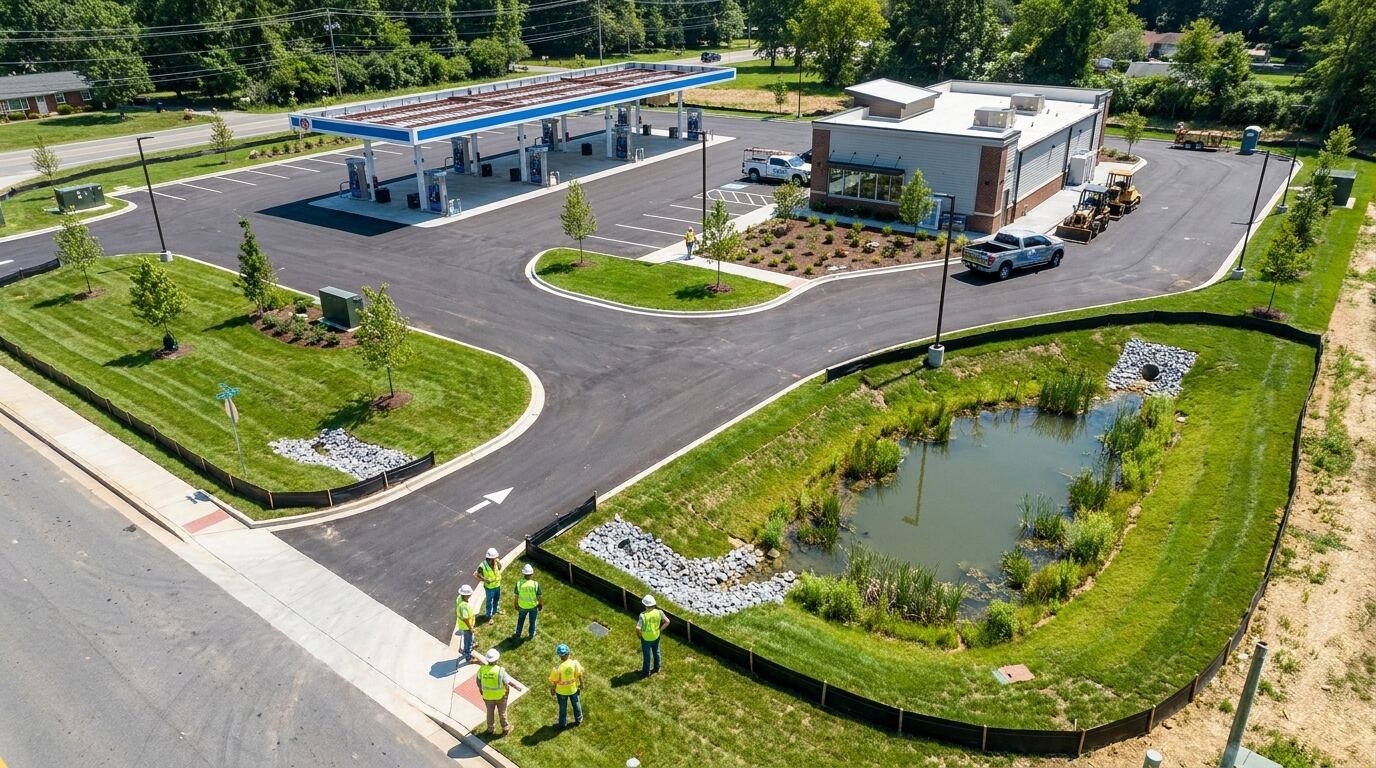
Gas stations are not ordinary commercial sites. They have unique pollution risks that require extra attention in your SWPPP and on the ground. Regulators know this, and inspectors focus on these high-risk features.
Fueling Areas and Petroleum Storage
Fueling islands, tanker offloading points, and underground storage tank excavations are the highest-risk zones on a gas station site. Spills, drips, and overflows can easily reach storm drains during construction or operations. Your SWPPP must include spill prevention and response procedures, secondary containment during tank installation, and inlet protection near fuel zones. EPA guidance recommends covering fueling areas, using spill cleanup equipment, and minimizing stormwater run-on to these areas. During construction, temporary fueling or equipment maintenance areas need the same level of protection.
Vehicle Maintenance and Washwater
Washing vehicles or equipment on site and allowing washwater to enter storm drains is a violation. Construction stormwater permits do not authorize process wastewater discharges. If you need to wash equipment, route the water to a sanitary sewer with approval, use dry cleanup methods, or collect and dispose of washwater off-site. Never hose down fueling areas or maintenance zones and let the runoff go into the street or storm system.
Dewatering Underground Tank Excavations
Large tank pits often require dewatering to keep the excavation dry for installation. Dewatering discharge to storm drains or surface waters may need a separate temporary discharge permit or additional conditions under your construction permit. For example, Indiana’s environmental agency issues temporary discharge permits for dewatering at fueling station construction sites, with specific monitoring and reporting requirements. Check with your state agency before you pump groundwater from excavations into the storm sewer or a nearby stream.
Large Paved Parking and Drive Areas
Gas stations have a lot of impervious surface: parking, drive lanes, fueling aprons, and truck access. These areas generate high volumes of stormwater runoff contaminated with oil, grease, metals, and sediment. During construction, protect storm drain inlets in these zones with sediment bags, gravel filters, or inlet inserts. Some states, like Pennsylvania, flag fueling stations and large parking lots as land uses where groundwater infiltration for stormwater management should not be used because of contamination concerns. Your SWPPP and post-construction stormwater plan must account for these heightened risks.
Not sure what your project needs? Schedule a Free SWPPP Consultation with CPESC Certified SWPPP Expert Derek E. Chinners.
Federal Baseline vs. State Programs: What’s Stricter and Where
The EPA Construction General Permit sets the minimum standard nationwide. Every state NPDES program must be at least as strict. Many states go beyond the federal floor with lower thresholds, more detailed BMP requirements, stricter inspection schedules, and special rules for high-risk land uses like gas stations.
The Federal EPA CGP Baseline
Under the EPA CGP, you need coverage if you disturb 1 acre or more (or are part of a common plan of 1 acre or more) and discharge to waters of the U.S. Your SWPPP must describe erosion and sediment controls, pollution prevention measures, and inspection procedures. Inspections are required at least once every 7 calendar days and within 24 hours of the end of any storm event of 0.25 inches or more (or 3.25 inches of snowmelt). You must correct deficiencies within 7 days or document why more time is needed. This is the floor; states can require more.
How State Programs Differ
State-run programs vary in several ways that matter for gas station projects:
- Lower acreage thresholds: Some states require permit coverage for projects disturbing less than 1 acre in sensitive watersheds or municipal separate storm sewer (MS4) areas.
- Stricter BMP standards: States in the Northeast, Pacific Northwest, and parts of the Mid-Atlantic often mandate specific erosion control practices, buffer widths, and stabilization timelines that exceed EPA minimums.
- More frequent inspections: Some states require inspections twice per week or after every rain event over 0.25 inches.
- Special permits for dewatering and washwater: As seen with Indiana’s temporary discharge permit for dewatering at fueling station construction, certain states treat these discharges separately from standard construction stormwater.
- High-risk land use designations: States like Pennsylvania explicitly call out fueling stations, large parking lots, and convenience stores as land uses requiring cautious stormwater design and often prohibit infiltration-based stormwater management due to contamination concerns.
Examples Across States
In Texas, TCEQ administers the Construction General Permit with a 1-acre threshold and standard inspection intervals, but the agency closely scrutinizes projects in impaired watersheds and near public water supplies. In Georgia, EPD’s Construction General Permit includes buffer requirements and additional controls for sites draining to certain stream segments. California’s State Water Resources Control Board enforces one of the strictest programs in the country, with risk-based permitting, numeric action levels for turbidity, and mandatory rain event action plans.
The takeaway: always confirm the specific requirements in your state. The 1-acre trigger is universal, but the details of your SWPPP, inspection schedule, and BMP installation can vary significantly. Pro SWPPP operates nationwide and knows the local rules cold.

What It Costs to Comply with SWPPP Requirements
SWPPP compliance has real costs, but they’re predictable and manageable when you plan ahead. The alternative, getting caught without a SWPPP or with failing controls, is far more expensive.
Permit Fees and SWPPP Preparation
State permit application or NOI fees vary but typically range from a few hundred to a couple thousand dollars depending on project size. SWPPP preparation by a qualified professional (civil engineer, environmental consultant, or CPESC-certified specialist) costs anywhere from $1,500 to $5,000 for a typical gas station project, depending on site complexity, slope, soil conditions, and proximity to sensitive waters. Pro SWPPP delivers professional, site-specific SWPPPs with a 72-hour turnaround at competitive rates, and we handle NOI filing for you.
BMP Installation and Maintenance
Budget for silt fence, inlet protection, stabilized construction entrances, sediment basins or traps, and stockpile covers. Installation costs depend on site size and topography but are typically a small fraction of total site work costs. Maintenance is ongoing: repairing damaged silt fence, cleaning out sediment traps, and restocking spill kits. Plan for weekly or bi-weekly maintenance visits by your site superintendent or a dedicated erosion control contractor.
Inspection and Documentation
Inspections take staff time or consultant fees. Budget a few hours per week for a qualified person to walk the site, document conditions, and update the inspection log. Some contractors hire third-party inspectors to ensure objectivity and expertise. Over a typical 6- to 12-month construction timeline, inspection costs add up but are far less than the cost of a violation.
What Happens If You Skip It
Starting construction without a SWPPP and permit coverage, or failing to maintain BMPs, can trigger stop-work orders, civil penalties, and project delays. Federal and state laws authorize penalties of thousands of dollars per day per violation. A site with multiple violations (no permit, no BMPs, sediment leaving the site, contaminated discharges) can face tens of thousands in fines, not to mention the cost of emergency corrective actions, legal fees, and schedule impacts. Compliance is always cheaper than enforcement.
Common Violations and How to Avoid Them
Gas station and convenience store projects get hit with the same violations over and over. Here’s what inspectors find most often and how to prevent it.
Starting Work Without Permit Coverage or a SWPPP
This is the most common and most serious violation. Contractors assume they can file the NOI “later” or don’t realize the 1-acre threshold applies to them. By the time they find out, dirt is already moving and sediment is leaving the site. File your NOI and have your SWPPP ready before the first piece of equipment touches the ground.
Failing to Install or Maintain BMPs
Silt fence installed but never repaired after a storm, inlet protection missing or clogged, stabilized entrances that are just mud pits—these are easy targets for inspectors. Walk your site regularly, fix problems immediately, and document everything.
Discharging Washwater or Contaminated Dewatering Flows
Hosing down equipment or fueling areas and letting the water go into the street or storm drain is illegal. Pumping groundwater from tank excavations into a storm drain without a separate permit is also a violation in many states. Know the rules for dewatering and washwater in your jurisdiction before you start.
Not Performing or Documenting Inspections
Your permit requires regular inspections and written records. If an inspector shows up and you have no logs, that’s a violation even if your BMPs look good. Use a standard inspection form, take photos, and keep the logs on site.
Terminating Coverage Before Final Stabilization
Filing your Notice of Termination too early, before paving and landscaping are complete, is a violation. Wait until the site is fully stabilized and you’ve completed any required post-construction stormwater features.
Pro SWPPP helps contractors avoid these pitfalls with clear, site-specific plans, inspection templates, and ongoing support. We’ve seen it all and know how to keep you compliant.
No Exemption for Gas Stations: Why Retail Fueling is Not “Oil and Gas Construction”
Some contractors mistakenly believe gas stations get an exemption under federal oil and gas rules. They don’t. The EPA Construction General Permit exempts certain oil and gas exploration and production construction activities under 40 CFR 122.26(c). That exemption covers upstream operations like drilling rigs, well pads, pipelines, and field processing facilities. It does not cover retail gasoline dispensing facilities.
Gas stations and convenience stores are treated as standard commercial construction. If your project disturbs 1 acre or more, you need a SWPPP and permit coverage, period. There is no special carve-out for fuel retailers. This confusion comes up often, and it’s important to clear it up early so you don’t start a project assuming you’re exempt.
Why Pro SWPPP is the SWPPP Service Contractors Trust
When your gas station or convenience store project needs a SWPPP, you need a partner who knows the regulations, understands construction, and delivers fast. That’s Pro SWPPP – America’s #1 SWPPP Service.
CPESC Certified, 20+ Years in Stormwater Compliance
Our lead expert, Derek E. Chinners, is a Certified Professional in Erosion and Sediment Control (CPESC) leading a family-owned firm with 20+ years in stormwater compliance, preparing SWPPPs and supporting contractors nationwide. CPESC certification is the gold standard in the stormwater industry. When an inspector sees a CPESC-prepared SWPPP, they know it’s done right. We’ve worked on gas station and c-store projects from small-town single-pump sites to multi-site fuel chains, and we know what works.
Want a number before you commit? Get a free SWPPP estimate for your site.
Nationwide Coverage, One Trusted Partner
Pro SWPPP operates nationwide, including Texas, Georgia, Florida, California, and many more. We understand the differences between EPA’s CGP and state-specific permits. We know which states require separate dewatering permits, which have stricter inspection schedules, and which flag gas stations as high-risk land uses. Whether you’re building in Texas, Georgia, or anywhere else, we deliver a SWPPP that meets local requirements.
72-Hour Turnaround
Speed matters in construction. We deliver professional, site-specific SWPPPs in 72 hours or less. No generic templates, no delays. You send us your site plan and project details, and we turn around a complete SWPPP ready for permit filing. Fast doesn’t mean sloppy. Every plan is tailored to your site and reviewed by our CPESC team before it goes out the door.
Full-Service Support: NOI Filing, Inspections, and Compliance Assistance
We don’t just hand you a binder and walk away. Pro SWPPP handles NOI filing, prepares inspection forms and logs, provides on-site training, and offers ongoing compliance support throughout your project. If an inspector shows up or you have a question about a failed BMP, we’re a phone call away. Get a free SWPPP estimate anytime, or learn more about our team and services.
Proven Track Record
Contractors nationwide trust Pro SWPPP because we deliver results, and our 180+ five-star Google reviews say so. Our plans pass inspector review, our clients stay compliant, and projects stay on schedule. We’ve prepared SWPPPs for every type of gas station and convenience store project: new builds, tear-down rebuilds, expansions, and multi-site rollouts. We know the risks, the regulations, and how to keep you out of trouble.
FAQ
Do I need a SWPPP if my gas station project is less than 1 acre?
Usually no, unless your project is part of a larger common plan of development that totals 1 acre or more. If your site is a standalone build under 1 acre with no connection to a larger development, you likely do not need NPDES permit coverage or a SWPPP. Check with your local permitting authority, because some states and municipalities have their own erosion control requirements for smaller sites.
How long does it take to get a SWPPP and permit coverage?
Pro SWPPP delivers a complete, site-specific SWPPP in 72 hours. Filing the Notice of Intent (NOI) typically takes a few days to a couple of weeks depending on the state and whether you use electronic or paper filing. Some states issue permit coverage immediately upon NOI acceptance, while others have a short review period. Plan for 1 to 3 weeks from start to finish, and always begin the process before you need to break ground.
What happens if I start construction without a SWPPP?
Starting construction without permit coverage and a SWPPP is a violation of the Clean Water Act and state environmental laws. EPA or your state environmental agency can issue a stop-work order, assess civil penalties (often thousands of dollars per day per violation), and require corrective actions before you can resume. You may also face delays, increased costs, and legal liability. It’s always better to get your SWPPP and permit in place before the first shovel hits the dirt.
Do gas stations get any special exemptions from SWPPP requirements?
No. Gas stations and convenience stores are standard commercial construction projects and do not qualify for the oil and gas exploration and production exemption found in federal regulations. That exemption applies to upstream drilling, pipelines, and field facilities, not retail fuel dispensing. If your project disturbs 1 acre or more, you need a SWPPP and permit coverage just like any other commercial build.
Can Pro SWPPP handle my project in multiple states?
Absolutely. Pro SWPPP operates nationwide and has deep experience with both EPA’s Construction General Permit and dozens of state-specific construction stormwater permits. Whether you’re building one station or rolling out a dozen sites across the country, we deliver consistent, compliant SWPPPs tailored to each state’s requirements. We also handle NOI filing and ongoing compliance support nationwide.
How much does a SWPPP cost for a gas station project?
Costs vary based on site complexity, but Pro SWPPP delivers professional, CPESC-certified SWPPPs at competitive rates. For a typical gas station or convenience store build, plan on $1,500 to $5,000 for SWPPP preparation, depending on project size and risk factors. Permit fees are set by the state or EPA and typically range from a few hundred to a couple thousand dollars. BMP installation and maintenance are part of your site work budget. The bottom line: compliance is affordable, and violations are expensive.
What if I need help during construction or an inspector shows up?
Pro SWPPP provides ongoing support throughout your project. If you have a question about BMPs, need help with inspection logs, or get a notice from an inspector, we’re here. Schedule a consultation with our CPESC expert Derek E. Chinners anytime, and we’ll walk you through the issue and help you resolve it quickly.
Ready to get started? Order your SWPPP now or schedule a free consultation with Pro SWPPP.
Visit Pro SWPPP and see why contractors nationwide rate us 180+ five-star Google reviews.
By Derek E. Chinners, CPESC — Founder & Stormwater Consultant, Pro SWPPP, LLC
Related: What Is a SWPPP? · When Is a SWPPP Required? The 1-Acre Rule and Common Plans · Texas SWPPP Requirements (SWP3) · Georgia SWPPP Requirements