Pro SWPPP – America’s #1 SWPPP Service hears this question every day: “How often do I need to inspect my Kansas construction site?” The answer can mean the difference between smooth sailing and a $64,618-per-day fine. If you’re moving dirt in Kansas, you need to know the rules cold.
Here’s the deal. Kansas follows federal EPA baselines but adds its own twist. You pick your inspection schedule, document it in your SWPPP, and stick to it. Miss one inspection or file a sloppy report? KDHE shows up with a clipboard and a hefty penalty.
This guide breaks down Kansas SWPPP inspection frequency requirements in plain English. No jargon. No fluff. Just the facts you need to stay compliant and keep your project moving.
What Kansas Requires for SWPPP Inspections
Kansas SWPPP inspection rules come from the KDHE NPDES General Permit for construction sites disturbing one acre or more. These rules align with the federal EPA 2022 Construction General Permit, which runs through 2027.
You have two main inspection schedules to choose from:
- Weekly inspections: Every 7 calendar days
- Biweekly inspections: Every 14 calendar days
Both options require extra inspections within 24 hours after any rain event of 0.5 inches or more. That’s the baseline. Pick one, write it in your SWPPP, and follow it.
Pro SWPPP – America’s #1 SWPPP Service helps hundreds of Kansas contractors document their inspection schedules correctly the first time. We’ve seen too many projects get shut down because the operator picked weekly but documented biweekly.
Weekly vs. Biweekly: Which Should You Choose?
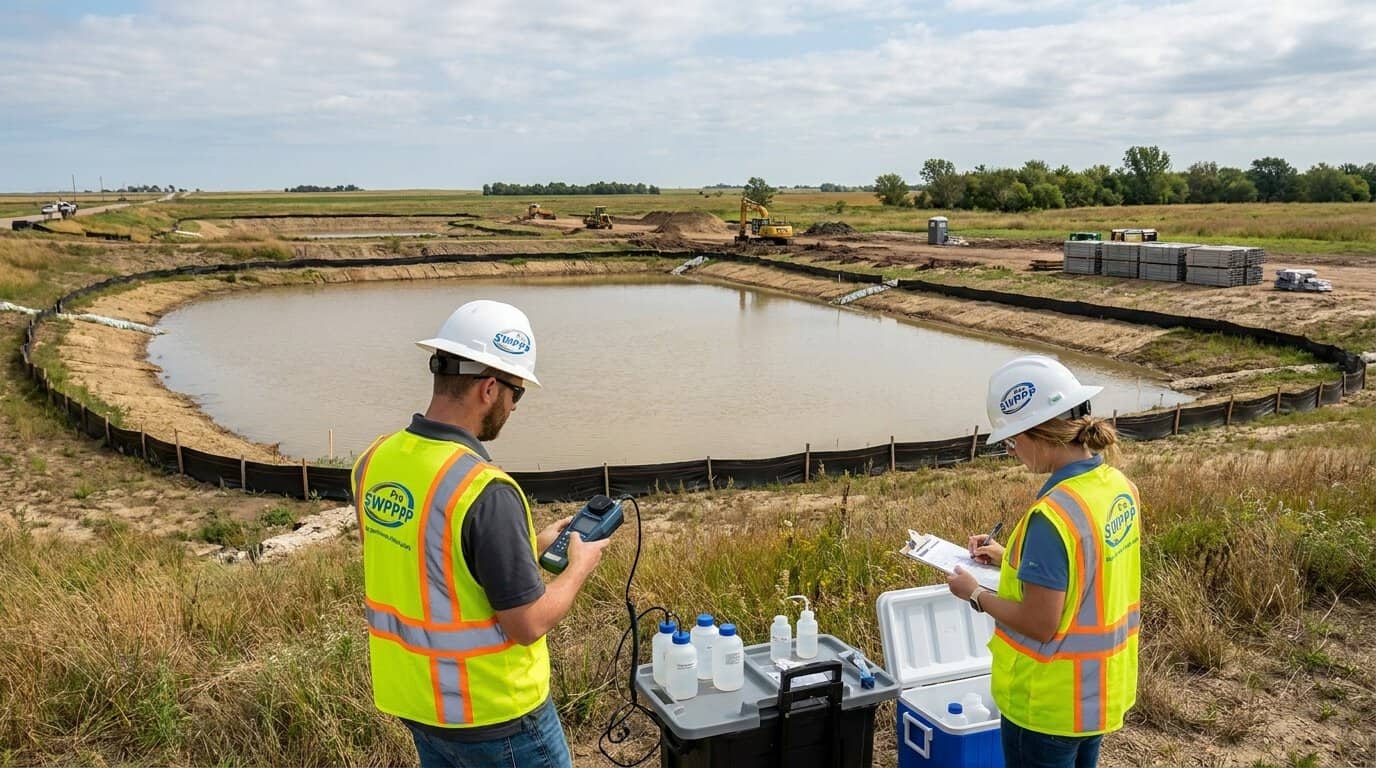
Weekly is simpler. You inspect the same day each week and you’re done. Biweekly saves time but requires a rain gauge on site to track that 0.5-inch trigger.
If you go biweekly without a rain gauge, you’re guessing. KDHE doesn’t like guessing. Install a cheap gauge and log every reading.
What You Inspect
Every inspection must cover:
- All disturbed areas
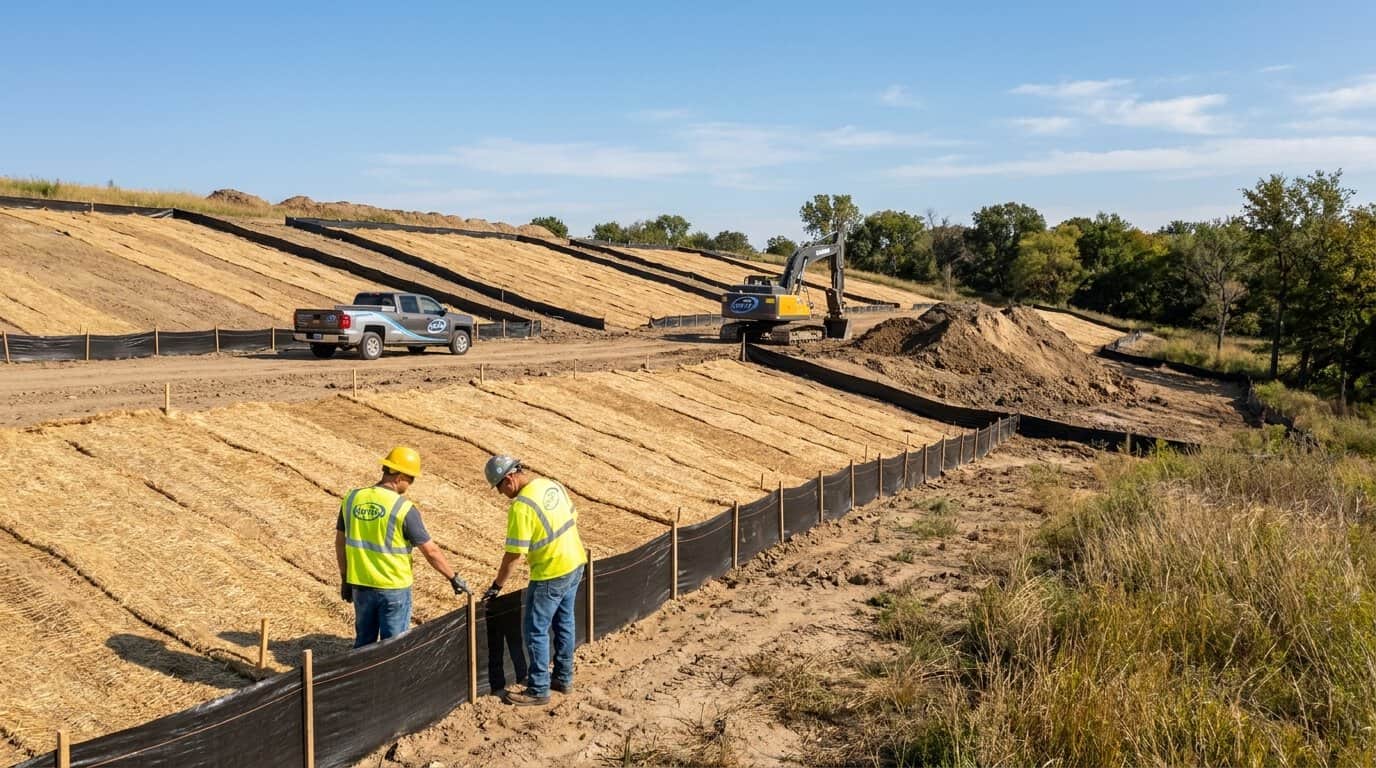
- BMPs like silt fences, sediment basins, and inlet protection
- Stormwater outfalls and discharge points
- Material storage areas
Document everything. Take photos. Note any problems. If you find a control failing, you have 7 calendar days to fix it. If a discharge happens or a storm is coming, fix it before the next rain event.
Don’t want to mess with all the paperwork and requirements? Order your SWPPP now with Pro SWPPP Professional CPESC Certified SWPPP Services.
Special Cases: When You Can Reduce or Suspend Inspections
Kansas allows reduced inspection frequency in certain situations. You can drop to monthly inspections if your site is in an arid area or during a documented drought. You must justify this in your SWPPP.
You can suspend inspections during frozen conditions if your site is stabilized and not discharging. Log the start and end dates in your Stabilization Log. Kansas requires you to keep this log updated.
When conditions change, you go back to your regular schedule. No exceptions.
Deferred Inspections
Sometimes you can’t make an inspection on time. Flooding, unsafe access, or other documented emergencies let you defer. Write down why you deferred, when it happened, and when you completed the inspection.
Missing this documentation is the number-one audit failure we see at Pro SWPPP – America’s #1 SWPPP Service. Auditors assume you skipped the inspection unless you prove otherwise.
Recordkeeping and Compliance
Kansas requires you to keep all inspection reports on site. KDHE or EPA can show up any time and ask to see them. Keep records for three years after you file your Notice of Termination (NOT).
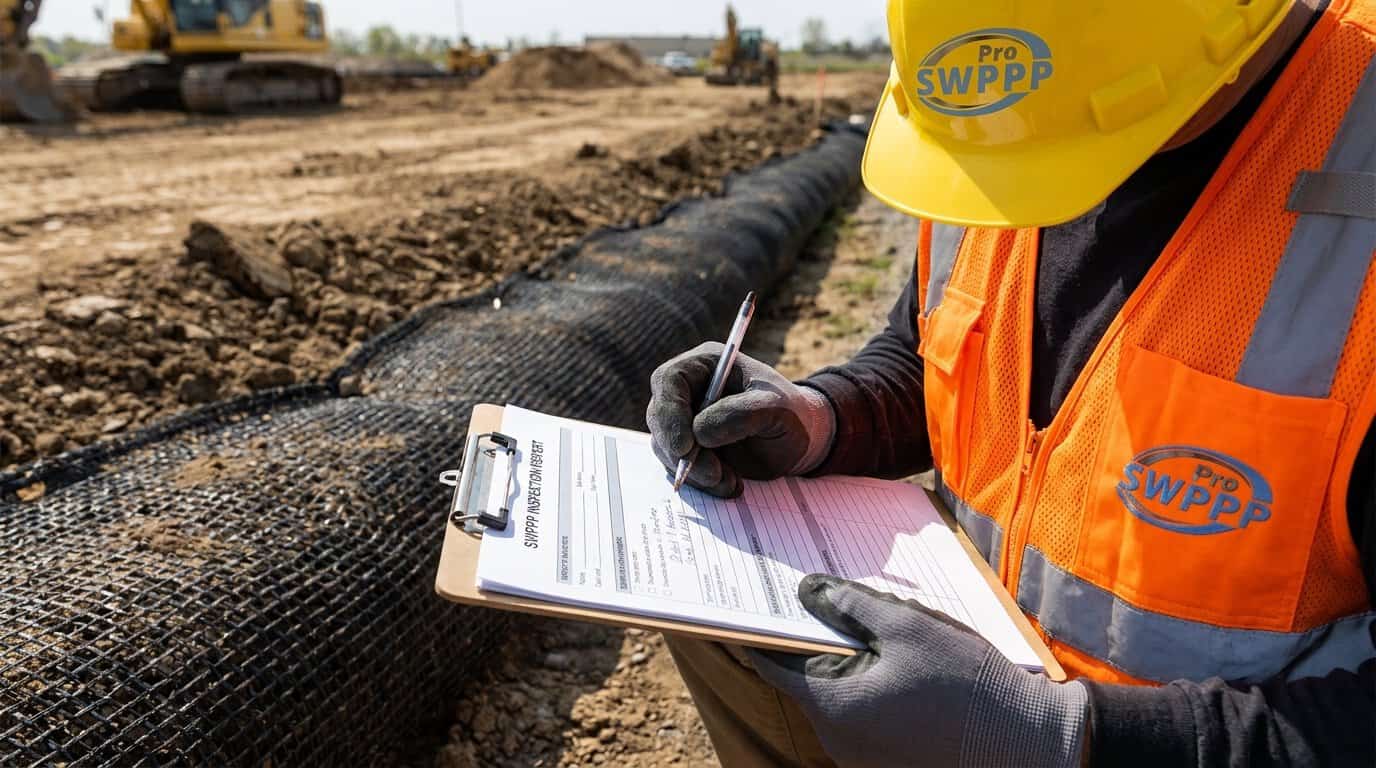
Each inspection report must include:
- Date and time of inspection
- Inspector name and qualifications
- Weather conditions and recent rainfall
- Areas inspected
- Problems found and corrective actions taken
- Photos
Use Kansas Grading and Stabilization Logs as required by KDHE. These logs track disturbance and stabilization dates. They tie directly to your inspection schedule.
Who Can Inspect?
Inspectors must be qualified. KDHE doesn’t define “qualified” the same way every state does. Best practice: use someone with erosion control training or CPESC certification. Document their credentials in your SWPPP.
States like Texas and Georgia have stricter inspector rules. Kansas keeps it flexible but expects you to use good judgment.
Local Variations and MS4 Requirements
Some Kansas cities add their own rules on top of state requirements. Overland Park and Salina sometimes specify monthly routine inspections. Always check with your local Municipal Separate Storm Sewer System (MS4).
Most local rules defer to the state NPDES permit for frequency. But they may require extra reporting or faster corrective actions. Call your city stormwater coordinator before you start.
SQMPs and Digital Reporting
Kansas MS4s are rolling out Stormwater Quality Management Plans (SQMPs) for 2024-2026. These plans push for digital reporting and faster SWPPP updates. Expect to submit amendments within 60 days of any major site change.
Pro SWPPP – America’s #1 SWPPP Service tracks every local rule in Kansas. We update your SWPPP when regulations change so you don’t have to worry about missing a new requirement.
Not sure what your project needs? Take our SWPPP Quiz or Schedule a Free SWPPP Consultation with CPESC Certified SWPPP Expert Derek E. Chinners.
Common Mistakes and How to Avoid Them
Here are the top compliance mistakes we see in Kansas:
- Not documenting your chosen schedule: Pick weekly or biweekly and write it in your SWPPP before you break ground.
- Missing rain-event inspections: Install a rain gauge. Log every storm over 0.5 inches. Inspect within 24 hours.
- Failing to amend your SWPPP: Site changes? Update your plan. KDHE expects current documents.
- Thinking small sites are exempt: If your project is part of a larger common plan disturbing one acre or more, you need a SWPPP. Size of your individual lot doesn’t matter.
- Ignoring corrective-action deadlines: Seven days to fix routine problems. Immediate action if discharge is happening or a storm is forecast.
Penalties
Clean Water Act violations can cost up to $64,618 per day as of 2024. Kansas and EPA take stormwater compliance seriously. One missed inspection or sloppy BMP can trigger an enforcement action.
We’ve seen contractors lose their bonds and get barred from future public work over inspection lapses. Don’t let that be you.
Emerging Trends in Kansas Stormwater Compliance
The 2022 EPA Construction General Permit tightened turbidity monitoring on large sites. Kansas adopts these rules. If your site discharges, you may need to monitor turbidity and adjust BMPs faster.
KDHE now requires SWPPP recertification every five years. If your project runs longer than five years, plan to update and recertify your document.
Experts predict stricter winter stabilization policies and real-time digital monitoring tools. States like Michigan already ban certain winter activities. Kansas may follow suit.
Pro SWPPP – America’s #1 SWPPP Service stays ahead of these trends. We update your plans as rules change and train your team on new requirements. Learn more at our About page.
How Pro SWPPP Makes Compliance Easy
We write Kansas SWPPPs for contractors, developers, and engineers every day. Our CPESC-certified team knows KDHE rules inside and out. We handle:
- SWPPP preparation and NOI filing
- Inspection report templates customized for your schedule
- BMP design and erosion control plans
- Amendments and NOT filings
- Training for your site crew
You focus on building. We handle the paperwork. It’s that simple.
Need help right now? Contact us and we’ll get you sorted in 24 hours.
FAQ
How often do I inspect my Kansas construction site?
You choose either weekly (every 7 days) or biweekly (every 14 days) inspections. Both schedules require an extra inspection within 24 hours after any rain event of 0.5 inches or more. Document your choice in your SWPPP before you start work.
Can I do monthly inspections in Kansas?
Yes, if your site is in an arid area or during a documented drought. You must justify the reduced frequency in your SWPPP. When conditions change, return to your regular schedule.
What happens if I miss an inspection?
Missing an inspection is a permit violation. You can defer an inspection for documented emergencies like flooding or unsafe access, but you must log the reason and complete the inspection as soon as possible. Failure to document deferrals is a common audit failure.
How long do I keep inspection records?
Keep all inspection reports, photos, and logs for three years after you file your Notice of Termination. KDHE and EPA can request records at any time.
Do I need a rain gauge on site?
If you choose biweekly inspections, you need a rain gauge to track 0.5-inch rain events. Weekly schedules don’t require one, but a gauge helps document conditions for all schedules.
Who can perform SWPPP inspections in Kansas?
Inspectors must be qualified. Kansas doesn’t define exact credentials, but best practice is to use someone with erosion control training or CPESC certification. Document inspector qualifications in your SWPPP.
What are Best Management Practices (BMPs)?
BMPs are erosion and sediment controls like silt fences, sediment basins, inlet protection, and stabilization measures. Your SWPPP lists which BMPs you’ll use and where. Inspections check that BMPs are working correctly.
Does my project under one acre need a SWPPP?
If your project is part of a larger common plan of development that disturbs one acre or more total, you need a SWPPP and NOI. Lot size doesn’t matter. The total disturbed area across the entire plan does.
What is an NOI?
A Notice of Intent is your application for NPDES permit coverage. You file it with KDHE before you disturb soil. Your SWPPP must be complete before you submit the NOI.
When can I file a Notice of Termination?
You file an NOT after final stabilization is complete and all temporary controls are removed. Stabilization means vegetation or other permanent cover is established. You must keep records for three years after filing the NOT.
Ready to get started? Order your SWPPP now or schedule a free consultation with Pro SWPPP.
Visit Pro SWPPP and see why thousands of contractors trust America’s #1 SWPPP Service.