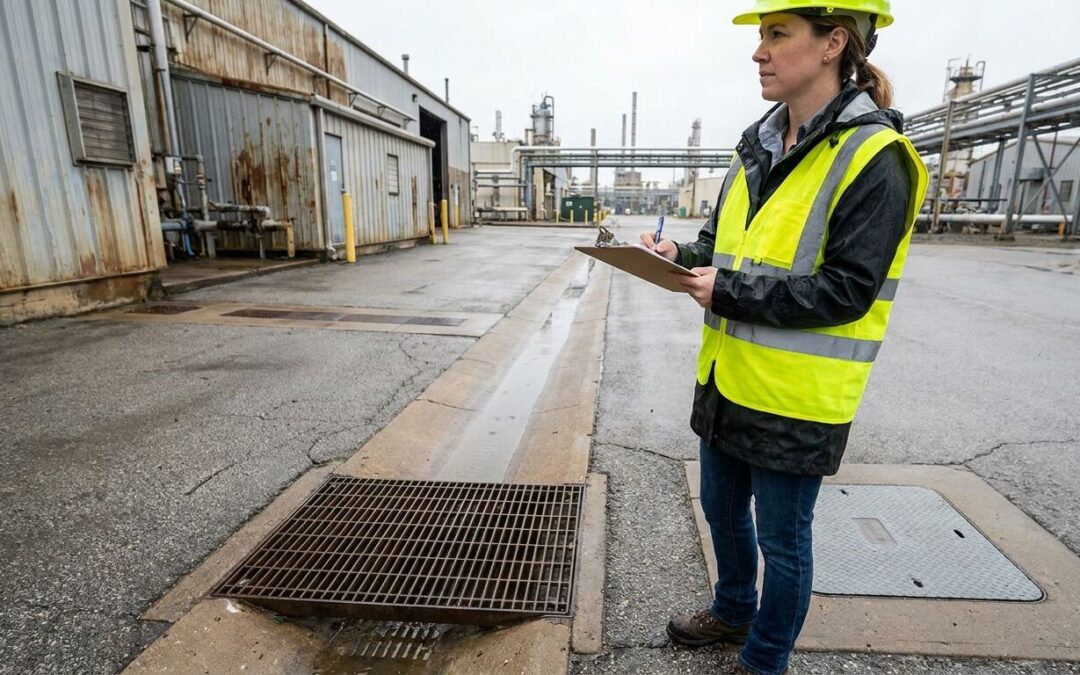
Under EPA's 2021 Multi-Sector General Permit, AIM Level 1 requires SWPPP review and implementation of necessary control measures within 14 days of laboratory results, or 45 days if documented as infeasible. Level 2 requires additional pollution-prevention and source-control measures. Level 3 requires permanent structural source-control or treatment technologies for the exceeded pollutant.
Pro SWPPP prepares stormwater plans for contractors nationwide.
Permit status note: EPA's 2021 MSGP expired on February 28, 2026 and has been administratively continued under 40 CFR 122.6, so it remains in force for operators that were already covered before it expired. The AIM provisions below are those of the 2021 permit and still govern those facilities. EPA proposed a 2026 MSGP in December 2024 and the comment period closed May 19, 2025, but no final 2026 permit has been issued. New facilities cannot obtain coverage under the continued permit — see MSGP coverage during the 2026 transition.
Not sure whether your project needs a SWPPP? Take the SWPPP quiz.
What triggers an AIM requirement under the MSGP for industrial SWPPPs?
An AIM triggering event occurs when the average of four quarterly benchmark monitoring results exceeds the applicable benchmark for a pollutant parameter at a specific discharge point. Before four quarterly samples are available, a triggering event also occurs if one sample—or the sum of samples collected during the monitoring year—exceeds four times the benchmark, demonstrating that the four-quarter average will necessarily exceed it.
The triggering event is determined per pollutant parameter and per affected discharge point. If a facility has multiple outfalls and multiple parameters, each combination is evaluated separately. A benchmark exceedance at one outfall for total suspended solids does not automatically trigger AIM for other outfalls or other pollutants.
Once a triggering event occurs, the operator must continue quarterly monitoring for that parameter at the affected discharge point and advance through the AIM levels sequentially. The levels may not be skipped, and each level builds on the previous response.
Two framing points are worth stating plainly. First, AIM only reaches facilities that are subject to benchmark monitoring at all: benchmark parameters are assigned by sector in Part 8, so a facility in a sector with no numeric benchmarks never enters the AIM ladder. Second, a benchmark exceedance is not itself a permit violation. Part 1.6 says so explicitly, because benchmarks are not effluent limits. What creates the violation is failing to carry out the required AIM response within its deadline.
These EPA MSGP requirements apply only in areas where EPA is the permitting authority. States and territories with delegated NPDES authority may administer separate industrial stormwater permits with different benchmark, exceedance, and response provisions.
What does AIM Level 1 require for MSGP benchmark exceedances in industrial SWPPPs?
A triggering event while in baseline status places the operator in AIM Level 1. The operator must review the SWPPP and existing stormwater control measures, determine whether modifications or additional control measures are necessary, and implement any necessary modifications or controls.
Necessary Level 1 modifications or controls must generally be implemented within 14 days after receiving laboratory results. If implementation within 14 days is infeasible, the operator must document the infeasibility under Part 5.3 of the permit and implement the measures within 45 days.
The operator must continue quarterly benchmark monitoring for the triggering parameter and affected discharge point throughout Level 1 and beyond. The Level 1 response focuses on reviewing and adjusting existing practices rather than installing new structural controls.
See the SWPPP plan request form.
What does AIM Level 2 require for continued MSGP benchmark exceedances in industrial SWPPPs?
The operator advances from Level 1 to AIM Level 2 when the Level 1 response has been completed and continued quarterly monitoring produces another AIM triggering event for the same parameter. At Level 2, the operator must review the SWPPP again and implement additional pollution-prevention and good-housekeeping source-control measures beyond the Level 1 response.
The Level 2 measures must be selected using good engineering practices and would reasonably be expected to bring the discharge below the benchmark. The operator must continue quarterly monitoring for the parameter at the affected discharge point.
Level 2 measures use the same 14-day deadline as Level 1, or 45 days when 14-day implementation is infeasible with the required documentation. The emphasis at Level 2 is on additional source-control and pollution-prevention measures rather than structural treatment technologies.
What does AIM Level 3 require for persistent MSGP benchmark exceedances in industrial SWPPPs?
The operator advances from Level 2 to AIM Level 3 when the Level 2 response has been completed and continued quarterly monitoring produces another AIM triggering event for the same parameter. At Level 3, the operator must install one or more permanent structural source-control or treatment technologies appropriate for the exceeded pollutant.
Level 3 has its own clock, and it is the deadline most often misstated. The operator must identify the installation schedule within 14 days of receiving the laboratory results and complete installation within 60 days. If 60 days is infeasible, the operator documents that under Part 5.3 and installs within 90 days, and EPA may grant an extension beyond 90 days on an appropriate demonstration. The controls must be more rigorous than the pollution-prevention and good-housekeeping measures used at Level 2, must have pollutant-removal efficiencies sufficient to bring the discharge below the benchmark, and must be installed at the affected discharge point and at any substantially identical discharge points, unless those are monitored individually and shown not to trigger Level 3. Level 3 is the most intensive response tier and the one that requires capital investment.
If the same benchmark continues to be exceeded after compliance with AIM Level 3, EPA may require the operator to apply for an individual permit. The individual permit process allows EPA to impose facility-specific requirements tailored to the site's discharge characteristics.

Can an operator return to baseline status after an MSGP AIM trigger for industrial SWPPPs?
Yes. An operator returns directly to baseline status once the response required at its current AIM level has been completed and four quarters of continued benchmark monitoring pass with no new triggering event for that parameter. That reset rule sits with the level provisions themselves, in Parts 5.2.1 and 5.2.3 through 5.2.5 — not with the exceptions, which are a separate mechanism.
Part 5.2.6 holds five named exceptions that can take an exceedance out of AIM at any level: an exceedance solely attributable to natural background pollutant levels; one caused by run-on from a neighboring source, which requires EPA concurrence; one due to an abnormal event, available once per parameter per discharge point and requiring a clean sample at the next measurable storm event; an aluminum-and-copper-only exception using derived facility-specific criteria; and a demonstration that the discharge results in no exceedance of water quality standards, which must be submitted within 30 days and which EPA reviews within 90. Natural background expressly excludes legacy pollutants from earlier activity on the site and non-natural run-on from roadways or other industrial sources. Note that corrective action already taken is not one of the five; ordinary corrective actions are a separate obligation under Part 5.1.
Returning to baseline status does not eliminate the requirement to continue quarterly monitoring for the parameter at the affected discharge point. The operator must demonstrate sustained compliance through continued monitoring before any monitoring frequency reduction may be considered under the permit's provisions.
Request a project-specific SWPPP estimate.
Do state-administered industrial SWPPPs have the same AIM requirements as the MSGP?
States with NPDES delegation may issue and administer their own industrial stormwater general permits, which must be checked separately for their benchmark, exceedance, response, deadline, and exception provisions. The EPA 2021 MSGP requirements apply only to coverage under EPA's permit in areas where EPA is the permitting authority.
The EPA permit should not be treated as a nationwide minimum requirement for every state program. State-administered permits may have different benchmark values, different triggering thresholds, different response timelines, or different terminology for corrective action levels.
Operators must determine which permit applies to their facility based on location and permitting authority. If a facility is in a state with delegated NPDES authority, the operator must consult that state's industrial stormwater general permit for the applicable benchmark monitoring and corrective action requirements.
What else should operators know about MSGP AIM benchmark exceedance requirements for industrial SWPPPs?
Are MSGP AIM levels applied separately for each pollutant and outfall in industrial SWPPPs?
Yes, AIM levels are determined per pollutant parameter and per affected discharge point. A facility may be in AIM Level 1 for total suspended solids at Outfall 001, AIM Level 2 for total zinc at Outfall 002, and baseline status for all other parameters and outfalls. Each combination is tracked and responded to independently.
Can an operator skip from MSGP AIM Level 1 directly to Level 3 for industrial SWPPPs?
No, the AIM levels are sequential and may not be skipped. An operator must complete the Level 1 response, experience another triggering event, complete the Level 2 response, and experience yet another triggering event before advancing to Level 3. The sequential structure ensures that less costly and less disruptive measures are attempted before requiring structural controls.
What documentation is required when the MSGP 14-day AIM deadline is infeasible for industrial SWPPPs?
When implementation within 14 days is infeasible, the operator must document the infeasibility under Part 5.3 of the permit. The documentation must explain why the measure cannot be implemented within 14 days and must be maintained as part of the SWPPP. The operator must then implement the measures within 45 days of receiving the laboratory results.
Does the MSGP specify which structural controls to install at AIM Level 3 for industrial SWPPPs?
No, the permit requires the installation of one or more permanent structural source-control or treatment technologies appropriate for the exceeded pollutant but does not prescribe specific technologies. The operator must select technologies using good engineering practices that would reasonably be expected to bring the discharge below the benchmark. The selection must be documented and comply with the design, implementation, and documentation provisions in Part 5.2.5.
What happens if MSGP benchmarks continue to be exceeded after AIM Level 3 compliance for industrial SWPPPs?
If the same benchmark continues to be exceeded after compliance with AIM Level 3, EPA may require the operator to apply for an individual permit. The individual permit process allows EPA to impose facility-specific requirements, monitoring schedules, and numeric effluent limitations tailored to the site's discharge characteristics and receiving water conditions.
Discuss the SWPPP scope for your project.
By Derek E. Chinners, CPESC — Founder & Stormwater Consultant, Pro SWPPP, LLC
Related: What is a SWPPP? · When is a SWPPP required? The one-acre and common-plan rule · MSGP compliance guide for industrial SWPPPs · Industrial facility SWPPP requirements · No Exposure Certification