
Rhode Island's 2026 RIPDES Construction General Permit takes effect September 27, 2026, replacing the interim 2025 permit. Key changes include express turbidity monitoring for dewatering discharges, site-stabilization photographs required for termination, and differentiated submission packages based on project size.
Pro SWPPP prepares stormwater plans for contractors nationwide.
Not sure whether your project needs a SWPPP? Take the SWPPP quiz.
What is Rhode Island's 2026 RIPDES Construction General Permit for SWPPP compliance?
The 2026 RIPDES Construction General Permit is Rhode Island's statewide permit for construction stormwater discharges, administered by the Rhode Island Department of Environmental Management (RIDEM) under the state's delegated RIPDES program. It takes effect September 27, 2026, the day after the interim 2025 permit expires, and remains valid through September 27, 2031.
Rhode Island holds EPA delegation to administer its own construction stormwater program. The 2026 permit is the controlling document for covered construction activity in Rhode Island, not EPA's federal 2022 CGP. RIDEM incorporated changes from the federal permit and EPA's April 2025 modifications to improve alignment, but the 2026 permit remains a state-issued RIPDES permit with Rhode Island-specific requirements.
Contractors disturbing at least one acre, or disturbing less than one acre as part of a common plan of development or sale that totals at least one acre, must obtain coverage under this permit.
What changed between the 2025 and 2026 Rhode Island SWPPP permits?
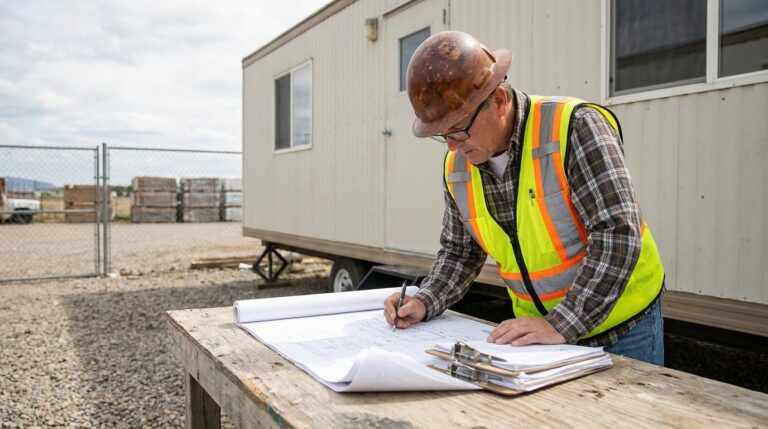
The 2026 permit introduces several substantive changes from the interim 2025 permit. RIDEM published a summary of changes and a fact sheet that identify the principal updates.
Turbidity monitoring for dewatering discharges is now expressly required. RIDEM identifies this as a significant change from prior permit language. The requirement applies to dewatering discharge monitoring, not to rainfall-triggered inspection schedules.
Termination documentation now includes site-stabilization photographs. When submitting a Notice of Termination, contractors must provide photographs showing erosion and sediment control stabilization at the project site. This visual documentation requirement is new to the 2026 permit.
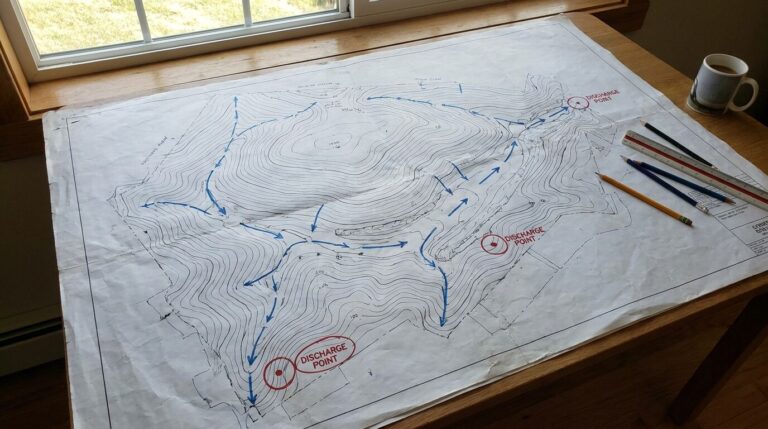
Submission packages differ by disturbance size. Projects disturbing five acres or more must submit the RISDISM Appendix A Checklist and a Stormwater Management Plan. Projects disturbing at least one acre but less than five acres must submit the checklist, a project narrative, and site-plan or map information showing flow paths, discharges, existing and proposed conditions, and receiving waters.
The basic coverage threshold remains greater than one acre of disturbance, including projects with less than one acre of direct disturbance that are part of a common plan of development or sale disturbing at least one acre.
See the SWPPP plan request form.
What must contractors submit before starting construction under Rhode Island's 2026 SWPPP permit?
A Stormwater Management Plan must be developed before submitting the RIPDES CGP application for projects disturbing at least five acres. RIDEM describes the plan as addressing stormwater site planning, analysis and design; soil erosion, runoff and sediment control; and post-construction operation and maintenance. The plan is part of the submission package, not a separate later step.
For projects disturbing at least one acre but less than five acres, contractors must submit the RISDISM Appendix A Checklist, a project narrative, and site-plan or map information showing flow paths, discharges, existing and proposed conditions, and receiving waters. This smaller-project package does not require the full Stormwater Management Plan but still demands detailed site information.
The application process uses RIDEM's Office of Water Resources Permit Application Portal. The final permit requires online submission and also requires written notice of the anticipated start date and contractor contact information through the portal's Notice of Start of Construction form. Applications are due at least 30 days before the discharge authorization is needed, according to the circumstances specified by the permit.
How does the 2026 Rhode Island SWPPP permit differ from EPA's federal permit?
Rhode Island is an EPA-delegated state and issues this statewide construction permit through the Rhode Island Pollutant Discharge Elimination System (RIPDES). The 2026 document is the applicable state-administered permit for covered construction activity in Rhode Island. EPA's federal 2022 CGP and its 2025 modifications are referenced as the source of changes incorporated into the state permit, not as a substitute for determining Rhode Island coverage.
RIDEM revised the 2026 permit to incorporate deferred changes associated with EPA's 2022 federal Construction General Permit and EPA's April 2025 modifications. Rhode Island describes these as changes intended to improve alignment with those federal requirements, but the 2026 permit remains a Rhode Island RIPDES permit administered by RIDEM. Contractors working in Rhode Island follow the state permit, not the federal permit directly.
For a complete overview of Rhode Island's construction stormwater program, see the Rhode Island SWPPP requirements guide.
Request a project-specific SWPPP estimate.
What remains uncertain about the 2026 Rhode Island SWPPP permit changes?
The available official summaries identify the principal changes but do not establish every line-by-line difference between the 2025 and 2026 permits. RIDEM's fact sheet and summary of changes provide the most reliable guidance, but contractors should review the full 2026 RIPDES CGP text for complete requirements.
The cited materials do not establish a new fixed-number exception, penalty amount, inspection frequency, or rainfall trigger as changes in the 2026 permit. Those details should not be stated as changes without the controlling permit section or another official Rhode Island source.
The final permit states that applications are due at least 30 days before the discharge authorization is needed in the circumstances specified by the permit. The exact applicability of that timing requirement depends on the permit's application provisions, which should be reviewed in the full permit text.
What else should Rhode Island contractors know about the 2026 SWPPP permit changes?
When does the 2026 Rhode Island SWPPP permit take effect?
The 2026 RIPDES Construction General Permit takes effect September 27, 2026, the day after the interim 2025 permit expires. The 2025 RIPDES CGP expires on September 26, 2026. The 2026 permit remains effective through September 27, 2031.
Do all Rhode Island projects need the same SWPPP submission package?
No. Projects disturbing five acres or more must submit the RISDISM Appendix A Checklist and a Stormwater Management Plan. Projects disturbing at least one acre but less than five acres must submit the checklist, a project narrative, and site-plan or map information. The submission requirements are differentiated by project size.
What is the turbidity monitoring requirement in Rhode Island's 2026 SWPPP permit?
The 2026 permit expressly requires turbidity monitoring for dewatering discharges. RIDEM identifies this as a significant change from the prior permit language. The requirement concerns dewatering discharge monitoring and should not be generalized into a rainfall-triggered inspection requirement.
What photographs are required for Rhode Island SWPPP permit termination?
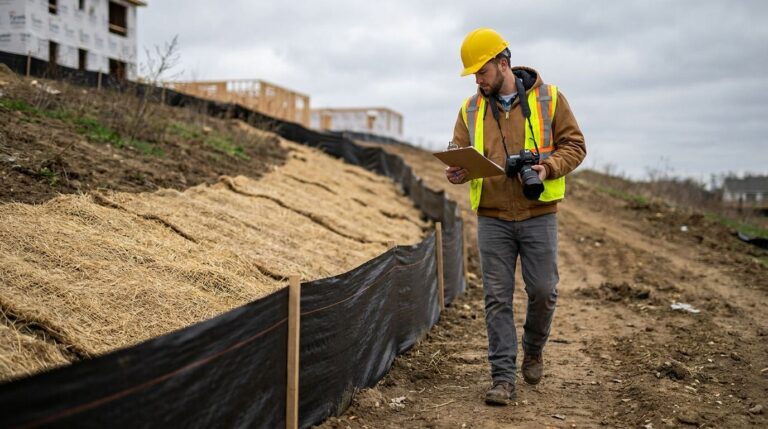
The 2026 permit requires photographs showing erosion and sediment control stabilization at the project site when submitting a Notice of Termination. This visual documentation requirement is new to the 2026 permit and applies to all covered projects.
Where can I find the official 2026 Rhode Island SWPPP permit text?
The 2026 RIPDES Construction General Permit is published by RIDEM, not by EPA. The permit text is posted on RIDEM's stormwater construction permitting page, which also carries the guidance documents. Registrations are filed through RIDEM's Office of Water Resources Permit Application Portal.
Discuss the SWPPP scope for your project.
By Derek E. Chinners, CPESC — Founder & Stormwater Consultant, Pro SWPPP, LLC