Pro SWPPP – America’s #1 SWPPP Service helps contractors and developers in Salt Lake City avoid stormwater headaches every single day. If you’re building in Utah’s capital, you need to know one thing: the rules here are stricter than most people think. Even a small project can trigger a full Storm Water Pollution Prevention Plan. Miss the threshold, and you risk fines, stop-work orders, and delays that cost thousands. This guide breaks down exactly when you need a SWPPP or Notice of Intent in Salt Lake City—no fluff, just the facts.
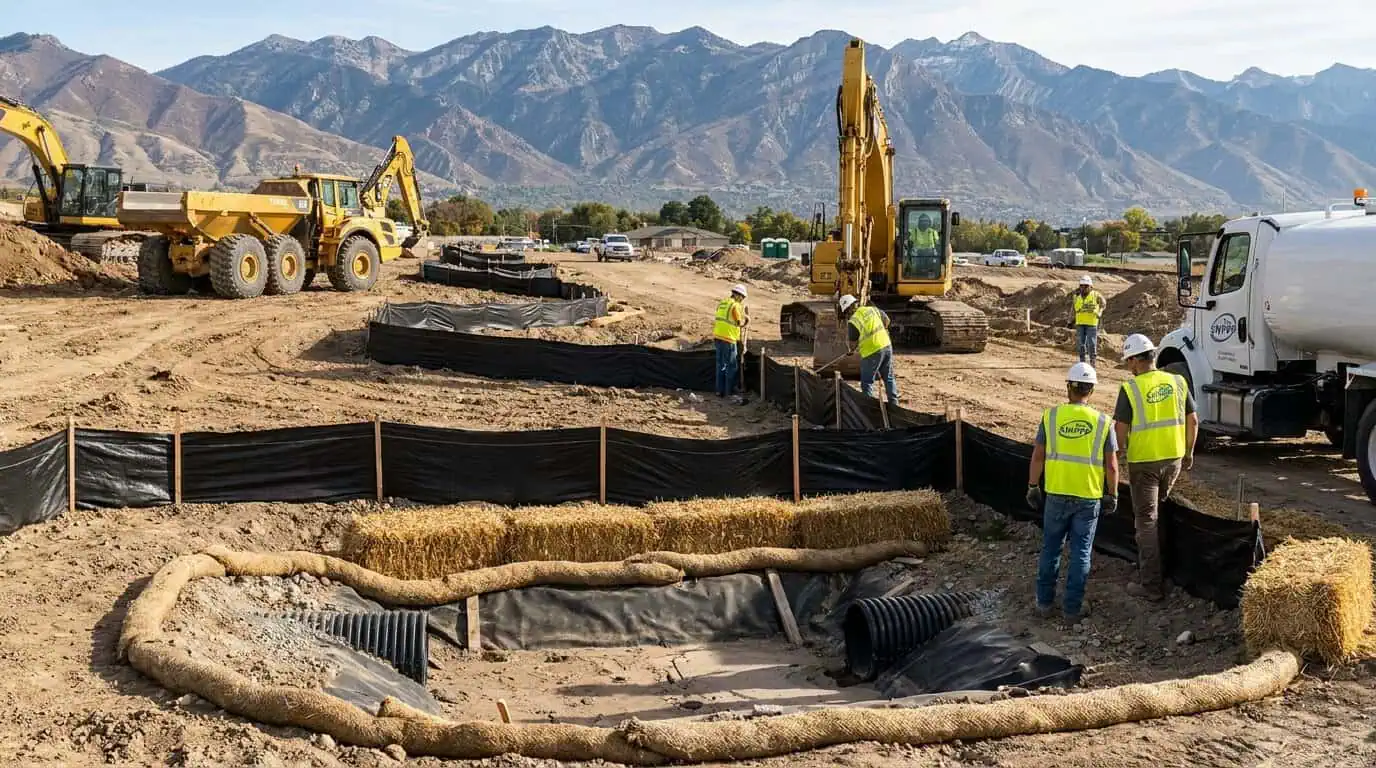
Why Salt Lake City SWPPP Rules Are Different
Most states follow a simple rule: disturb one acre or more, and you need a SWPPP. Utah follows that rule too, under the UPDES Construction General Permit. But Salt Lake City adds its own twist. The city has a local ordinance (Title 17.84) that kicks in at much smaller thresholds.
Here’s what makes Salt Lake City unique: projects that disturb just 0.2 acres can require a full SWPPP if they’re in high-profile areas like Downtown, Sugar House, or South Glendale. The city also requires a SWPPP for any project next to a stream or lake, no matter the size. And if your project runs longer than six months, even a tiny site might need coverage. These local rules catch a lot of people off guard.
Salt Lake City’s MS4 permit (UPDES UTS000002) drives these requirements. The city must protect local waterways from construction runoff. So they layer city rules on top of state rules. That means you comply with both or you don’t start digging. For detailed context on how Utah’s state-level framework shapes local enforcement, check out the full breakdown of Utah SWPPP requirements.
Do You Need a SWPPP or Just an NOI?
Let’s clear up the confusion. A Notice of Intent (NOI) is the paperwork you file with Utah DEQ to get coverage under the UPDES Construction General Permit. The SWPPP is the actual plan that describes your site, your erosion controls, and your inspection schedule. You need both for large projects. But Salt Lake City small-site projects only need a city SWPPP and city discharge permit—no state NOI.
Large Sites (1 Acre or More)
If you disturb one acre or more—or your project is part of a larger development that totals one acre—you must:
- Develop a site-specific SWPPP that meets UPDES CGP standards
- File a Notice of Intent with Utah DEQ before breaking ground
- Submit the SWPPP to Salt Lake City Public Utilities for local review
- Get a city Stormwater Discharge Permit and pay the fees
- Hold a pre-construction meeting with city inspectors
The city reviews your SWPPP for compliance with both state and local rules. You can’t start until both permits are in place.
Small Sites (Under 1 Acre)
If you disturb less than one acre and your project is not part of a common plan, you usually don’t need the state UPDES permit. But Salt Lake City still regulates you if:
- You disturb more than 0.2 acres on a public project
- You disturb more than 0.2 acres in Downtown, Sugar House, or South Glendale on a private project
- Your project is next to a creek, river, or lake (any size)
- Your construction phase lasts more than six months
For these small sites, you skip the state NOI but you still need a city SWPPP and city discharge permit. The permit fee is $125, renewal is $125 per year, initial inspection is $110, and re-inspections cost $30. Salt Lake City provides a small-site SWPPP template to make this easier.
Dewatering and Special Cases
Planning to pump groundwater during excavation? Dewatering requires separate permits. You’ll need:
- A city discharge permit for dewatering
- A UPDES dewatering permit (UTG070000) or treated groundwater permit (UTG790000)
- An NOI filed with Utah DEQ
- A Dewatering Control Plan included in your SWPPP
Many contractors forget this step. The city takes dewatering seriously because pumped water can carry sediment and contaminants straight into storm drains.
Don’t want to mess with all the paperwork and requirements? Check out Order your SWPPP now with Pro SWPPP Professional CPESC Certified SWPPP Services.
What Goes in Your Salt Lake City SWPPP
A compliant SWPPP is not a one-page form. It’s a detailed, site-specific document. Utah DEQ and Salt Lake City both reject generic templates. Your plan must include:
- Contact information: Names, phone numbers, and emails for the people installing BMPs, running inspections, and updating the SWPPP
- Site description: Maps, drainage patterns, discharge points, receiving waters, and the sequence of construction phases
- Erosion and sediment controls: Silt fences, sediment basins, check dams, inlet protection, and stabilized construction entrances
- Pollution prevention: Concrete washout areas, fuel storage, spill kits, and waste management procedures
- Inspection schedule: Weekly inspections and inspections within 24 hours of storms, plus recordkeeping and corrective action procedures
- Post-construction BMPs: Detention basins, retention ponds, and maintenance plans if your project creates more than 15,000 square feet of impervious area
Salt Lake City requires onsite detention to limit discharge to 0.2 cubic feet per second per acre during the 100-year storm. This must be part of your Technical Drainage Study and integrated into your SWPPP.
Best Management Practices (BMPs) You Can’t Skip
Effective BMPs are the backbone of your SWPPP. Here’s what works on Salt Lake City sites:
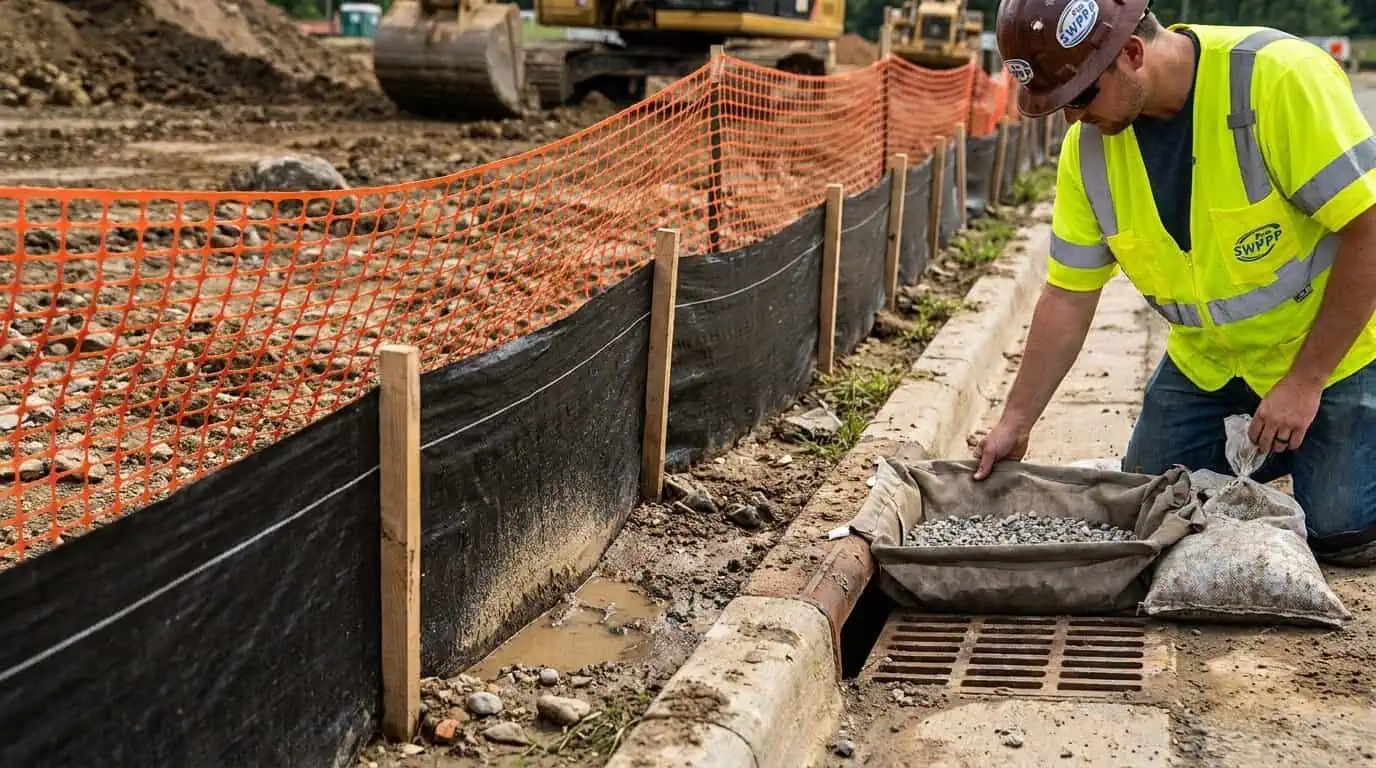
- Install perimeter silt fencing before any grading starts
- Use gravel construction entrances to prevent track-out onto streets
- Protect storm drains with sediment bags or filter fabric
- Stabilize exposed soil with mulch, seed, or erosion blankets within 14 days of inactivity
- Set up contained concrete washout areas—never rinse into the ground or drains
- Cover stockpiles and control dust to reduce sediment in runoff
The Clean Water Act and the NPDES program require these controls to protect water quality. In Utah, the UPDES program enforces them. Cities like Salt Lake City add local inspection and enforcement on top of state oversight.
The Salt Lake City Review and Permit Process
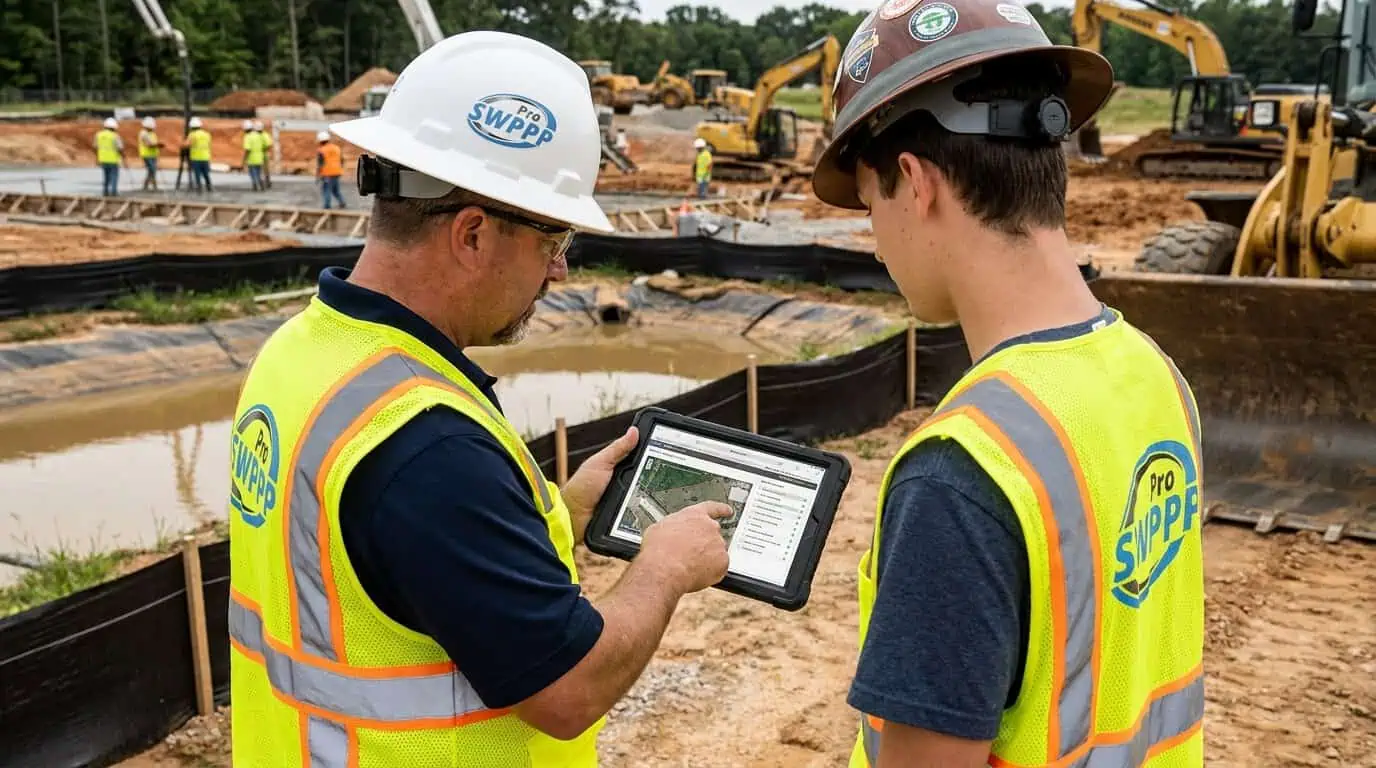
You can’t break ground until Salt Lake City approves your SWPPP and issues permits. Here’s the workflow:
- Submit your SWPPP, Technical Drainage Study, and construction plans to Salt Lake City Public Utilities
- City Stormwater Quality staff review your plan for compliance with UPDES CGP (large sites) or the Small Site Regulatory Program (small sites)
- If approved, pay your fees and receive a Utilities Permit (PUT number), Stormwater Construction Activities Permit (SW number), and any dewatering permits
- Schedule a pre-construction meeting with city inspectors
- Install your BMPs and pass an initial inspection before you disturb any soil
North Salt Lake gives public works up to 14 business days to review your SWPPP. Salt Lake City’s timeline is similar. Plan for at least two weeks between submission and approval.
Not sure your Salt Lake City site triggers the requirement? Take the 60-second SWPPP quiz.
Common Mistakes That Cost Salt Lake City Contractors
Thinking Only Big Projects Need SWPPPs
This is the most expensive mistake. Salt Lake City’s 0.2-acre threshold catches a lot of small remodels, parking lot expansions, and utility projects. If you’re in a high-profile area or near water, assume you need a SWPPP until you confirm otherwise.
Using a Generic Template
Utah DEQ rejects cookie-cutter plans. Your SWPPP must be site-specific. That means your site map, your BMPs, your drainage patterns, and your contacts must match your actual project. Templates are a starting point, not a finished product.
Ignoring Post-Construction Requirements
Many contractors focus only on erosion control during construction. But if you create more than 15,000 square feet of impervious area, you must design detention or retention systems and execute a Stormwater Maintenance Agreement with Greater Salt Lake MSD before you get a certificate of occupancy. Skipping this step delays your project.
Forgetting to Update the SWPPP
Your SWPPP is a living document. If you change your phasing, your BMPs, or your responsible party, you must update the plan. Salt Lake County and North Salt Lake both require updates when conditions change. Inspectors can order revisions if your plan is ineffective.
Enforcement and Penalties
Salt Lake City treats stormwater violations as permit violations under the Utah Water Quality Act and the Clean Water Act. Consequences include:
- Stop-work orders that shut down your site
- Fines for each day of noncompliance
- Mandated corrective actions at your expense
- Delayed certificates of occupancy
Local coalitions and inspectors stress that Utah’s stormwater rules are legal requirements, not suggestions. Noncompliance exposes owners, developers, and contractors to liability. Real-world enforcement includes SWPPP rejections for incomplete BMPs, field citations for missing perimeter controls, and delays when maintenance agreements are incomplete.
Why Pro SWPPP Is Your Best Choice in Salt Lake City
Pro SWPPP knows Salt Lake City’s local rules inside and out. We handle both large UPDES CGP projects and small-site city permits. Our CPESC-certified professionals write site-specific plans that pass review the first time. We cover erosion control, sediment control, detention design, and dewatering permits in one package.
We serve contractors across the country. Whether you need Texas SWPPP services or Georgia compliance support, Pro SWPPP delivers fast, professional plans that meet state and local standards. Our team understands the Construction General Permit, Best Management Practices, and local MS4 requirements in every market we serve.
Learn more about our team and process on our About page, or reach out directly through our Contact Us page. We’re here to make compliance simple.
FAQ
Do I need a SWPPP for a half-acre project in Salt Lake City?
It depends. If you’re in a high-profile area (Downtown, Sugar House, South Glendale), disturbing more than 0.2 acres triggers a city SWPPP. If you’re next to a stream or your project lasts more than six months, you need a SWPPP no matter the size. Outside those conditions, projects under one acre that are not part of a larger common plan may not need coverage. Always check with Salt Lake City Public Utilities before starting.
What’s the difference between a city SWPPP and a state SWPPP?
A state SWPPP meets the UPDES Construction General Permit for projects one acre or larger. A city SWPPP is a simplified plan for small sites under Salt Lake City’s local ordinance. Both require erosion controls, inspections, and documentation, but the city version uses a streamlined template and doesn’t require a state NOI.
How long does it take to get a SWPPP approved in Salt Lake City?
Plan for at least two weeks. Salt Lake City Stormwater Quality reviews your SWPPP, Technical Drainage Study, and plans. North Salt Lake allows up to 14 business days. Incomplete submittals take longer. Submitting a professional, site-specific plan speeds up the process.
Can I use a template SWPPP in Utah?
No. Utah DEQ requires site-specific plans. A generic template will be rejected. Your SWPPP must include your actual site map, drainage patterns, BMPs, and responsible parties. Templates are a starting point, but you must customize them to your project.
What happens if I don’t have a SWPPP when I should?
You face stop-work orders, fines, and legal liability. Salt Lake City and Utah DEQ enforce stormwater rules under the Clean Water Act. Noncompliance can shut down your project and cost thousands in penalties and delays.
Do I need a dewatering permit in Salt Lake City?
Yes, if you plan to pump groundwater. You need a city discharge permit, a UPDES dewatering permit (UTG070000 or UTG790000), an NOI filed with Utah DEQ, and a Dewatering Control Plan in your SWPPP. Skipping this step is a common violation.
What is a Stormwater Maintenance Agreement?
A Stormwater Maintenance Agreement is a recorded document required by Greater Salt Lake MSD before you get a certificate of occupancy. It ensures long-term maintenance of detention ponds, retention basins, and other post-construction BMPs. Projects with more than 15,000 square feet of impervious area must execute one.
How often do I need to inspect my site under a SWPPP?
The UPDES Construction General Permit requires weekly inspections and inspections within 24 hours of qualifying storm events. Your SWPPP must identify who performs inspections, what checklists are used, and how deficiencies are corrected and documented.
Can Pro SWPPP help with other states besides Utah?
Yes. Pro SWPPP serves contractors nationwide. We provide state-specific plans for Texas, Georgia, and dozens of other states. Our CPESC-certified team knows local thresholds, permit processes, and enforcement practices in every market.
Want a flat-rate number? Get a free SWPPP estimate.
Ready to move? Order your SWPPP now or schedule a call with a stormwater expert.
By Derek E. Chinners, CPESC — Founder & Stormwater Consultant, Pro SWPPP, LLC
Related: Utah SWPPP requirements · Utah County & Provo · When is a SWPPP required?
Visit Pro SWPPP — 180+ five-star Google reviews from contractors nationwide.