When you buy or take over a construction site mid-project, you might assume the stormwater permit just follows the property. Pro SWPPP – America’s #1 SWPPP Service – has seen that one assumption cost contractors weeks of delay, avoidable fines, and legal exposure they inherited without knowing it. Under the federal Clean Water Act’s National Pollutant Discharge Elimination System (NPDES) program, stormwater permits are not transferable the way a deed or business license is. When ownership or operational control changes hands, the existing permit coverage usually terminates, and the new operator must file their own Notice of Intent (NOI) before work can legally continue. This guide walks you through exactly what happens when a site changes hands, what forms you need to file, which states have stricter rules, and how Pro SWPPP keeps contractors compliant coast to coast.
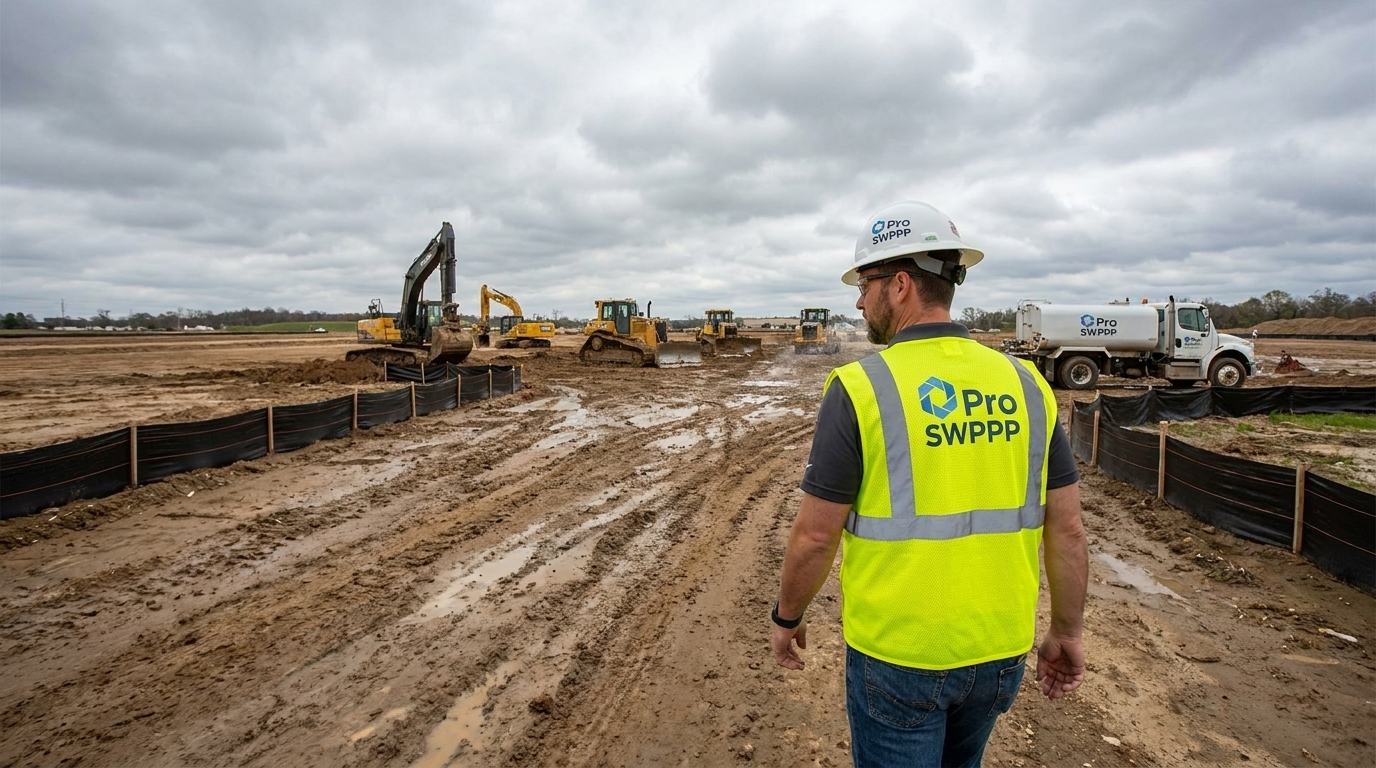
Can You Actually “Transfer” a Stormwater Permit?
The short answer: No, not in the way most people think. Under the EPA’s Construction General Permit (CGP) and Multi-Sector General Permit (MSGP) for industrial sites, permits are issued to a specific owner or operator. When that party changes, EPA requires the old permittee to notify the agency and file a Notice of Termination (NOT), and the new owner or operator must submit a new NOI to obtain their own coverage. This two-step process ensures the agency knows who is discharging, tracks compliance history, and holds the right party accountable.
States with EPA-authorized NPDES programs often mirror this rule. California, Rhode Island, and many others explicitly prohibit automatic permit transfers. Some states, like Washington and Ohio, offer administrative “transfer of coverage” procedures if operations stay the same, but even those require advance notice, written agreements, and agency approval. If you skip these steps and start work under the old permit, you are discharging without coverage, which is a Clean Water Act violation carrying civil penalties.
Pro SWPPP has helped clients through ownership changes nationwide. The common thread: plan ahead, file early, and document everything.
Why the EPA Requires Termination and Re-Coverage Instead of a Simple Transfer
EPA developed the NOT-plus-new-NOI model for good reason. When permits could be “transferred” without agency review, compliance records were lost, new operators inherited someone else’s violations, and enforcement became a nightmare. The 2021 EPA MSGP and current CGP guidance spell it out: permits are not transferable to any person except after notice to EPA, and the practical method is termination by the old permittee and a new NOI by the incoming operator.
Rhode Island is a recent case study. Under its 2019 industrial permit, facilities could automatically transfer coverage to a new owner if paperwork was filed. By 2024, Rhode Island aligned with EPA’s stricter 2021 MSGP and eliminated automatic transfers entirely. The reason? Transferred permits did not carry forward compliance history, so new owners started with a clean slate even if the site had years of violations. Now every ownership change requires a fresh NOI, ensuring the state can track who was responsible and when.
For contractors, this means you cannot rely on inheriting a permit. You need your own coverage, with your own certifications and liability.
What Happens to the Old Permit When the Site Changes Hands
The outgoing operator (seller, original developer, or general contractor) must submit a Notice of Termination to EPA or the state agency. That NOT certifies they no longer control the site or the discharge. Until the NOT is filed, the old permittee remains legally responsible for compliance, including any violations that occur after the sale. This is why timing and coordination matter. Pro SWPPP drafts transfer timelines for buyers and sellers so no one is left holding liability they did not anticipate.
What the Incoming Operator Must Do Before Work Begins
If you are buying or taking over operational control of a permitted construction site, you are the “operator” under NPDES. That label triggers a series of deadlines and paperwork. Here is the baseline under the federal EPA Construction General Permit:
- File a new NOI at least 14 calendar days before the transfer date. Coverage becomes effective 14 days after EPA confirms receipt of a complete NOI.
- Develop or revise the Stormwater Pollution Prevention Plan (SWPPP). You cannot rely on the old SWPPP unless you adopt it in writing and update operator names, certifications, and best management practices (BMPs) for your scope of work.
- Install or maintain erosion controls. If the site is not fully stabilized, you inherit responsibility for silt fences, inlet protection, and sediment traps. Any BMPs on someone else’s property require a written agreement and explicit mention in your SWPPP.
- Obtain any required inspections and reports. Many CGPs require weekly or post-storm inspections by a qualified person. Make sure your team is trained and logs are current before you mobilize equipment.
Pro SWPPP prepares NOIs, drafts site-specific SWPPPs, and handles all filing deadlines in every state so contractors can close deals and start work without permit gaps.
Why the 14-Day Advance Notice Matters
Fourteen days is not a suggestion. It is the minimum time EPA and many state agencies need to process your NOI and issue a tracking number. If you submit late or with errors, your coverage may not be effective by the closing date. That means any earthwork you do is unpermitted discharge, and inspectors can issue a stop-work order on day one. Pro SWPPP has seen developers lose tens of thousands of dollars in demobilization costs because they filed an NOI the day before closing and coverage was not active.
States can be stricter. Ohio requires 21 days advance notice for construction NOIs (longer in special watersheds). South Carolina requires NOI submission and coverage approval before any construction activity by the new owner. Check your state rules early, and file even earlier if the project is large or politically sensitive.
What Happens with Individual Lots in Subdivisions
Subdivision projects create unique transfer headaches. The original developer typically holds one permit covering the entire common plan of development. As individual lots sell to builders, each new builder becomes an “operator” for their parcel and must obtain coverage. Illinois and Ohio explicitly require lot-specific NOIs when a parcel transfers, even if the lot is under one acre, because it remains part of the larger common plan until stabilized.
The original developer must update the master SWPPP to show which lots have been sold, who the new operators are, and how BMPs are divided. Buyers must file their own NOI (often 7-21 days before closing) and either adopt the developer’s SWPPP for their lot or write a new one. If shared BMPs like a sediment basin serve multiple lots, written agreements are required spelling out maintenance responsibilities and access rights. Pro SWPPP drafts these inter-operator agreements and coordinates NOI filings so closings do not stall.
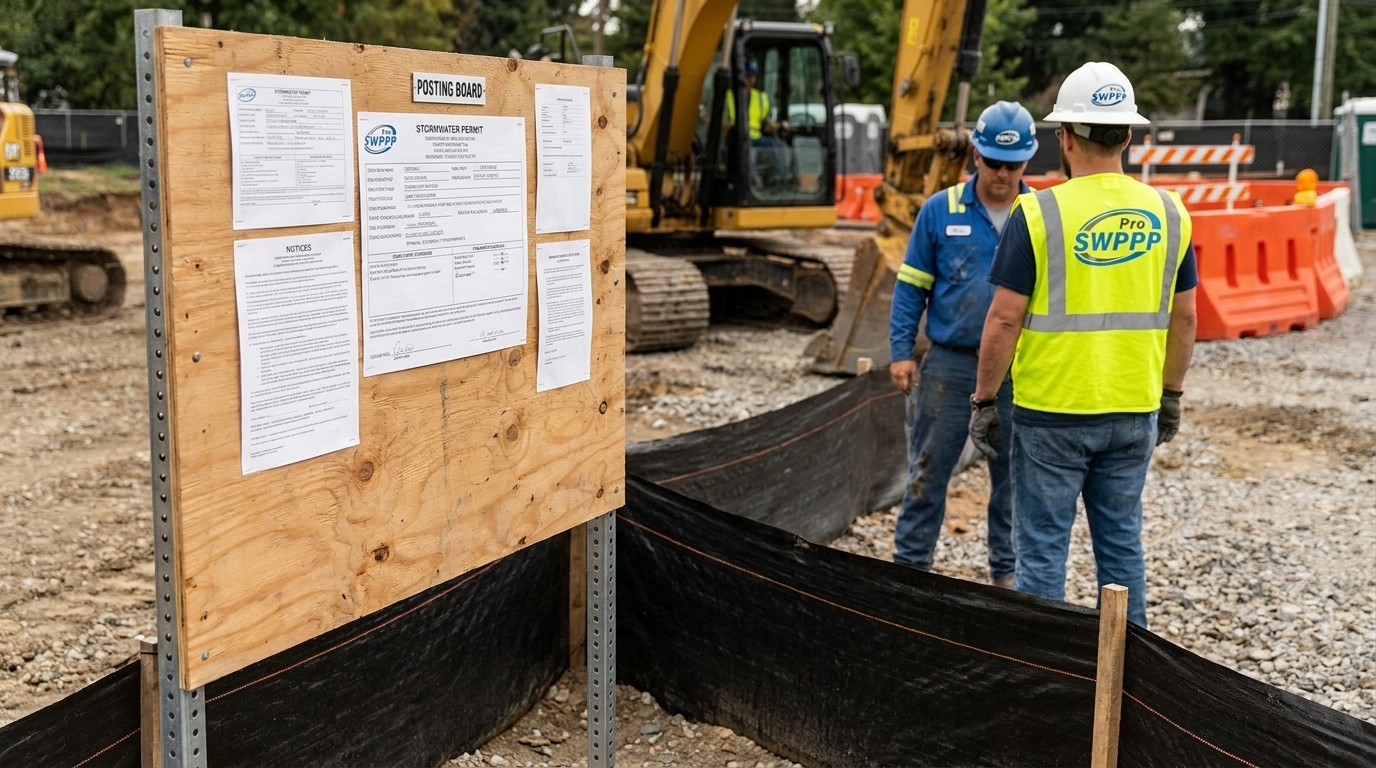
Example: Ohio’s Lot Transfer Rules
Ohio’s CGP requires lot-specific NOIs at least 7 days before ownership transfers. The new owner must submit the NOI electronically through Ohio EPA’s eBusiness Center portal, upload SWPPP certifications, and pay any required fees. The developer’s SWPPP must be updated to reflect the sale. Ohio enforces this rule aggressively; inspectors check NOI records during routine visits, and missing lot NOIs trigger violations for both the developer and the builder.
Taking over a site and not sure what you are inheriting? Take the 60-second quiz — Do I even need a SWPPP?
How State Requirements Differ from the Federal Baseline
Every state with an EPA-authorized NPDES program can set rules stricter than the federal floor. That means NOI deadlines, transfer procedures, and fees vary by state. Pro SWPPP tracks permit requirements nationwide and handles the local nuances so contractors do not have to become permit lawyers.
California: No Transfers, Period
California’s State Water Resources Control Board states plainly: “Stormwater General Permits do not allow a transfer of permit coverage to a new owner or operator.” If the Legally Responsible Person (LRP) changes due to a change in ownership, the old LRP files a Notice of Termination and the new entity files a new NOI. California uses the SMARTS portal (Storm Water Multiple Application and Report Tracking System) for all filings. Coverage cannot begin until SMARTS issues a WDID number. Contractors working in California must plan for this extra processing time and cannot assume they can start work on closing day.
South Carolina: Transfer Notification Plus New Coverage
South Carolina offers a middle path. New owners must notify the Department of Health and Environmental Control (DHEC) within 14 days of the ownership change using a specific Transfer of Ownership form. That form is free, but it does not grant coverage. The new owner must also submit a new NOI and pay the $125 NPDES coverage fee. Coverage must be granted before any construction activity. If the site is not adequately stabilized, DHEC may require a Compliance Agreement or revised SWPPP before approving the new NOI. Pro SWPPP handles South Carolina transfers regularly and knows which DHEC regional offices move fast and which require extra documentation.
Washington and Ohio: Administrative Transfer Options
Washington and Ohio allow formal “transfer of coverage” under certain conditions. Washington’s Industrial Stormwater General Permit includes a Transfer of Coverage form that assigns permit responsibility, coverage, and liability to a new operator on a specific date. The catch: industrial activities cannot substantially change. If operations change, the permit cannot be transferred, and the new operator must file a new NOI under special condition S2.D.
Ohio’s draft industrial general permit (OHR000007) allows transfers if the permittee notifies the succeeding owner at least 30 days prior, submits a copy to Ohio EPA Central Office, and both parties jointly file a complete electronic transfer application. A written agreement dividing liability (old owner liable up to transfer date, new owner liable after) must be submitted within 30 days. The EPA Director has 30 days to object and require a new NOI instead. This is a robust process but still subject to agency discretion.
For contractors, the lesson is clear: read your state permit carefully and assume you need a new NOI unless the permit explicitly allows administrative transfer and you meet every condition.
Costs, Portals, and Filing Mechanics
Stormwater permit fees and submission portals vary widely. The federal EPA CGP and MSGP use electronic systems like the NPDES eReporting Tool (NeT) or the Central Data Exchange (CDX) for NOI and NOT submissions. EPA itself does not charge an NOI fee in most cases, but states often do. Pro SWPPP files through these portals nationwide, so we can file on your behalf and avoid the learning curve.
State Fee Examples
- South Carolina: No fee for the Transfer of Ownership notification form; $125 NPDES coverage fee when the new NOI is submitted.
- Texas: TCEQ charges a flat fee for construction NOIs under the TXR150000 permit; the fee depends on project size and disturbed acreage.
- Georgia: Georgia EPD requires electronic NOI submission through the Georgia Environmental Protection Division portal; fees apply for new coverage but not for routine amendments.
- Ohio: NOIs filed through the Ohio EPA eBusiness Center; fee schedules are posted online and vary by permit type.
Portals often require account setup, PINs, electronic signatures, and site maps in specific formats (shapefiles, PDFs with georeferencing). Missing a map or using the wrong file type can delay coverage by weeks. Pro SWPPP handles all portal logistics, uploads, and follow-up so you get your permit number on time.
Don’t want to mess with all the paperwork? Order your SWPPP now with Pro SWPPP Professional CPESC Certified SWPPP Services.
SWPPP Transfers and BMP Responsibility
The SWPPP is the site-specific blueprint for erosion and sediment control. When ownership changes, the new operator cannot simply point to the old SWPPP and call it done. You must either adopt the existing SWPPP in writing and update it with your contact information, certifications, and construction phasing, or draft a new SWPPP from scratch.
Key SWPPP updates during a transfer include:
- Operator names and contact information. The SWPPP must list every operator with control over site design or daily activities, including subcontractors if they meet the definition.
- Site map updates. If lot lines have changed, new phases are planned, or BMPs have been moved, the site map must reflect current conditions.
- BMP descriptions and maintenance schedules. If you inherit silt fences or sediment basins, the SWPPP must describe them, assign responsibility for inspection and repair, and document maintenance frequency.
- Shared BMP agreements. If you rely on a sediment trap or outlet structure on a neighbor’s lot, you need a written agreement and a copy in the SWPPP. Without that agreement, inspectors can cite you for inadequate controls.
Pro SWPPP revises existing SWPPPs or drafts new ones within 72 hours, complete with updated site maps, operator certifications, and BMP schedules. We also coordinate with sellers to ensure their NOT and your NOI align so there is no coverage gap.
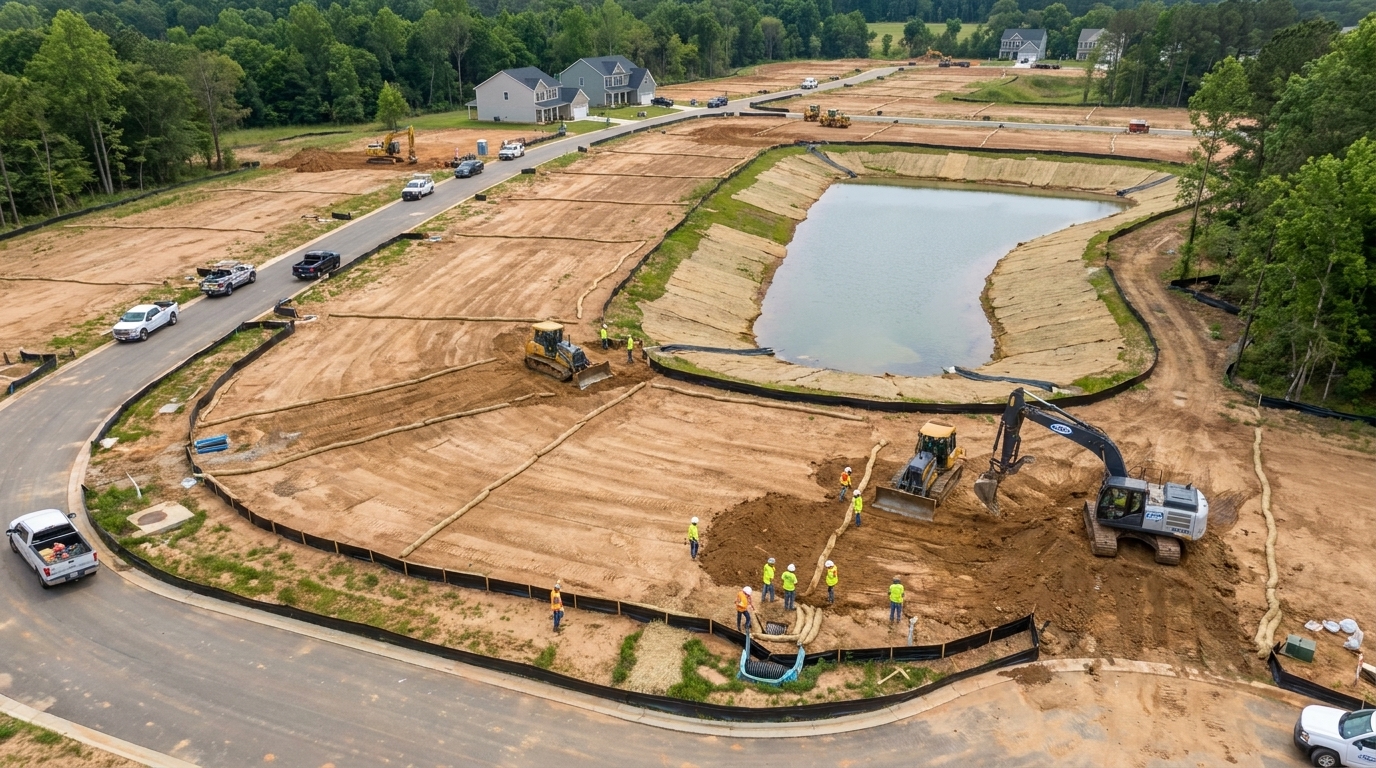
What If the Site Is Not Stabilized?
If you buy a site mid-construction with active disturbance and incomplete stabilization, you inherit the erosion control obligations. Some states, like South Carolina, require the site to be adequately stabilized before approving a new NOI, or they may demand a Compliance Agreement outlining corrective actions and timelines. Pro SWPPP conducts pre-closing site assessments to identify deficiencies, estimate stabilization costs, and negotiate who pays for corrective work. That due diligence protects you from surprise stop-work orders or six-figure retrofit bills.
Enforcement Risks When Transfers Go Wrong
Operating without permit coverage is a serious violation of the Clean Water Act. EPA and state agencies can issue administrative orders, civil penalties, and require corrective actions. Penalties vary by state, but construction sites with large disturbed acreage, off-site sediment discharges, or repeated violations can face six-figure fines.
Common enforcement scenarios during ownership transfers include:
- Discharging without coverage. If you start work before your NOI is effective, every day of discharge is a separate violation.
- Operating under the old permit. If the old permittee filed a NOT but you have not obtained new coverage, you are discharging without authorization.
- Shared liability. If the old permittee fails to file a NOT, they can remain liable for violations even after the sale. Written transfer agreements are critical to divide liability by date.
- SWPPP and BMP failures. Taking over a site with deficient erosion controls can trigger corrective orders, especially if off-site sediment impacts waterways or neighboring properties.
Pro SWPPP has defended clients in enforcement actions by producing timestamped NOIs, transfer agreements, and compliance logs that prove coverage was continuous and responsibilities were clear. Documentation is your best defense.
Recent Regulatory Changes Tightening Transfer Rules
Over the past three years, EPA and several states have tightened transfer procedures to close loopholes and improve compliance tracking. These changes affect how contractors plan ownership transitions.
Rhode Island’s 2024 MSGP Eliminates Automatic Transfers
Rhode Island’s 2019 MSGP allowed automatic permit transfers if the new owner met specific conditions. The 2024 MSGP, aligning with EPA’s 2021 MSGP, eliminated that option entirely. Now every ownership change requires the old owner to file a NOT and the new owner to file a new NOI. The state cited loss of compliance history as the reason: automatic transfers effectively reset the clock on violations, making enforcement impossible.
Ohio’s Industrial Permit Draft Allows Conditional Transfers
Ohio revised its draft industrial stormwater permit to allow transfers under Ohio Administrative Code, but with strict conditions. Both parties must notify Ohio EPA at least 30 days in advance, submit a written liability agreement, and file a joint electronic transfer application. The Director can object within 30 days and require a new NOI instead. This is more flexible than California or Rhode Island, but still far from automatic.
EPA CGP Guidance Reinforces 14-Day Advance Filing
EPA’s “Getting Coverage Under the CGP” webpage now explicitly states that new operators of permitted sites must file an NOI at least 14 days before the transfer. This guidance clarifies timing that was ambiguous in earlier permits and signals EPA’s focus on seamless coverage during transitions.
The trend nationwide is clear: agencies want explicit, documented transfers with no gaps in coverage and no loss of compliance records. Pro SWPPP stays current on every regulatory update and adjusts filing procedures accordingly.
Step-by-Step Checklist for Contractors Taking Over a Permitted Site
Here is a practical timeline for buyers, developers, and general contractors taking operational control of a construction site with existing stormwater permit coverage:
- 60 days before closing: Request a copy of the existing NPDES permit, NOI confirmation, and current SWPPP from the seller. Conduct a site walk to assess BMP condition and stabilization status.
- 45 days before closing: Identify which state or EPA office issued the permit. Determine if the permit allows administrative transfer or requires NOT plus new NOI. Engage Pro SWPPP to draft your NOI and revised SWPPP.
- 30 days before closing: Submit your NOI to the agency (EPA or state). In states like Ohio or Texas, this may need to be 21-30 days in advance depending on project size and watershed.
- 14 days before closing: Confirm NOI receipt and tracking number. Verify the seller has prepared their Notice of Termination to be filed on or after the closing date.
- Closing day: Execute written transfer agreements specifying the date permit responsibility shifts. Ensure the seller files their NOT promptly.
- First day on site: Post your NOI confirmation and SWPPP at the site entrance. Conduct initial inspection and document BMP condition. Update contact information on all site signage.
- 7 days after closing: Submit any required ownership change notifications (e.g., South Carolina Transfer of Ownership form). File amended SWPPP if needed.
Pro SWPPP manages every step, from pre-closing due diligence to post-transfer filings, so you can focus on mobilizing equipment and starting work.
Not sure what your project needs? Schedule a Free SWPPP Consultation with CPESC Certified SWPPP Expert Derek E. Chinners.
Why Pro SWPPP is the SWPPP Service Contractors Trust
Pro SWPPP has handled permit transfers, NOI filings, and SWPPP updates for contractors nationwide — a family-owned firm with 20+ years in stormwater compliance. Our team is led by CPESC-certified professionals who know federal EPA rules and every state variation cold. When you work with Pro SWPPP, you get:
- 72-hour turnaround on NOIs and SWPPPs. We know transfer timelines are tight, and closing dates do not move. We file fast and file right.
- State-specific portal expertise. We have accounts and credentials in Ohio eBusiness Center, California SMARTS, Texas TCEQ Steers, Georgia EPD portal, and dozens more. No learning curve, no delays.
- Pre-closing compliance audits. We walk sites, review existing permits, and identify deficiencies before you sign. That protects you from inheriting violations or unbudgeted corrective costs.
- Coordinated seller-buyer filings. We draft NOTs for sellers and NOIs for buyers on the same timeline, ensuring seamless coverage with no gap and no overlapping liability.
- Written transfer agreements. We prepare inter-operator agreements and liability-division documents that satisfy agency requirements and protect both parties.
- Nationwide support. Whether you are in Texas, Georgia, California, or Rhode Island, Pro SWPPP knows the local rules and local inspectors.
We have filed thousands of NOIs, drafted transfer packages for subdivision developers, and defended clients in enforcement actions. Contractors trust Pro SWPPP because we turn complex permit transfers into simple checklists.
Closing on a site and need to know what the permit position costs to fix? Get a free estimate, or learn more about our team and services.
FAQ
Can I just take over the old permit when I buy the site?
No. Under EPA and most state rules, stormwater permits are not transferable like a deed. The old permittee must file a Notice of Termination, and you must file a new Notice of Intent to get your own coverage. A few states allow administrative transfers if operations do not change, but even those require advance notice and agency approval.
How far in advance do I need to file my NOI?
Under the federal EPA Construction General Permit, you must file at least 14 days before the transfer date. Some states require 21 days or more. Ohio requires 21 days (longer in special watersheds), and South Carolina requires coverage to be granted before you start any work. File as early as possible to avoid delays.
What happens if I start work before my NOI is approved?
You are discharging without a permit, which is a Clean Water Act violation. EPA or the state can issue a stop-work order, impose civil penalties, and require corrective actions. Penalties vary, but large projects with off-site impacts can face six-figure fines. Do not mobilize equipment until your coverage is active.
Do I need a new SWPPP or can I use the seller’s?
You can adopt the seller’s SWPPP if you revise it with your contact information, operator certifications, updated site maps, and BMP descriptions. Many contractors prefer a new SWPPP to avoid liability for the seller’s mistakes. Pro SWPPP drafts site-specific SWPPPs within 72 hours, so you start fresh.
What if the site has existing violations or unpermitted discharges?
Conduct a pre-closing compliance audit. Pro SWPPP walks the site, reviews inspection logs, and identifies any violations or deficiencies. You can negotiate who pays for corrective work or walk away from the deal if the liability is too high. Do not assume the seller disclosed everything.
How much does a stormwater permit transfer cost?
Costs vary by state. Some states charge no fee for the transfer notification but require a new NOI fee (e.g., South Carolina charges $125). Other states charge flat fees based on project size or disturbed acreage. Pro SWPPP includes all filing fees in our flat-rate packages, so you know the total cost upfront.
Which states have the strictest transfer rules?
California, Rhode Island, and several others prohibit any automatic transfers and require full termination and re-coverage. Washington and Ohio allow conditional administrative transfers if operations stay the same, but the agency can still require a new NOI. Always check your state permit language and assume you need a new NOI unless the rules explicitly say otherwise.
Ready to get started? Order your SWPPP now or schedule a free consultation with Pro SWPPP.
Visit Pro SWPPP and see why contractors nationwide hand us the permit paperwork on every acquisition — 180+ five-star Google reviews and counting.
Closing on a site with active earthwork? Schedule a call with a stormwater expert — the NOI needs to be in before the deed changes hands, not after.
By Derek E. Chinners, CPESC — Founder & Stormwater Consultant, Pro SWPPP, LLC
Related: What is a SWPPP? · When is a SWPPP required? The 1-acre rule and common plans · What is a Notice of Intent (NOI)? · California SWPPP requirements