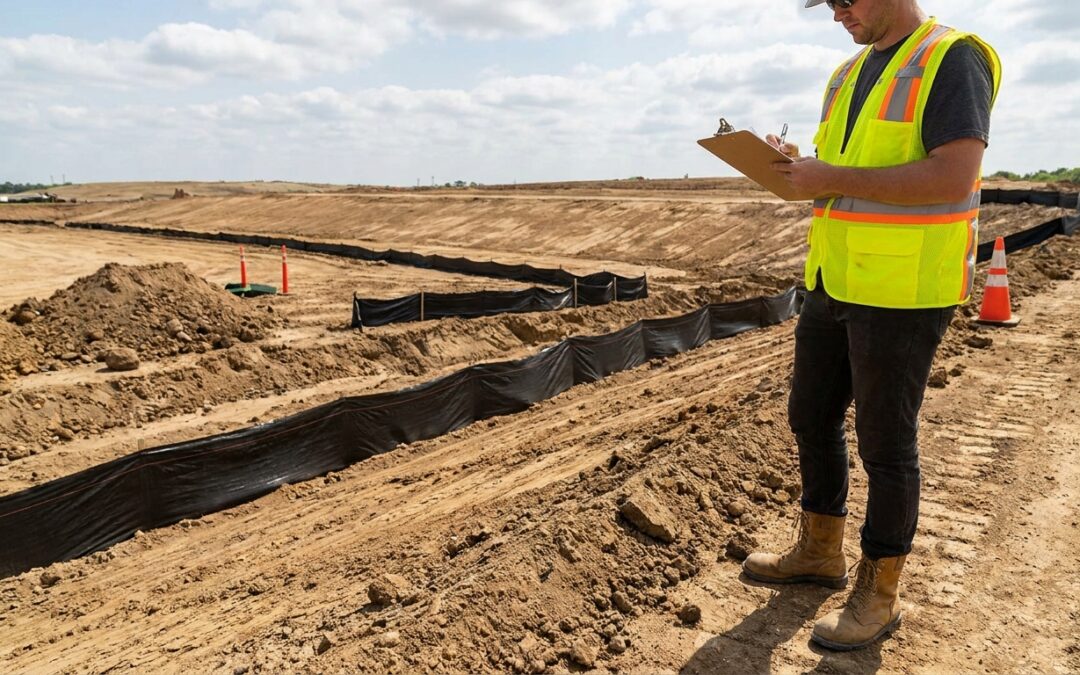
A SWPPP inspector is the qualified person responsible for examining a construction site's erosion and sediment controls, disturbed areas, pollutant-storage locations, drainage paths, and discharge points; documenting conditions; and identifying or initiating corrective actions required by the applicable construction-stormwater permit.
Pro SWPPP prepares stormwater plans for contractors nationwide.
Not sure whether your project needs a SWPPP? Take the SWPPP quiz.
What does a SWPPP inspector check during an inspection?
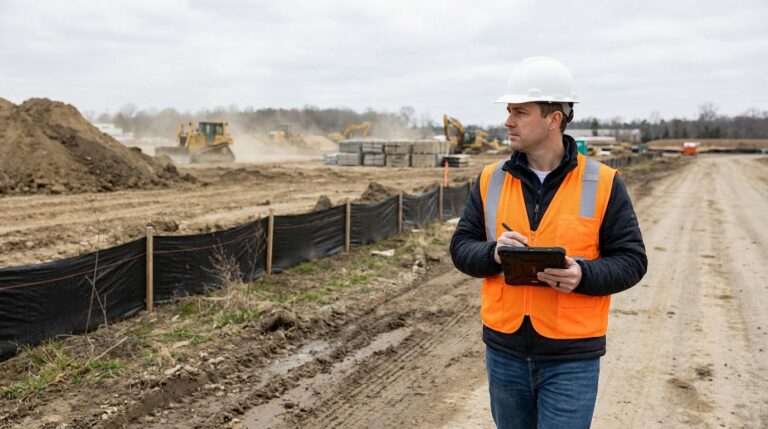
A SWPPP inspector checks erosion and sediment controls to confirm they are installed, maintained, and functioning properly. The inspector walks the site's disturbed areas, verifies that silt fences, inlet protection, stabilized construction entrances, and other best management practices are in place, and notes any damage, displacement, or accumulation of sediment that reduces effectiveness.
The inspector also looks for pollution sources and discharge risks. This includes examining material-storage areas, waste containers, equipment-fueling zones, and any location where spills, leaks, or pollutant accumulations could enter drainage systems or leave the site. According to an EPA enforcement document, inspections must cover disturbed areas and precipitation-exposed storage areas and observe erosion and sediment controls.
The inspector documents findings in an inspection report. The report records the inspection date and time, weather conditions, observations about control effectiveness, any deficiencies discovered, and corrective actions initiated or completed. Documentation requirements vary by permit, but the inspection record is a compliance document that may be reviewed by regulators or requested during an audit.
When dewatering operations are active, the inspector must also examine dewatering discharges. Under the EPA's 2022 Construction General Permit, dewatering operations must be inspected daily on days when dewatering discharge occurs, in addition to the site's ordinary inspection schedule.
When does a contractor need to hire a SWPPP inspector?
A contractor needs to hire or designate a qualified SWPPP inspector when the project is subject to a construction-stormwater permit that requires inspections by qualified personnel. Under EPA's 2022 CGP, only a qualified person may conduct Part 4 inspections, and the permit defines specific training or certification requirements for that qualification.
Permit coverage is the first threshold. EPA's construction-stormwater materials identify permit coverage for construction activity disturbing at least one acre, and for smaller sites that are part of a common plan expected to disturb at least one acre. If the project meets that threshold and is located in an EPA-administered jurisdiction or a state with similar requirements, a qualified inspector is needed once inspections are due.
State programs can impose their own inspector requirements. For example, South Carolina states that active construction projects disturbing two acres or more require weekly inspections by qualified personnel meeting specified knowledge, skill, supervision, or certification criteria. The acreage threshold, inspection frequency, and qualification standard depend on the controlling permit and jurisdiction.
Hire or designate a qualified inspector before inspections are due. The inspector may be an employee or an outside consultant, but the permit holder remains responsible for ensuring that inspections, reports, maintenance, and corrective actions are completed as required. Do not rely on a generic national schedule; inspection frequency and rainfall-event triggers depend on the controlling permit.
See the SWPPP plan request form.
What qualifications must a SWPPP inspector have?
Under EPA's 2022 CGP, a person must either complete EPA's construction inspection training course or hold a current construction-inspection certification or license meeting the permit's subject-matter requirements. The EPA training course is available online and covers inspection procedures, control identification, and documentation requirements specific to the 2022 CGP.
State programs may recognize different credentials. Some states accept the EPA course, while others require state-specific training, a Certified Professional in Erosion and Sediment Control credential, or a state-issued license. The controlling permit and jurisdiction determine which qualifications are acceptable.
The contractor or permit holder is responsible for verifying that the inspector meets the applicable qualification standard before the first inspection. If hiring an outside consultant, confirm that the consultant's credentials match the permit's requirements. For more detail on credential options, see SWPPP certification: EPA course, CPESC, or state credential.
How often does a SWPPP inspector visit the site?
Inspection frequency depends on the controlling permit. EPA's 2022 CGP requires inspections at least once every seven calendar days and within 24 hours after a storm event that produces 0.25 inches or more of rain in a 24-hour period. Some state permits use different intervals or rainfall thresholds.
Certain conditions may reduce or increase inspection frequency. For example, sites that have achieved final stabilization and are awaiting permit termination may have reduced inspection requirements. Conversely, sites with active dewatering must inspect dewatering discharges daily on days when discharge occurs, in addition to the ordinary inspection schedule.
Do not assume that a seven-day or quarter-inch rule applies universally. An EPA enforcement document describes a project-specific permit requiring inspection by the next day after rainfall of 0.5 inches or more, but that condition should not be treated as a universal EPA or state requirement. Check the project's authorization and permit conditions directly.
What happens if a SWPPP inspector finds a problem?
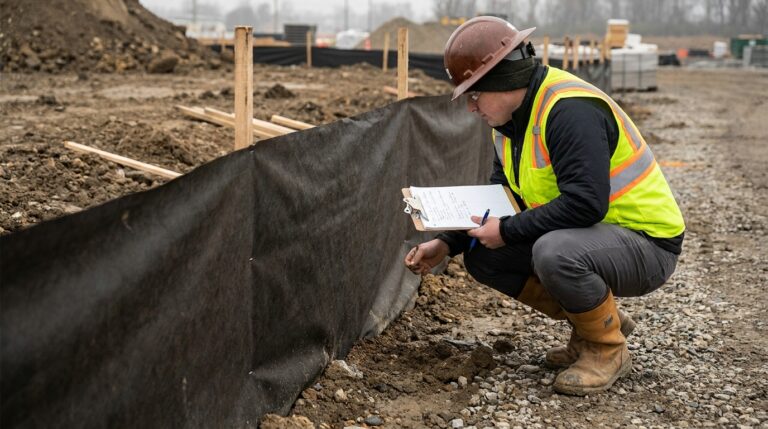
When a SWPPP inspector identifies a deficiency, the permit typically requires corrective action within a specified timeframe. The inspector documents the problem in the inspection report, describes the corrective action needed, and notes the deadline for completion.
Corrective actions may include repairing or replacing damaged controls, removing accumulated sediment, stabilizing exposed soil, or addressing a spill or leak. The permit holder is responsible for ensuring that corrective actions are completed and that the inspector verifies completion during a follow-up inspection or in the next scheduled report.
Failure to complete corrective actions on time can result in permit violations, enforcement actions, and penalties. The inspector's documentation serves as the compliance record, so accurate and timely reporting is essential.
Request a project-specific SWPPP estimate.
Can a contractor perform SWPPP inspections themselves?
A contractor can perform SWPPP inspections if an employee meets the applicable qualification standard and the permit does not require an independent third party. Under EPA's 2022 CGP, the qualified person may be an employee of the permit holder, provided the person has completed the required training or holds an acceptable certification.
Some state or local permits require inspections by an independent qualified professional who is not employed by the contractor or permit holder. Review the project's permit and authorization to determine whether an independent inspector is required.
If the contractor does not have a qualified employee available, hiring an outside consultant is often the most practical option. The consultant conducts the inspections, prepares the reports, and identifies corrective actions, while the contractor remains responsible for implementing those actions and maintaining compliance.
What else should contractors know about hiring a SWPPP inspector?
Does the SWPPP inspector need to be on-site for every rain event?
The inspector must visit the site within the timeframe specified by the permit after a qualifying rain event. Under EPA's 2022 CGP, that timeframe is within 24 hours after a storm event that produces 0.25 inches or more of rain in a 24-hour period. The inspector does not need to be present during the rain, but the inspection must occur within the required window.
What is the difference between a SWPPP inspector and a SWPPP preparer?
A SWPPP preparer develops the stormwater pollution prevention plan, selects controls, and prepares the permit application. A SWPPP inspector conducts site inspections, documents conditions, and identifies corrective actions. Some professionals perform both roles, but the tasks and qualifications may differ depending on the permit and jurisdiction.
Can the same person inspect multiple SWPPP sites?
Yes, a qualified inspector can inspect multiple sites, provided the inspector meets the qualification requirements for each applicable permit and can complete inspections within the required timeframes. Many consultants and contractors manage inspection schedules for multiple projects.
What records does the SWPPP inspector need to keep?
The inspector must maintain inspection reports that include the date and time of the inspection, weather conditions, observations about control effectiveness, deficiencies discovered, and corrective actions initiated or completed. The permit holder must retain these records for the period specified by the permit, typically three years or longer.
Discuss the SWPPP scope for your project.
By Derek E. Chinners, CPESC — Founder & Stormwater Consultant, Pro SWPPP, LLC
Related: What is a SWPPP? · When is a SWPPP required? One acre or common plan · SWPPP inspections: every 7 days or after quarter-inch rain · How much does a SWPPP inspection cost?