
Contractors can request a SWPPP quote before final site plans are ready, and many do so to budget early in the project timeline. The quote should be clearly marked as preliminary and subject to revision once complete design information, grading plans, drainage patterns, construction phasing, and final acreage are available. Regulatory requirements govern what a compliant SWPPP must contain and when it must be completed, not when a contractor may ask for pricing.
Pro SWPPP has served contractors nationwide for 20+ years, providing preliminary quotes and final permit-ready plans as project details develop.
Not sure what information you have now? Take our quick quiz to see whether you’re ready for a preliminary quote or a final plan.
What Information Helps a Preliminary SWPPP Quote?
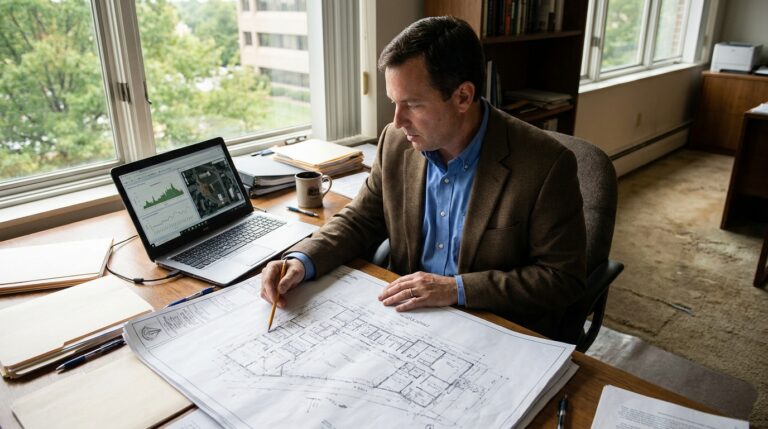
A preliminary quote becomes more accurate when you provide even partial project details. The most useful information at the early stage includes approximate disturbed acreage, general project type (residential subdivision, commercial pad, roadway, utility corridor), and the project location by city and state. If you have a concept plan, sketch, or zoning map, that helps establish scope even if grading and drainage are not yet designed.
Knowing the receiving water body or watershed, if available, can affect BMP selection and permitting complexity. If your project will be phased, mention that; phasing changes the number of plan updates and inspection schedules. If you already know the project will exceed one acre of disturbance or is part of a larger common plan of development, state that clearly.
You do not need final engineering drawings, signed grading plans, or completed drainage calculations to request a preliminary quote. The goal at this stage is a budgetary figure that helps you plan, not a binding scope of work.
What Changes Between a Preliminary Quote and the Final SWPPP Scope?
The final scope depends on information that often changes during design. Final disturbed acreage may increase or decrease as the site layout is refined. Grading plans reveal slopes, cut-and-fill areas, and drainage flow paths that determine the type, size, and number of best management practices required.
Construction phasing affects how many times the SWPPP must be updated and how long inspection services will be needed. Final impervious surface area, stormwater discharge points, and the identification of sensitive receiving waters all influence BMP design and permit conditions. If the project crosses jurisdictional boundaries or triggers additional local ordinances, that adds permit-filing and plan-revision work.
A preliminary quote typically assumes a straightforward single-phase project with standard BMPs. The final quote adjusts for complexity, additional permit submittals, design calculations, and any site-specific conditions revealed in the completed plans.
When Must the Final SWPPP Be Complete?
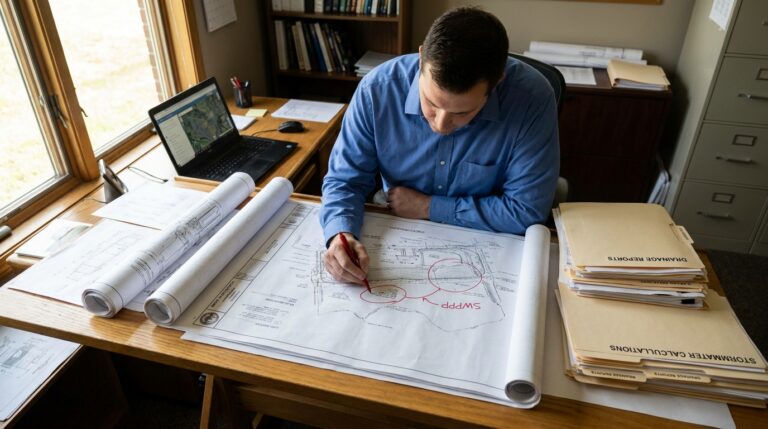
Regulatory deadlines for SWPPP completion are jurisdiction-specific and tied to permit application or Notice of Intent submission, not to the timing of a quote request. Under the EPA-administered 2022 Construction General Permit, operators must develop a SWPPP consistent with Part 7 before submitting the Notice of Intent. The SWPPP must include site-specific information such as construction areas, phasing, slopes before and after major grading, completed impervious surfaces, drainage patterns, and stormwater-control locations.
This means final or sufficiently developed design information is needed for the permit-compliant document. The 2022 EPA Construction General Permit is generally effective February 17, 2022, through February 16, 2027, in areas where EPA is the permitting authority. You can review the full permit at https://www.epa.gov/system/files/documents/2022-01/2022-cgp-final-permit.pdf.
In state-administered programs, requirements differ. For example, Minnesota requires the owner to develop a complete and accurate SWPPP before submitting the construction-stormwater permit application, including design calculations, BMP locations and quantities, construction phasing, surface-water mapping, and a site map showing existing and final grades. More information is available at https://stormwater.pca.state.mn.us/construction_stormwater_permit_overview. The timing of your quote request does not change these permit deadlines.
For a full overview of permit requirements, see our guide to the Construction General Permit.
How Should a Contractor Use a Preliminary Quote?
Treat a preliminary quote as a budgetary planning tool, not a fixed price. Use it to estimate stormwater compliance costs in your overall project budget or bid. Include a contingency for scope changes as design details emerge.
Share the preliminary quote with your design team so they understand the stormwater-plan implications of layout, grading, and phasing decisions. Early coordination can reduce costly plan revisions later. If you are bidding a project, note in your proposal that the stormwater compliance cost is based on preliminary information and subject to adjustment.
When final plans are ready, request an updated quote that reflects the completed design. That updated quote becomes the basis for your order and the scope of work for the final SWPPP.
Ready to move forward? Order your SWPPP once your final plans are available.
What Should the Preliminary Quote Clearly State?
A responsible preliminary quote should identify the assumptions it is based on and the conditions under which it may change. It should list the approximate disturbed acreage, project type, and location used to estimate the scope. It should state that BMP quantities, design calculations, plan revisions, and permitting support may change when final plans, grading, drainage, and construction phasing are available.
The quote should specify whether it includes only SWPPP preparation or also permit filing, inspection services, and plan updates during construction. If inspection frequency or duration depends on final project phasing and timeline, the quote should note that. Clarify whether the quote assumes a single jurisdiction or anticipates multiple permit submittals.
A clear preliminary quote helps both parties understand the scope and avoid disputes when the final project details differ from early assumptions. It also sets expectations for the information you will need to provide before the final SWPPP can be completed.
Can a Preliminary Quote Speed Up the Final SWPPP Process?
Requesting a preliminary quote early can streamline the final SWPPP process if you use the feedback to prepare the right information. When you receive the preliminary quote, ask what additional details will be needed for the final plan. Coordinate with your civil engineer or surveyor to ensure grading plans, drainage calculations, and construction phasing are documented in a format the SWPPP preparer can use.
If the preliminary quote identifies potential permitting issues—such as proximity to sensitive waters, steep slopes, or local ordinance requirements—you can address those during design rather than after plans are complete. Early identification of jurisdiction-specific requirements also allows time to gather necessary supporting documents or certifications.
Once final plans are ready, the SWPPP preparer already understands your project and can move directly to detailed BMP design and permit preparation. This reduces turnaround time compared to starting from scratch with a new provider.
Need a cost estimate based on your current project information? Request a SWPPP estimate to see how your project details affect pricing.
What Else Should Contractors Know About Requesting a SWPPP Quote Before Final Plans?
Does requesting a preliminary quote obligate me to use that provider?
No. A preliminary quote is an estimate, not a contract. You are free to request quotes from multiple providers and compare scope, pricing, and qualifications. If your project details change significantly, you can request updated quotes or choose a different provider when you are ready to proceed.
What if my project acreage or phasing changes after I receive a preliminary quote?
Contact the provider with the updated information and request a revised quote. Changes in disturbed acreage, construction phasing, or project timeline often affect BMP quantities, inspection frequency, and plan-update requirements. A revised quote based on current information will be more accurate than the preliminary estimate.
Can I get a preliminary quote if I don’t know the exact project location yet?
You can request a general estimate based on project type and approximate acreage, but the quote will be less accurate without a specific location. Jurisdiction determines which permit applies, what local ordinances may add requirements, and whether sensitive receiving waters or other site conditions affect BMP design. Provide at least a city and state for a more useful preliminary quote.
Should I wait for final plans before asking for a quote if my project is complex?
Complex projects benefit from early consultation. A preliminary quote can identify permitting challenges, multiple-jurisdiction requirements, or design considerations that affect your timeline and budget. Waiting until final plans are complete may mean costly redesigns if stormwater requirements were not considered during layout and grading design.
What happens if I order a SWPPP based on a preliminary quote and the final scope is larger?
The provider should issue a revised scope and price based on the final plans before completing the SWPPP. You will have the opportunity to approve the revised scope or discuss alternatives. Reputable providers do not lock you into a preliminary quote when the actual project requirements differ significantly from the initial assumptions.
Have questions about your specific project? Schedule a consultation to discuss your timeline, design stage, and compliance needs.
By Derek E. Chinners, CPESC — Founder & Stormwater Consultant, Pro SWPPP, LLC
Related: What is a SWPPP? · When is a SWPPP required? The 1-acre rule and common plans · What site information to send for a SWPPP quote · What does a SWPPP cost?