Contractors should send site location and parcel details, total disturbed acreage, project schedule, civil and grading plans, drainage patterns and discharge points, receiving waters, anticipated pollutant sources, and the names of all operators and responsible personnel. This information enables the SWPPP preparer to identify the applicable permit, design the required site map, select appropriate controls, and complete permit filings.
Pro SWPPP has prepared construction stormwater plans nationwide for 20+ years and can guide you through the information-gathering process.
Answer a few quick questions to start your SWPPP quote and receive tailored guidance on the site data you’ll need to share.
What project identification and location details do you need to provide?
Every SWPPP quote begins with basic project identification. Provide the project name, street address or location description, city, state, ZIP code, and county. If the site does not have a street address yet, include approximate coordinates or a nearby intersection.
Include parcel identification numbers when available. These identifiers help confirm jurisdiction, zoning, MS4 boundaries, and any prior permit history tied to the property.
List the project owner and all operators. An operator is any party with day-to-day operational control over construction activities or with control over project specifications. General contractors, subcontractors performing grading or utilities, and owners actively managing the work may all be operators requiring permit coverage.

What project schedule and acreage information should you include?
State the anticipated start date for earth-disturbing work and the expected completion date for final stabilization. If construction has already started, indicate the actual start date and current status.
Provide the total acreage that will be disturbed by all construction activities. Include grading, clearing, excavation, demolition, utility trenches, access roads, haul roads, borrow areas, waste areas, staging areas, and stockpile locations. Count all areas where ground cover will be removed or soil will be exposed, even temporarily.
Identify whether your project is part of a larger common plan of development or sale. A common plan includes all construction activity within a contiguous area where multiple separate projects will disturb land as part of a single development plan. The acreage threshold and common-plan rules vary by jurisdiction, so the SWPPP preparer will confirm whether your project meets the permit-coverage threshold based on total planned disturbance.
What site plans and project description should you send?
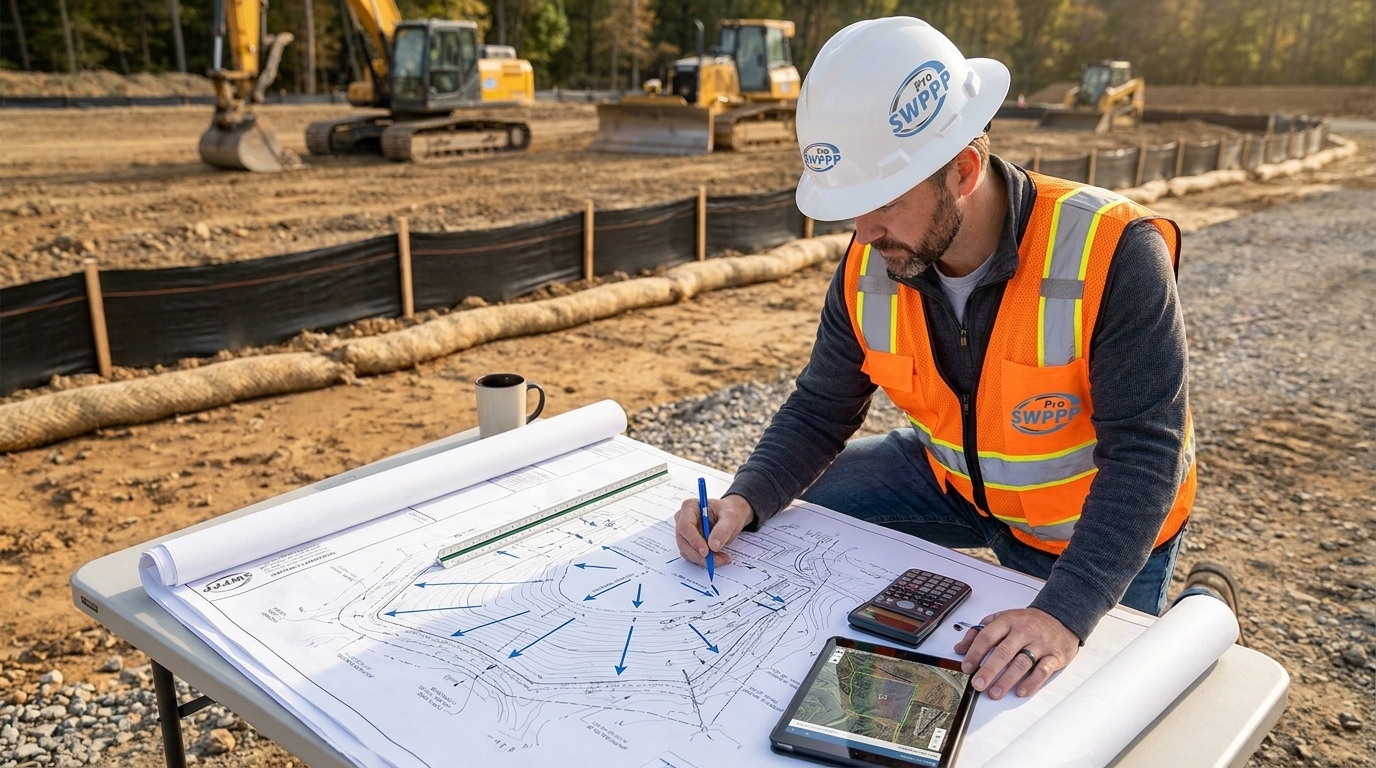
Send all available site plans in digital format. Current civil plans, grading plans, drainage plans, utility plans, erosion-control drawings, and construction-phasing schedules all help the preparer understand the sequence of work and required controls.
Include existing and proposed contours, impervious-area calculations, and any preliminary stormwater-management designs. If final plans are not ready, preliminary or conceptual drawings are still useful and can be updated later through a SWPPP amendment.
Describe the intended construction activities in practical terms. Identify grading, building construction, paving, utilities, demolition, dewatering, concrete work, landscaping, excavation, and any other activities that will expose soil or generate pollutants. Mention whether the project involves deep cuts, large fills, or mass grading that could affect drainage or sediment risk.
What soils, slopes, and drainage information are important?
Provide any geotechnical reports, soil-survey data, or infiltration test results. Soil type affects the selection of erosion controls, sediment basins, and permanent stormwater facilities. Highly erodible soils, clay, or sandy soils each require different management approaches.
Identify steep slopes, areas prone to erosion, and any known groundwater or infiltration constraints. If the site includes slopes greater than three horizontal to one vertical, or if shallow bedrock or high groundwater is present, note those conditions.
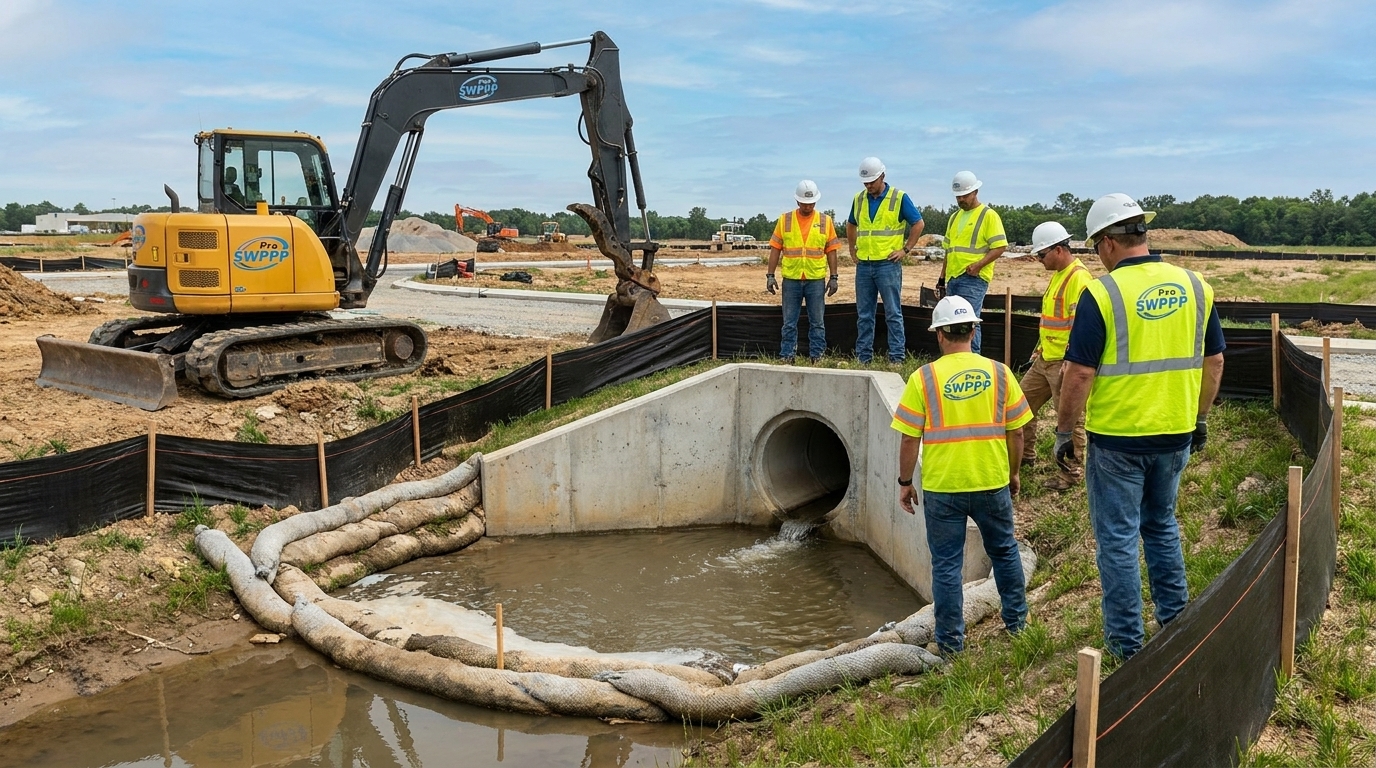
Describe existing and proposed drainage patterns. Show where stormwater flows on-site and where it leaves the property. Identify all discharge points, including connections to storm drains, curb inlets, culverts, ditches, and direct sheet-flow discharge to adjacent properties or waters.
What receiving waters and environmental features should you identify?
Identify all nearby surface waters, including streams, rivers, lakes, ponds, wetlands, and coastal waters. Note the name of the first receiving water for each discharge point and whether that water is on the site or downstream.
Indicate whether any receiving waters are impaired, listed under Clean Water Act Section 303(d), or designated as special-protection waters such as drinking-water sources, outstanding national resource waters, or cold-water fisheries. Many permits impose additional requirements or discharge limits when construction drains to these sensitive waters.
Where required by the applicable permit, provide information to support endangered-species and historic-preservation determinations. EPA’s 2022 Construction General Permit requires operators to evaluate potential impacts and complete specific eligibility criteria before submitting a Notice of Intent. State programs may have different procedures. The SWPPP preparer can identify the applicable requirements once jurisdiction is confirmed.
What pollutant sources and materials information do you need to share?
List all materials and activities that could generate stormwater pollutants. Common sources include concrete washout, fuels and oils, paints and solvents, fertilizers, pesticides, building products, solid waste, portable toilets, vehicle and equipment maintenance, and dewatering discharges.
Identify any planned chemical treatment of stormwater, such as flocculants, polymers, or pH adjustment. Chemical treatment may require prior approval from the permitting authority and additional monitoring, depending on the jurisdiction.
Note if hazardous materials will be stored on-site or if the project involves demolition of structures containing lead paint, asbestos, or other regulated substances. These activities may require separate permits or spill-prevention plans in addition to the SWPPP.
What existing controls and permit history should you provide?
If an erosion and sediment control plan, stormwater-management design, or preliminary BMP layout already exists, send it with the quote request. Existing designs can be incorporated into the SWPPP and streamline preparation.
Provide detention or sediment-basin calculations, permanent stormwater facility plans, and proposed BMP quantities or specifications if available. If the site will include infiltration basins, bioretention, or other post-construction controls, describe those facilities and their intended function.
Disclose any prior or existing permit coverage for the site, including permit numbers, authorization dates, and the permitting authority. Identify the MS4 jurisdiction and whether a municipal review, approval, or waiver is required before permit coverage can begin. MS4 requirements vary widely; some municipalities require detailed plan review and formal acceptance, while others issue no-jurisdiction letters or provide streamlined approval for smaller projects.
Order your SWPPP online and upload your site plans, project details, and contact information through a simple guided process.
What responsible personnel and operator information is required?
Provide contact information for the project owner, general contractor, subcontractors with operational control, and the design professional if applicable. Include names, company names, mailing addresses, phone numbers, and email addresses for each operator.
Identify who will be responsible for SWPPP implementation, BMP installation, inspection, maintenance, record-keeping, and permit compliance. Some permits require the SWPPP to list a qualified person who will conduct inspections and a person responsible for amending the plan when conditions change.
If you already have a certified SWPPP preparer or inspector, include their credentials and contact information. Pro SWPPP prepares the plan, files permits, performs inspections, and keeps records; your crews install the controls and maintain the site.
How does jurisdiction affect the information you need to send?
The exact information required for a SWPPP quote depends on whether your project will be covered under EPA’s federal Construction General Permit or a state-administered NPDES program. EPA’s 2022 CGP applies only where EPA is the permitting authority and where the site meets that permit’s eligibility conditions. Most states administer their own construction stormwater programs with distinct permit names, thresholds, application processes, and SWPPP content requirements.
A state-administered program may require additional site details, such as surface waters within a certain distance, soil-type maps, detailed grading calculations, or specific BMP design standards. Do not assume that EPA’s federal permit requirements apply to your state unless EPA is the permitting authority.
The SWPPP preparer will confirm the applicable permit, permitting authority, acreage threshold, NOI filing method, MS4 review requirements, and SWPPP content standards once the project location and jurisdiction are identified. Items such as inspection frequency, receiving-water restrictions, chemical-treatment approval, and endangered-species procedures are jurisdiction-specific and must be drawn from the controlling permit.
Want a working figure before you gather every document? Request a SWPPP estimate using the project details you already have.
What else do contractors ask before sending site information for a SWPPP quote?
Do I need to send final plans to get a SWPPP quote?
No, preliminary or conceptual plans are sufficient to prepare a quote. The SWPPP can be finalized once construction plans are complete, and the plan can be amended if site conditions or project scope change during construction.
What if I don’t know all the receiving waters or discharge points yet?
Provide as much information as you have. The SWPPP preparer can help identify discharge points and receiving waters from site plans, topographic maps, and available drainage data. A site visit or detailed survey may be needed for complex sites.
Does the quote depend on how much acreage I’m disturbing?
Yes, disturbed acreage affects the permit threshold, required controls, inspection frequency, and overall plan complexity. Larger projects typically require more detailed drainage analysis, sediment basins, and permanent stormwater facilities. SWPPP cost generally increases with site size and complexity.
What if my project is in multiple municipalities or crosses county lines?
Identify all jurisdictions involved. Each municipality may have its own MS4 requirements, and crossing county lines can affect permit fees, review processes, and enforcement authority. The SWPPP preparer will coordinate coverage across all applicable jurisdictions.
Can I get a quote before I know my project schedule?
Yes, you can request a quote with an approximate timeline. The SWPPP and permit filings can be prepared in advance and held until you are ready to begin earth-disturbing work. Most permits require the SWPPP to be complete before the Notice of Intent is submitted and before construction starts.
What happens if site conditions change after I send the information?
The SWPPP must be amended whenever there is a change in design, construction, operations, or maintenance that affects the discharge of pollutants or when the plan proves ineffective. Send updated plans and a description of the changes, and the preparer will issue an amended SWPPP and update permit records as required.
Will the SWPPP preparer need site access?
Often, yes. Note any access restrictions in your quote request — locked gates, escort or badging requirements, limited hours, or active-traffic constraints — because they affect how inspections are scheduled and documented. Pro SWPPP prepares the plan, files the permits, inspects, and keeps the records; your crews install and maintain the controls.
Schedule a SWPPP consultation to discuss your project, review your site information, and confirm the documentation needed for your quote.
By Derek E. Chinners, CPESC — Founder & Stormwater Consultant, Pro SWPPP, LLC
Related: How long does it take to get a SWPPP? · What is a SWPPP? · When is a SWPPP required? The 1-acre rule and common plans · What does a SWPPP cost? · Can you get a SWPPP quote before final site plans? · SWPPP inspection requirements