Pro SWPPP – America’s #1 SWPPP Service – helps contractors across Colorado meet their Stormwater Management Plan (SWMP) requirements without the stress, confusion, or last-minute scrambles that can shut down a job site. If you’re working construction in Colorado and you disturb one acre or more, you need a SWMP. It’s not optional. It’s the law. And it’s your ticket to staying compliant with the Colorado Department of Public Health and Environment (CDPHE), avoiding fines, and keeping your project on schedule. This guide walks you through every single thing you need to know about Colorado SWMP requirements, how they work, what’s inside them, and how to get yours done right the first time.
What Is a Colorado SWMP and Why Does It Matter?
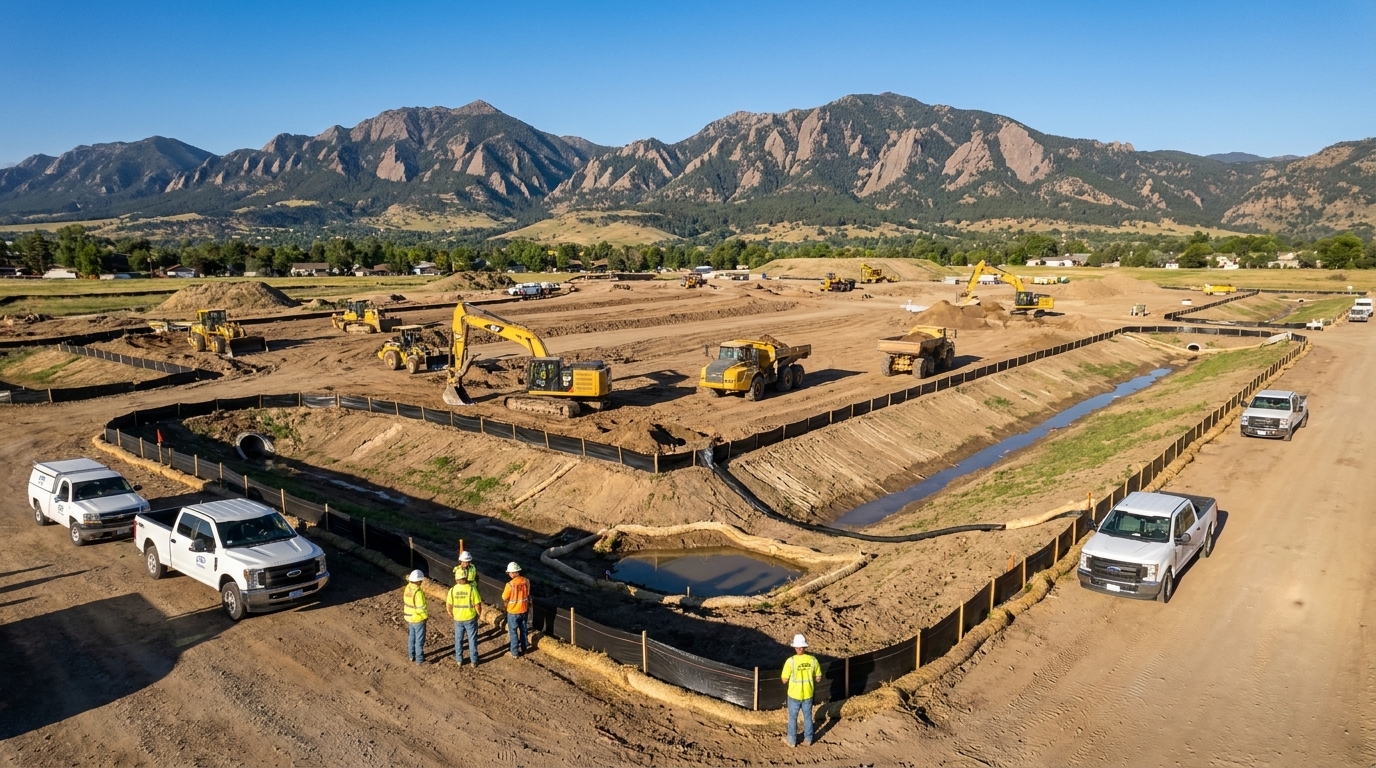
Colorado calls it a Stormwater Management Plan, or SWMP. Most other states call it a SWPPP. Same idea. Different name. The SWMP is the written document that explains how you’re going to keep mud, sediment, trash, chemicals, and other pollutants from washing off your construction site into streams, rivers, and storm drains. It’s required by the Colorado Discharge Permit System (CDPS) Construction Stormwater General Permit, also known as COR400000.
The SWMP isn’t just a piece of paper you toss in a binder and forget about. It’s a living document. You build it before construction starts. You keep it on site. You follow it every single day. You update it when conditions change. And when an inspector shows up, you better have it ready.
Pro SWPPP has prepared SWMPs for projects from Fort Collins to Colorado Springs, Denver to Grand Junction. We know the state rules, the local add-ons, and the common mistakes that get contractors in trouble. Let’s break down what you need to know.
Who Needs a SWMP in Colorado?
If your construction project will disturb one acre or more of land, you need a SWMP. Period. That includes grading, excavation, demolition, clearing, stockpiling, or any other activity that exposes soil. It also includes projects that disturb less than one acre if they’re part of a larger common plan of development or sale that adds up to one acre or more. That means a subdivision, a shopping center, or a phased industrial park all count as one big project, even if your piece is small.
Some local governments and agencies require a SWMP even if you’re under one acre. CDOT, for example, expects a SWMP for nearly every project that involves earth disturbance, with permit coverage kicking in when you hit the one-acre threshold. Boulder County and Westminster have their own rules that can trigger SWMP requirements below the state threshold. When in doubt, assume you need one. Pro SWPPP can review your project scope in minutes and tell you exactly what applies.
Don’t want to mess with all the paperwork? Order your SWPPP now with Pro SWPPP Professional CPESC Certified SWPPP Services.
Not sure whether your Colorado site crosses the line? Take the 60-second quiz — Do I even need a SWPPP?
Common Plan of Development: What It Means
A common plan means any project where multiple separate activities occur under one master development. Think of a residential subdivision where ten different builders each construct homes on separate lots. Each builder might disturb less than one acre, but the total subdivision is twenty acres. Every single one of those builders needs permit coverage and a SWMP because they’re part of a common plan.
This catches a lot of contractors off guard. You can’t just look at your own work area. You have to look at the whole project. If the total disturbance is one acre or more, you’re in. Pro SWPPP helps clients navigate these situations every week.
When Do You Need Your SWMP Ready?
Your SWMP must be completed before construction activities begin. That’s the rule. You can’t start grading, clearing, or moving dirt until your SWMP is done. For public emergency projects, the state gives you 14 days after construction starts to finish the plan. But that’s the exception, not the rule. For everyone else, the SWMP comes first.
The current permit allows you to complete the SWMP before construction begins, not necessarily before you submit your permit application. That’s a small change from older versions. But don’t cut it close. Agencies like CDOT and local counties expect the SWMP to be part of the project design and bid documents so contractors know what they’re signing up for. Pro SWPPP recommends having your SWMP ready during the design phase, long before the first shovel hits the ground.
Not sure what your project needs? Schedule a Free SWPPP Consultation with CPESC Certified SWPPP Expert Derek E. Chinners.
What Goes Into a Colorado SWMP?
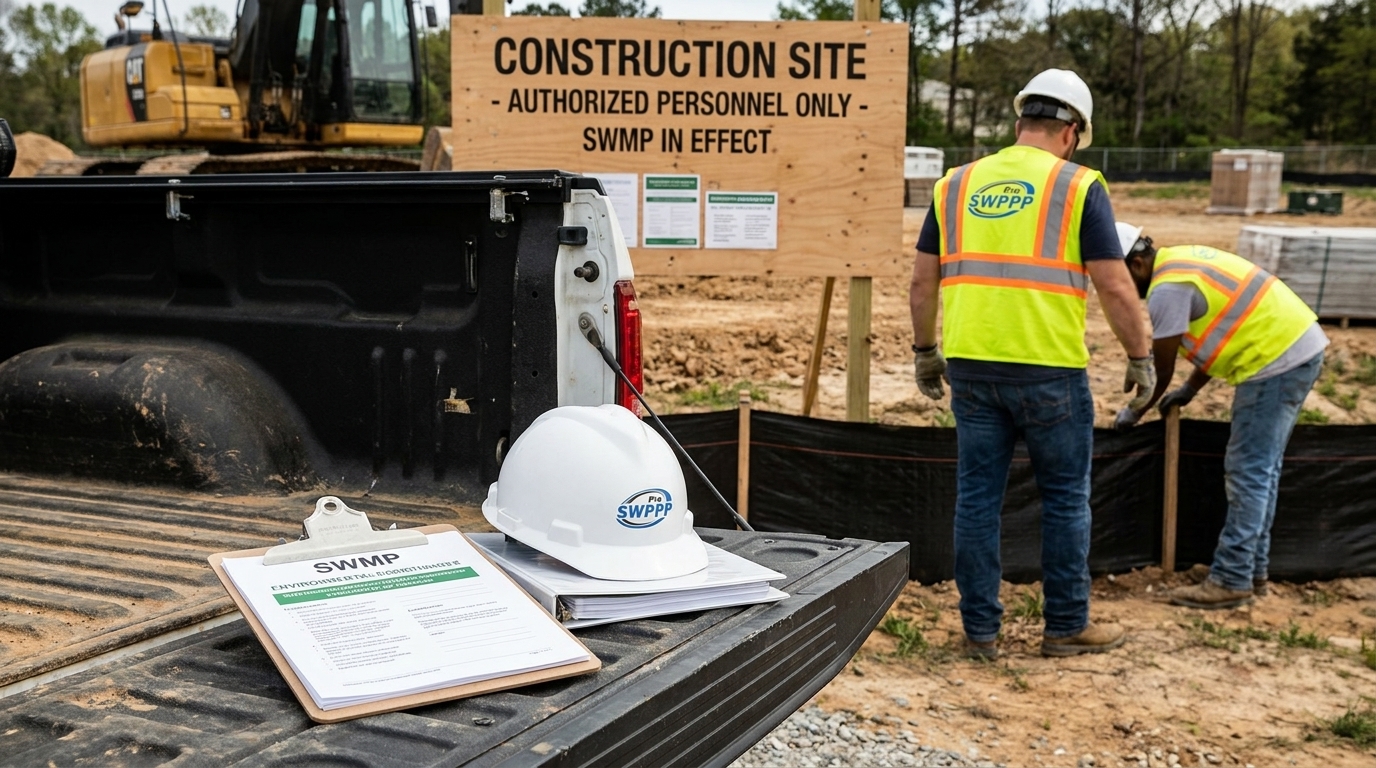
A Colorado SWMP is more than a checklist. It’s a detailed plan tailored to your specific site. Here’s what must be inside it.
Site Information and Mapping
Your SWMP needs a clear location map showing the site boundaries, limits of disturbance, flow directions, discharge points, and receiving waters. You need to show where stormwater enters and leaves the site. You need to identify soil types, wetlands, and any protected resources like threatened species habitat or cultural sites. The map should show existing vegetation you plan to protect and any unique landscape features.
Local agencies want these maps legible and accurate. If an inspector can’t read your map or find your BMPs on it, you’re in trouble. Pro SWPPP creates site-specific maps that meet state and local standards every time.
Pollution Source Identification
You must list every possible pollutant source on your site that could affect stormwater. That includes:
- Stockpiles of dirt, gravel, or construction materials
- Fueling areas and equipment storage
- Concrete washout stations
- Vehicle and equipment maintenance areas
- Waste containers and porta-potties
- Chemical storage (paints, solvents, additives)
- Disturbed soil areas prone to erosion
For projects one acre or larger, Boulder County requires a formal evaluation of potential pollution sources. Pro SWPPP includes this evaluation in every plan we prepare. We know what inspectors look for and we make sure you’re covered.
Best Management Practices (BMPs)
This is the heart of your SWMP. You must describe the erosion and sediment controls you’ll use to protect water quality. That means silt fences, sediment basins, rock check dams, inlet protection, stabilized construction entrances, and more. You also need a seeding and stabilization plan, including mulching, fertilizing, and phased stabilization if your project is large or will take months to complete.
CDOT projects require a detailed tabulation of all erosion and sediment control measures, their locations, and installation standards. Your plan must explain how you’ll slow down runoff, minimize disturbed soil, and prevent off-site sediment discharge. Pro SWPPP designs BMP packages that meet good engineering practices and comply with Colorado rules. We include standard details and site-specific notes so your field crews know exactly what to build.
For a comparison of requirements in other states, check out Texas SWPPP Services and Georgia SWPPP Services.
Qualified Stormwater Manager
Your SWMP must name the person responsible for implementing it. This is the Qualified Stormwater Manager or SWMP Administrator. The permit requires you to list them by name and title. This person oversees inspections, maintenance, and plan updates. They’re the point of contact when an inspector shows up.
Colorado doesn’t require a PE to prepare the SWMP, but the manager should be trained. Many projects use professionals with CPESC or CESSWI certifications. Pro SWPPP is CPESC certified and we can serve as your Qualified Stormwater Manager or train your team to take on the role.
Inspection and Maintenance Procedures
Your SWMP must spell out how often you’ll inspect BMPs and what you’ll do when you find problems. The standard is inspections on one of two schedules: at least once every 7 calendar days, or at least once every 14 calendar days provided you also inspect within 24 hours after the end of any precipitation or snowmelt event that causes surface erosion. Colorado sets no minimum rainfall amount for that post-storm trigger — the test is whether the event caused erosion, not whether it reached a fixed inch total, so the 0.5-inch threshold that circulates in generic checklists does not apply in Colorado. Sites discharging to designated Outstanding Waters must inspect every 7 calendar days regardless of which option they pick. Some local rules are stricter. You need to document every inspection and keep those records with the SWMP for at least three years after permit termination.
Inspections aren’t paperwork for the sake of paperwork. They’re how you catch problems before they turn into violations. A silt fence that’s buried in mud doesn’t work. A sediment basin that’s full doesn’t hold sediment. Pro SWPPP helps clients set up simple inspection logs and schedules so nothing slips through the cracks.
How Does the SWMP Relate to the COR400000 Permit?
The SWMP is required by the COR400000 Construction Stormwater General Permit. That permit is issued by the Colorado Department of Public Health and Environment, Water Quality Control Division. The permit gives you the legal authorization to discharge stormwater from your construction site. The SWMP is the document that shows how you’ll do that without violating water quality standards.
You don’t submit the SWMP with your permit application. Instead, you certify that it’s complete or will be complete before construction starts. You keep the SWMP on site and make it available to CDPHE, EPA, and local inspectors on request. You implement the SWMP from day one of construction until you achieve final stabilization and terminate your permit. Pro SWPPP can prepare your SWMP, help you apply for COR400000 coverage through the Colorado Environmental Online Services (CEOS) portal, and support you all the way to final stabilization.
What Happens If Your SWMP Is Wrong, Incomplete, or Not Followed?
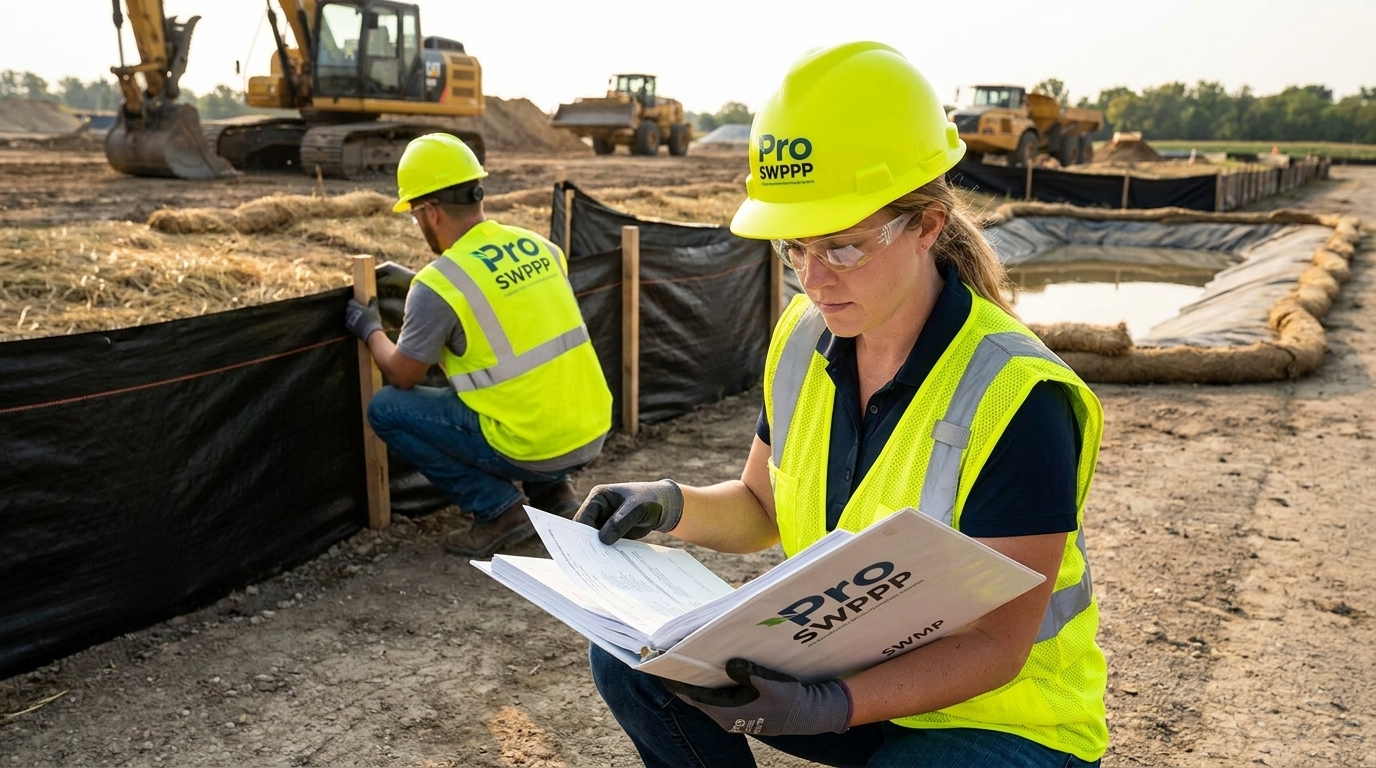
Failing to have a SWMP, or having one that’s incomplete or not implemented, is a violation of your permit and Colorado law. Inspectors from CDPHE or local agencies can shut you down. They can issue notices of violation, compliance orders, and fines. EPA can get involved if the problem is serious or repeated. Local MS4 communities have their own enforcement tools, including stop-work orders and permit revocations.
Common violations include no SWMP on site, BMPs not installed as described, missing inspection records, and sediment leaving the site. These violations can cost tens of thousands of dollars in fines. They can delay your project for weeks. And they can damage your reputation with owners and general contractors.
Pro SWPPP has seen it all. We help contractors avoid these problems by delivering compliant, thorough SWMPs that inspectors respect. We also offer training and ongoing support so your team knows what to do in the field.
Recent Changes to Colorado SWMP Requirements (2024 Update)
The COR400000 permit was modified with an effective date of April 1, 2024. CDOT released new SWMP templates to match the updated permit. If your project was advertised or permitted after April 1, 2024, you need to follow the new requirements. The core elements haven’t changed, but documentation standards and inspection expectations have tightened.
The permit now explicitly allows SWMPs to be completed before construction begins rather than before the application is submitted. That gives contractors a bit more flexibility in timing, but it doesn’t change the fact that you can’t start work without a finished SWMP. The 14-day emergency exception remains for public projects.
Local agencies are also modernizing. Boulder County moved away from requiring its old SWMP template but still expects plans to meet its Storm Drainage Criteria Manual and stormwater quality checklist. More agencies are using electronic portals like Accela for SWMP submittals and tracking. Pro SWPPP stays current with all these changes so your plan is always up to date.
How Much Does a Colorado SWMP Cost?
The direct permit fee for COR400000 is a few hundred dollars per year, paid through the CEOS portal. But the real cost is in preparing the SWMP, installing and maintaining BMPs, conducting inspections, and keeping records. If you hire a consultant to prepare your SWMP, expect to pay anywhere from a few hundred to a few thousand dollars depending on project size, complexity, and local requirements.
CDOT projects and large county projects with extensive BMP designs and phased stabilization plans cost more. Small one-acre sites with simple controls cost less. Pro SWPPP offers flat-rate pricing with 72-hour turnaround so you know what you’re paying and when you’ll have your plan. No surprises. No hidden fees. Just fast, professional service that keeps your project moving. Learn more at our About page.
Why Pro SWPPP is the SWPPP Service Contractors Trust
Pro SWPPP has been preparing compliant SWMPs for contractors across Colorado and nationwide as a family-owned firm with 20+ years in stormwater compliance. We’re CPESC certified, which means we hold the highest professional credential in erosion and sediment control. We know Colorado’s rules inside and out. We know what CDPHE inspectors expect. And we know how to deliver plans that protect your project and your bottom line.
Speed Without Sacrificing Quality
We deliver most SWMPs in 72 hours or less. That means you can get your permit application moving, satisfy your owner or general contractor, and start construction on schedule. Fast doesn’t mean sloppy. Every plan we produce is tailored to your site, reviewed by a CPESC professional, and backed by 20+ years of field experience.
Statewide and National Experience
We’ve worked projects in Denver, Colorado Springs, Fort Collins, Boulder, Grand Junction, Pueblo, and dozens of smaller communities. We’ve prepared SWMPs for CDOT highway projects, residential subdivisions, commercial developments, and industrial sites. We also serve clients nationwide. That breadth of experience means we’ve seen every scenario and we know how to handle it. Get a free estimate for your Colorado project.
Ongoing Support and Training
Your SWMP isn’t a one-and-done document. You’ll need to update it as site conditions change. You’ll need help with inspections, BMP maintenance, and permit termination. Pro SWPPP offers ongoing support packages and training for your field crews. We can serve as your Qualified Stormwater Manager or coach your team so they’re confident and compliant every day.
Compliance You Can Count On
Our plans meet or exceed Colorado SWMP requirements, CDOT specifications, and local agency standards. We include detailed site maps, pollution source evaluations, BMP designs, inspection schedules, and all required certifications. Inspectors know a Pro SWPPP plan when they see one. That’s the reputation we’ve built, and it’s the peace of mind we deliver to every client.
For additional guidance on federal stormwater rules, see the EPA’s Construction Stormwater page.
FAQ
Do I need a SWMP if I’m disturbing less than one acre in Colorado?
If your project disturbs less than one acre and is not part of a larger common plan of development, you generally do not need COR400000 permit coverage or a SWMP under state rules. But some local agencies and CDOT require SWMPs for smaller projects. Check with your local government or project owner. Pro SWPPP can review your situation and tell you exactly what applies.
Can I use a generic SWPPP template for my Colorado project?
No. Colorado has specific SWMP requirements under the COR400000 permit, and many local agencies add their own rules. A generic template from another state or an online form won’t meet Colorado standards. You need a site-specific plan that addresses your actual conditions, pollutant sources, and BMPs. Pro SWPPP prepares custom SWMPs for every project. No cookie-cutter documents.
How often do I need to inspect my BMPs in Colorado?
The COR400000 permit requires inspections on one of two schedules: at least once every 7 calendar days, or at least once every 14 calendar days provided you also inspect within 24 hours after the end of any precipitation or snowmelt event that causes surface erosion. Colorado sets no minimum rainfall amount for that post-storm trigger — the test is whether the event caused erosion, not whether it reached a fixed inch total, so the 0.5-inch threshold that circulates in generic checklists does not apply in Colorado. Sites discharging to designated Outstanding Waters must inspect every 7 calendar days regardless of which option they pick. Some local rules are stricter. Your SWMP will spell out the exact schedule for your project. You must document every inspection and keep those records on site for at least three years after permit termination.
What happens if my SWMP isn’t on site when an inspector shows up?
That’s a violation. The permit requires you to keep the SWMP on site at all times during construction and to make it available on request. If you don’t have it, you can be cited, fined, and potentially shut down. Keep a paper copy in your job trailer or a digital copy accessible on a tablet or phone. Pro SWPPP delivers plans in both formats.
Do I need a licensed engineer to prepare my Colorado SWMP?
No. The COR400000 permit does not require a PE to prepare the SWMP. It must be prepared in accordance with good engineering, hydrologic, and pollution control practices, but the preparer does not need to be a licensed engineer. Many contractors hire CPESC-certified professionals like Pro SWPPP to ensure their plans meet all requirements and stand up to inspection.
When can I terminate my COR400000 permit and stop using my SWMP?
You can terminate your permit only after you achieve final stabilization. That means all construction activities are complete, all disturbed areas are permanently stabilized with vegetation or other cover, and all temporary BMPs are removed. You submit a notice of termination through the CEOS portal. Your SWMP must remain on site and in effect until that termination is approved.
Can Pro SWPPP help with permit applications and inspections, or just the SWMP document?
Pro SWPPP offers full-service stormwater compliance support. We prepare your SWMP, help you apply for COR400000 coverage through CEOS, conduct or train your team for inspections, update your plan as conditions change, and support you all the way to final stabilization and permit termination. We’re your one-stop solution for Colorado construction stormwater compliance.
Ready to get started? Order your SWPPP now or schedule a free consultation with Pro SWPPP.
Visit Pro SWPPP and see why Colorado contractors hand us the SWMP — 180+ five-star Google reviews and counting.
By Derek E. Chinners, CPESC — Founder & Stormwater Consultant, Pro SWPPP, LLC
Related: What is a SWPPP? · When is a SWPPP required? The 1-acre rule and common plans · Colorado SWPPP requirements · Colorado Springs SWMP requirements · Denver CDPHE requirements