Pro SWPPP knows the drill. You’re about to break ground in Oklahoma City. Your permit checklist says you need a SWPPP. Or was it an NOI? Or both? And how does the city fit in? If you’re scratching your head, you’re not alone. OKC stormwater rules layer state permits, city permits, and federal Clean Water Act mandates into one big compliance puzzle. Get it wrong and you face stop-work orders, fines, and delays. Get it right and your project rolls smoothly from day one.
This guide cuts through the confusion. We’ll show you exactly when you need a SWPPP, when you need an NOI, and how Oklahoma City’s own requirements stack on top of the state’s OPDES program. By the end, you’ll know which forms to file, which documents to keep on site, and how to stay compliant without wasting time or money.

Understanding the Regulatory Framework in OKC
Oklahoma City stormwater rules come from two places: the state and the city. The Oklahoma Department of Environmental Quality (ODEQ) runs the OPDES program under the Clean Water Act. That program includes the OKR10 Construction General Permit for construction sites and the OKR05 permit for industrial facilities. ODEQ handles state-level enforcement and permit issuance.
At the same time, Oklahoma City operates a regulated Municipal Separate Storm Sewer System (MS4). The city enforces its own stormwater ordinances and land-disturbance permit requirements. In practice, this means most construction projects need both state OKR10 coverage and a city Construction Stormwater Discharge Permit. For more on how Oklahoma’s state-level rules work across the board, see Oklahoma SWPPP Requirements.
The bottom line: OKC projects face a two-layer system. State law sets the floor. City ordinances add extra steps and paperwork. Miss either layer and you’re out of compliance.
When Do You Need a SWPPP in Oklahoma City?
A Stormwater Pollution Prevention Plan (SWPPP) is the detailed roadmap of how you’ll manage stormwater on your construction site. It describes your erosion control and sediment control Best Management Practices (BMPs), inspection schedules, and pollution-prevention measures. Think of it as the playbook that keeps mud, chemicals, and debris from washing into storm drains and creeks.
State OKR10 Trigger: One Acre or More
Under Oklahoma’s OPDES OKR10 Construction General Permit, you must prepare a SWPPP before starting construction if your project disturbs one acre or more. This rule also applies if your project is part of a larger common plan of development that will eventually disturb one acre or more, even if your individual phase is smaller. You develop the SWPPP before submitting your Notice of Intent (NOI) to ODEQ. You cannot legally start construction without OKR10 coverage in place.
City OKC Trigger: All Land-Disturbing Activities
Oklahoma City goes further. The city’s Land Disturbing Permit Submittal Requirements checklist divides projects into three priority tiers. Priority I projects disturb one acre or more and must submit a full SWPPP using the OKR10-SWP3 template. Priority II and III projects disturb less than one acre but still need an “OKC Construction SWPPP Less Than One Acre” and a site map showing erosion control BMPs. Small demolition jobs, grading for a single-family house, and utility repairs all fall into these lower tiers.
In short, nearly every construction activity that moves dirt in Oklahoma City requires some form of SWPPP. The only difference is how detailed the plan must be and whether you also need state OKR10 coverage.
What Is an NOI and When Do You File One?
The Notice of Intent (NOI) is the application form you submit to ODEQ to request OKR10 permit coverage. It tells the state who you are, where you’re building, how many acres you’ll disturb, and which receiving waters your stormwater will discharge into. Filing an NOI is how you officially enter the OPDES construction permit program.
State NOI Requirements
You must file an NOI if your construction project disturbs one acre or more, or is part of a common plan exceeding one acre. The NOI must be submitted before you begin any construction or land-clearing activity. Along with the NOI, you pay a $100 application fee and a $347.71 annual fee for new projects. You also must have a completed SWPPP prepared and ready, though under the current permit cycle (effective October 2022 through 2027) you generally do not submit the SWPPP itself to ODEQ unless requested. The SWPPP stays on site and must be available for inspection.
City Permit Process
After filing your state NOI, you also submit your city Construction Stormwater Discharge Permit application and SWPPP materials through Oklahoma City’s Accela Citizen Access portal or by email to [email protected]. The city reviews your erosion control plans and SWPPP as part of broader development review. You cannot pull a city grading or building permit until both state and city stormwater permits are in place.
Don’t want to mess with all the paperwork and requirements? Check out Order your SWPPP now with Pro SWPPP Professional CPESC Certified SWPPP Services.
Core SWPPP Requirements for OKC Construction Projects
A compliant Oklahoma City SWPPP must include several key sections. These elements ensure your plan covers every angle of stormwater management from pre-construction through final stabilization.
- Cover page and project information: Project name, address, owner, operator, and contact details.
- Qualified person and SWPPP contacts: Name and credentials of the person responsible for SWPPP updates and inspections.
- Site description and detailed site map: Show boundaries, drainage patterns, outfalls, disturbed areas, stockpiles, and nearby surface waters.
- Potential pollutant sources: Identify sediment, concrete washout, fuels, chemicals, trash, and sanitary waste risks.
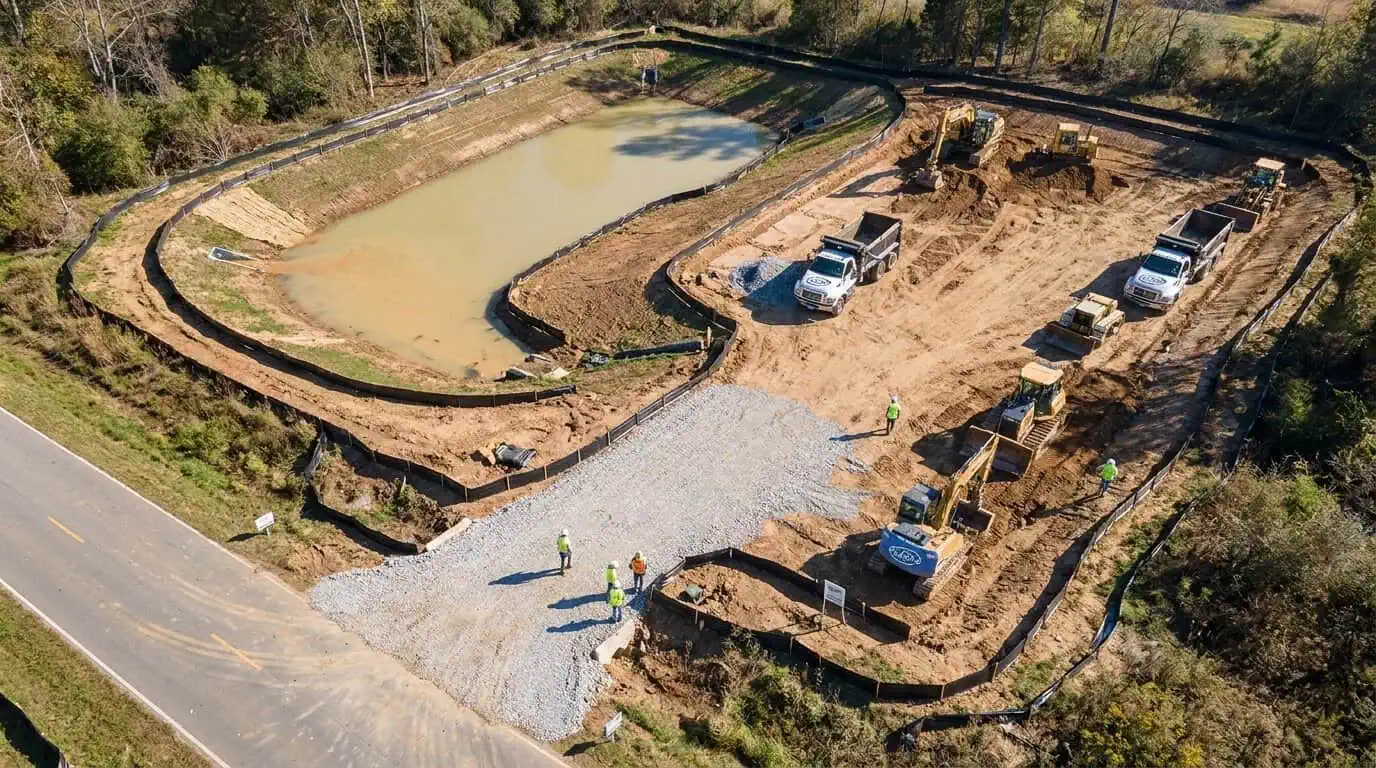
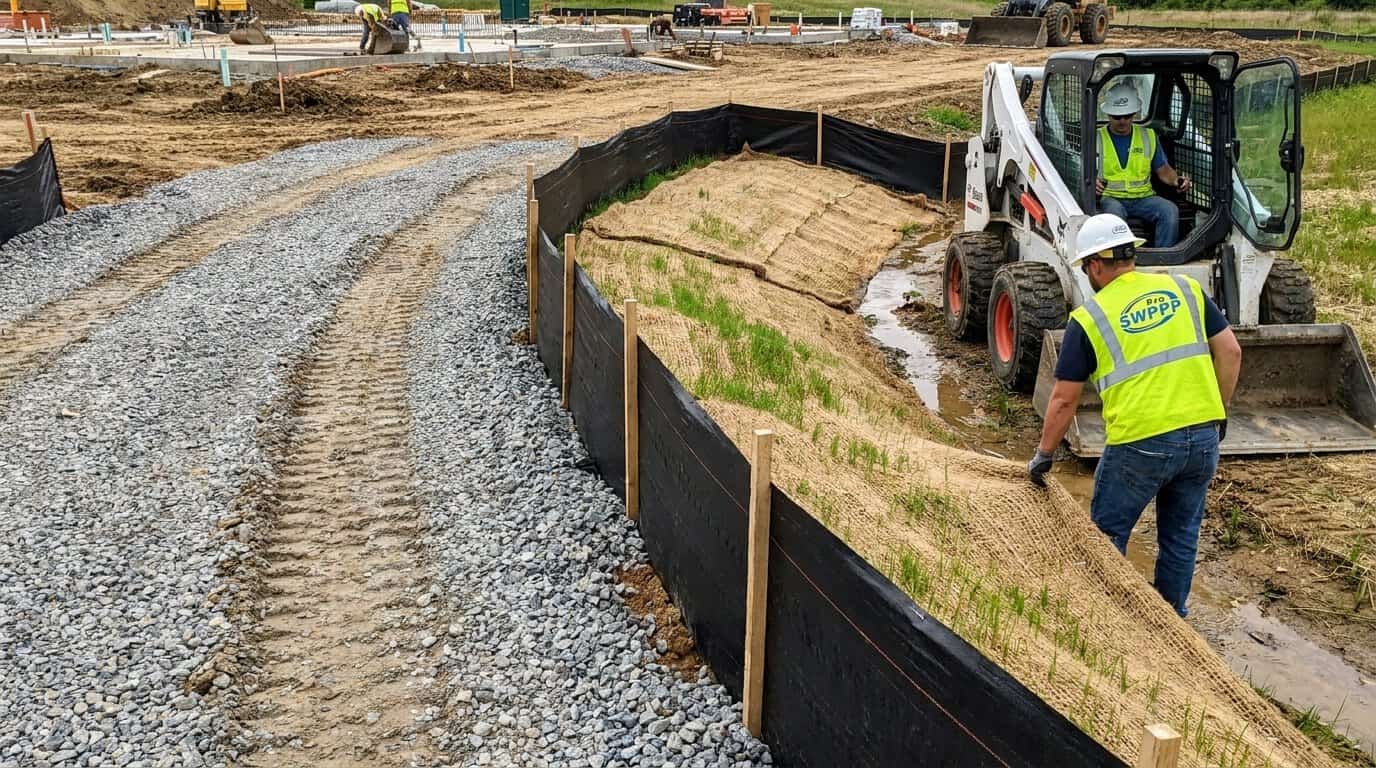
- Erosion and sediment control BMPs: Describe silt fences, sediment basins, check dams, inlet protection, and stabilization methods.
- Pollution-prevention measures: Document spill kits, secondary containment, vehicle wash areas, and concrete washout pits.
- Inspection and maintenance schedules: Commit to weekly inspections and post-storm inspections within 24 hours of any rain event exceeding 0.5 inches.
- Record-keeping procedures: Describe how you’ll log inspections, corrective actions, and SWPPP amendments.
Your site map must show buffer zones. Typical OKC templates require a 50-foot vegetated buffer between disturbed areas and surface waters. If your site drains to a classified or losing stream or is near a sinkhole, the buffer increases to 100 feet or more. Sediment basins are required for any drainage area exceeding two disturbed acres, sized at a minimum of 3,600 cubic feet per disturbed acre.
Best Management Practices You Must Include
Oklahoma City expects construction SWPPPs to specify both structural and non-structural BMPs. Here are the most common controls required in OKC plans.
Erosion and Sediment Control
- Phase clearing and grading to minimize exposed soil at any one time.
- Preserve existing vegetation wherever possible.
- Install silt fencing along down-slope perimeters.
- Use inlet protection devices on all storm drains within and down-gradient of the site.
- Build check dams in swales and ditches to slow runoff and trap sediment.
- Construct sediment traps or basins for larger drainage areas.
- Install stabilized construction entrances with crushed stone to prevent track-out onto public roads.
Dust Control
Dust from grading and vehicle traffic can clog storm drains and become a pollutant when it washes off paved surfaces. Control dust by applying water via sprinklers or water trucks, placing wind barriers, and using mulch with binders or tackifiers on slopes. Sweep or vacuum sediment from paved roads daily before it enters the storm system.
Concrete Washout and Vehicle Wash
Concrete wash water is highly alkaline and toxic to aquatic life. Designate concrete washout pits at least 50 feet from storm drains and ditches and at least 100 feet from sensitive waters. Never discharge wash water directly to storm drains. Pump or pipe wash water to a sediment basin or treatment structure before release. The same rule applies to vehicle and equipment wash areas.
Spill Prevention and Pollution Control
- Keep spill kits on site with absorbent pads, booms, and containment materials.
- Store fuels, oils, and chemicals in secondary containment with covers to prevent rain contact.
- Label all hazardous material containers clearly.
- Post “No Dumping” signs at storm drains and paint storm drain stencils.
- Train all employees and subcontractors on spill response and stormwater prohibitions.
Inspection, Documentation, and Maintenance
Writing a SWPPP is only half the battle. Keeping it current and proving you’re following it is the other half. Oklahoma’s OKR10 permit and city ordinances require rigorous inspection and record-keeping.
Weekly and Post-Storm Inspections
You must inspect your site at least once every seven calendar days and within 24 hours after any storm that produces 0.5 inches or more of rain. Document every inspection on a standardized form. Note the condition of BMPs, any signs of erosion or sediment release, and needed repairs. Make corrections immediately and document the corrective actions in your SWPPP log.
Keeping the SWPPP Current
Your SWPPP is a living document. As you move from one construction phase to the next, update the plan to reflect new disturbed areas, completed stabilization, and changed BMPs. Keep the updated SWPPP, your NOI acknowledgment letter, and all inspection records in a weatherproof container on site. Inspectors from ODEQ or the city can ask to see these documents at any time.
Not sure your Oklahoma City site triggers the requirement? Take the 60-second SWPPP quiz.
Recent Changes and Trends in OKC Stormwater Compliance
Oklahoma’s stormwater program has evolved in the past few years. Understanding these changes helps you avoid outdated advice and stay compliant with current rules.
Streamlined SWPPP Submittals
Under the current OKR10 permit cycle (effective October 2022 through 2027), ODEQ no longer requires routine submission of the SWPPP itself. You still must prepare the SWPPP before filing your NOI and keep it on site, but you only send it to ODEQ if specifically requested. This change reduces paperwork but increases expectations for self-implementation and recordkeeping. Industrial facilities under OKR05 saw a similar change in 2022.
Emphasis on Green Infrastructure and Low Impact Development
Oklahoma City’s Storm Water Quality Program now promotes Low Impact Development (LID) and green design practices. The renewed OKR05 industrial permit explicitly defines Green Infrastructure and encourages bioretention, permeable pavement, rain gardens, and vegetated swales. While construction sites have different needs than permanent facilities, these trends push SWPPP writers to consider infiltration and natural treatment options where site conditions allow.
Digital Permitting and Citizen Access Tools
Oklahoma City now accepts SWPPP and permit submittals through the Accela Citizen Access online portal. This system improves transparency, speeds up review, and gives you real-time status updates on your application. Email submission to [email protected] remains an option, but the portal is recommended for faster processing.
Common Mistakes and How to Avoid Them
Even experienced contractors stumble over Oklahoma City’s stormwater rules. Here are the most common pitfalls and how to sidestep them.
Thinking You’re Exempt Because You’re Under One Acre
Many builders assume only large sites need a SWPPP. In Oklahoma City, projects under one acre still need a city SWPPP and land-disturbance permit. If your small site is part of a larger development plan that will eventually disturb one acre or more, you also need state OKR10 coverage. Evaluate both your individual site size and the common plan at the project planning stage.
Failing to Document Inspections and Corrective Actions
A SWPPP without inspection logs is just paper. Enforcement officers look for documented weekly and post-storm inspections. They want to see that you identified problems and fixed them promptly. Use a standard inspection form and file it with your SWPPP after every inspection. Assign one person as the SWPPP manager to ensure nothing slips through the cracks.
Treating the SWPPP as a One-Time Paperwork Exercise
Some operators write the SWPPP to satisfy the permit application and never look at it again. BMPs described on paper don’t get installed or maintained in the field. The fix: integrate the SWPPP into your on-site training. Keep a copy in the field office. Reference it in pre-construction meetings and require subcontractors to follow its provisions. Pro SWPPP writes plans designed for field use, not just regulatory approval.
Inadequate Concrete Washout and Non-Stormwater Controls
Uncontrolled concrete wash, vehicle wash, and equipment cleaning are frequent violations. Designate and sign concrete washout areas. Provide physical containment. Plumb or pump wash waters to sediment basins or approved treatment. Never let washout discharge directly to storm drains or ditches.
Ignoring Buffer and Basin Sizing Requirements
Skipping required vegetated buffers and undersized sediment basins lead to off-site sediment transport and neighbor complaints. Incorporate buffer distances and basin sizing into your site design early. Show calculations on your SWPPP site map and grading plans. Verify basin dimensions in the field before the first rain.
Step-by-Step Compliance for an OKC Construction Project
Here’s a simple roadmap to get your Oklahoma City construction project compliant from start to finish.
Pre-Construction Phase
- Determine if your project disturbs one acre or more, or is part of a larger common plan.
- Prepare a SWPPP following OKR10 requirements and OKC templates. Include a detailed site map, BMP descriptions, inspection schedules, and stabilization plans.
- Submit your NOI to ODEQ with the application fee and annual fee. Wait for acknowledgment before starting work.
- Submit city land-disturbance permit materials through Accela Citizen Access or email to [email protected].
- Hold a pre-construction meeting with all contractors and subcontractors. Review the SWPPP and assign responsibilities.
During Construction
- Install all BMPs specified in your SWPPP before clearing and grading begins.
- Conduct weekly inspections and post-storm inspections within 24 hours of any 0.5-inch rain event.
- Document every inspection and corrective action in your SWPPP log.
- Update the SWPPP whenever site conditions, BMPs, or construction phases change.
- Keep the SWPPP, NOI acknowledgment, and inspection records on site at all times.
Project Close-Out
- Achieve final stabilization. This means establishing durable vegetation or non-vegetative cover on all disturbed areas so that significant erosion will not occur.
- Remove all temporary BMPs such as silt fences and sediment traps once the site is stable.
- File a Notice of Termination (NOT) with ODEQ once final stabilization criteria are met.
- Retain SWPPP and inspection records for the required post-project retention period.
Why Oklahoma City Contractors Choose Pro SWPPP
Pro SWPPP understands Oklahoma City’s dual-layer compliance system. We know the state OKR10 permit inside and out. We know the city’s land-disturbance checklists, Accela portal, and buffer requirements. Our CPESC-certified experts write SWPPPs that satisfy both regulators and work in the field. For examples of our work in other markets, see our Texas and Georgia services pages.
We deliver fast turnaround without cutting corners. Most plans are ready in 48 to 72 hours. We include detailed site maps, BMP specifications, inspection forms, and training materials. You get everything you need to submit your NOI, pull your city permit, and start construction on schedule. Learn more about our team and credentials at Pro SWPPP About.
Our clients stay compliant because we build maintenance and inspection procedures into every plan. We don’t just write documents. We create field-ready tools that keep your crew on track and inspectors happy. When questions come up mid-project, our support team is one call away. Reach us anytime at Pro SWPPP Contact.
FAQ
Do I need both an NOI and a SWPPP in Oklahoma City?
Yes, if your project disturbs one acre or more. The SWPPP is the detailed plan describing your erosion and sediment controls. The NOI is the application form you submit to ODEQ to request OKR10 permit coverage. You must prepare the SWPPP before filing the NOI. You also need a separate city Construction Stormwater Discharge Permit and SWPPP submittal for Oklahoma City.
What if my project is less than one acre?
You still need a city land-disturbance permit and an OKC SWPPP for projects under one acre. Use the “OKC Construction SWPPP Less Than One Acre” template and submit a site map showing your erosion control BMPs. If your small site is part of a larger common plan that will disturb one acre or more, you also need state OKR10 coverage and a full SWPPP.
How often do I need to inspect my construction site?
You must inspect at least once every seven calendar days and within 24 hours after any storm that produces 0.5 inches or more of rain. Document every inspection on a standard form and keep the records with your SWPPP on site.
Do I have to submit my SWPPP to ODEQ?
Under the current OKR10 permit (effective October 2022 through 2027), you generally do not submit the SWPPP to ODEQ unless specifically requested. You must still prepare the SWPPP before filing your NOI and keep it on site for inspection.
What are the most common SWPPP violations in Oklahoma City?
The most common violations include failure to install or maintain BMPs, lack of documented inspections, uncontrolled concrete washout, inadequate sediment basin sizing, and operating without valid OKR10 and city permit coverage. These issues are easily prevented with a well-written SWPPP and consistent field oversight.
Can I use a SWPPP template I found online?
Generic templates often miss local requirements such as Oklahoma City’s buffer zones, sediment basin sizing formulas, and city-specific submittal checklists. A custom SWPPP prepared by a CPESC-certified professional ensures your plan meets both state OKR10 and city MS4 standards.
How long does it take to get OKR10 permit coverage?
Once you submit a complete NOI with fees and a prepared SWPPP, ODEQ typically acknowledges your coverage within a few business days. You cannot begin construction until you receive the acknowledgment letter. Plan ahead and submit your NOI at least two weeks before your planned start date.
What is final stabilization?
Final stabilization means all soil-disturbing activities are complete and a uniform cover of perennial vegetation or other permanent erosion-control measures has been established on all unpaved areas. The site must be stable enough that significant erosion will not occur. Once you achieve final stabilization, you can file a Notice of Termination with ODEQ and close out your OKR10 permit.
Want a flat-rate number for your Oklahoma site? Get a free SWP3 estimate.
Ready to move? Order your SWP3 now or schedule a call with a stormwater expert.
By Derek E. Chinners, CPESC — Founder & Stormwater Consultant, Pro SWPPP, LLC
Related: What is a SWPPP? · When is a SWPPP required? · SWPPP inspection requirements
Visit Pro SWPPP and see why contractors nationwide rely on America’s #1 SWPPP Service.