Pro SWPPP – America’s #1 SWPPP Service gets calls every week from Alabama contractors who just learned the hard way that inspections are not optional. They thought one monthly walk-through was enough. Then ADEM showed up. Now they’re scrambling to fix a laundry list of violations before deadlines expire and fines pile up.
Agency: Alabama Department of Environmental Management (ADEM) ·
Permit: ALR100000 Construction General Permit (eff. 4/1/2026 – 3/31/2031) ·
Plan: CBMPP — Construction Best Management Practice Plan ·
Threshold: 1 acre, including common plans of development ·
Roles: a QCP prepares and certifies the plan (CPESC qualifies); a QCI performs site inspections ·
Filing: Notice of Intent submitted through AEPACS ·
Inspections: monthly, plus within 72 hours of any rain event over 0.75″ (5 days for linear projects)
If you’re disturbing one acre or more in Alabama, you need a Construction Best Management Practices Plan (CBMPP) prepared by a Qualified Credentialed Professional (QCP). That plan must spell out exactly how you’ll control erosion and sediment. And once you start work, you cannot skip inspections.
This article breaks down exactly what CPESC‑certified CBMPP inspections look like in Alabama, when they’re required, who can perform them, and how Pro SWPPP makes compliance simple.
Why Alabama Has Separate CBMPP Rules
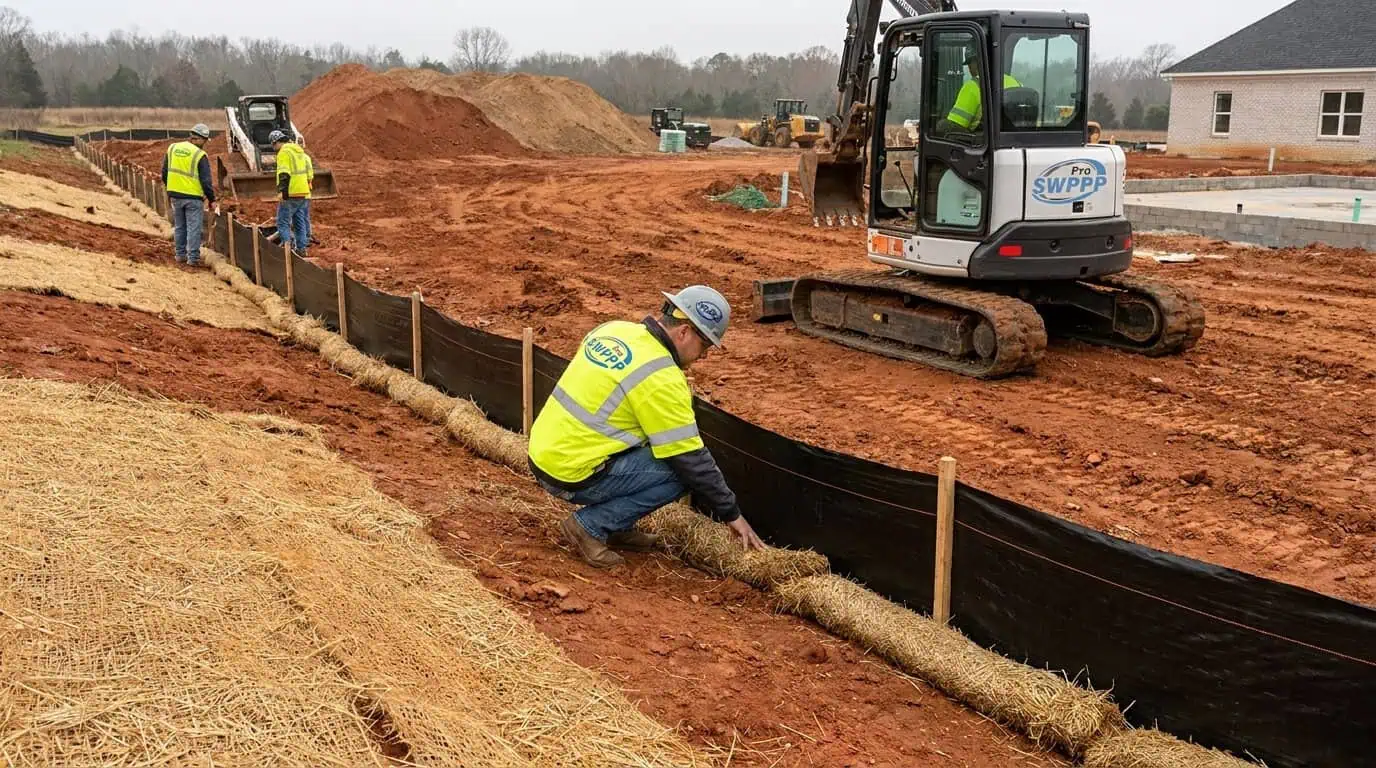
Most states bundle erosion and sediment control into a single Stormwater Pollution Prevention Plan (SWPPP). Alabama splits it. Your SWPPP covers overall stormwater management. Your CBMPP zeroes in on erosion and sediment controls—what you install, where, and how you maintain it.
Both documents are required under the NPDES Construction General Permit (CGP) if you disturb one acre or more. But the CBMPP must be signed by a QCP before you move any dirt. A QCP can be a Professional Engineer, a designated NRCS professional, or a Certified Professional in Erosion and Sediment Control (CPESC).
CPESCs bring specialized training. They’ve passed exams on soil mechanics, hydrology, BMP selection, and state rules. That expertise means your CBMPP will be accurate, buildable, and inspection‑ready from day one. Pro SWPPP employs CPESC‑certified professionals to design CBMPPs that pass inspection and keep inspectors happy.
You can learn more about Alabama’s overall framework at Alabama SWPPP & CBMPP requirements.
Who Can Inspect Your CBMPP?
Alabama recognizes three roles:
- Qualified Credentialed Professional (QCP): Designs or updates the CBMPP. Must be a PE, NRCS designee, or CPESC.
- Qualified Credentialed Inspector (QCI): Completes state‑approved Qualified Credentialed Inspection Program (QCIP) training. Can perform routine inspections but cannot modify the plan.
- Qualified person under QCP supervision: Someone directed by a QCP. Can conduct inspections as long as the QCP reviews findings.
Here’s the key: only a QCP can change your CBMPP. If a QCI or site foreman spots a problem, they document it. The QCP decides whether to revise controls, add BMPs, or adjust phasing.
On your typical project, a QCI or site superintendent handles day‑to‑day and post‑storm inspections. Every three or six months (depending on site priority), the CPESC or QCP comes back for a formal CBMPP evaluation. That layered approach keeps inspections affordable while ensuring expert oversight when it counts.
Pre‑Construction Inspection
Before you install a single silt fence, you must conduct a comprehensive pre‑construction inspection. The inspector walks all proposed disturbance areas, material storage zones, ditches, outfalls, receiving waters, and stream banks. This inspection must be performed or supervised by a QCP.
Why? So you catch drainage issues, wetland boundaries, or sensitive stream buffers before equipment shows up. Fixing those on paper is cheap. Fixing them after you’ve already graded is expensive and often triggers violations.
How Often Must You Inspect?
Alabama’s CGP spells out multiple inspection triggers. Miss any one, and you’re out of compliance.
Daily Observations
Every day there’s activity, someone on site must visually observe the work area, note rainfall, and log obvious BMP problems. This isn’t a formal inspection. It’s a quick check. Did the inlet protection blow over? Did yesterday’s storm wash out a ditch check? Log it and fix it fast.
Monthly and Post‑Storm Inspections
At minimum, conduct a full site inspection once per month. That inspection must cover all disturbed areas, BMPs, material storage, and discharge points. It must be performed by a QCI, QCP, or qualified person under QCP supervision.
But monthly is not enough if it rains. After every rainfall of 0.75 inches or more in 24 hours, you must inspect within 72 hours. That’s a qualifying storm. Measure rainfall with a rain gauge at the site or use an approved online data source. Log every reading. When you hit the threshold, inspect and document.
Common mistakes: contractors assume “it didn’t look like much rain.” ADEM doesn’t care what it looked like. They check your rain log. If you recorded 0.8 inches and didn’t inspect, you’re cited.
Don’t want to mess with all the paperwork and requirements? Check out Order your SWPPP now with Pro SWPPP Professional CPESC Certified SWPPP Services.
QCP CBMPP Evaluations
On top of routine inspections, your QCP (CPESC or PE) must evaluate the CBMPP and site conditions at regular intervals:
- Priority construction sites: every 3 months
- Non‑priority sites: every 6 months
Priority sites include those draining to impaired waters, near sensitive habitats, or flagged by the permit. If you’re unsure which category you fall into, ask your QCP or ADEM.
During each evaluation, the QCP walks the site, checks BMP performance, reviews your inspection logs and rainfall data, and determines if the CBMPP needs updates. If controls are failing or site conditions changed (new grading, longer project duration), the QCP revises the plan and recertifies it.
What Inspectors Look For
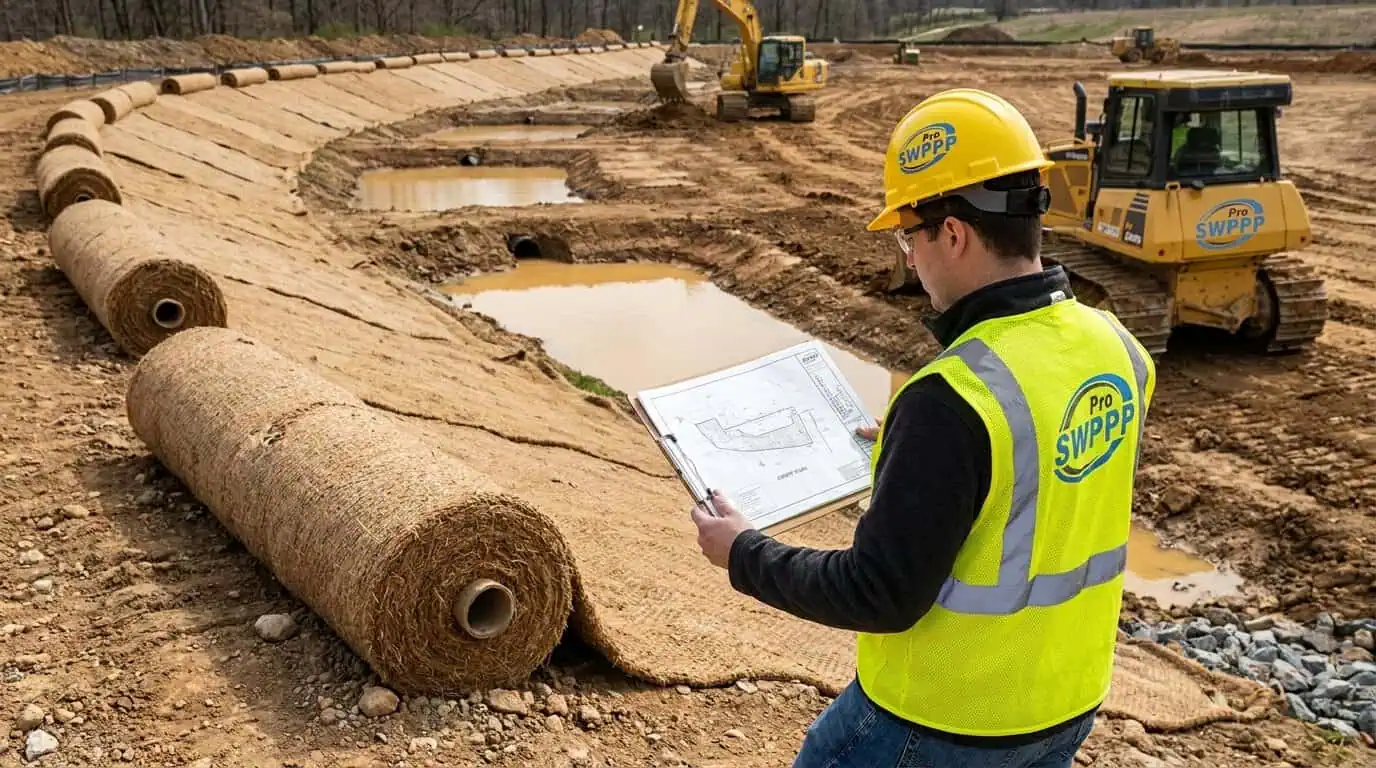
ADEM enforcement and professional training materials highlight the same issues over and over:
- No facility ID sign posted at the site entrance.
- BMPs installed wrong or not maintained (torn fabric, clogged inlets, silted basins).
- Missing or incomplete records (no rainfall logs, no inspection reports).
- Fuel or chemical storage without secondary containment or spill kits.
- No energy dissipation at discharge points, causing channel erosion.
- Inactive areas not stabilized after 13 days of no work.
Every one of these is preventable. Put up the sign. Check BMPs weekly. Keep a rain gauge and a binder. Cover or berm your diesel tank. Add riprap at outfalls. Seed and mulch areas the moment they sit idle for two weeks.
Pro SWPPP designs CBMPPs that address every one of those points. Our inspection checklists are built from ADEM’s own guidance and ALDOT templates, so nothing gets overlooked.
Common Contractor Mistakes
Confusing QCI and QCP Roles
A QCI can inspect. A QCP can design and inspect. Some contractors hire a QCI to handle all inspections, then wonder why their CBMPP never gets updated when site conditions change. Only a QCP can revise the plan. If your site evolves (phasing shifts, you add a staging area, drainage patterns change), call your CPESC or PE to amend the CBMPP before you proceed.
Skipping Post‑Storm Inspections
Monthly inspections feel manageable. Then a 1‑inch storm hits Tuesday night. You’re busy pouring concrete Thursday. By Friday, 72 hours have passed and you never walked the perimeter. ADEM reviews your log and sees the rainfall entry with no matching inspection report. Violation.
Set up rainfall alerts. Many contractors subscribe to weather services that email or text when a site crosses the 0.75‑inch threshold. Assign one person to trigger the inspection protocol the moment the alert arrives.
Poor Documentation
Inspections mean nothing if you can’t prove you did them. Use standardized forms. ADEM and ALDOT publish templates. Fill in every field: date, time, inspector name, rainfall since last inspection, BMPs checked, deficiencies found, corrective actions, and completion dates. Take photos. Store everything in one binder or cloud folder. Keep records for at least three years after permit termination.
Ignoring the 13‑Day Stabilization Rule
If you stop work on an area for more than 13 calendar days, you must temporarily stabilize it. Seed, mulch, blanket, or hydroseed. Contractors often delay, thinking “we’ll be back next week.” Next week turns into three weeks. ADEM drives by. Citation issued.
Build stabilization triggers into your schedule. Train your foreman to flag areas going dormant and initiate seeding before day 13.
Forgetting Off‑Site Areas
Your borrow pit half a mile away disturbs two acres. That’s a separate one‑acre disturbance. It needs CGP coverage and a CBMPP. Same for haul roads, staging yards, and disposal sites. Include them in your permit strategy from day one, or risk double the violations when ADEM inspects.
Not sure what your project needs? Take our SWPPP Quiz or Schedule a Free SWPPP Consultation with CPESC Certified SWPPP Expert Derek E. Chinners.
How ALDOT Projects Model Best Practices
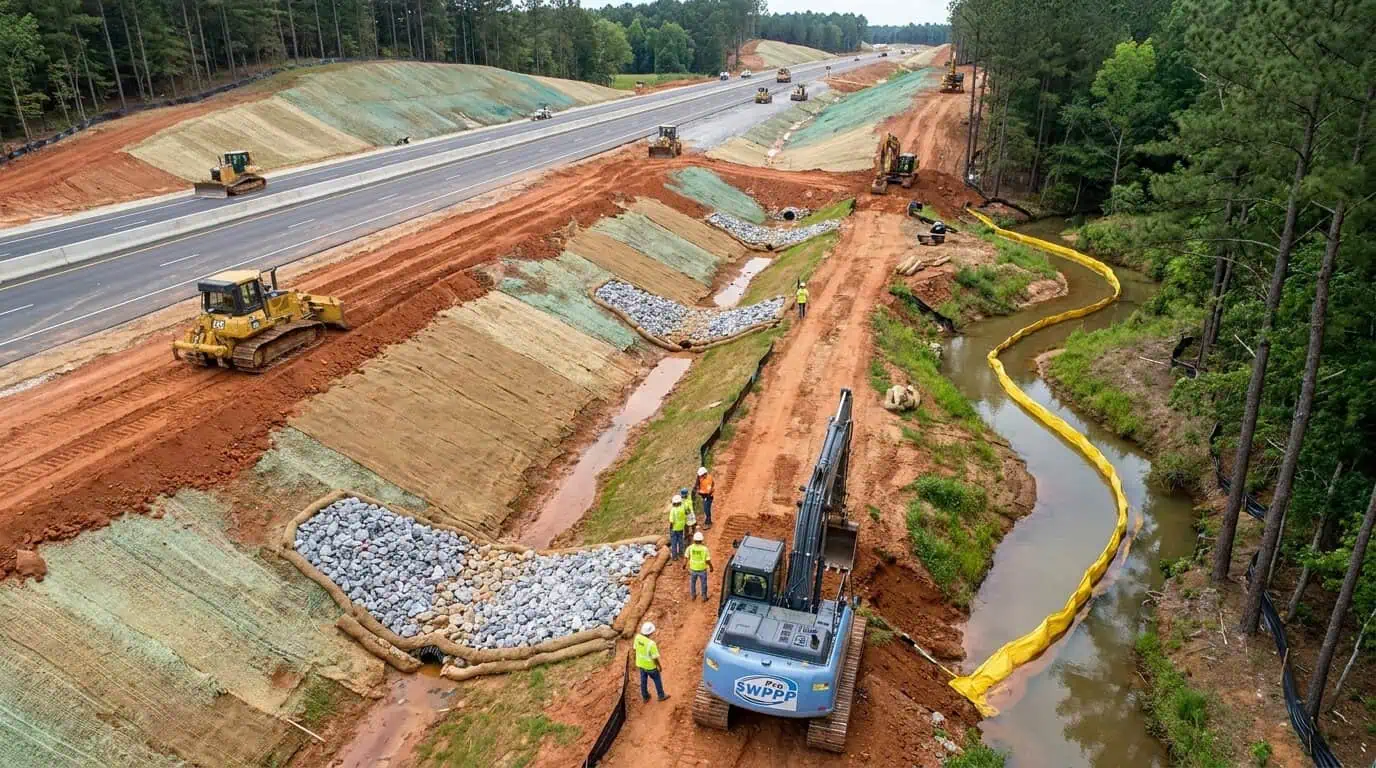
Alabama Department of Transportation highway projects offer a practical roadmap. Every ALDOT job requiring CGP coverage has an ALDOT CBMPP. ALDOT distinguishes design components (prepared by ALDOT engineers or consultants) from operational components (implemented and inspected by contractors).
Contractors learn:
- Exactly which BMPs must be installed before grading begins.
- Who performs inspections (usually the contractor’s QCI under ALDOT QCP oversight).
- How to coordinate electronic CBMPP updates when site conditions shift.
- How to document rainfall, inspections, and corrective actions in formats ALDOT and ADEM both accept.
ALDOT’s system eliminates ambiguity. Contractors know their lane. QCPs know theirs. Inspections happen on time. Violations drop. That same clarity works just as well on private commercial and residential projects.
Emerging Trends in Alabama CBMPP Inspections
Digital CBMPP Management
ALDOT’s electronic CBMPP platform centralizes plan content and inspection data. Contractors upload photos, GPS coordinates, and corrective‑action status in real time. That trend is spreading. Cloud‑based inspection apps let QCIs and QCPs attach evidence to every BMP, flag deficiencies instantly, and generate reports with one click.
Digital tools reduce paperwork errors and speed up ADEM audits. When an inspector asks for your last six months of rainfall and inspection logs, you hand over a tablet or email a PDF. Done.
More Frequent QCP Evaluations on Priority Sites
The 2021 CGP reissuance dropped QCP evaluation intervals from six months to three months for priority construction sites. That change reflects ADEM’s focus on high‑risk locations. Expect that trend to continue. Sites near impaired streams, drinking‑water intakes, or sensitive habitats will see closer QCP oversight.
Budget accordingly. If your project is priority, plan for quarterly CPESC site visits. Pro SWPPP offers flexible service agreements that bundle CBMPP design, quarterly evaluations, and on‑call support, so you never scramble to find a QCP at the last minute.
Growing Demand for CPESC Credentials
Owners and agencies increasingly prefer or require CPESC‑certified QCPs for complex sites. CPESCs demonstrate proven expertise in erosion and sediment control. That credential signals competence to inspectors, lenders, and municipal reviewers. Expect more RFPs and permit applications to specify “CBMPP prepared by CPESC” as a minimum standard.
How Pro SWPPP Simplifies CBMPP Inspections
Pro SWPPP – America’s #1 SWPPP Service delivers complete CBMPP solutions for Alabama contractors:
- CPESC‑certified design: Every CBMPP is prepared by credentialed professionals who know Alabama Handbook standards, ADEM expectations, and real‑world constructability.
- Pre‑construction inspections: We walk your site before you break ground, identify issues, and certify readiness.
- Inspection scheduling and templates: We provide rain‑gauge protocols, monthly checklists, post‑storm forms, and digital log systems that match ADEM and ALDOT formats.
- Quarterly or semiannual QCP evaluations: Our CPESCs return on schedule, review BMPs, update the CBMPP as needed, and recertify compliance.
- Training and support: We train your QCIs and site staff so daily observations and routine inspections happen correctly, reducing the burden on your QCP.
We also serve contractors in Georgia and Texas, bringing the same CPESC expertise and inspection rigor to every project.
You focus on moving dirt and meeting deadlines. We handle the inspection schedules, rainfall tracking, corrective‑action documentation, and QCP evaluations. When ADEM shows up, your binder is complete and your BMPs are functioning.
FAQ
What is the difference between a CBMPP and a SWPPP in Alabama?
The SWPPP covers overall stormwater management, including pollution prevention for fuels, chemicals, and waste. The CBMPP focuses specifically on erosion and sediment controls. Both are required under the CGP for sites disturbing one acre or more.
Can a QCI revise my CBMPP?
No. Only a Qualified Credentialed Professional (QCP) can prepare, update, or modify a CBMPP. A QCI can inspect and document deficiencies, but the QCP must approve and sign any plan changes.
How do I know if my site is priority or non‑priority?
Priority sites typically drain to impaired waters, are near sensitive habitats, or meet other criteria in the CGP. Your QCP or ADEM can confirm. Priority sites require QCP CBMPP evaluations every three months; non‑priority sites every six months.
What happens if I miss a post‑storm inspection?
Missing a required inspection is a permit violation. ADEM can issue a Notice of Violation, require corrective action, and assess penalties. Always measure rainfall daily and schedule inspections within 72 hours of any 0.75‑inch or greater event.
Do I need a separate CBMPP for off‑site borrow pits or staging areas?
Yes, if those areas disturb one acre or more. Each one‑acre disturbance requires CGP coverage and a CBMPP prepared by a QCP. Include all related disturbance in your permit strategy from the start.
How long must I keep inspection records?
At least three years after permit termination. Store rainfall logs, inspection reports, corrective‑action documentation, and photos in a secure location for easy ADEM review.
Can Pro SWPPP handle both my SWPPP and CBMPP?
Absolutely. Pro SWPPP prepares integrated SWPPP and CBMPP packages that align site controls, phasing, stabilization timelines, and inspection schedules. One point of contact, one expert team, complete compliance. Visit our contact page or learn more about us.
Ready to get started? Order your SWPPP now or schedule a free consultation with Pro SWPPP.
Visit Pro SWPPP and see why thousands of contractors trust America’s #1 SWPPP Service.
More Alabama stormwater guidance
This guide is part of our Alabama compliance cluster. Start with the hub: Alabama SWPPP & CBMPP Services.
- Birmingham CBMPP Guide
- Mobile CBMPP Guide for Contractors
- Montgomery CBMPP Guide for Contractors
- ALR100000 Guide
Need your Alabama CBMPP?
Pro SWPPP are the paperwork and permitting experts. CBMPP prepared by a CPESC-certified QCP and your Notice of Intent filed with ADEM through AEPACS — in 72 hours, or it’s free. Physical installation of BMPs is handled by your site contractor.