Pro SWPPP – America’s #1 SWPPP Service helps contractors across Alabama stay compliant with stormwater rules without wasting time or money. If you’re breaking ground on a construction project, you’ve probably heard the term CBMPP thrown around. Maybe you’re wondering what it is, why you need it, or how it’s different from a SWPPP. This guide breaks it all down in plain English so you can get back to building.
Agency: Alabama Department of Environmental Management (ADEM) ·
Permit: ALR100000 Construction General Permit (eff. 4/1/2026 – 3/31/2031) ·
Plan: CBMPP — Construction Best Management Practice Plan ·
Threshold: 1 acre, including common plans of development ·
Roles: a QCP prepares and certifies the plan (CPESC qualifies); a QCI performs site inspections ·
Filing: Notice of Intent submitted through AEPACS ·
Inspections: monthly, plus within 72 hours of any rain event over 0.75″ (5 days for linear projects)
Here’s the deal: Alabama takes stormwater seriously. The state requires a Construction Best Management Practices Plan, or CBMPP, for most construction sites. It’s part of the NPDES permit system under the Clean Water Act. If you’re disturbing one acre or more of land, you need this plan before you start work. No plan, no permit. No permit, no construction.
The CBMPP is your roadmap for controlling sediment, chemicals, and runoff from your site. It’s not just a box to check. It’s a living document that keeps inspectors happy and your project on track. And if you’re not sure where your project falls under Alabama SWPPP and CBMPP requirements, we’ll walk you through it.
What Is a CBMPP and Why Do You Need One?
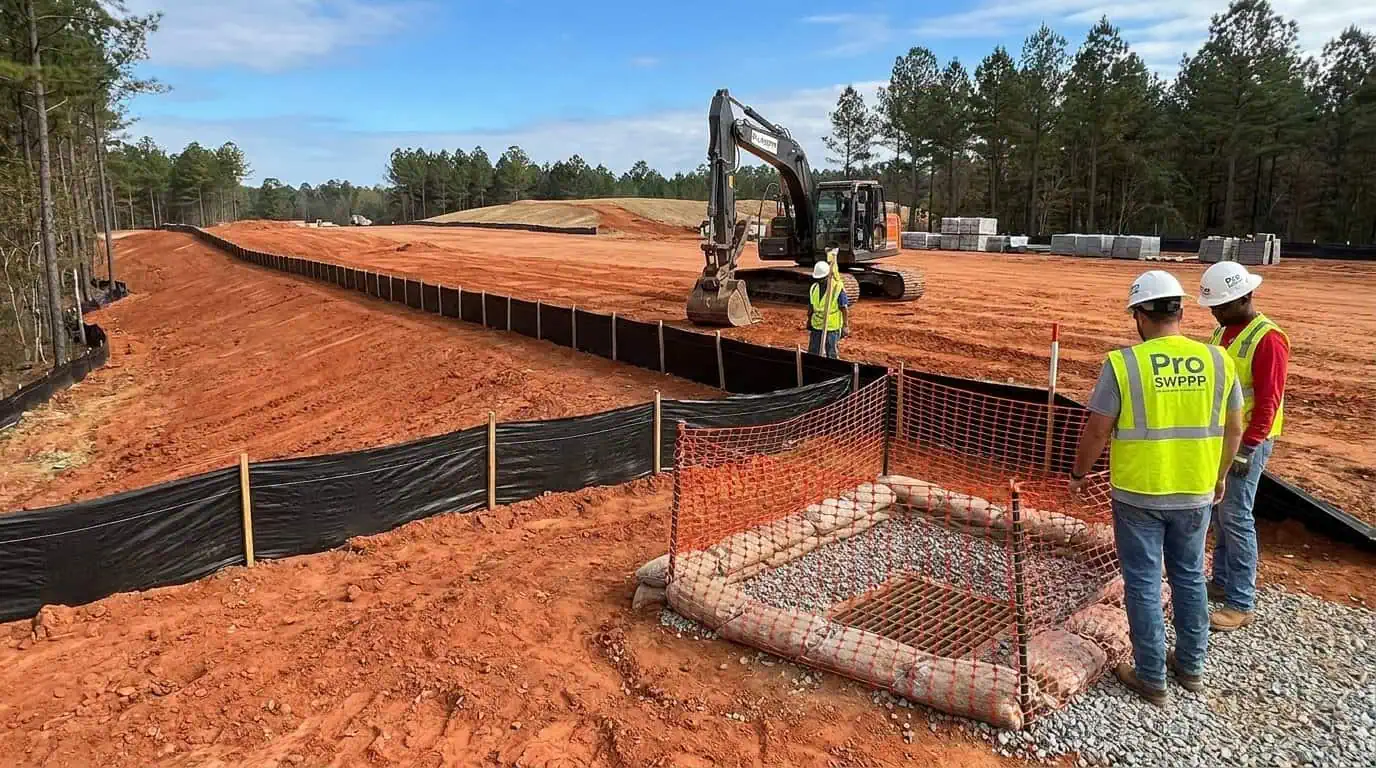
A CBMPP is a site-specific plan that lays out every step you’ll take to prevent pollutants from leaving your job site. Think of it as your defense strategy against sediment, trash, fuel spills, and concrete washout. It’s required under Alabama’s Construction General Permit, which is issued by the Alabama Department of Environmental Management, or ADEM.
The plan must be prepared and certified by a Qualified Credentialed Professional, also called a QCP. That’s usually a licensed engineer or a certified erosion and sediment control specialist. You can’t just download a template and fill in the blanks. The QCP makes sure your plan matches your site’s soil, slopes, drainage, and nearby streams or wetlands.
Here’s what goes into a solid CBMPP:
- Site map showing drainage patterns, limits of disturbance, and nearby waters
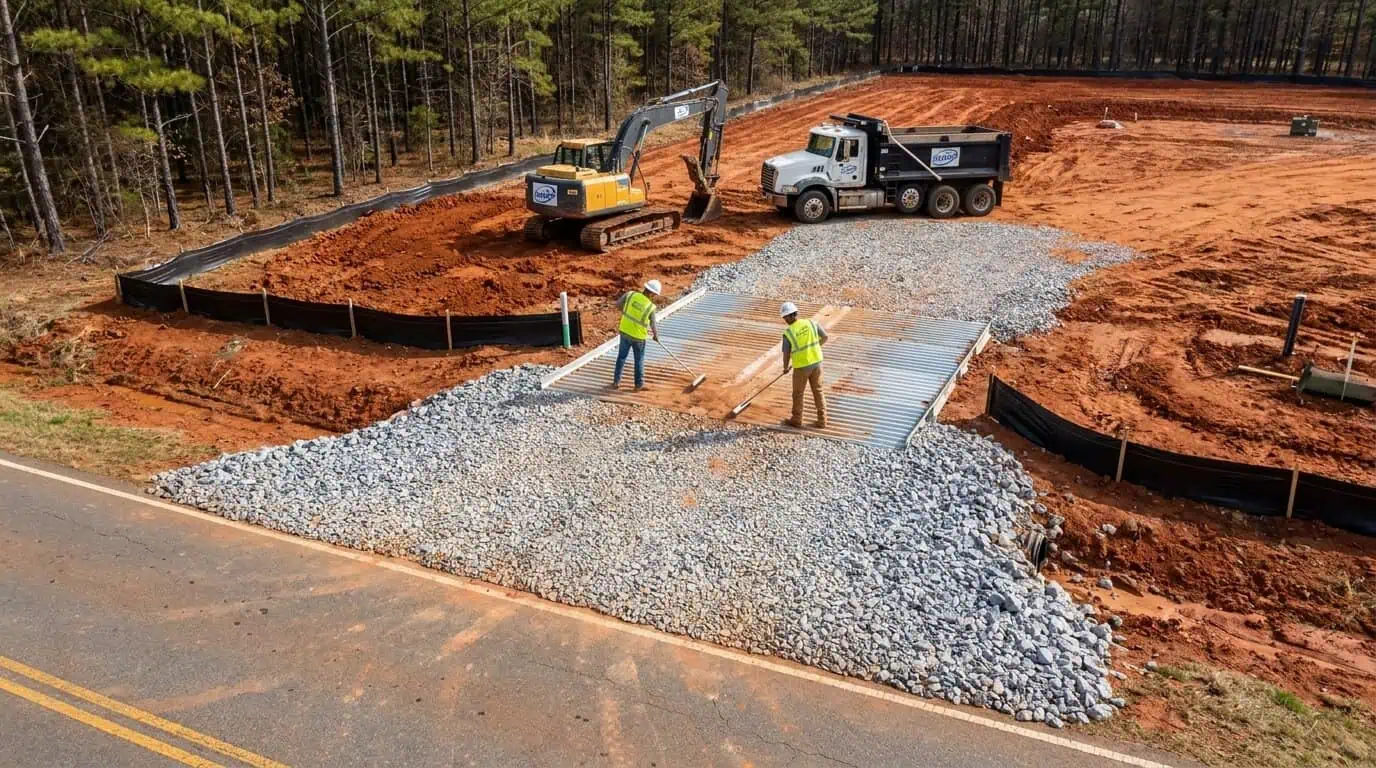
- Erosion Control measures like silt fences, check dams, and stabilized entrances
- Sediment Control features such as sediment basins and inlet protection
- Best Management Practices for concrete washout, fueling areas, and material storage
- Inspection schedule and maintenance procedures
- Record-keeping system for logs and corrective actions
If you’re working in a sensitive area like a Tier 1 stream or Outstanding National Resource Water, you’ll need extra approvals. ADEM doesn’t mess around with these zones. Your CBMPP has to spell out exactly how you’ll protect them.
How CBMPP Differs from SWPPP
You might have heard the term SWPPP, or Stormwater Pollution Prevention Plan. Alabama uses both. The SWPPP is your overall pollution prevention plan. The CBMPP is the detailed technical plan that sits inside it. Think of the SWPPP as the big picture and the CBMPP as the step-by-step playbook.
Some states like Texas or Georgia use different names or combine them. Alabama keeps them separate. That means you need both documents to stay legal. Pro SWPPP – America’s #1 SWPPP Service handles both so you don’t have to guess which form goes where.
Who Needs a CBMPP in Alabama?
If your project disturbs one acre or more, you need a CBMPP. That includes grading, clearing, excavation, and anything that moves dirt. Smaller projects can also trigger the requirement if they’re part of a larger plan or pose a water quality risk.
ADEM issues the Construction General Permit. You submit your Notice of Intent, or NOI, along with your CBMPP before you break ground. The permit replaced an older version in 2026 and added stricter monitoring rules for large sites. If you’re moving 10 or more acres of erodible material, expect turbidity monitoring and extra oversight.
Common projects that need a CBMPP:
- Housing subdivisions and commercial developments
- Road and highway construction
- Industrial facilities and warehouses
- Parking lots and shopping centers
- Utility line installation and pipeline work
Even if you’re disturbing less than an acre, check with ADEM or your local permitting office. Some counties have stricter rules. Baldwin County, for example, requires a signed CBMPP form, a site sketch, and proof that you’ll inspect after rain events.

Key Components of a CBMPP
Every CBMPP must cover pollution sources and Best Management Practices. That means identifying where problems could happen and spelling out how you’ll stop them.
Pollution Source Identification
Your QCP will walk the site and flag every potential source of runoff or contamination. Unstable soils, stockpiles, fueling stations, concrete washout, sanitary facilities, and access roads all make the list. Each source gets a corresponding BMP.
Structural and Non-Structural BMPs
Structural BMPs are physical installations. Silt fences, check dams, sediment basins, and stabilized construction entrances fall into this category. Non-structural BMPs are practices like sweeping roads, staging grading to minimize open areas, and covering stockpiles.
Your plan must reference the Alabama Handbook of erosion and sediment control, often called the “Blue Book.” This guide sets minimum standards for BMP design and installation. If your QCP recommends something tougher, follow their guidance.
Inspection and Maintenance
ADEM requires regular inspections. Many contractors inspect weekly and after every rain event of half an inch or more. You’ll log the date, conditions, and any repairs. If a silt fence is damaged or a sediment basin is full, you fix it right away. Skipping maintenance is a fast track to a violation.
Keep your logs in a binder on site. Inspectors will ask to see them. Digital tools and mobile apps make this easier, but a simple notebook works too.
Don’t want to mess with all the paperwork and requirements? Check out Order your SWPPP now with Pro SWPPP Professional CPESC Certified SWPPP Services.
Common Contractor Mistakes and How to Avoid Them
Even experienced contractors trip up on CBMPP compliance. Here are the most common mistakes and how to dodge them.
Treating the CBMPP Like Shelfware
Some crews think the CBMPP is just a stack of paper for the permit file. Wrong. Your plan is operational. BMPs must be installed before disturbance begins and maintained every single day. Use the CBMPP in toolbox talks, daily logs, and subcontractor scopes.
Ignoring Site-Specific Drainage
Generic BMP layouts don’t work. If you don’t understand where water flows on your site, you’ll install controls in the wrong spots. Water will bypass your silt fence or overwhelm your sediment basin. Walk the site with your QCP and map every drainage path, slope, and low spot.
Skimping on Maintenance
Installing BMPs is only half the job. A damaged silt fence or clogged inlet does nothing. Set a clear inspection schedule, document repairs, and make sure your crew knows who’s responsible for each task.
Forgetting Non-Sediment Pollutants
Sediment is the big one, but your CBMPP must also cover concrete wash water, fuel, oils, chemicals, trash, and sanitary waste. Add BMPs for material storage, fueling areas, concrete washout bins, waste containers, and spill kits. Don’t leave gaps.
Failing to Update the Plan
Your site changes as construction progresses. Grading plans shift, phasing adjusts, and access roads move. When that happens, update your CBMPP. Your QCP should revise the plan and keep inspection logs current. ADEM requires this.
Not sure what your project needs? Take our SWPPP Quiz (link) or Schedule a Free SWPPP Consultation with CPESC Certified SWPPP Expert Derek E. Chinners.
What’s New in 2026 and Beyond
Alabama’s 2026 Construction General Permit brought updates to monitoring and inspection rules. Large sites now face turbidity monitoring requirements. ADEM is also pushing risk-based oversight, meaning high-risk projects get more scrutiny.
Expect more digital tools in the next few years. GIS-based tracking, mobile inspection apps, and cloud document control are becoming standard. Contractors who adopt these tools early will find compliance easier and cheaper.
Green infrastructure is also on the rise. Low-impact development practices like vegetated swales, infiltration areas, and improved erosion control blankets are showing up in updated BMP handbooks. Pro SWPPP – America’s #1 SWPPP Service stays on top of these trends so your plan meets current and future standards.
How Pro SWPPP Makes CBMPP Easy
Pro SWPPP – America’s #1 SWPPP Service takes the guesswork out of stormwater compliance. We handle everything from site assessment to QCP certification. You get a complete, legally defensible CBMPP that ADEM will approve.
Site Assessment and BMP Design
Our CPESC-certified team walks your site, maps drainage, and designs BMPs that match your soil, slopes, and schedule. We don’t use cookie-cutter templates. Every plan is custom.
QCP Certification and NOI Filing
We prepare and certify your CBMPP with a licensed QCP. We also handle your NOI submission to ADEM so you don’t have to navigate the paperwork.
Inspection Support and Updates
Need help with weekly or post-storm inspections? We offer on-site inspection services and digital log templates. If your site changes mid-project, we’ll update your CBMPP fast.
Nationwide Reach
We serve contractors across the country, from Texas to Georgia. If you work in multiple states, we’ll keep your plans consistent and compliant.
Want to learn more? Visit our about page or contact us today. For helpful EPA guidance on stormwater, check out the EPA NPDES construction page.
FAQ
What is the difference between a SWPPP and a CBMPP?
A SWPPP is your overall pollution prevention plan. A CBMPP is the detailed technical plan for Best Management Practices. Alabama requires both. Pro SWPPP – America’s #1 SWPPP Service prepares both documents so you stay compliant.
Who can prepare a CBMPP in Alabama?
Only a Qualified Credentialed Professional can prepare and certify a CBMPP. That’s usually a licensed engineer or CPESC-certified specialist. Our team includes certified professionals ready to serve your project.
How often do I need to inspect BMPs?
ADEM requires inspections at least quarterly, but most contractors inspect weekly and after every rain event of half an inch or more. Regular inspections catch problems before they become violations.
What happens if I start construction without a CBMPP?
Alabama law prohibits starting or continuing construction without effective BMPs under a certified CBMPP. You risk stop-work orders, fines, and permit revocation. Don’t skip this step.
Can I use the same CBMPP for multiple projects?
No. Each CBMPP must be site-specific. Drainage patterns, soil types, and nearby waters vary from site to site. A generic plan won’t pass inspection.
Does Pro SWPPP handle NOI filing?
Yes. We prepare your CBMPP, certify it with a QCP, and submit your Notice of Intent to ADEM. You get one point of contact for the entire process.
Ready to get started? Order your SWPPP now or schedule a free consultation with Pro SWPPP.
Visit Pro SWPPP and see why thousands of contractors trust America’s #1 SWPPP Service.
More Alabama stormwater guidance
This guide is part of our Alabama compliance cluster. Start with the hub: Alabama SWPPP & CBMPP Services.
- Birmingham CBMPP Guide
- Mobile CBMPP Guide for Contractors
- ALR100000 Guide
- CPESC Certified CBMPP Inspections
Need your Alabama CBMPP?
Pro SWPPP are the paperwork and permitting experts. CBMPP prepared by a CPESC-certified QCP and your Notice of Intent filed with ADEM through AEPACS — in 72 hours, or it’s free. Physical installation of BMPs is handled by your site contractor.