A construction site over the Edwards Aquifer Recharge Zone needs two approved documents, not one: a TCEQ-approved Water Pollution Abatement Plan (WPAP) or Contributing Zone Plan (CZP) under 30 TAC Chapter 213, folded into a TXR150000 SWP3. Neither is optional, and the aquifer plan must be approved before you move dirt. Pro SWPPP – America’s #1 SWPPP Service – integrates the two every week for contractors in San Antonio, Austin and the Hill Country. The Recharge Zone is where stormwater compliance gets real. If your construction site sits over this critical Texas aquifer, you need more than the standard SWPPP. You need an Edwards-enhanced plan that meets TCEQ rules, protects drinking water, and keeps your project moving. Let’s break down exactly what that means.
Why the Edwards Aquifer Changes Everything
The Edwards Aquifer supplies drinking water to more than two million people across central Texas. Its Recharge Zone is where rainwater and runoff seep straight into the ground through porous limestone. That means pollutants from your site can reach the aquifer fast. No buffer. No second chances.
Because of that risk, the Texas Commission on Environmental Quality (TCEQ) enforces 30 TAC Chapter 213, also called the Edwards Aquifer Rule. This regulation sits on top of the normal TPDES Construction General Permit requirements. You must comply with both. If you disturb one acre or more in the Recharge or Contributing Zones, you file a TPDES Notice of Intent (NOI) and build a SWPPP. But your SWPPP cannot be a copy-paste job. It must include your approved Edwards Aquifer Protection Plan.
What is that plan? It is usually a Water Pollution Abatement Plan (WPAP) for sites in the Recharge Zone, or a Contributing Zone Plan (CZP) for upstream areas that drain into the Recharge Zone. You submit that plan to TCEQ before you move dirt. Once TCEQ approves it, you fold the plan into your SWPPP. Pro SWPPP handles this integration every day for contractors across Texas.
What Goes Into Your Edwards Aquifer SWPPP
A standard Construction General Permit SWPPP covers erosion control, sediment control, site maps, inspection schedules, and spill plans. All of that still applies. But the Edwards Recharge Zone demands extra layers.
Core SWPPP Requirements
Every SWPPP must describe your site, your construction sequence, and your pollution sources. You list Best Management Practices (BMPs) like silt fence, check dams, and sediment basins. You map stormwater flow. You schedule inspections and maintenance. You outline spill response. These are baseline requirements under the NPDES program and the Clean Water Act.
Edwards Aquifer Add-Ons
On top of the baseline, your SWPPP must address:
- Recharge features. Caves, sinkholes, fractures, and losing streams are mapped and protected. You cannot let sediment-laden runoff flow directly into these features.
- Impervious cover limits. Local ordinances often cap impervious cover at 15 to 25 percent in the Recharge Zone. Your site layout and grading plan must reflect those caps.
- First-flush treatment. Many jurisdictions require you to capture and treat the first half-inch of runoff from impervious surfaces. That means sedimentation basins, filtration systems, or vegetated swales sized to handle design storms.
- Approved WPAP or CZP. You attach a copy of your TCEQ-approved aquifer plan and the approval letter to your SWPPP. You reference the plan number and approval date. Your BMPs, drainage design, and cover limits must match what TCEQ approved.
Pro SWPPP makes sure every element aligns. We write SWPPPs that embed your aquifer plan, not treat it as a separate afterthought. That coordination saves you revision cycles and keeps inspectors happy.
Local Rules Stack On Top
TCEQ sets the statewide floor, but counties and cities add their own requirements. Williamson County, for example, enforces impervious cover limits and requires a Texas Professional Engineer to seal drainage and grading plans. The City of San Antonio and SAWS apply an Aquifer Protection Ordinance with strict cover caps and runoff treatment rules.
In the San Antonio ETJ Recharge Zone, single-family, multi-family, and commercial projects all face a 15 percent gross impervious cover limit. Inside city limits, caps rise to 30, 50, or 65 percent depending on use, but multi-family and commercial sites must still capture and isolate the first half-inch of runoff. These local overlays are not optional. Your SWPPP must comply with every layer of regulation.
For a complete breakdown of regional requirements, see our South Texas SWPPP Requirements guide. It walks through TCEQ, county, and city rules step by step.
Common Mistakes and How to Avoid Them
Contractors trip over three big issues in the Recharge Zone.
Treating the SWPPP and Aquifer Plan as Separate Documents
TCEQ guidance says your approved aquifer plan must be incorporated into your SWPPP. That means cross-references, shared maps, and consistent BMPs. If your WPAP shows a sediment basin at one location and your SWPPP shows it somewhere else, you will face stop-work orders. Pro SWPPP coordinates both documents from the start so they speak the same language.
Ignoring Recharge Features
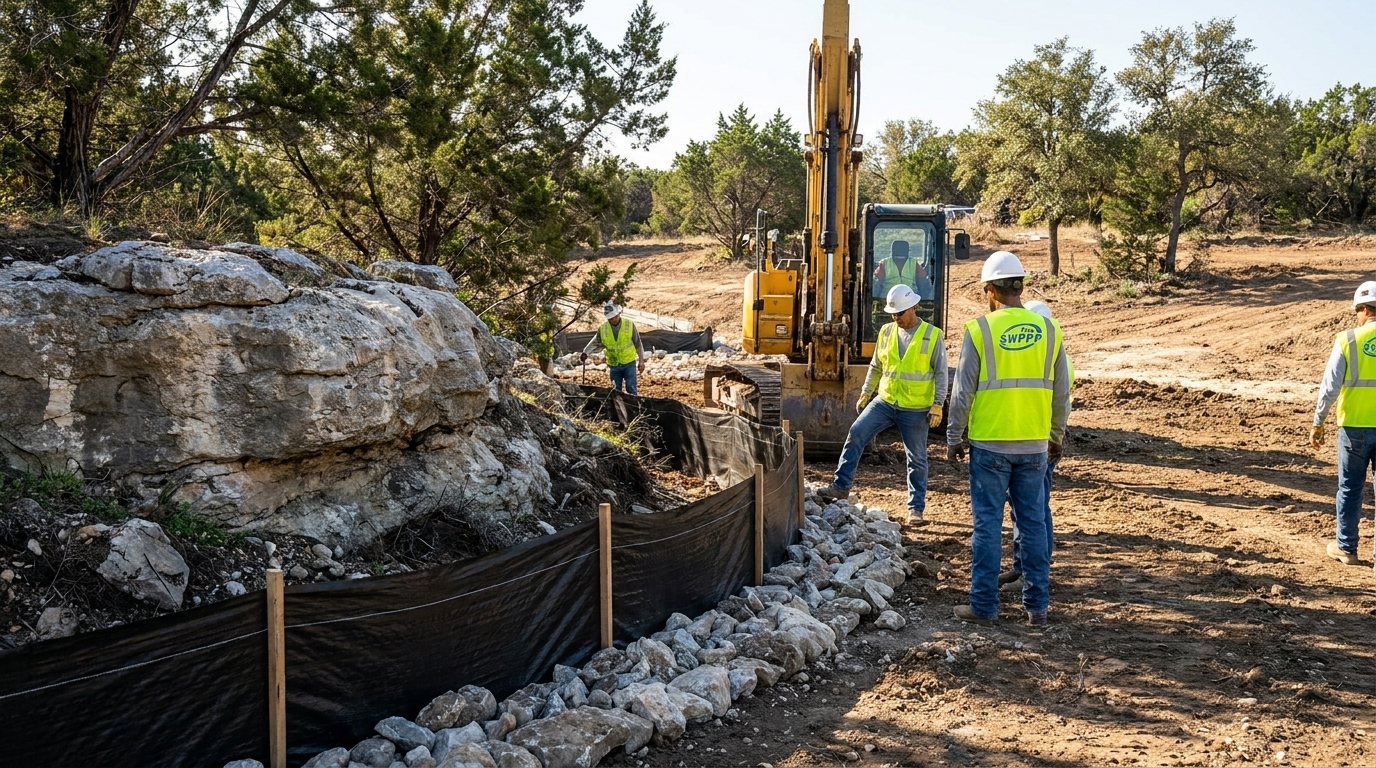
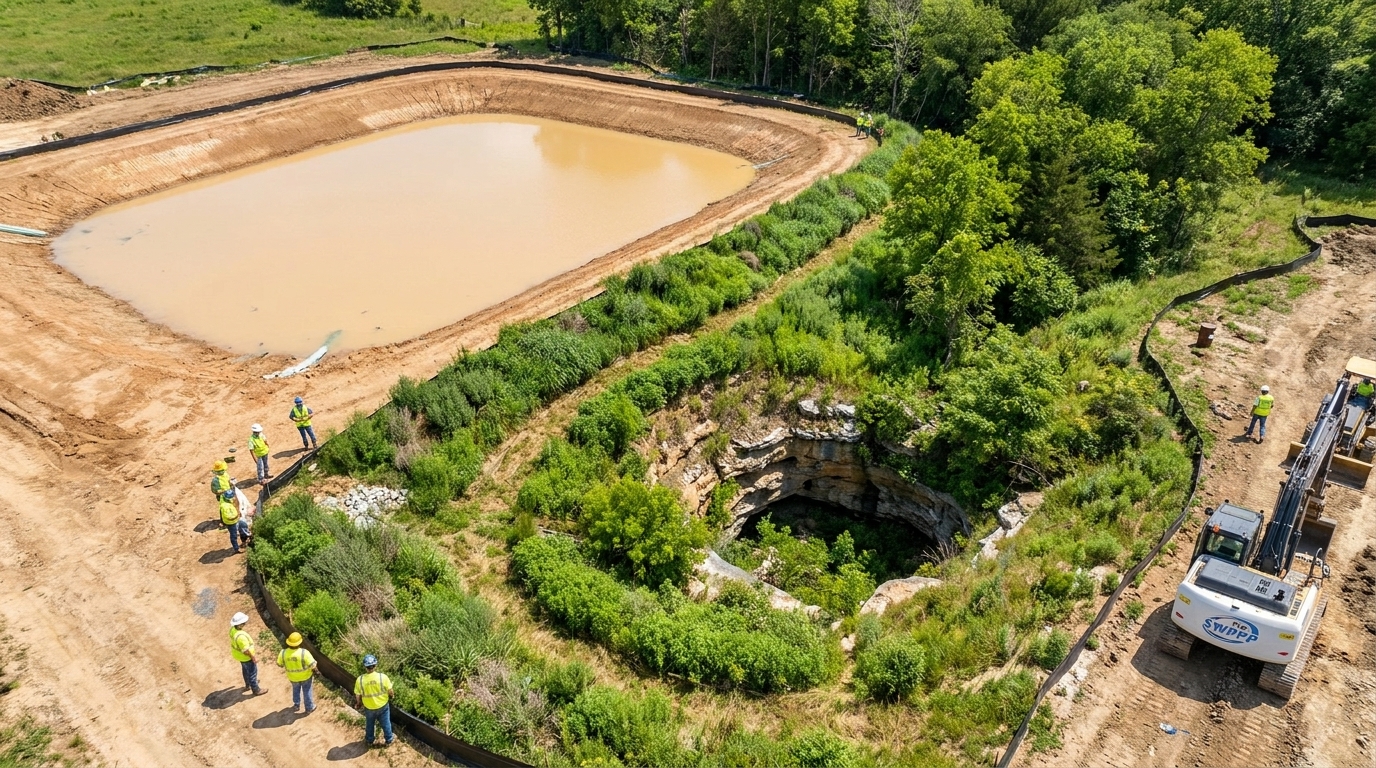
Limestone outcrops, sinkholes, and caves are not just geological curiosities. They are direct pipelines to the aquifer. Some contractors assume they can fill or seal these features if they get in the way. Wrong. Edwards rules and local ordinances restrict or prohibit sealing. You must map every feature, set buffers, and install BMPs to prevent sediment from entering. Skipping this step invites fines and project delays.
Weak Inspection and Maintenance Plans
The Recharge Zone demands tight oversight. Your SWPPP must spell out who inspects, when they inspect, what they look for, and how they document findings. Weekly inspections and post-storm inspections are standard. Maintenance routines for silt fence, basins, and inlet protection must be clear. Vague language like “inspect as needed” will not cut it.
Don’t want to mess with all the paperwork and requirements? Order your SWPPP now with Pro SWPPP Professional CPESC Certified SWPPP Services. We build inspection schedules, maintenance checklists, and documentation systems that hold up under scrutiny.
What TCEQ Expects to See
TCEQ publishes detailed guidance for the Edwards Aquifer, including RG-348 (Technical Guidance for BMPs) and GI-406 (Contractor’s Guide). These documents explain how to size BMPs, design drainage, and maintain long-term performance. Inspectors use these guides as checklists when they visit your site.
Key expectations include:
- Site design that reduces pollutant load and maintains natural recharge patterns.
- Engineered BMPs sized for design storms, not guesswork.
- Long-term maintenance plans with legal mechanisms to ensure BMP performance after construction ends.
- Early coordination with TCEQ regional offices in Austin or San Antonio.
Pro SWPPP stays current with every TCEQ update. Our CPESC-certified team knows RG-348 and GI-406 inside out. We design SWPPPs that align with the latest technical guidance, so you pass inspections the first time.

Recent Changes and Trends
TCEQ updated its Edwards Aquifer guidance in 2025 and 2026. The new versions of RG-011, RG-348, GI-406, and the SWPPP template (RG-639) all emphasize integrated planning. TCEQ wants one cohesive water-quality strategy, not a pile of disconnected documents.
Local ordinances continue to tighten. San Antonio and surrounding counties are pushing lower impervious cover caps, wider floodplain buffers, and more robust first-flush treatment. These trends mean contractors must plan site layouts early with Edwards compliance in mind. Retrofitting after design is expensive and slow.
Digital templates and checklists have expanded. TCEQ now offers downloadable Word and PDF forms that standardize aquifer plan submissions. Pro SWPPP uses these templates to streamline the process and reduce documentation errors.
Your Edwards Aquifer SWPPP Checklist
Before you break ground, make sure your SWPPP includes:
- References to TPDES CGP TXR150000 and 30 TAC Chapter 213.
- Copies of your WPAP or CZP and TCEQ approval letter.
- Site map showing Recharge Zone location, recharge features, drainage areas, discharge points, and sediment basins.
- List of potential pollution sources: fuels, concrete, chemicals, stockpiles.
- Temporary and permanent erosion, sediment, and runoff control BMPs sized per Edwards guidance.
- Feature-specific measures for caves, sinkholes, and losing streams.
- Impervious cover calculations and site layout showing compliance with local caps.
- First-flush treatment design if required by ordinance.
- Construction sequence and soil stabilization schedule.
- Spill response procedures and materials.
- Inspection schedule, criteria, and documentation forms.
- Maintenance and corrective action procedures for BMPs.
Not sure what your project needs? Schedule a Free SWPPP Consultation with CPESC Certified SWPPP Expert Derek E. Chinners. We will walk through your site, review TCEQ requirements, and outline exactly what your SWPPP must contain.
Why Pro SWPPP Gets It Right
Contractors choose Pro SWPPP because we eliminate confusion. We know the Edwards Aquifer Rule. We know TCEQ guidance. We know local ordinances in San Antonio, Austin, Williamson County, and beyond. Our CPESC-certified team writes SWPPPs that integrate your approved aquifer plan, map every recharge feature, and satisfy every layer of regulation.
We also save you time. Our turnaround is fast, our support is responsive, and our documentation holds up under inspection. Whether you are building a subdivision, a commercial center, or a highway expansion, we deliver SWPPPs that work.
Learn more about our team and our process. See how we have helped contractors across Georgia, Texas, and the rest of the country stay compliant and keep projects moving. You can also reach out through our contact page with questions.
FAQ
Do I need a SWPPP in the Edwards Aquifer Recharge Zone?
Yes, if you disturb one acre or more. You need both a TPDES CGP SWPPP and an approved Edwards Aquifer plan (WPAP or CZP). The two must be integrated into one cohesive document.
What is the difference between a WPAP and a CZP?
A Water Pollution Abatement Plan (WPAP) applies to construction sites in the Recharge Zone. A Contributing Zone Plan (CZP) applies to upstream areas that drain into the Recharge Zone. Both require TCEQ approval before construction starts.
Can I seal a sinkhole or cave on my site?
Usually no. Edwards rules and local ordinances restrict sealing of significant recharge features. You must map features, set buffers, and install BMPs to prevent sediment entry. Contact TCEQ regional staff and consult your aquifer plan before taking action.
How often do I need to inspect BMPs in the Recharge Zone?
Weekly inspections and inspections within 24 hours after any rain event that produces runoff are standard. Your SWPPP must document the schedule, responsible person, and corrective action procedures.
Who reviews and approves my Edwards Aquifer plan?
TCEQ regional offices in Austin or San Antonio review and approve WPAP and CZP submissions. Local governments may also require separate approvals under aquifer protection ordinances.
What happens if my SWPPP and aquifer plan do not match?
Inspectors will issue violations. Mismatched drainage paths, BMP locations, or impervious cover calculations lead to stop-work orders and fines. Your SWPPP and aquifer plan must tell the same story.
Not sure whether your parcel sits in the Recharge Zone, the Contributing Zone, or outside both? Take the 60-second SWPPP quiz, or see when a SWPPP is required for the acreage rules.
Want a flat-rate number for an Edwards Aquifer site? Get a free SWP3 estimate — WPAP integration included.
Ready to move? Order your SWP3 now or schedule a call with a stormwater expert.
By Derek E. Chinners, CPESC — Founder & Stormwater Consultant, Pro SWPPP, LLC. Pro SWPPP prepares the plans and files the permits; your crews install the controls.
Related: Texas SWPPP requirements · San Antonio · Austin · SWP3 Texas: TXR150000 · What is a SWPPP?
Visit Pro SWPPP — 180+ five-star Google reviews from contractors nationwide.