Pro SWPPP – America’s #1 SWPPP Service knows this truth: most contractors in Texas have no clue if they need a full permit or just paperwork until they’re already behind. You’re about to move dirt. You want to start now. But Texas stormwater rules can stop you cold if you miss a step.
Here’s the good news. Once you know your project size, the rest is simple. This guide breaks down exactly what you need for SWP3 compliance in Texas, when you need to file an NOI, and how to stay legal from day one.
What Is SWP3 Compliance and Why Texas Cares
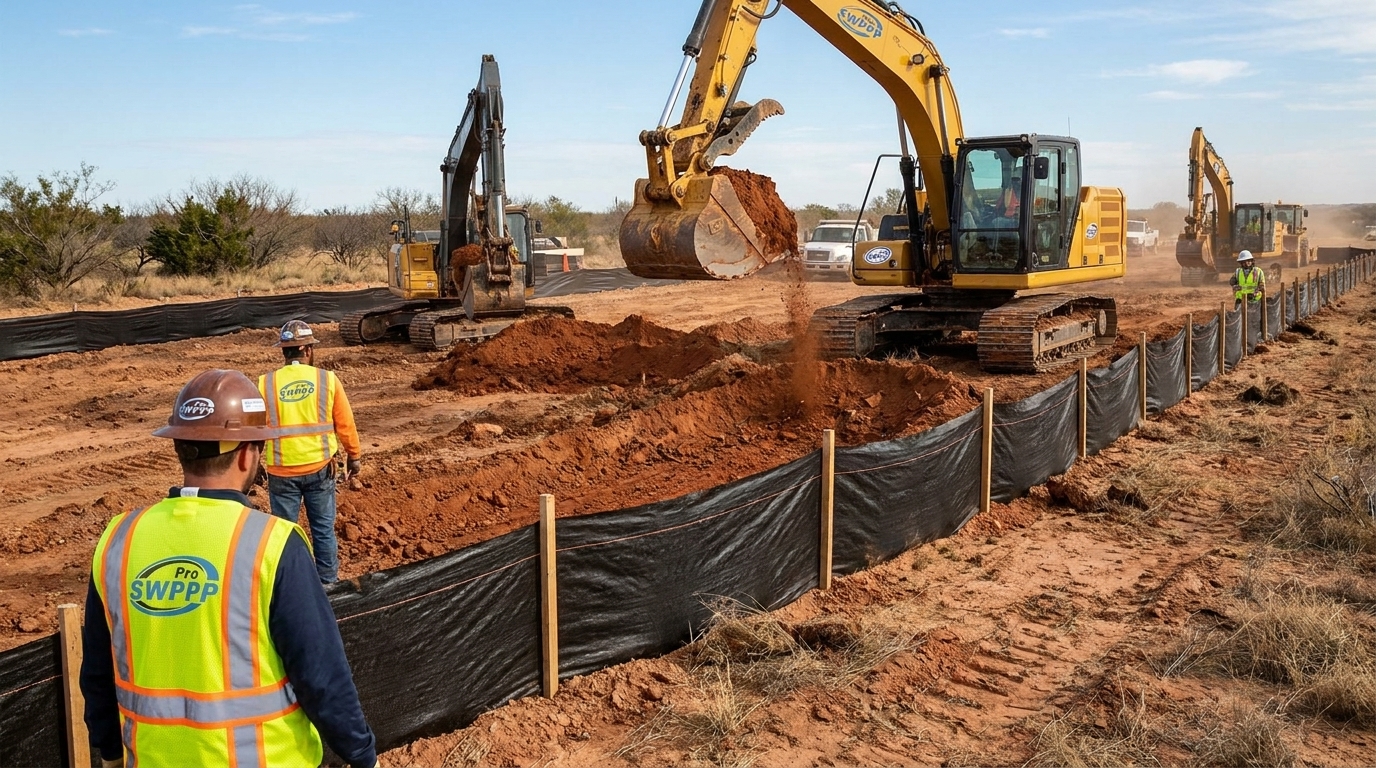
SWP3 stands for Stormwater Pollution Prevention Plan. It’s the same thing as a SWPPP. The Clean Water Act says if rain can wash dirt, oil, or trash off your site into a creek or storm drain, you need a plan to stop it.
The EPA handed that job to states. In Texas, the TCEQ runs the show through the National Pollutant Discharge Elimination System permit program. They call their permit the Construction General Permit, or TXR150000.
Here’s how size matters. If you disturb one acre or more, you need coverage under TXR150000 and a site-specific SWP3 before you start. If you’re part of a larger common plan (like a subdivision or shopping center), even a half-acre lot counts.
The One-Acre Rule
One acre is about the size of a football field without the end zones. Most commercial pads, parking lots, and home subdivisions hit that mark fast. Once you cross one acre, you’re in. No exceptions.
The Five-Acre NOI Trigger
If you disturb five acres or more, you also file a Notice of Intent through TCEQ’s electronic system before stormwater leaves your site. Projects under five acres still need the SWP3 and the correct site notice. They just skip the NOI step in most cases.
That means a three-acre retail pad needs a plan and a notice posted on-site. But it doesn’t file the formal NOI unless local rules say otherwise.
What Goes Into a Texas SWP3
TCEQ wants your plan tailored to your site. Generic templates fail inspections. Pro SWPPP – America’s #1 SWPPP Service builds every plan around your actual dirt, slopes, and drainage.
A compliant SWP3 includes these pieces:
- Site map showing property lines, drainage patterns, and discharge points
- Phases of construction and how you’ll sequence grading to limit exposed soil
- Erosion control measures like silt fence, fiber rolls, and mulch
- Sediment control Best Management Practices such as check dams, inlet protection, and sediment basins
- Pollution prevention steps for fuel storage, concrete washout, and trash
- Stabilization plan for finished slopes and stockpiles
- Inspection schedule and log forms
- Spill response and corrective action procedures
- Plan amendment log to track changes
TCEQ says the plan must be updated as conditions change. If you add a laydown yard or shift your exit, you mark it in the plan. If you don’t, an inspector can write you up.
Best Management Practices That Work
Texas guidance groups BMPs into three buckets: erosion control, sediment control, and housekeeping. Erosion control stops dirt from moving. Sediment control catches it if it does. Housekeeping keeps fuel and chemicals out of the mix.
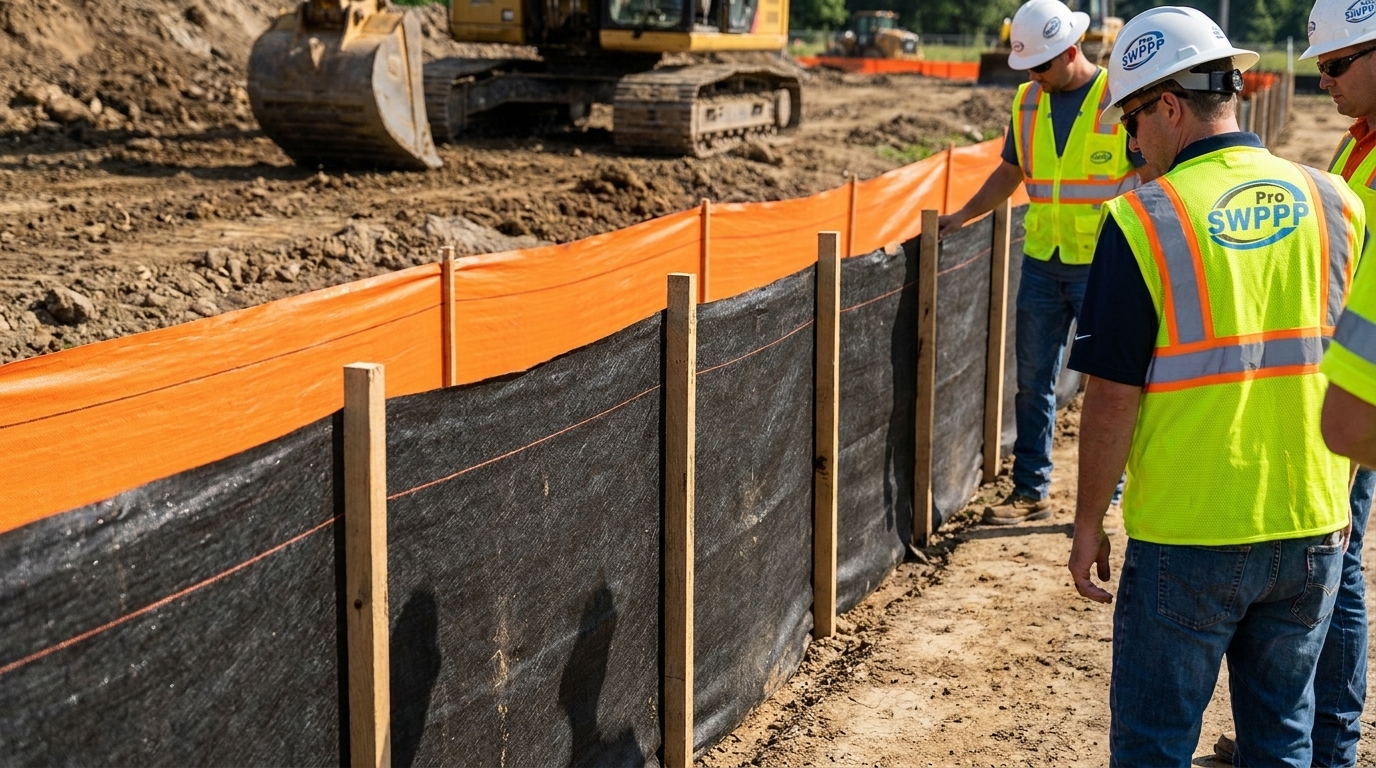
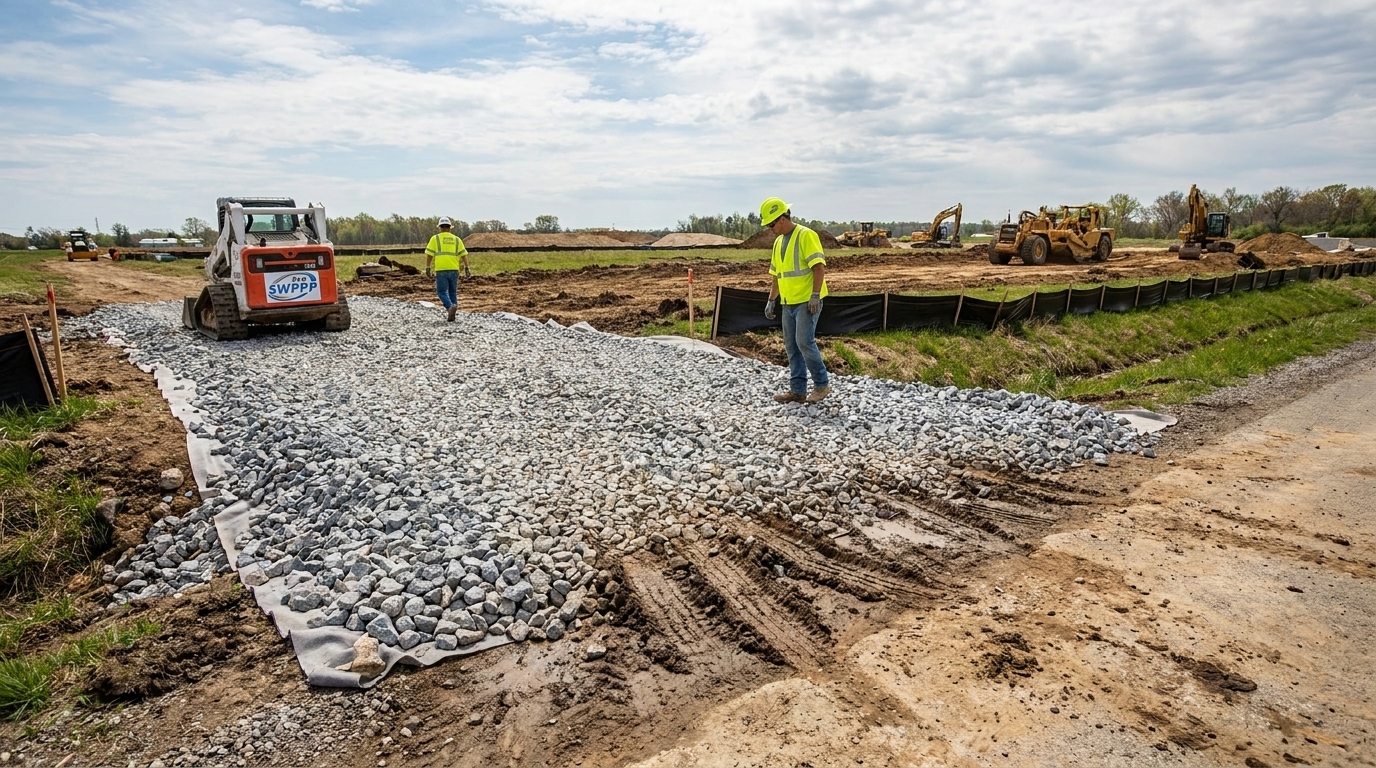
Common erosion controls include mulch, hydroseed, and erosion-control blankets. Sediment controls include perimeter silt fence, inlet protection, and construction exits with rock. Housekeeping covers dumpster lids, concrete-truck washouts, and covered material bins.
You pick the BMPs that fit your site. A flat pad in the Panhandle looks different from a sloped lot in the Hill Country. That’s why Pro SWPPP customizes every plan instead of recycling the same document.
The NOI: When and How to File
If your project hits five acres, you submit an NOI through TCEQ’s e-Permitting system before the first shovel. The NOI tells the state who you are, where you’re building, and how many acres you’ll disturb.
Once TCEQ processes it, you get an authorization letter. Print the first page of your NOI and post it on-site with your Construction Site Notice. That notice stays up until you finish final stabilization and submit your Notice of Termination.
Projects under five acres use the Small Construction Site Notice instead. You still post it before breaking ground. You still keep your SWP3 on-site. You just skip the formal NOI filing.
Don’t want to mess with all the paperwork and requirements? Check out Order your SWPPP now with Pro SWPPP Professional CPESC Certified SWPPP Services.
Inspection Rules and Documentation
Texas requires inspections at least every 14 days and within 24 hours after any rain event that drops half an inch or more. Some permits allow alternate schedules if your site is stable, but the default is every two weeks plus rain events.
Inspectors look for installed BMPs, sediment leaving the site, and whether your plan matches what’s on the ground. They also check your logs. Generic notes like “site looks good” won’t cut it. You need dates, weather, findings, and any fixes you made.
TCEQ accepts electronic records as long as they’re accessible on-site and have the same legal weight as paper. That means a tablet with your SWP3 and logs works fine, but you can’t tell the inspector to wait while you email the file from the office.
Common Inspection Pitfalls
- BMPs listed in the plan but not actually installed
- Silt fence torn or buried and never fixed
- Inlet protection missing after a rain
- No log entry for the last storm
- Plan shows one exit but the crew uses two
The fix is simple. Walk your site every two weeks. Take photos. Write what you see. Make repairs before the next inspection. Update your plan if the site changes.
Starting Before You’re Ready: The Biggest Risk
One of the most serious violations is starting earthwork before your permit coverage and postings are in place. TCEQ says the SWP3 must be prepared and BMPs installed prior to breaking ground.
Here’s the safe sequence:
- Determine your acreage and whether you’re part of a common plan
- Prepare your SWP3
- File your NOI if you’re at or above five acres
- Post your site notice
- Install perimeter controls and entrance BMPs
- Start dirt work
Skip any step and you’re out of compliance before the first truck rolls. Pro SWPPP – America’s #1 SWPPP Service can have your plan and NOI ready in 24 hours so you don’t lose days waiting.
Not sure your Texas site triggers the requirement? Take the 60-second SWPPP quiz — it runs the acreage and common-plan tests for you.
Small Sites Still Need Plans
A common mistake is thinking sites under one acre get a free pass. If your quarter-acre lot is part of a 20-lot subdivision, you’re part of a larger common plan. That means you need SWP3 coverage even though your individual piece is tiny.
Developers handle this by writing one master plan for the whole subdivision and assigning responsibility to each builder. But if you’re the builder, you still need to follow the plan, install BMPs, and keep logs. You can’t ignore it just because your lot is small.
The Living-Document Approach
Texas guidance now emphasizes that your SWP3 is a living document. It changes as your project changes. If you add a stockpile, you update the site map. If you finish a phase and move to the next, you note the new drainage pattern.
This isn’t extra work. It’s proof you’re managing the site. When TCEQ or a city inspector shows up, they want to see that the plan in the binder matches the dirt outside. If it doesn’t, they assume you’re not managing stormwater.
Pro SWPPP includes amendment support with every plan. You call or email when something changes, and we update the document. No guesswork, no scrambling before an inspection.
Texas vs. Other States
Every state runs its own NPDES program, and the details vary. In Georgia, for example, the one-acre threshold is the same, but the inspection schedule and NOI process have different quirks.
If you build in multiple states, don’t assume your Texas plan will work in Oklahoma or Louisiana. The Clean Water Act sets the floor, but each state adds its own rules. For a detailed breakdown of South Texas requirements, see our South Texas SWPPP Requirements guide.
Pro SWPPP – America’s #1 SWPPP Service covers all 50 states. We know the local rules and write plans that pass on the first review.
Permit Renewal and What’s Next
The current Construction General Permit, TXR150000, is active and set to expire March 5, 2028. TCEQ has already started the renewal process. That means updates are coming.
Most renewals tighten inspection requirements or add new BMP categories. If you’re planning a multi-year project, expect the permit language to evolve. Stay in touch with TCEQ or work with a service that tracks regulatory changes for you.
Why Contractors Choose Pro SWPPP
We’ve written SWP3s across Texas. We know TCEQ inspectors, city reviewers, and what triggers violations. Our plans are built by CPESC-certified professionals who understand both the rules and the dirt.
You get a custom site map, phased BMP installation schedule, inspection forms, and unlimited amendments. We file your NOI if needed and walk you through posting requirements. Most plans ship within 24 hours.
We also offer on-site training and inspection support. If your crew has never installed silt fence or doesn’t know how to fill out a rain log, we can fix that in one visit.
For questions about our services or to learn more about our team, visit our About page or reach out through our Contact page.
FAQ
Do I need a SWPPP in Texas?
Yes, if you disturb one acre or more, or if your smaller site is part of a larger common plan of development. You need a site-specific SWP3 and coverage under the TXR150000 Construction General Permit before you start construction.
When do I file an NOI in Texas?
You file a Notice of Intent if your project disturbs five acres or more. Submit it through TCEQ’s e-Permitting system before stormwater discharges from your site. Projects under five acres typically do not file an NOI but still need the plan and site notice.
How often do I inspect my site?
At least every 14 days and within 24 hours after any rainfall of half an inch or more. Some permits allow alternate schedules if the site is fully stabilized, but the default is biweekly plus rain events.
Can I use an electronic SWP3?
Yes. TCEQ accepts electronic records as long as they are immediately accessible on-site and have the same legal weight as paper. A tablet or laptop with the plan and logs works fine.
What happens if I start before my plan is ready?
You’re out of compliance. TCEQ can issue a notice of violation, and you may face fines or a stop-work order. Always prepare your SWP3, file your NOI if required, post your notice, and install BMPs before breaking ground.
Do small sites under one acre need a plan?
If your small site is part of a larger common plan that will disturb one acre or more total, yes. For example, a half-acre lot in a 10-lot subdivision is covered. Stand-alone projects under one acre that are not part of a larger plan typically do not need TXR150000 coverage, but local ordinances may still require erosion control.
How do I update my SWP3 when the site changes?
Add an amendment to your plan binder. Note the date, describe the change, and update your site map or BMP list. TCEQ expects the plan to match current conditions at all times. Pro SWPPP provides free amendments with every plan.
What BMPs are required in Texas?
There is no one-size list. You select erosion control, sediment control, and pollution-prevention measures that fit your site’s soil, slope, and drainage. Common choices include silt fence, inlet protection, stabilized entrances, mulch, and concrete washout areas.
Want a flat-rate number for your Texas site? Get a free SWP3 estimate — no hourly billing.
Ready to move? Order your SWP3 now or schedule a call with a stormwater expert.
By Derek E. Chinners, CPESC — Founder & Stormwater Consultant, Pro SWPPP, LLC
Related: Texas SWPPP requirements · Houston · Dallas-Fort Worth · Austin · San Antonio · El Paso · Fort Worth
Visit Pro SWPPP and see why contractors nationwide rely on America’s #1 SWPPP Service.